TR
TR EN
EN

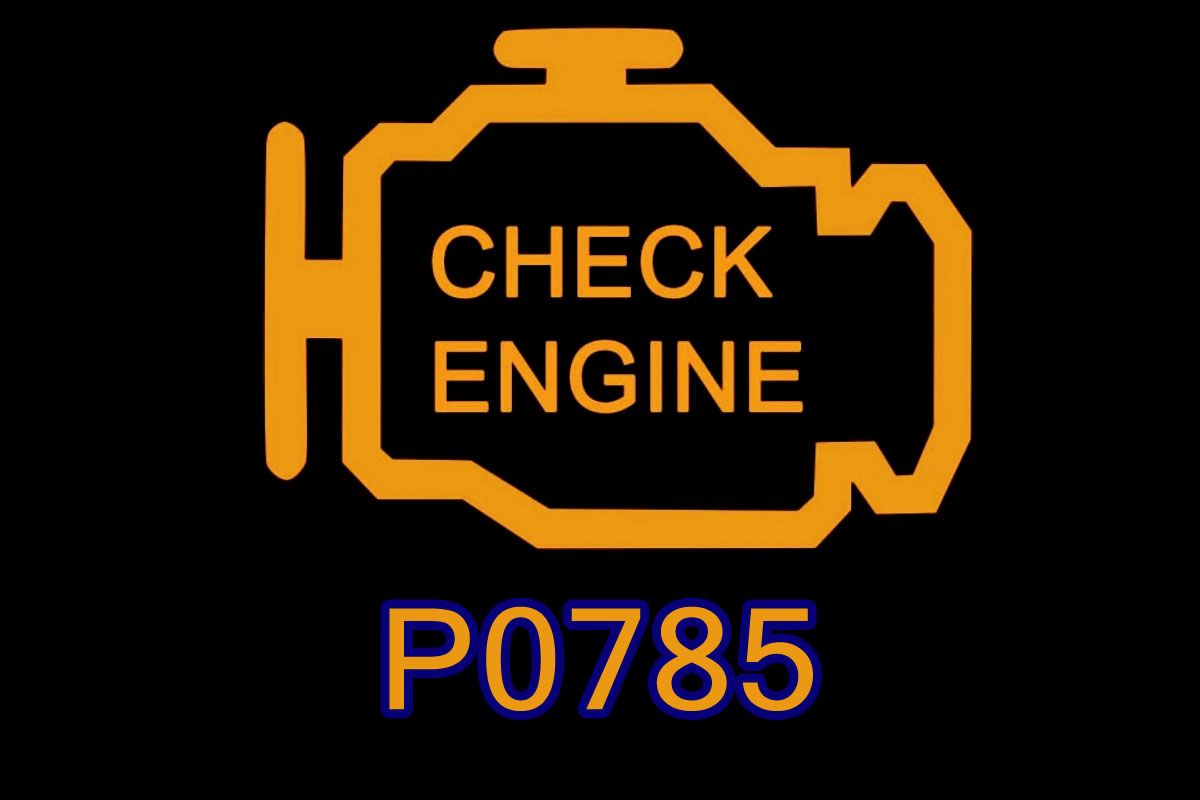
P0785 Shift Timing Solenoid "A" Malfunction
The P0785 trouble code is an OBD-II diagnostic trouble code related to the Shift Timing Solenoid "A" in an automatic transmission.
P0785 – Shift Timing Solenoid "A" Malfunction
This code means that the Transmission Control Module (TCM) or Powertrain Control Module (PCM) has detected a malfunction involving Shift Timing Solenoid "A" or its control circuit.
Shift Timing Solenoid "A" is an electrically controlled component that regulates transmission fluid flow and hydraulic pressure. The TCM uses it to help control gear changes and maintain proper transmission operation.
P0785 is a general malfunction code. It does not necessarily mean that the solenoid itself has failed. The actual problem may be in the solenoid, wiring, connector, power supply, hydraulic system, valve body or transmission control module.
What Does P0785 Mean?
An automatic transmission uses hydraulic pressure to apply and release internal clutches and bands. Modern transmissions control this hydraulic system electronically through solenoids.
The basic control process is:
TCM → Shift Timing Solenoid "A" → Hydraulic Fluid Flow → Clutch/Gear Operation → Transmission Shift
When the TCM detects an abnormal condition involving Solenoid "A", it can store:
P0785 – Shift Timing Solenoid "A" Malfunction
Depending on the vehicle, the malfunction can involve:
-
Electrical operation
-
Solenoid response
-
Hydraulic operation
-
Shift timing
-
Transmission behavior
The exact function of Solenoid "A" is manufacturer- and transmission-specific.
What Is Shift Timing Solenoid "A"?
Shift Timing Solenoid "A" is an electrically controlled valve used to manage transmission hydraulic functions.
Depending on the transmission design, it can influence:
-
Gear changes
-
Shift timing
-
Clutch engagement
-
Hydraulic pressure
-
Shift firmness
-
Torque converter operation
The TCM continuously adjusts transmission operation based on information from various sensors.
For example, it may consider:
-
Engine RPM
-
Vehicle speed
-
Throttle position
-
Engine load
-
Transmission temperature
-
Input shaft speed
-
Output shaft speed
-
Selected gear
Why Is the Shift Timing Solenoid Important?
A modern automatic transmission must coordinate multiple hydraulic circuits during a gear change.
When the TCM commands a shift, the appropriate solenoids must operate at the correct time.
If Shift Timing Solenoid "A" does not work correctly, the transmission may have difficulty controlling:
-
Clutch application
-
Clutch release
-
Hydraulic pressure
-
Shift timing
-
Gear engagement
This can result in noticeable transmission problems.
Symptoms of P0785
The symptoms depend on the vehicle and the severity of the malfunction.
Possible symptoms include:
-
Check Engine Light
-
Transmission warning light
-
Harsh shifting
-
Delayed shifting
-
Erratic shifting
-
Incorrect shift timing
-
Transmission slipping
-
Shift flare
-
Unexpected downshifting
-
Unexpected upshifting
-
Transmission stuck in one gear
-
Limp mode
-
Reduced acceleration
-
Poor fuel economy
-
Increased transmission temperature
In some cases, the only obvious symptom may be a warning light.
Common Causes of P0785
Faulty Shift Timing Solenoid "A"
The solenoid may have an internal electrical or mechanical failure.
Sticking solenoid
Contaminated transmission fluid can prevent the solenoid from moving correctly.
Damaged wiring
A broken, shorted or damaged wire can interfere with solenoid operation.
Corroded connector
Corrosion can increase electrical resistance and disrupt the control signal.
Loose connector terminals
Poor terminal contact can cause intermittent or unreliable solenoid operation.
Water intrusion
Moisture inside the connector can cause corrosion and electrical faults.
Low transmission fluid
Low fluid can cause hydraulic problems and abnormal shifting.
Contaminated transmission fluid
Dirty or degraded fluid can affect solenoid and valve-body operation.
Incorrect transmission fluid
Using the wrong fluid can change hydraulic characteristics and affect transmission operation.
Valve body problem
A sticking or worn valve can produce symptoms similar to a defective solenoid.
Hydraulic pressure problem
Incorrect transmission pressure can prevent the transmission from responding correctly.
Internal transmission wear
Worn clutches, seals or other components can cause abnormal shift behavior.
Low system voltage
Battery or charging-system problems can interfere with electronic transmission controls.
Faulty TCM
The TCM's internal solenoid driver circuit may be defective.
Is P0785 Serious?
P0785 can be serious.
The severity depends on the symptoms.
If the vehicle is experiencing slipping, harsh shifting or loss of gears, continued operation can increase transmission wear.
If the vehicle still drives normally, the problem should nevertheless be diagnosed promptly.
Ignoring a transmission-control fault can allow a relatively simple electrical problem to develop into a more expensive hydraulic or mechanical problem.
Can You Drive With P0785?
If the transmission is shifting normally and there are no signs of slipping or overheating, a short trip to a repair facility may be possible.
However, avoid continued driving if you experience:
-
Severe transmission slipping
-
Violent gear changes
-
Loss of drive
-
Transmission overheating
-
Limp mode
-
Inability to select gears correctly
P0785 vs. P0786
These codes are closely related.
P0785 – Shift Timing Solenoid "A" Malfunction
General malfunction involving the solenoid or its circuit.
P0786 – Shift Timing Solenoid "A" Range / Performance
The solenoid or associated transmission function is operating outside the expected range or performance parameters.
P0785 is therefore broader, while P0786 provides additional information about a range/performance problem.
P0785 vs. P0787
P0785 – Shift Timing Solenoid "A" Malfunction
General malfunction.
P0787 – Shift Timing Solenoid "A" Low
The control circuit voltage is lower than expected.
If P0787 is present, the diagnosis should focus particularly on short circuits, voltage drops, wiring and solenoid electrical condition.
P0785 vs. P0788
P0785 – Shift Timing Solenoid "A" Malfunction
General malfunction.
P0788 – Shift Timing Solenoid "A" High
The control circuit voltage is higher than expected.
P0785 vs. P0789
P0785 – Shift Timing Solenoid "A" Malfunction
General malfunction involving the solenoid or circuit.
P0789 – Shift Timing Solenoid "A" Intermittent
The fault occurs intermittently rather than being continuously present.
Where Is Shift Timing Solenoid "A"?
The exact location depends on the transmission.
It may be:
-
Inside the transmission
-
Installed in the valve body
-
Located underneath the transmission pan
-
Integrated into a solenoid pack
-
Integrated into a mechatronic unit
Some transmissions allow the solenoid to be replaced individually.
Others require replacement of a complete solenoid assembly or valve-body component.
How to Diagnose P0785
Because P0785 is a general malfunction code, the diagnosis should be systematic.
1. Scan the transmission control module
Use a professional scan tool to retrieve all relevant codes.
Check:
-
Stored codes
-
Pending codes
-
History codes
-
Freeze-frame data
Additional codes can provide important clues.
2. Check freeze-frame information
Record the conditions under which P0785 was stored:
-
Vehicle speed
-
Engine RPM
-
Transmission temperature
-
Selected gear
-
Engine load
-
Solenoid command
-
Battery voltage
This can help determine whether the problem occurs during a particular shift or operating condition.
3. Check transmission live data
Monitor:
-
Commanded gear
-
Actual gear
-
Solenoid commands
-
Input speed
-
Output speed
-
Transmission temperature
Compare commanded operation with actual transmission behavior.
4. Inspect the connector
Check the Solenoid "A" connector for:
-
Corrosion
-
Loose terminals
-
Bent pins
-
Water intrusion
-
Fluid contamination
-
Damaged locking mechanisms
5. Inspect the wiring
Look for:
-
Open circuits
-
Short circuits
-
Chafing
-
Pinched wiring
-
Melted insulation
-
High resistance
-
Poor previous repairs
6. Check power and ground
Verify the required electrical supply according to the vehicle's wiring diagram.
Do not assume that all transmissions use the same solenoid circuit design.
7. Measure solenoid resistance
If specified by the manufacturer, measure the resistance of Solenoid "A".
Compare the result with the factory specification.
A generic resistance value should not be used because solenoid specifications vary.
8. Test the control signal
Determine whether the TCM is properly commanding the solenoid.
Some systems use PWM control, making an oscilloscope useful for verifying the command signal.
9. Check for mechanical sticking
A solenoid may have correct electrical resistance but still be mechanically stuck.
Contaminated fluid can contribute to this problem.
10. Inspect transmission fluid
Check:
-
Fluid level
-
Fluid condition
-
Correct specification
-
Burnt smell
-
Metal particles
-
Clutch material
11. Inspect the valve body
If the solenoid and electrical circuit are correct, inspect the valve body for:
-
Sticking valves
-
Contamination
-
Wear
-
Damaged passages
-
Hydraulic leakage
12. Check hydraulic pressure
If necessary, measure transmission hydraulic pressure and compare it with manufacturer specifications.
13. Check transmission speed sensors
The TCM uses shaft-speed information to determine whether shifts are occurring correctly.
Check:
-
Input speed
-
Intermediate shaft speed
-
Output speed
A faulty speed signal can sometimes cause transmission-control problems that appear related to shift operation.
14. Check internal transmission operation
If electrical and hydraulic testing is normal but the transmission still fails to perform the commanded shift, internal mechanical wear may need to be investigated.
15. Check TCM operation
Only after the external components and circuits have been verified should the TCM itself be considered.
Can a Bad Solenoid Cause P0785?
Yes.
A defective Shift Timing Solenoid "A" is one of the main possible causes.
The solenoid can fail electrically or mechanically.
Can Wiring Cause P0785?
Yes.
Damaged wiring can prevent the TCM from properly controlling the solenoid.
Possible problems include:
-
Open circuit
-
Short to ground
-
Short to power
-
High resistance
-
Intermittent connection
Can a Bad Connector Cause P0785?
Yes.
A loose or corroded connector can interrupt the solenoid's electrical signal.
Can Dirty Transmission Fluid Cause P0785?
Yes.
Contaminated fluid can cause the solenoid or valve body to stick.
This can produce abnormal transmission operation even when the electrical circuit is functioning correctly.
Can Low Transmission Fluid Cause P0785?
It can contribute to abnormal transmission operation.
Low fluid can cause inadequate hydraulic pressure and poor shift quality.
However, low fluid alone should not automatically be assumed to be the cause of a solenoid malfunction code.
Can P0785 Cause Harsh Shifting?
Yes.
If the solenoid cannot control hydraulic pressure correctly, the transmission may apply or release clutches too quickly or too slowly.
Can P0785 Cause Transmission Slipping?
Yes.
Incorrect hydraulic control can cause clutch engagement problems and slipping.
However, actual clutch wear should also be investigated if slipping is severe.
Can P0785 Cause Limp Mode?
Yes.
The TCM may activate a fail-safe strategy to protect the transmission when it detects a serious solenoid malfunction.
The exact response varies by manufacturer.
Can P0785 Cause Transmission Overheating?
Potentially.
Incorrect clutch operation or repeated slipping can create additional heat.
Can P0785 Damage the Transmission?
The code itself does not automatically mean that internal transmission damage has occurred.
However, continued driving with severe slipping or abnormal shifting can increase wear.
Can P0785 Be Caused by the TCM?
Yes, but the TCM should generally not be the first component replaced.
Before condemning the TCM, verify:
Solenoid → Connector → Wiring → Power/Ground → Control Signal → Fluid → Valve Body → Hydraulic Pressure → Transmission Operation → TCM
Common Diagnostic Mistakes With P0785
Replacing the solenoid immediately
The wiring or connector may be responsible.
Assuming the transmission is mechanically damaged
P0785 can be caused by a simple electrical problem.
Ignoring transmission fluid
Dirty or incorrect fluid can affect solenoid operation.
Ignoring the valve body
A sticking hydraulic valve can mimic a solenoid failure.
Checking only resistance
A solenoid may have normal resistance but still fail mechanically.
Ignoring speed-sensor data
Incorrect speed information can affect TCM shift calculations.
Replacing the TCM too early
The complete circuit and transmission operation should be verified first.
What Is the Correct Repair for P0785?
The correct repair depends on the actual cause.
Possible repairs include:
-
Replacing Shift Timing Solenoid "A"
-
Repairing damaged wiring
-
Repairing open or short circuits
-
Replacing damaged connector terminals
-
Cleaning corrosion
-
Repairing water intrusion
-
Restoring proper power or ground
-
Correcting transmission-fluid level
-
Replacing contaminated or incorrect transmission fluid
-
Cleaning or servicing the valve body
-
Repairing hydraulic pressure problems
-
Repairing worn internal transmission components
-
Updating TCM software
-
Reprogramming the TCM
-
Replacing the TCM when confirmed defective
How to Test the Vehicle After Repair
After the repair, verify:
-
Shift Timing Solenoid "A" operates correctly
-
Electrical signals are within specification
-
Wiring remains stable
-
Connector terminals maintain proper contact
-
Transmission pressure is correct
-
Commanded and actual gears correspond
-
Gear changes occur correctly
-
No slipping occurs
-
Transmission temperature remains normal
-
Limp mode does not activate
-
No additional transmission codes remain
-
P0785 does not return
The road test should include multiple gear changes and different operating temperatures.
Frequently Asked Questions About P0785
What does P0785 mean?
P0785 means the TCM has detected a malfunction involving Shift Timing Solenoid "A" or its control circuit.
Does P0785 mean the solenoid is bad?
No. The wiring, connector, fluid, valve body, hydraulic system or TCM may also be responsible.
Can dirty transmission fluid cause P0785?
Yes. Contaminated fluid can cause a solenoid or hydraulic valve to stick.
Can low transmission fluid cause P0785?
It can contribute to abnormal transmission operation, although the electrical circuit should still be tested.
Can wiring cause P0785?
Yes.
Can P0785 cause harsh shifting?
Yes.
Can P0785 cause transmission slipping?
Yes, depending on the function of Solenoid "A" in the specific transmission.
Can P0785 cause limp mode?
Yes, depending on the vehicle's transmission-control strategy.
Can I drive with P0785?
If the vehicle shifts normally and there is no slipping or overheating, a short trip for diagnosis may be possible. Severe slipping, harsh shifting, overheating or loss of drive should be treated as reasons to stop driving.
Does P0785 require transmission replacement?
No. P0785 should be properly diagnosed before considering transmission replacement.
Final Thoughts on P0785
P0785 – Shift Timing Solenoid "A" Malfunction indicates that the transmission control system has detected a problem involving the Shift Timing Solenoid "A" or its associated control circuit.
This is a broad code, so replacing the solenoid without testing the rest of the system can result in an unnecessary repair.
The recommended diagnostic sequence is:
Scan Data → Connector → Wiring → Power/Ground → Solenoid → Transmission Fluid → Valve Body → Hydraulic Pressure → Speed Data → Internal Transmission → TCM
A faulty solenoid is possible, but damaged wiring, corroded connectors, contaminated fluid, a sticking valve body, hydraulic pressure problems or internal transmission wear can produce similar symptoms.
Most importantly, P0785 does not automatically mean that the transmission needs to be rebuilt or replaced. A systematic electrical, hydraulic and mechanical diagnosis should be performed first to identify the actual cause.