TR
TR EN
EN

Why Do Headlights Fog Up? How to Remove Moisture From Headlights?
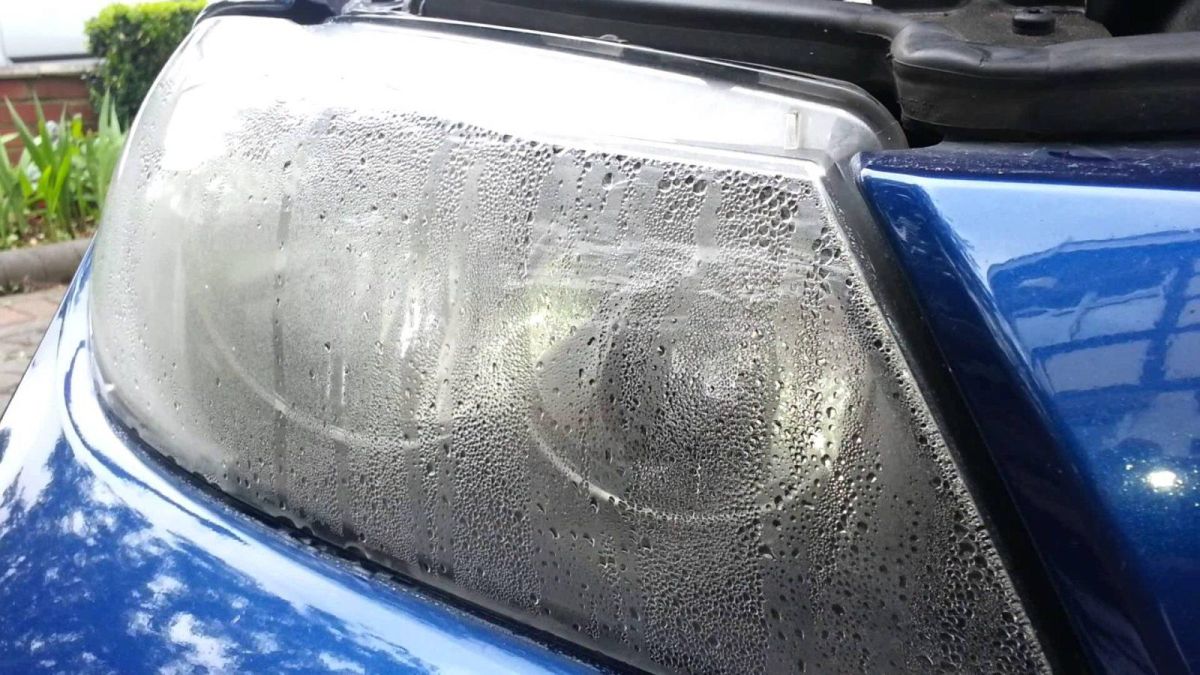
Headlight fogging is a common problem, especially during cold weather, rain, washing, or sudden temperature changes. You may notice a thin layer of condensation inside the headlight lens, small droplets around the edges, or even visible water accumulation.
A small amount of temporary condensation does not always mean that the headlight is defective. Modern headlights are not completely airtight. They are designed to breathe through controlled ventilation systems that allow pressure and humidity to equalize.
However, persistent condensation, large water droplets, or standing water inside the headlight should not be considered normal. These symptoms can indicate a damaged seal, blocked vent, cracked housing, or an incorrectly installed bulb or cover.
How Does Moisture Get Inside a Headlight?
There is normally air inside a headlight assembly. That air contains some amount of moisture.
When the temperature changes, the moisture can condense on the inside of the cooler lens.
For example, imagine driving at night with the headlights operating. The bulbs, LEDs, or other internal components generate heat, warming the air inside the housing.
After the vehicle is parked, the headlight begins to cool.
If the outside temperature is much lower than the temperature inside the headlight, moisture can condense on the inside surface of the lens.
This is essentially the same condensation process that causes a cold glass of water to become covered with droplets on the outside.
Is Headlight Fogging Normal?
Temporary light condensation can be normal.
A light mist that appears after:
-
Rain
-
Car washing
-
Cold weather
-
Rapid temperature changes
-
Parking in a humid environment
may disappear naturally after the headlight warms up and ventilation removes the moisture.
The important factor is how much moisture is present and how long it remains.
A thin mist that disappears after the headlights have been operating for a while is generally less concerning than:
-
Large water droplets
-
Heavy fogging covering most of the lens
-
Water pooling at the bottom
-
Repeated condensation that never disappears
-
Condensation appearing after every wash
-
Moisture inside electrical connectors
These conditions require further inspection.
Why Do Headlights Fog Up More in Cold Weather?
Cold weather increases the likelihood of condensation because the temperature difference between the headlight housing and the surrounding environment can become significant.
The lens can cool rapidly while the air inside the headlight still contains moisture.
When that humid air contacts the colder inner surface of the lens, water vapor turns into tiny liquid droplets.
This is why headlight condensation can be especially noticeable during:
-
Winter
-
Rainy weather
-
Foggy weather
-
Early mornings
-
Sudden temperature changes
Can a Car Wash Cause Headlight Condensation?
Yes.
Pressure washing and cold water can temporarily increase the temperature difference between the headlight assembly and the surrounding environment.
Water can also enter through an existing weakness in the headlight assembly.
If the headlight is properly sealed and its ventilation system is functioning correctly, temporary misting may disappear after the headlight warms up.
However, if water continues to accumulate after washing, there may be an actual sealing or ventilation problem.
The Most Common Cause: Damaged Headlight Seals
Headlight assemblies contain several sealing points.
These may include:
-
Lens-to-housing seals
-
Bulb access covers
-
Rear caps
-
Electrical connector seals
-
Ventilation components
-
Gaskets around service openings
As the vehicle ages, rubber seals can become hard, cracked, compressed, or damaged.
A headlight that was previously dry can therefore begin allowing moisture inside after several years.
Even a very small leak can introduce enough humidity to cause repeated condensation.
A Missing or Poorly Installed Rear Cover Can Let Moisture In
Many headlights have removable rear covers that provide access to bulbs or other components.
If the cover is:
-
Missing
-
Cracked
-
Loose
-
Incorrectly installed
-
Installed with a damaged gasket
moisture can enter the headlight housing.
This is particularly common after a bulb replacement.
A bulb may have been changed correctly electrically but the rear cover may not have been seated properly afterward.
Can a Bulb Replacement Cause Headlight Fogging?
Yes.
If moisture appears shortly after a bulb replacement, inspect the area that was opened during the repair.
Possible problems include:
-
Incorrectly installed bulb
-
Damaged bulb seal
-
Loose rear cap
-
Missing gasket
-
Broken locking mechanism
-
Dirt trapped between sealing surfaces
-
Damaged connector boot
This is one reason why the headlight should be checked after any bulb or lighting-system repair.
Cracked Headlight Housing
A cracked headlight housing can allow moisture to enter directly.
The crack may be:
-
Clearly visible
-
Very small
-
Located near a mounting point
-
Hidden behind the bumper
-
Around an electrical connector
-
Around a mounting tab
Even a small crack can become a pathway for water during rain or washing.
If water is repeatedly entering through a crack, simply drying the headlight will not solve the problem.
The damaged housing must be repaired appropriately or replaced.
Cracked or Damaged Headlight Lens
The front lens can also be damaged.
A stone impact, accident, incorrect installation, or age-related deterioration can create cracks.
Sometimes the damage is difficult to see because it is located around the edge of the lens.
A close visual inspection should therefore include the entire perimeter of the headlight.
Blocked Headlight Vents
Headlights are designed with ventilation passages.
These vents allow air pressure to equalize as the temperature inside the housing changes.
If a vent becomes blocked by:
-
Dirt
-
Mud
-
Insects
-
Dust
-
Incorrect sealant
-
Damage
-
Debris
moisture may remain trapped inside the headlight for longer.
This does not necessarily mean the headlight has a large water leak.
Sometimes the problem is simply that humid air cannot escape efficiently.
Why Do Modern LED Headlights Also Fog Up?
LED headlights can also develop condensation.
Although LEDs generally produce less heat directly at the light-emitting surface than traditional halogen bulbs, the complete headlight assembly still experiences temperature changes.
Modern LED headlights can contain:
-
LED modules
-
Electronic drivers
-
Cooling systems
-
Heat sinks
-
Ventilation systems
-
Complex internal structures
Therefore, LED technology does not make a headlight completely immune to condensation.
Can Xenon or HID Headlights Fog Up?
Yes.
Xenon/HID headlights can also experience condensation because the housing still contains air and is exposed to temperature changes.
The important consideration is not whether the light source is halogen, HID, or LED.
The condition of the headlight housing, seals, vents, and installation is more important.
How Can You Remove Moisture From a Headlight?
The correct method depends on how much moisture is present and why it entered the headlight.
For light temporary condensation, the simplest solution may be to allow the headlight to dry naturally.
Start the vehicle and operate the headlights for a reasonable period. Heat generated inside the assembly can help evaporate moisture, while the ventilation system allows humid air to escape.
Do not expect this to fix a headlight that has a significant leak.
What Should You Do If There Is a Large Amount of Water?
If there is visible water pooling inside the headlight, the problem should be treated differently.
The water needs to be removed and the source of entry identified.
Depending on the headlight design, a technician may need to:
-
Remove the headlight
-
Open an appropriate service cover
-
Drain accumulated water
-
Dry the internal components
-
Inspect seals
-
Check ventilation
-
Inspect the housing for cracks
-
Check electrical connectors
-
Repair or replace damaged components
Simply drying the headlight without fixing the leak usually means the condensation will return.
Can You Use a Hair Dryer to Dry a Foggy Headlight?
A hair dryer can potentially help with drying in some situations, but it must be used carefully.
Excessive heat can damage:
-
Plastic lenses
-
Housing components
-
Seals
-
Adhesives
-
Electrical components
If warm air is used, it should not be excessively hot and should not be directed continuously at one small area.
For a heavily contaminated or water-filled headlight, professional removal and drying is safer than applying high heat through an opening.
Should You Drill a Hole in the Headlight?
No.
Drilling holes into the headlight housing is sometimes suggested as a quick way to improve ventilation, but it is generally a poor repair method.
The headlight's ventilation system is engineered as part of the assembly.
An improvised hole can allow:
-
Rainwater
-
Road spray
-
Dust
-
Dirt
-
Insects
to enter directly.
It can also damage the housing and compromise the intended environmental sealing of the headlight.
A blocked factory vent should be cleaned or repaired rather than replaced with an uncontrolled hole.
Should You Remove the Headlight to Dry It?
Not always.
If the condensation is light and disappears after normal operation, removing the headlight may be unnecessary.
If there is substantial water inside the assembly, however, removing the headlight can make it much easier to:
-
Drain water
-
Inspect the housing
-
Check seals
-
Inspect vents
-
Dry internal areas
-
Find cracks
-
Check connectors
The exact procedure depends on the vehicle.
Can Moisture Damage LED Headlights?
Yes.
Condensation itself is not necessarily immediately destructive, but persistent moisture can eventually cause problems.
Water and humidity can contribute to:
-
Electrical connector corrosion
-
Terminal oxidation
-
LED driver problems
-
Module corrosion
-
Wiring problems
-
Intermittent operation
-
Communication faults in electronically controlled headlights
Modern headlights can contain expensive electronic components, so persistent moisture should not be ignored.
Can Headlight Condensation Damage a Bulb?
It can contribute to problems over time.
A small amount of temporary condensation does not automatically mean that the bulb will fail.
However, significant water accumulation can affect electrical connections and components.
In conventional bulb systems, moisture around the bulb socket or connector can contribute to corrosion and poor electrical contact.
In LED systems, moisture can affect electronic modules and connectors.
Why Is There Water at the Bottom of the Headlight?
Water collecting at the bottom is more concerning than a light layer of mist.
When a headlight contains enough water to form droplets that run downward and accumulate at the bottom, there is usually more moisture than would be expected from ordinary temporary condensation.
Possible causes include:
-
Damaged seal
-
Cracked housing
-
Damaged lens
-
Loose rear cover
-
Blocked or damaged vent
-
Incorrect previous repair
-
Accident damage
At this point, the source should be identified rather than simply waiting for the water to disappear.
How Can You Find Where the Headlight Is Leaking?
Finding a very small leak can sometimes be difficult.
A technician can inspect:
-
Lens-to-housing seam
-
Rear bulb covers
-
Gaskets
-
Vent tubes
-
Electrical connector seals
-
Mounting points
-
Cracks around the housing
-
Areas damaged during previous repairs
In some cases, controlled water testing can help identify an entry point.
However, simply spraying high-pressure water directly at the headlight is not a good diagnostic method because it can force water into places where normal rainwater would not enter.
Can Silicone Sealant Fix a Foggy Headlight?
Sometimes a damaged external seal can be repaired, but simply applying silicone around everything is not the correct solution.
Before applying any sealant, the actual leak must be identified.
The repair material must also be compatible with:
-
Automotive plastics
-
Headlight lens materials
-
Existing sealants
-
Temperature changes
-
Water exposure
Incorrect sealant can make future headlight repair more difficult and can potentially interfere with ventilation.
What If the Headlight Was Repaired After an Accident?
Accident-repaired headlights are particularly worth inspecting if condensation starts afterward.
A headlight may have been:
-
Reassembled incorrectly
-
Sealed poorly
-
Cracked during removal
-
Installed with a damaged gasket
-
Fitted with aftermarket parts
-
Repaired with unsuitable adhesive
If fogging began after bodywork or headlight replacement, the previous repair should be one of the first areas investigated.
Why Does Only One Headlight Fog Up?
It is very common for only one headlight to develop condensation.
The two headlights are separate assemblies and can have different:
-
Seal conditions
-
Ventilation conditions
-
Age
-
Damage history
-
Repair history
-
Bulb access covers
-
Manufacturing tolerances
If the left headlight repeatedly fogs while the right one remains completely clear, this can be a useful diagnostic clue.
It suggests that the problem may be localized to that particular assembly rather than simply being caused by the weather.
Is Headlight Fogging a Sign That the Headlight Must Be Replaced?
Not necessarily.
A foggy headlight does not automatically require replacement.
If the issue is caused by:
-
Temporary condensation
-
A blocked vent
-
A loose rear cover
-
A damaged gasket
the headlight may be repairable.
Replacement becomes more appropriate when there is:
-
Severe cracking
-
Structural housing damage
-
Unrepairable sealing damage
-
Damaged internal electronics
-
Persistent water intrusion
-
Serious internal corrosion
The cause should be identified before buying a new headlight.
Can You Prevent Headlight Condensation?
You cannot completely eliminate the possibility of condensation because headlights are exposed to changing temperatures and environmental humidity.
However, you can reduce the risk of persistent moisture by:
-
Keeping ventilation passages clear
-
Installing rear covers correctly
-
Replacing damaged gaskets
-
Repairing cracked housings
-
Checking headlights after bulb replacement
-
Avoiding improper modifications
-
Inspecting headlights after accidents
-
Repairing water leaks promptly
A headlight should be properly sealed while still retaining its designed ventilation characteristics.
What Should You Never Do to a Foggy Headlight?
Avoid several common shortcuts.
Do not drill random holes into the housing.
This can turn a minor condensation problem into a permanent water-ingress problem.
Do not use excessive heat.
High temperatures can deform plastic and damage seals or electronics.
Do not ignore standing water.
Large amounts of water can damage electrical components.
Do not seal every ventilation opening with silicone.
The headlight needs its designed ventilation system.
Do not replace the headlight immediately without diagnosis.
A loose cap, blocked vent, or damaged gasket may be the actual problem.
When Should You Have the Headlight Checked?
Professional inspection is recommended when:
-
Condensation does not disappear
-
Large droplets form
-
Water collects at the bottom
-
The same headlight repeatedly fogs
-
The headlight flickers
-
LEDs stop working
-
Bulbs fail repeatedly
-
Electrical connectors show corrosion
-
The lens or housing is cracked
-
The problem started after an accident or repair
Persistent moisture is particularly important on modern vehicles because headlights may contain electronic control modules and communication circuits.
Final Thoughts
Headlight condensation is not always a sign of a defective headlight. A small amount of temporary misting can occur when humid air inside the assembly meets a cold lens, particularly after rain, washing, or rapid temperature changes.
The important distinction is between temporary condensation and persistent water intrusion.
If the fog disappears naturally after the headlight warms up, there may be no serious problem. But if condensation repeatedly returns, large droplets form, or water collects inside the housing, the headlight should be inspected for damaged seals, loose covers, blocked vents, cracks, or previous repair problems.
The best solution is not simply to dry the headlight. The source of the moisture must be identified and corrected.
A properly functioning headlight should be able to manage normal humidity through its designed ventilation system without allowing significant water to accumulate inside.