TR
TR EN
EN

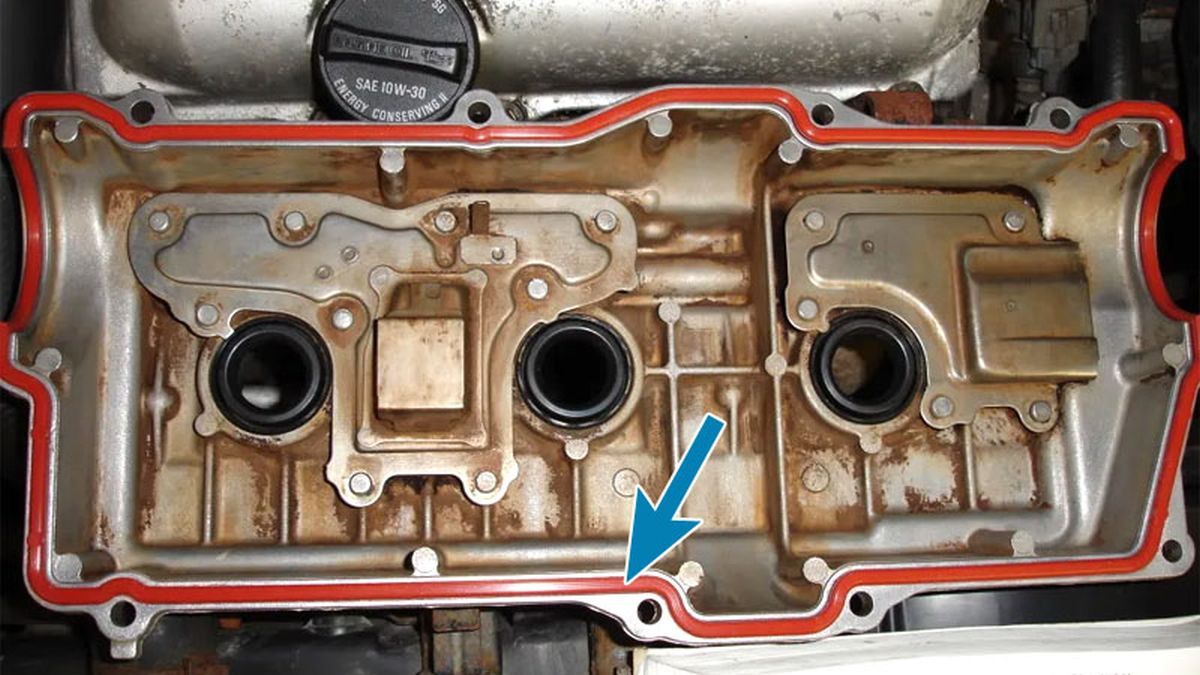
What Is a Valve Cover Gasket? What Are the Symptoms of a Valve Cover Gasket Oil Leak?
The valve cover gasket is one of the most common sources of oil leaks around the upper part of an engine. Although the leak may initially appear small, oil escaping from the valve cover area can spread over the engine, reach electrical components, spark plug wells, exhaust components, or other parts and eventually create more serious problems.
A valve cover gasket leak does not always produce a large oil puddle under the vehicle. In many cases, the first sign is simply oil residue around the upper engine or a burning-oil smell.
What Does the Valve Cover Gasket Do?
The valve cover is mounted on top of the cylinder head. Depending on the engine design, it covers components such as the camshafts, valve train and related oil-lubricated mechanisms.
The gasket sits between the valve cover and cylinder head and creates an oil-tight seal.
Its main purposes are to:
-
Prevent engine oil from escaping from the valve cover joint
-
Keep contaminants out of the engine
-
Maintain proper sealing around the upper part of the cylinder head
-
Prevent oil from entering spark plug wells on engines where the plugs are located in the cylinder head
The gasket is exposed to engine heat, oil and repeated thermal expansion and contraction. Over time, it can become hard, brittle, flattened or cracked.
What Are the Symptoms of a Valve Cover Gasket Oil Leak?
A leaking valve cover gasket can produce several different symptoms. The severity depends on where the gasket has failed and how much oil is escaping.
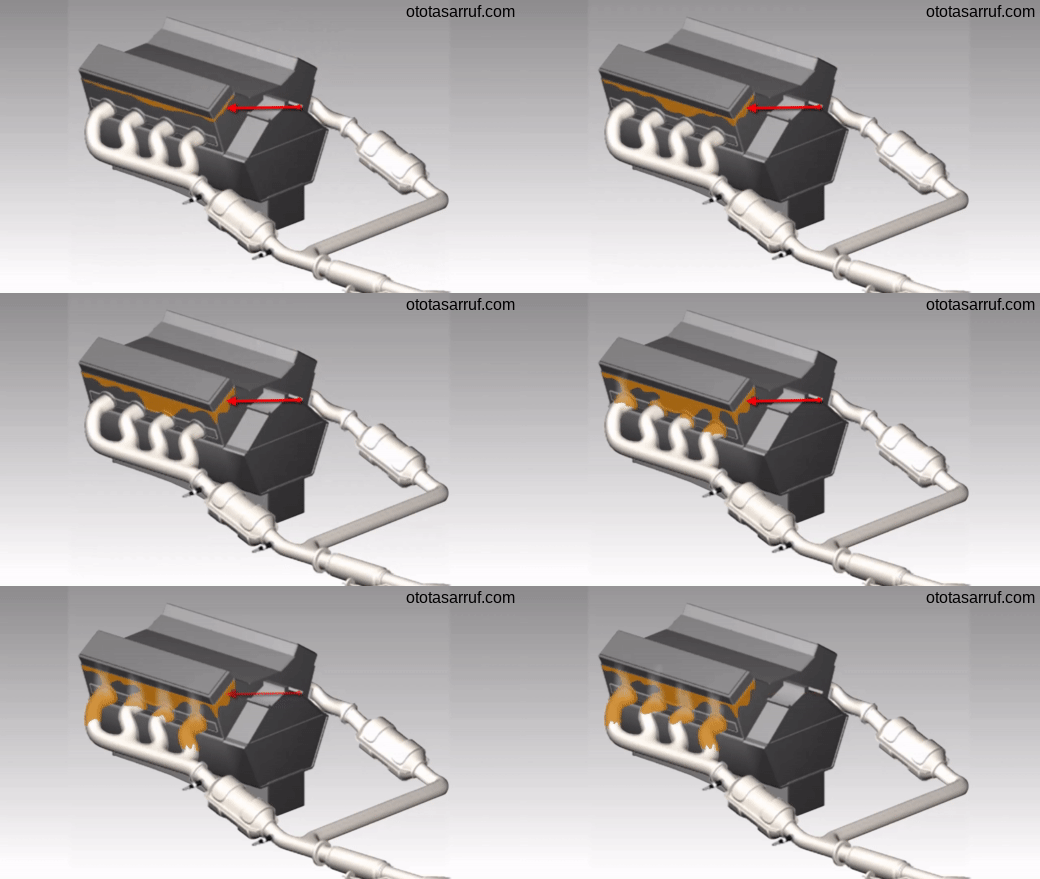
Oil around the valve cover
One of the most obvious signs is oil accumulation along the edge of the valve cover.
You may notice:
-
Wet oil around the gasket area
-
Fresh oil deposits
-
Oil stains on the cylinder head
-
Oil collecting in recessed areas of the engine
-
Dirt sticking to oily surfaces
A small leak may only leave a thin oily film, while a more severe leak can produce visible dripping.
Burning oil smell
If leaking oil reaches a hot exhaust manifold, turbocharger housing or another hot engine component, it can produce a strong burning-oil smell.
This is particularly noticeable after driving because engine temperatures are higher.
A burning-oil smell coming from the engine compartment should not automatically be attributed to the valve cover gasket, however. Oil can originate from another location and flow toward a hot component.
Smoke from the engine compartment
A more advanced leak can cause oil to reach hot exhaust components and produce smoke.
This should be taken seriously.
Even if the amount of oil is small, continuous oil contamination around very hot components can create a fire risk under certain conditions.
Low engine oil level
A minor valve cover gasket leak usually does not cause the engine oil level to drop rapidly. However, if the leak is substantial and continues for a long time, measurable oil consumption can occur.
If the oil level repeatedly falls between oil changes, the engine should be inspected for both external leaks and internal oil consumption.
Oil inside spark plug wells
This is an important symptom on some engines.
Certain engines use a valve cover gasket design with additional seals around the spark plug tube openings. When these seals fail, engine oil can enter the spark plug wells.
This may cause:
-
Oil around the ignition coils
-
Oil around the spark plug boots
-
Misfires
-
Rough running
-
Difficult starting
-
Check Engine Light illumination
Oil inside a spark plug well does not necessarily mean the spark plug itself is leaking. The leak may be coming from the valve cover or spark plug tube seal above it.
Engine misfire
A valve cover leak can indirectly cause a misfire when oil enters the spark plug wells.
Oil contamination can affect the ignition coil or spark plug boot and eventually interfere with ignition.
This is particularly important when a vehicle develops a misfire together with visible oil around the ignition coils.
However, a misfire should never automatically be blamed on the valve cover gasket. Ignition coils, spark plugs, injectors, wiring, compression and other systems can produce the same symptom.
Oil leaking onto the outside of the engine
Sometimes the first indication is simply an oily engine surface.
Because oil can travel along the cylinder head, engine block or other surfaces, the point where you see oil may not be the actual source.
This is why cleaning the area and tracing the leak from the highest wet point downward is often more useful than replacing the first seal that appears suspicious.
Why Does the Valve Cover Gasket Leak?
The gasket can fail for several reasons.
Age and heat
Constant exposure to engine heat eventually changes the properties of the gasket material. It may become hard and lose its ability to maintain a flexible seal.
Gasket deterioration
Rubber and other sealing materials can shrink, crack or become permanently compressed.
Once the gasket loses its elasticity, it may no longer seal properly against the cylinder head and valve cover.
Incorrect installation
A recently replaced gasket that begins leaking shortly afterward may have an installation problem.
Possible causes include:
-
Incorrect gasket positioning
-
Dirty sealing surfaces
-
Old gasket material remaining on the mating surface
-
Incorrect tightening sequence
-
Incorrect bolt torque
-
Over-tightening
-
Under-tightening
-
Sealant applied incorrectly
A valve cover does not necessarily seal better when its bolts are tightened excessively. Over-tightening can deform the cover or damage the gasket.
Warped or damaged valve cover
Sometimes the gasket is not the real problem.
A plastic valve cover can become distorted after prolonged heat exposure, while an aluminum cover can also suffer from damage or sealing-surface problems.
Installing a new gasket against a distorted cover may not permanently solve the leak.
Can a Valve Cover Gasket Leak Cause Oil to Enter the Engine?
The valve cover gasket is normally intended to prevent oil from escaping out of the engine.
A leak generally results in external oil loss.
However, the valve cover assembly may also incorporate other seals and components, such as:
-
Spark plug tube seals
-
PCV system components
-
Camshaft-related seals
-
Vacuum passages
-
Integrated oil separators
Therefore, an oil leak around the valve cover does not necessarily mean the perimeter gasket itself has failed.
Valve Cover Gasket Leak vs. Head Gasket Leak
These two problems are often confused because both involve the upper portion of the engine.
The valve cover gasket seals the valve cover to the cylinder head.
The head gasket seals the cylinder head to the engine block and performs a much more critical function involving combustion chambers, coolant passages and oil passages.
A valve cover gasket leak typically causes an external oil leak.
A head gasket failure can potentially cause:
-
Coolant loss
-
Oil/coolant contamination
-
Combustion-gas leakage
-
Overheating
-
Compression problems
-
White exhaust smoke in certain failure modes
-
External oil or coolant leakage
Therefore, seeing oil on the outside of an engine does not automatically mean the head gasket has failed.
How Is a Valve Cover Gasket Leak Diagnosed?
A proper diagnosis starts by identifying the actual source of the oil.
The engine should be inspected around:
-
Valve cover perimeter
-
Spark plug tube seals
-
PCV components
-
Camshaft seals
-
Timing cover
-
Oil pressure sensors
-
Vacuum pump areas
-
Other seals and joints located above or near the valve cover
If the engine is heavily covered in old oil and dirt, the area may need to be cleaned before the leak can be accurately traced.
After cleaning, the engine can be inspected for fresh oil appearing at the highest point of the leak.
In difficult cases, an appropriate UV dye and UV light can help trace the source, provided the dye is compatible with the engine oil and manufacturer's recommendations.
Does a Valve Cover Gasket Leak Trigger a Check Engine Light?
Usually, a simple external valve cover oil leak does not directly trigger a Check Engine Light.
However, a secondary problem can produce a warning light.
For example, if oil enters spark plug wells and causes ignition problems, the engine may develop misfires and store OBD-II trouble codes.
Depending on the vehicle, codes related to misfires or other engine-management problems may then appear.
The diagnostic code identifies a detected operating problem; it does not automatically prove that the valve cover gasket is the failed component.
Can You Drive With a Leaking Valve Cover Gasket?
It depends on the severity and location of the leak.
A very small seepage may not immediately create a major problem, but it should still be monitored and repaired.
Driving becomes more concerning when:
-
Oil is dripping significantly
-
The engine oil level is falling
-
Oil reaches the exhaust
-
Smoke is coming from the engine compartment
-
There is a strong burning-oil smell
-
Oil enters spark plug wells
-
The engine begins misfiring
-
The oil-pressure warning light comes on
If the oil-pressure warning light illuminates, the issue should not be treated as a normal valve cover gasket leak. Low engine oil pressure can cause severe engine damage and requires immediate attention.
How Is the Valve Cover Gasket Replaced?
Replacement procedures vary significantly between engines.
In general, the process involves removing components that obstruct access to the valve cover, removing the cover, cleaning the sealing surfaces, installing the correct gasket and reinstalling the cover using the manufacturer's specified tightening procedure.
On some engines, additional components such as ignition coils, wiring harnesses, breather hoses or intake components may need to be removed.
The important part is not simply installing a new gasket. The sealing surfaces, valve cover condition, bolt torque and any additional seals must also be checked.
Some engines require sealant at specific corners or joints, while others are designed to be assembled without additional sealant. Applying sealant everywhere is not necessarily correct.
How Long Does a Valve Cover Gasket Last?
There is no universal replacement interval.
A valve cover gasket is generally replaced when it begins leaking or loses its sealing ability.
Its lifespan depends on:
-
Engine temperature
-
Gasket material
-
Oil quality
-
Maintenance history
-
Engine design
-
Age and mileage
-
Repeated thermal cycling
Some gaskets can last for many years, while others may begin leaking relatively early.
Is a Valve Cover Gasket Leak Serious?
A small leak is usually not an immediate catastrophic engine failure, but ignoring it indefinitely is not a good idea.
The problem can gradually become worse and cause:
-
Oil loss
-
Burning-oil odor
-
Smoke
-
Oil contamination of ignition components
-
Misfires
-
Damage to electrical components
-
Oil contamination of hot exhaust components
The most important point is that the visible oil does not always identify the failed seal.
Oil can travel considerably before it becomes visible. A valve cover gasket should therefore be confirmed as the actual leak source before replacing it.
Final Thoughts
A valve cover gasket oil leak is one of the more common external engine oil leaks, particularly as an engine ages. Typical signs include oil around the valve cover, a burning-oil smell, oil entering spark plug wells, smoke from oil contacting hot components and, in severe cases, a noticeable reduction in engine oil level.
The key to a successful repair is accurate diagnosis. A new gasket will not permanently solve the problem if the real source is a warped valve cover, a PCV component, a camshaft seal, a sensor seal or another nearby sealing point.
If oil is leaking onto hot exhaust components, entering the ignition system, or causing the engine oil level to fall, the leak should be repaired without unnecessary delay.