TR
TR EN
EN

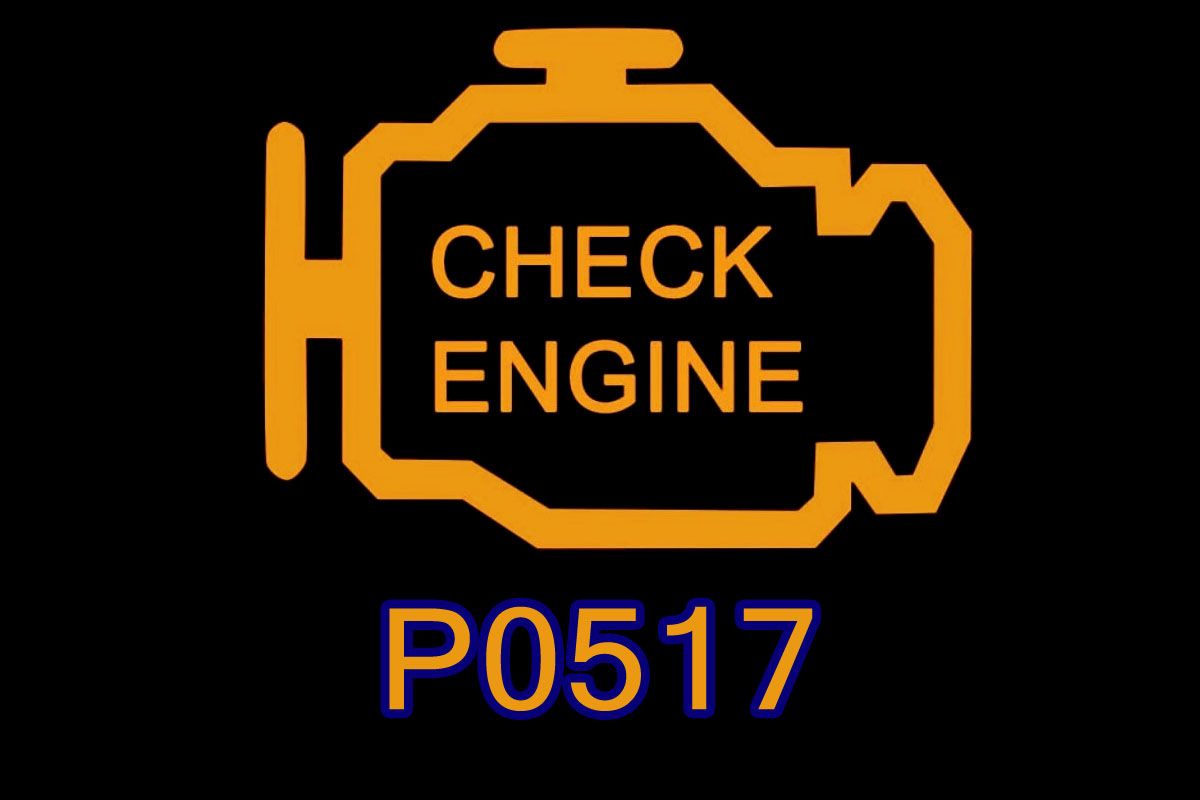
P0517 Battery Temperature Sensor Circuit High
The P0517 Battery Temperature Sensor Circuit High trouble code means the engine or powertrain control module has detected an abnormally high electrical signal from the battery temperature sensor circuit.
The important point is that “Circuit High” refers primarily to the electrical signal, not necessarily to the battery actually being too hot.
The battery temperature sensor is used by the vehicle’s charging system to determine how the battery should be charged under different temperature conditions. Battery charging requirements change with temperature, so the control module uses this information to adjust alternator or charging-system behavior.
When the module sees a voltage or signal higher than the expected range, it stores P0517.
What Does the Battery Temperature Sensor Do?
A battery temperature sensor monitors the temperature around or inside the battery and sends this information to the charging-system controller or engine control module.
Depending on the vehicle, the sensor may be:
-
Integrated into the battery monitoring sensor
-
Mounted directly on or near the battery
-
Built into the negative battery terminal assembly
-
Located in the battery tray or battery compartment
-
Integrated into an intelligent battery sensor (IBS)
Many modern vehicles use sophisticated battery management systems rather than a simple alternator-and-battery arrangement.
Temperature information is particularly important because a battery should not always be charged at the same voltage.
When the battery is cold, the charging system may need to increase charging voltage. When the battery is hot, charging voltage generally needs to be reduced to prevent excessive charging and battery damage.
This is why a faulty temperature signal can affect the vehicle's charging strategy.
What Does “Circuit High” Mean?
The word High in P0517 is important.
It does not necessarily mean:
“The battery temperature is too high.”
Instead, it means that the control module is seeing an electrical signal that is higher than the expected value for the battery temperature sensor circuit.
Depending on the sensor design, this can happen because of an electrical problem such as an open circuit, incorrect resistance, wiring problem, or sensor failure.
For example, if the sensor is a thermistor and the signal circuit is designed so that sensor resistance changes with temperature, an open circuit can cause the module to interpret the signal as an abnormally high voltage.
Therefore, replacing the battery simply because P0517 is present is usually not the correct first step.
Common Causes of P0517
Several different problems can cause this code.
Faulty battery temperature sensor
The sensor itself may have failed internally and may no longer produce a temperature signal that corresponds to the actual battery temperature.
Open circuit in the sensor wiring
A broken wire is particularly important to check. Depending on the circuit design, an open signal wire can cause the control module to see an excessively high voltage.
The wire can be broken internally even if the insulation looks perfectly normal from outside.
Damaged or loose connector
A connector that is not fully seated, has damaged terminals, corrosion, moisture, or poor terminal tension can create an abnormal sensor signal.
Poor electrical connection at the battery
Because the sensor is often located around the battery or battery terminal area, previous battery replacement or terminal work can disturb the sensor wiring.
Faulty battery monitoring sensor
Some vehicles combine battery temperature measurement with an intelligent battery sensor mounted on the battery terminal. In these systems, the problem may be related to the complete sensor assembly rather than a separate temperature sensor.
Reference or ground problem
A problem with the sensor's reference or ground circuit can alter the signal seen by the control module.
Incorrect battery installation
Installing an incorrect battery type or capacity can sometimes create battery-management problems, particularly on vehicles that require battery registration or coding after replacement. This does not necessarily cause P0517 directly, but it can complicate charging-system diagnosis.
Control module or charging-system communication problem
On modern vehicles, battery information may pass through a battery management module or communication network before reaching the engine or charging controller. A communication or module fault can therefore sometimes accompany the sensor fault.
Symptoms You May Notice
P0517 does not always produce obvious symptoms.
The vehicle may continue to start and drive normally while the fault is present.
Possible symptoms include:
-
Check Engine Light
-
Battery or charging-system warning
-
Charging voltage that seems unusually high or low
-
Battery charging problems
-
Battery becoming discharged
-
Battery overheating or reduced battery life
-
Start-stop system being disabled
-
Battery management warning
-
Electrical system warnings
-
Increased or reduced alternator output
-
Difficulty starting after the vehicle has been parked
-
Other battery-management-related fault codes
On vehicles equipped with start-stop technology, the system may be disabled because the control module no longer trusts the battery temperature information.
Why P0517 Can Affect Charging Voltage
Battery temperature is not just an informational parameter.
It can directly influence charging strategy.
A battery that is cold and a battery that is very hot do not require identical charging conditions. The charging system therefore uses temperature information to determine an appropriate charging voltage and charging behavior.
If the control module believes the temperature signal is invalid, it may switch to a fallback or protective charging strategy.
The exact behavior depends on the manufacturer.
Some vehicles may use a fixed substitute temperature value. Others may reduce charging, increase charging, disable certain energy-management functions, or generate additional warnings.
This is why P0517 should not be ignored simply because the engine still starts normally.
How to Diagnose P0517 Correctly
The best diagnosis begins with the scan tool rather than immediately replacing the battery or sensor.
Start with all stored fault codes
Read all codes from the engine, battery-management, body, and charging-system modules if the vehicle allows it.
P0517 may be accompanied by other codes that reveal whether the problem is isolated to the temperature sensor or part of a larger battery-management fault.
Freeze-frame data can also be useful because it shows the operating conditions when the code was recorded.
Look at battery temperature in live data
This is one of the most useful tests.
With the vehicle cold and parked for several hours, compare the reported battery temperature with the actual ambient temperature.
For example, if the vehicle has been sitting overnight in moderate weather but the scan tool reports an extremely high or implausible battery temperature, the sensor signal deserves immediate attention.
Likewise, a temperature reading that is completely fixed and does not change as the battery environment changes can indicate a sensor or circuit problem.
Inspect the battery and sensor area
Look carefully around:
-
Battery terminals
-
Negative battery cable
-
Battery monitoring sensor
-
Temperature sensor
-
Sensor connector
-
Wiring harness
-
Ground connections
-
Battery tray
Look for corrosion, damaged wires, stretched wiring, water intrusion, loose connectors, or terminals that have been disturbed during previous battery replacement.
Check the electrical circuit
The sensor's power, ground, reference, and signal circuits should be tested according to the manufacturer's wiring diagram.
Do not assume every battery temperature sensor uses the same circuit design.
Some sensors are simple thermistors. Others are incorporated into intelligent battery sensors with electronic circuitry and communication functions.
This distinction makes the manufacturer's wiring diagram and diagnostic procedure extremely important.
Check for an open circuit
Because P0517 is a high-signal code, an open circuit is an important possibility.
A broken wire or disconnected connector can cause the control module to interpret the sensor input as an abnormally high voltage.
The technician should test circuit continuity and terminal integrity rather than simply looking at the insulation.
Check the battery itself
The battery should still be tested, especially if there are charging or starting complaints.
A battery can be weak without being responsible for P0517.
Similarly, a perfectly good battery can have a faulty temperature sensor circuit.
These are separate diagnostic questions.
Do Not Confuse P0517 With an Overheated Battery
This is one of the most important points when interpreting the code.
P0517 does not automatically mean:
“The battery is overheating.”
It means:
The control module has detected a high electrical signal in the battery temperature sensor circuit.
The actual battery temperature could be completely normal.
In some cases, an open sensor circuit can produce a high electrical signal even though the battery itself is at normal temperature.
Therefore, measuring or observing the actual battery temperature and comparing it with scan-tool data is much more useful than assuming the battery is physically overheating.
Battery Temperature Sensor vs Battery Condition
Another common mistake is replacing the battery immediately after seeing P0517.
A weak battery and a faulty temperature-sensor circuit are not the same thing.
A battery may be:
-
Fully charged but have a sensor fault
-
Weak but have a perfectly functioning temperature sensor
-
Old and failing while the sensor circuit is also faulty
-
Discharged because the charging system is reacting incorrectly to bad temperature information
The battery, charging system, and temperature sensor should therefore be evaluated separately.
Could a Bad Alternator Cause P0517?
It can be related to charging-system problems, but the code itself specifically points toward the battery temperature sensor circuit being electrically high.
A failing alternator does not automatically mean the battery temperature sensor is defective.
However, if charging voltage is abnormal, the technician should inspect the complete charging system because the vehicle's energy-management system may have several interconnected faults.
On modern vehicles, alternator output may also be electronically controlled rather than simply switched on and off.
P0517 After Battery Replacement
If P0517 appears shortly after replacing the battery, pay particular attention to the battery terminal and battery-monitoring sensor.
The battery may have been replaced correctly while the sensor connector was:
-
Left disconnected
-
Partially connected
-
Damaged
-
Installed incorrectly
-
Subjected to excessive force
-
Left with a damaged wire
Some vehicles also require battery registration, adaptation, or coding after replacement.
Battery registration itself does not usually explain a genuine high sensor-circuit signal, but failing to perform the required battery-management procedure can create additional charging-system or energy-management problems.
Can You Keep Driving With P0517?
Whether the vehicle can be driven depends on how the charging system is behaving.
If the vehicle has no battery warning, charging voltage is normal, the engine starts normally, and there are no signs of electrical instability, a short trip to a repair facility may be possible.
However, continued driving should not be taken for granted.
If you see a battery/charging warning, experience electrical problems, notice unusually high charging voltage, smell battery electrolyte, or have repeated starting problems, the charging system should be checked promptly.
A charging system operating incorrectly can eventually leave the vehicle unable to start.
P0517 vs Other Battery Temperature Codes
P0517 belongs to a group of diagnostic codes associated with battery temperature sensor circuits.
The distinction between the codes is important.
P0517 – Battery Temperature Sensor Circuit High
The control module detects an excessively high electrical signal from the battery temperature sensor circuit.
P0516 – Battery Temperature Sensor Circuit Range/Performance
The signal exists but does not behave within the expected range or does not correspond to expected battery temperature conditions.
P0518 – Battery Temperature Sensor Circuit Low
The control module detects an electrical signal that is lower than expected.
P0519
This is not another battery temperature code; it relates to idle air control system performance.
Understanding these descriptions prevents a technician from treating every battery-temperature code as a simple sensor replacement.
The Most Reliable Repair Approach
The correct repair depends entirely on what the testing finds.
If the sensor itself has failed, the sensor or appropriate battery monitoring assembly may need replacement.
If the wiring is open or damaged, repairing the wiring is the correct solution.
If the connector has corrosion or poor terminal contact, the connector or terminals may need repair.
If the battery monitoring sensor integrated into the terminal is defective, the complete sensor assembly may need to be replaced.
If the battery is genuinely weak, it should be replaced with the correct battery specification and the required battery-management procedure should be performed.
If the charging system has another underlying problem, that problem must also be corrected.
After the repair, the fault codes should be cleared and the vehicle should be monitored with live data to confirm that the battery temperature reading is now plausible and stable.
Final Diagnosis
P0517 means the control module is seeing a high electrical signal from the battery temperature sensor circuit. It does not, by itself, prove that the battery is physically too hot or that the battery needs replacement.
The most important diagnostic steps are to compare the scan-tool battery temperature with the actual temperature, inspect the sensor and battery-terminal area, test the wiring and connections, and verify the charging system.
Because modern vehicles rely heavily on battery temperature information for charging and energy management, a seemingly small sensor-circuit problem can influence charging voltage, start-stop operation, battery life, and overall electrical-system reliability.