TR
TR EN
EN

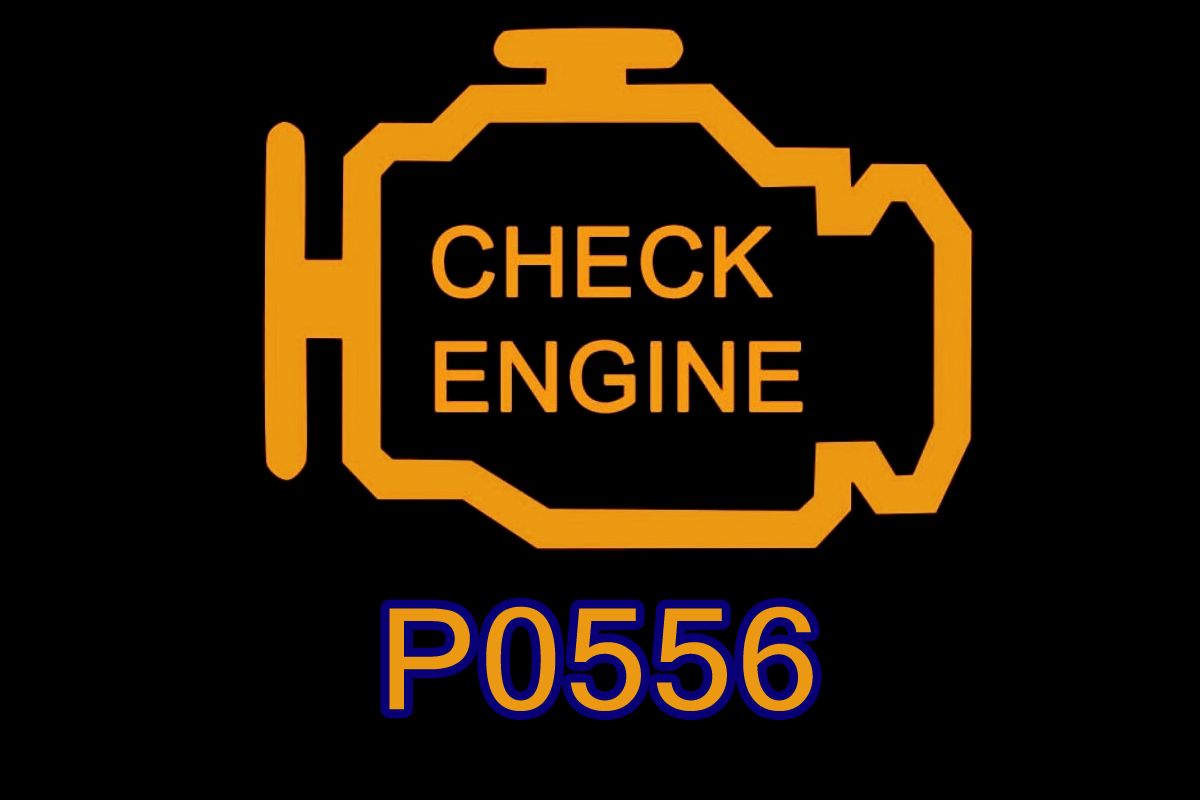
P0556 Brake Booster Pressure Sensor Circuit Range/Performance
The P0556 trouble code indicates that the vehicle’s control module has detected an abnormal range or performance problem in the brake booster pressure sensor circuit.
This is different from P0558 – Brake Booster Pressure Sensor Circuit High Input. P0558 indicates that the electrical signal is too high, while P0556 means the signal may be electrically present but does not behave as expected in relation to the actual brake-booster pressure or vacuum conditions.
In other words, the ECU is essentially saying:
"I can see the brake-booster pressure sensor signal, but the value is not behaving plausibly."
The sensor itself may be faulty, but P0556 can also be caused by wiring problems, incorrect reference voltage, poor ground, vacuum or pressure problems, a restricted hose, an electric vacuum-pump problem, or a mismatch between the sensor reading and the actual physical condition of the brake booster.
What Does the Brake Booster Pressure Sensor Measure?
The brake booster reduces the amount of physical effort required from the driver to apply the brakes.
Depending on the vehicle, the booster may rely on:
-
Engine vacuum
-
An electric vacuum pump
-
Hydraulic pressure
-
An electronically controlled brake-assistance system
The pressure sensor monitors the pressure or vacuum associated with the booster system.
The control module can use this information to determine whether sufficient brake assistance is available and whether the sensor is responding correctly.
A typical electronic sensor may have:
-
A reference-voltage circuit
-
A ground circuit
-
A signal circuit
The signal changes according to the pressure or vacuum detected by the sensor.
What Does "Range/Performance" Mean?
The Range/Performance portion of the code is important.
P0556 does not necessarily mean that the sensor signal is simply too high or too low.
Instead, the control module has determined that the signal is outside the expected operating behavior.
For example, the ECU may expect the sensor value to change when brake-booster vacuum changes.
If the pressure sensor reports almost the same value regardless of operating conditions, the ECU may recognize that the signal is not behaving plausibly.
Another possibility is that the sensor produces a technically valid voltage, but the corresponding pressure value is impossible under the current conditions.
For example:
Brake booster vacuum changes significantly → sensor signal barely changes → ECU detects abnormal sensor performance → P0556
P0556 vs. P0557 vs. P0558
These codes are closely related.
P0556 – Brake Booster Pressure Sensor Circuit Range/Performance
The sensor signal is present, but its behavior or value is not plausible.
P0557 – Brake Booster Pressure Sensor Circuit Low Input
The control module detects a sensor signal that is lower than the expected range.
P0558 – Brake Booster Pressure Sensor Circuit High Input
The control module detects a sensor signal that is higher than the expected range.
This distinction helps determine the diagnostic direction.
With P0557 or P0558, electrical signal level is the primary clue.
With P0556, you should also ask:
Does the sensor value change correctly when the actual brake-booster pressure or vacuum changes?
Common Causes of P0556
Possible causes include:
-
Defective brake booster pressure sensor
-
Sensor contamination or internal failure
-
Vacuum leak
-
Damaged vacuum hose
-
Restricted vacuum hose
-
Faulty check valve
-
Weak or defective electric vacuum pump
-
Engine vacuum problem
-
Incorrect sensor reference voltage
-
Poor sensor ground
-
High resistance in the signal circuit
-
Damaged wiring
-
Corroded connector
-
Loose connector terminal
-
Intermittent electrical connection
-
Incorrect sensor installation
-
Control-module problem
The exact causes depend on the vehicle's brake-booster architecture.
A Sensor Can Be Electrically Correct but Still Wrong
This is one of the most important aspects of diagnosing P0556.
Suppose the pressure sensor receives:
5 V reference → correct
and:
Ground → correct
The sensor also produces a signal voltage that appears reasonable.
That does not necessarily prove that the sensor is functioning correctly.
The ECU is not only looking at the voltage. It can evaluate whether the sensor's output corresponds logically to the operating conditions.
For example:
Engine running → vacuum should increase → sensor signal should respond
If the sensor remains almost unchanged, the ECU may determine that the sensor's performance is implausible.
Vacuum Problems Can Cause P0556
Unlike a pure high-input code such as P0558, P0556 can genuinely involve the physical brake-booster system.
If the sensor is measuring vacuum, the actual vacuum must be capable of reaching the expected level.
Possible mechanical causes include:
-
Cracked vacuum hose
-
Loose hose connection
-
Damaged check valve
-
Vacuum reservoir leak
-
Faulty vacuum pump
-
Insufficient engine vacuum
-
Brake-booster leak
For example:
Vacuum hose leaks → booster vacuum does not reach expected level → sensor reports abnormal pressure/vacuum → ECU detects performance problem → P0556
In this situation, replacing the pressure sensor would not solve the problem.
Engine Vacuum Must Be Considered
On vehicles using engine vacuum, the brake booster depends partly on the engine's ability to generate sufficient vacuum.
A problem with the engine's vacuum generation can therefore affect brake-booster pressure readings.
Possible causes may include:
-
Intake-system problems
-
Vacuum leaks
-
Engine operating problems
-
Incorrect valve operation
-
Damaged vacuum lines
-
Faulty vacuum check valve
However, not every engine vacuum problem will produce P0556.
The actual sensor reading and vehicle architecture must be evaluated.
Electric Vacuum Pump Systems
Some vehicles use an electric vacuum pump instead of relying entirely on engine vacuum.
In these systems, the control module may command the pump when additional brake-booster vacuum is required.
A P0556 diagnosis should then include:
-
Vacuum-pump operation
-
Pump power supply
-
Pump ground
-
Pump control signal
-
Vacuum generation
-
Vacuum retention
-
Pressure-sensor feedback
If the pump cannot create the required vacuum, the sensor may correctly report a condition that the ECU considers abnormal.
Check Valve Problems
The brake booster commonly uses a check valve to maintain vacuum when engine conditions change.
If the check valve does not operate correctly, vacuum may be lost after the engine is switched off or under certain operating conditions.
This can create inconsistent sensor readings.
A faulty check valve may therefore produce an intermittent P0556 even when the sensor itself is functioning normally.
Symptoms of P0556
Symptoms vary considerably.
Possible symptoms include:
-
Check engine light
-
Brake warning light
-
Increased brake-pedal effort
-
Hard brake pedal
-
Reduced brake assistance
-
Brake-system warning message
-
Cruise control becoming unavailable
-
ABS/ESP warnings
-
Electric vacuum pump operating unusually often
-
Intermittent brake-assistance problems
However, the vehicle can sometimes have normal brake-pedal feel despite storing P0556.
This can happen when the sensor's signal is implausible but the brake booster still provides adequate assistance.
Does P0556 Mean the Brake Booster Has Failed?
No.
P0556 is a pressure-sensor circuit range/performance code, not a direct declaration of brake-booster failure.
Consider this example:
Brake booster operates normally → pressure sensor becomes inaccurate → sensor reports an implausible value → ECU detects a performance mismatch → P0556
The mechanical booster can still function correctly.
The opposite is also possible:
Pressure sensor works correctly → booster cannot generate the expected vacuum → sensor reports the abnormal condition → P0556
Therefore, both the electrical sensor circuit and the physical brake-assistance system need to be considered.
Inspect the Sensor and Connector
Start with a physical inspection.
Check the sensor and connector for:
-
Corrosion
-
Moisture
-
Loose terminals
-
Damaged pins
-
Broken wires
-
Contamination
-
Poor connector locking
-
Damaged wiring insulation
Also inspect the sensor's pressure or vacuum connection if the sensor is connected to a hose.
A cracked hose near the sensor can be just as important as the sensor itself.
Check the 5-Volt Reference
If the sensor uses a 5-volt reference, measure the reference voltage directly at the sensor.
The exact acceptable value depends on the vehicle.
If the reference voltage is incorrect, investigate the reference circuit before replacing the sensor.
This is especially important if other sensors on the vehicle also use the same reference supply.
A shorted sensor elsewhere can sometimes affect a shared 5-volt reference circuit.
Check the Sensor Ground
A poor ground can distort the sensor output.
Check:
-
Ground continuity
-
Ground voltage
-
Voltage drop under appropriate conditions
Do not assume that a simple continuity test proves the ground circuit is good.
A ground can have enough resistance to cause an incorrect sensor reading while still showing continuity with a multimeter.
Check the Signal Voltage
Monitor the sensor signal while the brake-booster conditions change.
The exact voltage-to-pressure relationship is manufacturer-specific.
What matters is whether the signal responds logically and consistently.
For example, if the booster vacuum changes but the sensor signal remains fixed, the sensor or its signal circuit becomes suspicious.
Use Live Data
A capable scan tool can make P0556 diagnosis much easier.
Look for:
-
Brake booster pressure
-
Brake booster vacuum
-
Sensor voltage
-
Brake-pedal status
-
Brake-switch status
-
Vacuum-pump command
-
Vacuum-pump status
-
System voltage
The most useful information is often the relationship between the sensor reading and actual operating conditions.
A single sensor value is less useful than observing how that value changes.
Compare Sensor Data With Physical Measurements
If possible, compare the electronic sensor reading with an independent pressure or vacuum measurement.
For example:
Mechanical vacuum measurement → actual booster vacuum
versus:
Scan tool → pressure sensor reported value
If the mechanical measurement changes normally but the sensor value does not, the sensor or electrical circuit becomes much more likely.
If both measurements indicate insufficient vacuum, investigate the booster system itself.
This is a much stronger diagnostic method than simply replacing the sensor.
Intermittent P0556 Faults
P0556 can sometimes be intermittent.
The problem may appear only:
-
During cold starts
-
After repeated brake applications
-
During acceleration
-
During deceleration
-
At idle
-
When the vacuum pump operates
-
When the steering wheel or harness moves
-
During high electrical loads
Freeze-frame data can help identify the operating conditions when the code was recorded.
If the vehicle has a history of intermittent electrical problems, monitor the sensor signal while gently moving the harness and connectors.
Check the Brake Switch
The brake switch does not normally cause a P0556 pressure-sensor range/performance fault directly, but it can be relevant to the overall diagnosis.
The control module may compare:
Brake pedal input
with:
Brake-booster pressure/vacuum response
If these signals do not agree logically, additional brake-system codes may be stored.
If P0556 appears together with brake-switch or cruise-control codes, inspect the brake-switch circuit as well.
Why Cruise Control May Stop Working
Cruise control depends on reliable brake-system information.
If the ECU cannot determine whether the brake booster system is operating correctly, it may disable cruise control as a safety precaution.
This can produce a situation where:
-
The engine operates normally.
-
The brake pedal feels normal.
-
Cruise control does not activate.
-
P0556 is stored.
The cruise-control system may therefore be reacting to a brake-system monitoring fault rather than having a fault in its own switch or actuator.
A Practical Diagnostic Procedure
1. Scan all modules
Record P0556 and any additional engine, ABS, brake, or communication codes.
2. Check freeze-frame data
Look at engine speed, vehicle speed, system voltage, brake status, and sensor data when the fault occurred.
3. Inspect the sensor
Check the sensor, connector, wiring, and pressure/vacuum connection.
4. Check reference voltage
Verify the sensor receives the correct reference supply.
5. Check sensor ground
Perform an appropriate ground test and voltage-drop test.
6. Monitor sensor signal
Observe how the signal changes when brake-booster pressure or vacuum changes.
7. Check the physical booster system
Inspect vacuum hoses, check valves, reservoirs, and the vacuum pump where applicable.
8. Compare electronic and physical measurements
If possible, compare scan-tool data with an independent pressure or vacuum measurement.
9. Test the sensor
If the mechanical system is working correctly but the sensor output is inaccurate or inconsistent, test or replace the sensor according to the manufacturer's procedure.
10. Verify the repair
Clear the DTC and reproduce the operating conditions that originally caused the fault.
Should You Replace the Sensor Immediately?
No.
P0556 is exactly the type of code where replacing the sensor without testing can lead to an unnecessary repair.
For example, if the actual problem is a cracked vacuum hose:
Cracked hose → insufficient vacuum → abnormal sensor reading → P0556
A new sensor will still report the same abnormal physical condition.
Likewise, if the sensor has a perfect signal but the ECU is receiving an incorrect reference or ground, replacing the sensor will not correct the circuit.
Is P0556 Serious?
The seriousness depends on whether the fault affects actual brake assistance or only the monitoring signal.
If the brake pedal feels normal and the fault appears to be limited to sensor performance, the vehicle may remain operational, but the fault should still be diagnosed.
If there is:
-
Hard brake pedal
-
Increased pedal effort
-
Reduced brake assistance
-
Brake warning light
-
ABS/ESP warning
-
Unusual vacuum-pump operation
-
Any change in braking performance
the vehicle should be inspected promptly.
A brake-booster problem should never be treated as merely an engine-emissions fault.
Final Diagnostic Summary
P0556 – Brake Booster Pressure Sensor Circuit Range/Performance means the control module has detected that the brake-booster pressure sensor signal is not behaving within the expected range or does not correspond correctly to actual system conditions.
The key difference from P0557 and P0558 is that P0556 is not simply about the signal being low or high. The ECU is questioning the plausibility and performance of the sensor signal.
The most effective diagnostic path is:
Physical brake-booster condition → sensor reference → sensor ground → sensor signal → live-data response → wiring → sensor → control module
If the actual brake-booster pressure or vacuum is wrong, investigate the mechanical system.
If the physical pressure/vacuum is correct but the sensor signal is wrong, investigate the sensor and its electrical circuit.
And if both the physical measurement and sensor signal are correct but the ECU continues to report an implausible value, then the control module and its signal-processing circuit can finally be considered.
The central principle with P0556 is simple: do not confuse a sensor performance fault with automatic brake-booster failure. First determine whether the problem is with the physical pressure/vacuum, the sensor's electrical signal, or the ECU's interpretation of that signal.