TR
TR EN
EN

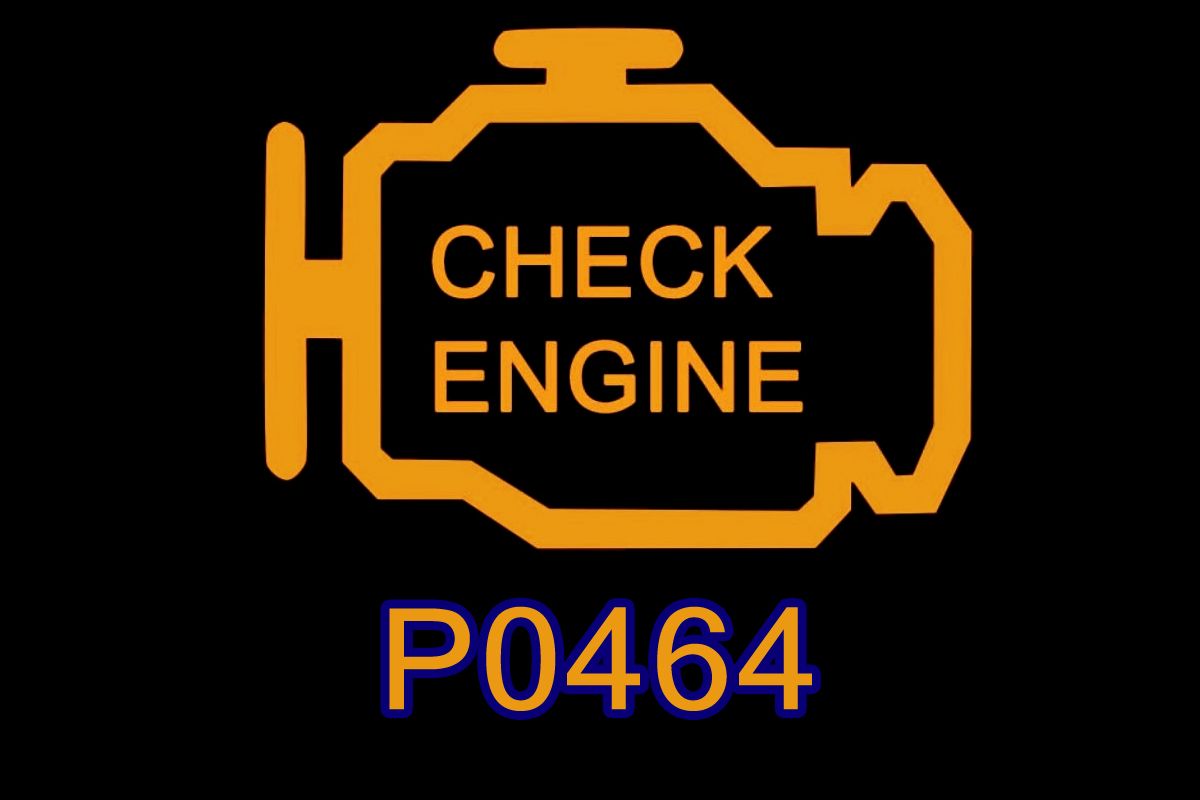
P0464 Fuel Level Sensor Circuit Intermittent
The P0464 trouble code means the engine control module (ECM/PCM) has detected an intermittent signal from the fuel level sensor circuit.
The key word is “Intermittent.” This means the fuel-level signal is not necessarily permanently high, permanently low, or completely absent. Instead, the electrical signal can drop out, fluctuate, suddenly change, or become implausible and then return to normal.
This is why P0464 can be more difficult to diagnose than a simple fuel-level sensor circuit high or low code.
The fuel gauge may appear to work normally most of the time, yet the ECM can still detect brief interruptions in the sensor signal.
How the fuel level sensor works
The fuel level sensor is usually installed inside the fuel tank and is commonly integrated into the fuel pump module.
A typical design uses a float connected to a variable-resistance mechanism.
As the fuel level changes, the float moves up and down. This movement changes the electrical resistance of the sensor, allowing the vehicle to determine the approximate amount of fuel remaining.
The signal may then be used by several systems, including:
-
Instrument cluster fuel gauge
-
ECM/PCM
-
Body control module
-
Fuel-range calculation
-
EVAP diagnostics
-
Low-fuel warning system
-
Trip computer
However, modern vehicles do not all use the same architecture.
Some systems send the fuel-level signal directly to the cluster or body module and then transmit the calculated fuel level to other modules through the vehicle's communication network.
Therefore, P0464 does not necessarily mean that the ECM is physically connected directly to the fuel-level sender.
What does “Intermittent” mean?
With P0464, the ECM is detecting a signal that comes and goes or behaves abnormally for a period of time.
For example, the fuel-level signal might normally indicate approximately 50% fuel.
While driving, a damaged connection could briefly cause the signal to disappear.
The system might then see:
50% → 0% → 50%
or:
50% → 80% → 45% → 50%
depending on the circuit design and failure.
The fault may last only a fraction of a second, making it difficult to reproduce when the vehicle is sitting in a workshop.
This is one reason an intermittent fuel-level fault should not automatically lead to replacement of the entire fuel pump module.
Common causes of P0464
Worn fuel level sender
The variable-resistance track inside the fuel-level sensor can wear over time.
This is particularly possible around positions where the float spends most of its life, such as the normal fuel-level range.
A worn contact can intermittently lose electrical continuity as the vehicle moves or the float changes position.
Loose or damaged connector
The connector at the fuel pump/fuel sender module is an important inspection point.
A loose terminal, corrosion or poor terminal tension can create an intermittent signal.
Broken or partially broken wiring
A conductor can be damaged internally while still appearing intact from the outside.
Vibration, movement of the fuel tank, chassis flex and road impacts can cause the damaged section to open and close intermittently.
Poor ground
Depending on the fuel-level circuit design, a poor ground can cause the signal to become unstable.
A ground connection can look visually acceptable while developing excessive resistance under load.
Fuel pump module connection problem
On many vehicles, the fuel level sender is incorporated into the fuel pump assembly.
The internal connector or wiring between the sender and the module can therefore be responsible for an intermittent fault.
Float mechanism problem
The float can become restricted, damaged or mechanically obstructed.
If it cannot move smoothly, the reported fuel level may jump or become inconsistent.
Instrument cluster or control module problem
The cluster or another body-control module may process the fuel-level information before it reaches the ECM.
A communication problem or internal module fault can therefore sometimes create a fuel-level-related diagnostic code.
Symptoms of P0464
The most obvious symptom is often an abnormal fuel gauge.
You may notice:
-
Fuel gauge jumping up and down
-
Fuel gauge suddenly dropping
-
Fuel gauge suddenly rising
-
Incorrect fuel-level indication
-
Fuel gauge temporarily reading empty
-
Low-fuel warning appearing incorrectly
-
Estimated driving range changing unexpectedly
-
Check Engine Light
-
Fuel level remaining fixed at one value
-
Fuel level changing after hitting a bump or during cornering
However, the fuel gauge can also appear completely normal.
An intermittent electrical problem may happen too quickly for the driver to notice.
Why can the fuel gauge work normally while P0464 is stored?
This is a common source of confusion.
The fuel gauge and ECM do not necessarily receive the fuel-level information through exactly the same path.
For example, the fuel sender may communicate with a body module or instrument cluster, which then sends information to the ECM over CAN communication.
Alternatively, the ECM may monitor the sender circuit directly.
Because the architecture differs between vehicles, a functioning fuel gauge does not completely eliminate the possibility of P0464.
The important question is:
Which module actually receives and processes the fuel-level signal on this particular vehicle?
That information should be determined from the wiring diagram and service information.
How P0464 should be diagnosed
Intermittent faults require a slightly different approach from permanent circuit faults.
1. Scan all modules
Start by scanning the entire vehicle rather than looking only at the ECM.
Check for additional codes involving:
-
Fuel level
-
Fuel pump
-
Body control
-
Instrument cluster
-
CAN communication
-
Low voltage
-
EVAP
-
Fuel system
A related communication or voltage code can provide an important clue.
2. Check the freeze-frame data
If freeze-frame information is available, examine the conditions when the fault occurred.
Look at:
-
Fuel level
-
Vehicle speed
-
Engine RPM
-
Battery/system voltage
-
Vehicle operating conditions
If P0464 repeatedly appears at a particular fuel level, this can be especially useful.
For example, if the fault tends to occur when the tank is around half full, the worn section of the sender's resistance track may be a strong suspect.
3. Monitor the fuel-level data
Use the scan tool to monitor the fuel-level parameter while driving, if possible.
Look for sudden changes that do not correspond with actual fuel movement.
An intermittent signal might be revealed when:
-
Driving over rough roads
-
Accelerating
-
Braking
-
Turning
-
Changing fuel level through normal driving
A scan tool capable of graphing the parameter can make these changes much easier to see.
4. Perform a wiggle test
Inspect and gently manipulate the wiring and connectors while monitoring the fuel-level signal.
Pay particular attention to:
-
Fuel pump module connector
-
Harness near the fuel tank
-
Ground points
-
Harness routing
-
Connector terminals
If the fuel-level value suddenly changes while the harness is moved, the wiring or connector becomes a strong suspect.
5. Test the sender circuit
The exact procedure depends on the vehicle.
The sender may be tested by measuring resistance through its operating range.
Move the float slowly and check whether the resistance changes smoothly.
A defective sender may show:
-
Sudden open circuit
-
Sudden resistance jumps
-
Dead spots
-
Unstable resistance
-
Incorrect resistance compared with manufacturer specifications
There is no universal fuel-level sender resistance specification, so generic resistance values should not be used as a definitive diagnosis.
6. Inspect the fuel sender mechanically
If the electrical testing points toward the sender, inspect the float and mechanism.
Check for:
-
Restricted movement
-
Damaged float
-
Bent arm
-
Internal wear
-
Fuel contamination where applicable
-
Damaged internal wiring
The float should normally move smoothly through its operating range.
A particularly useful clue: fuel level and road movement
Because the fuel sender is located inside the tank, intermittent faults can sometimes be reproduced by vehicle movement.
If the fuel gauge behaves normally while parked but suddenly jumps when the vehicle goes over bumps, turns sharply, or brakes, both the sender mechanism and its electrical connection deserve close attention.
The problem could be mechanical movement of the float, but it could also be a connector or wiring fault responding to vibration.
This is why simply checking the sender with the vehicle stationary may not always reveal the problem.
Can P0464 be caused by a bad fuel pump?
Not necessarily.
This is an important distinction.
On many vehicles, the fuel level sender and fuel pump are installed together in one module.
However, the P0464 code concerns the fuel-level sensing circuit, not automatically the fuel-pump motor.
The fuel pump can operate perfectly while the fuel-level sender has an intermittent electrical fault.
Therefore, replacing the entire fuel pump assembly solely because P0464 is stored may be unnecessary.
If the sender is available separately, replacing only the defective sender may be the appropriate repair. On some vehicles, however, the sender is integrated into the complete pump module.
Can low battery voltage cause P0464?
It can potentially affect electronic fuel-level processing, especially on vehicles where the fuel-level information is handled by electronic modules.
However, low system voltage should not be assumed to be the cause without evidence.
If P0464 appears together with multiple unrelated sensor or communication codes, checking:
-
Battery condition
-
Charging system
-
Grounds
-
Main power supplies
becomes particularly important.
A single voltage problem can sometimes create several seemingly unrelated faults.
Can P0464 affect the engine?
Usually, the engine can continue operating normally because the fuel-level sender is not responsible for determining the actual fuel pressure or injector quantity.
However, the fuel level can be important to other vehicle functions.
Depending on the vehicle, incorrect fuel-level information can affect:
-
EVAP diagnostic testing
-
Fuel-range calculation
-
Low-fuel warning
-
Emissions monitor operation
In some vehicles, certain EVAP tests are permitted only when the fuel level is within a specified range.
Therefore, an incorrect fuel-level signal can sometimes prevent emissions diagnostics from completing even when the engine itself runs normally.
P0464 vs P0461, P0462 and P0463
These codes describe different types of fuel-level signal problems.
P0461 – Fuel Level Sensor Circuit Range/Performance
The signal exists, but the ECM considers its value or behavior implausible.
P0462 – Fuel Level Sensor Circuit Low Input
The electrical input from the fuel-level sensor is lower than expected.
P0463 – Fuel Level Sensor Circuit High Input
The electrical input is higher than expected.
P0464 – Fuel Level Sensor Circuit Intermittent
The signal becomes unstable, disappears, or behaves abnormally intermittently.
This distinction is useful because P0464 points toward a problem that may be difficult to reproduce, particularly with wiring, connector terminals or a worn sender track.
What should be replaced?
The correct repair depends on what the testing reveals.
Possible repairs include:
-
Repairing damaged wiring
-
Repairing a poor ground
-
Repairing or replacing a connector
-
Replacing the fuel-level sender
-
Repairing the sender's internal wiring
-
Replacing the fuel pump module if the sender is integrated and cannot be serviced separately
-
Repairing a damaged float mechanism
-
Diagnosing the instrument cluster or body module if the signal path passes through it
The important point is that P0464 is not automatically a fuel-pump replacement code.
Final Diagnostic Summary
P0464 means the ECM/PCM has detected an intermittent problem with the fuel-level sensor signal.
The fault may be caused by a worn fuel-level sender, loose connector, damaged wiring, poor ground, an unstable internal connection, a sticking float, or—depending on the vehicle's architecture—a problem in the module or communication path that processes the fuel-level information.
Because the fault is intermittent, the most effective diagnosis is to monitor the fuel-level data while moving the vehicle or harness, inspect the fuel-tank wiring and connectors, and test the sender through its complete operating range.
If the fuel gauge works normally, P0464 should not simply be dismissed. An intermittent electrical fault can exist even when the gauge appears correct, and the fault may become visible only under vibration or at a particular position of the fuel-level sender.