TR
TR EN
EN

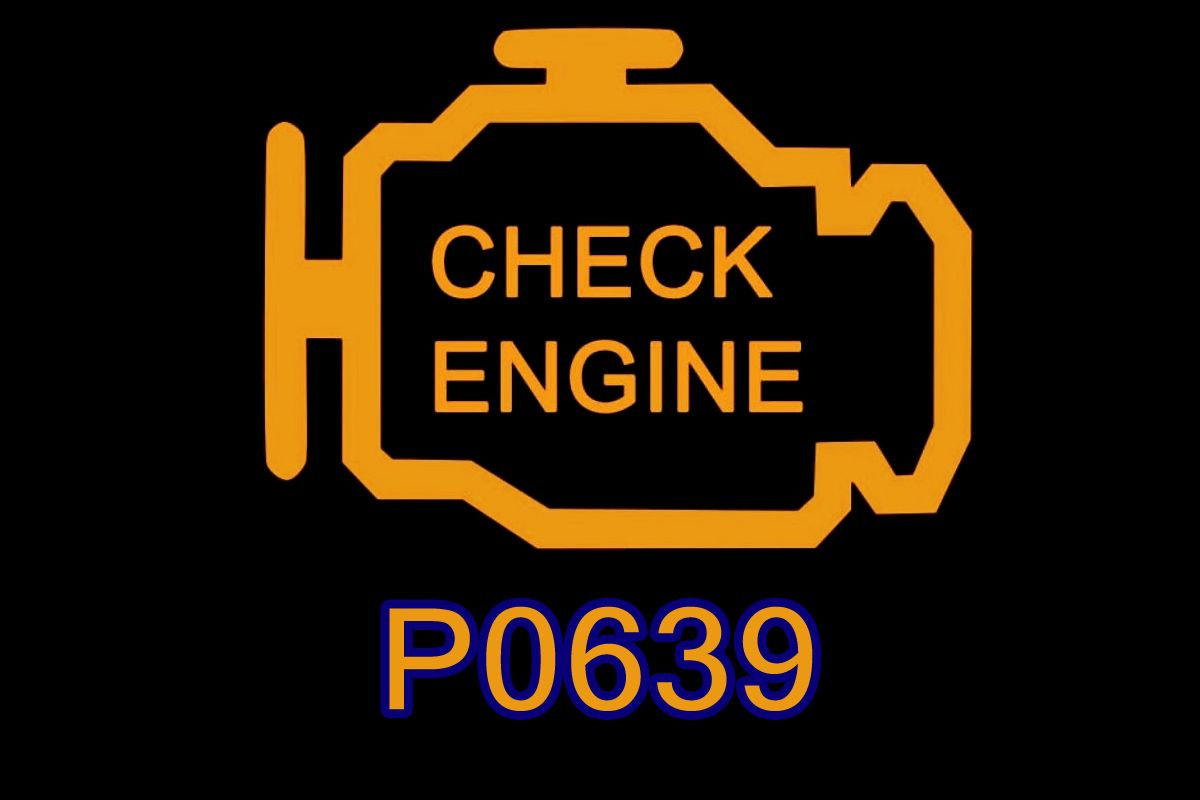
P0639 Throttle Actuator Control Range/Performance (Bank 2)
The P0639 – Throttle Actuator Control Range/Performance (Bank 2) diagnostic trouble code (DTC) indicates that the ECM/PCM has detected a problem with the commanded position or performance of the throttle actuator on Bank 2.
This code is associated with an electronic throttle control system. Instead of relying on a traditional mechanical cable between the accelerator pedal and throttle body, the ECM electronically controls the throttle actuator.
When the control module commands a particular throttle position but the actual throttle position does not respond as expected, P0639 may be stored.
An important point is that P0639 does not automatically mean the throttle body itself is defective. The problem can involve the throttle actuator, throttle-position sensors, wiring, connectors, power supply, mechanical movement, or the control system.
What Does P0639 Mean?
In simple terms:
The ECM/PCM sees a difference between the requested throttle position and the throttle position it actually detects on Bank 2.
The electronic throttle system can be simplified as:
Accelerator Pedal → ECM/PCM → Throttle Actuator → Throttle Valve → Throttle Position Feedback
The ECM continuously compares:
-
Desired throttle position
-
Actual throttle position
-
Throttle motor response
-
Throttle-position sensor signals
If the actual position does not follow the commanded position within an expected range, P0639 can be triggered.
What Does "Bank 2" Mean?
Bank 2 refers to the side of the engine that does not contain cylinder number 1 on an engine with multiple cylinder banks.
This distinction is important because P0639 is specifically identified as a Bank 2 throttle actuator control code.
However, the exact throttle arrangement varies between engine designs.
Some engines have separate throttle actuators or throttle bodies for each bank.
Other vehicles may use a single throttle body even though the engine has two banks.
Therefore, Bank 2 does not automatically mean that every vehicle has a separate physical throttle body on that bank.
What Is a Throttle Actuator?
The throttle actuator is the mechanism that electronically controls the throttle valve.
In a typical electronic throttle body, the assembly may contain:
-
Electric throttle motor
-
Throttle plate
-
Throttle-position sensor(s)
-
Internal gears
-
Return mechanism
-
Electrical connector
The ECM controls the motor to open or close the throttle plate.
How Does Electronic Throttle Control Work?
The system generally works like this:
Driver presses accelerator → Accelerator position sensors detect input → ECM calculates desired throttle opening → ECM commands throttle motor → Throttle plate moves → Position sensors report actual position → ECM compares actual vs. commanded position
This process occurs continuously.
If the ECM commands 40% throttle opening but the feedback indicates that the throttle remains at 15%, the control module may determine that the actuator is not performing within the expected range.
What Causes P0639?
Possible causes include:
-
Faulty throttle actuator
-
Dirty throttle body
-
Carbon buildup
-
Throttle plate sticking
-
Faulty throttle-position sensor
-
Faulty accelerator-pedal position sensor
-
Damaged wiring
-
Corroded connector
-
Poor electrical connection
-
Low system voltage
-
Throttle motor failure
-
Internal throttle-body gear damage
-
Mechanical obstruction
-
Throttle adaptation problem
-
ECM/PCM control problem
The exact cause depends on the vehicle.
Can a Dirty Throttle Body Cause P0639?
Yes, potentially.
Carbon and oil deposits can restrict throttle-plate movement.
For example:
Commanded position → 30%
but because the throttle plate is sticking:
Actual position → 15%
The ECM can detect the discrepancy and potentially store P0639.
However, cleaning the throttle body is not always the correct solution.
If the actuator motor, position sensor or internal gears are defective, cleaning may not solve the problem.
Can a Faulty Throttle Body Cause P0639?
Yes.
A defective electronic throttle body can cause:
-
Slow actuator movement
-
Incorrect position feedback
-
Intermittent operation
-
Sticking throttle plate
-
Motor failure
-
Internal gear damage
If the actual throttle position consistently fails to follow the commanded position, the throttle body becomes a strong suspect.
Can the Throttle Position Sensor Cause P0639?
Yes.
Electronic throttle bodies generally use one or more throttle-position sensors to tell the ECM where the throttle plate is located.
If the sensor produces an incorrect or inconsistent signal, the ECM may believe that the throttle actuator is not following its command.
Possible causes include:
-
Internal sensor failure
-
Wiring damage
-
Connector problems
-
Incorrect sensor signal
Can the Accelerator Pedal Sensor Cause P0639?
Potentially.
The accelerator pedal typically contains one or more position sensors.
If the pedal signal is incorrect, the ECM may calculate an incorrect desired throttle position.
Depending on the vehicle, this can contribute to throttle actuator-related DTCs.
If P0639 appears together with accelerator-pedal codes, the pedal circuit should be investigated.
Can Wiring Cause P0639?
Yes.
Wiring problems can interfere with both the throttle actuator motor and position feedback.
Inspect for:
-
Broken wires
-
Chafed insulation
-
Short circuits
-
Corrosion
-
Loose terminals
-
Water intrusion
-
Damaged connectors
-
Poor previous repairs
Because the throttle body is located in the engine compartment, its wiring is exposed to heat, vibration and contamination.
Can a Bad Connector Cause P0639?
Yes.
A poor electrical connection can cause intermittent actuator operation or incorrect position feedback.
Inspect the throttle connector for:
-
Bent pins
-
Corrosion
-
Loose terminals
-
Pushed-back terminals
-
Water intrusion
-
Damaged locking mechanism
A connector that looks physically intact can still have poor terminal contact.
Can Low Battery Voltage Cause P0639?
Yes, potentially.
Electronic throttle actuators can require considerable electrical power.
Low system voltage can affect:
-
Throttle motor operation
-
ECM operation
-
Sensor readings
-
Actuator response
Check the battery and charging system if P0639 appears alongside multiple voltage-related DTCs.
Can a Bad Alternator Cause P0639?
Potentially.
An alternator that produces unstable or insufficient voltage can interfere with electronic throttle operation.
However, P0639 should not automatically be blamed on the alternator.
The charging system should be tested rather than assumed to be the cause.
Can the ECM/PCM Cause P0639?
Yes, but this is usually not the first component to replace.
The ECM controls the throttle actuator and interprets its position signals.
An internal ECM fault could theoretically cause:
-
Incorrect actuator command
-
Missing control signal
-
Incorrect interpretation of position feedback
However, throttle-body wiring, sensors, power supply and mechanical operation should be verified first.
Symptoms of P0639
Possible symptoms include:
-
Check Engine Light
-
Reduced engine power
-
Poor acceleration
-
Throttle hesitation
-
Unstable idle
-
Limited RPM
-
Poor throttle response
-
Engine stalling
-
Limp mode
-
Accelerator pedal response problems
-
Difficulty maintaining engine speed
The severity depends on the nature of the throttle-control problem.
Can P0639 Cause Limp Mode?
Yes.
This is one of the more important consequences of an electronic throttle fault.
Because the throttle is directly involved in engine torque control, the ECM may enter a protective mode when it cannot reliably control the throttle.
Possible results include:
-
Limited engine power
-
Limited RPM
-
Reduced accelerator response
-
Fixed or restricted throttle opening
-
Warning messages
The exact behavior varies by manufacturer.
Can P0639 Cause a No-Start Condition?
Potentially, but not always.
A severe electronic throttle problem can prevent the engine from operating correctly.
However, many vehicles will still start while limiting throttle operation.
If the engine cranks but will not start, other DTCs and engine-control parameters should also be checked.
Can P0639 Cause Stalling?
Yes, potentially.
If the throttle actuator cannot maintain the required position, the ECM may struggle to control airflow into the engine.
This can contribute to:
-
Stalling
-
Unstable idle
-
Sudden RPM drops
-
Poor response after starting
However, stalling has many possible causes, so P0639 should be diagnosed alongside other information.
Can P0639 Cause Poor Acceleration?
Yes.
If the throttle plate does not open as commanded, the engine may not receive the airflow required for acceleration.
The driver may notice:
-
Delayed throttle response
-
Hesitation
-
Weak acceleration
-
Reduced power
Can P0639 Cause High or Low Idle?
Potentially.
An incorrectly positioned throttle plate can affect the amount of air entering the engine.
Depending on the failure, the result may be:
-
High idle
-
Low idle
-
Fluctuating idle
-
Rough idle
Can P0639 Be Caused by Throttle Body Cleaning?
Indirectly, yes.
Cleaning a throttle body does not normally create P0639 by itself.
However, problems can occur if:
-
The throttle plate is forced manually
-
The connector is damaged
-
Wiring is disturbed
-
The throttle body is improperly reinstalled
-
An adaptation procedure is required afterward
Some electronic throttle bodies should not have the throttle plate forcibly opened by hand.
The manufacturer's procedure should be followed.
Does P0639 Require Throttle Body Relearning?
Potentially.
Some vehicles require a throttle adaptation or relearn procedure after:
-
Throttle-body replacement
-
Throttle-body cleaning
-
Battery disconnection
-
ECM replacement
-
Accelerator-pedal replacement
Other vehicles perform adaptation automatically.
If the vehicle manufacturer specifies a relearn procedure, it should be performed after the relevant repair.
How Is P0639 Diagnosed?
A systematic diagnosis is much more reliable than immediately replacing the throttle body.
1. Scan all control modules
Record:
-
Stored DTCs
-
Pending DTCs
-
Freeze-frame data
-
Accelerator-pedal codes
-
Throttle-position codes
-
Voltage codes
-
Communication codes
Additional codes can reveal whether the problem is electrical or mechanical.
2. Check battery and charging voltage
Verify that system voltage is within specification.
3. Inspect the throttle body
Look for:
-
Carbon buildup
-
Oil contamination
-
Mechanical obstruction
-
Damaged housing
-
Signs of water intrusion
4. Inspect the connector
Check terminals and wiring carefully.
5. Check throttle actuator power and ground
Verify that the actuator receives the required electrical supply.
6. Check throttle-position signals
Compare the sensor readings while the throttle moves.
7. Compare commanded and actual throttle position
Use a capable scan tool to monitor:
-
Desired throttle position
-
Actual throttle position
-
Accelerator-pedal position
-
Throttle sensor signals
8. Test actuator operation
Determine whether the throttle motor responds correctly to commands.
9. Check mechanical movement
The throttle plate should move smoothly without sticking.
10. Perform throttle adaptation if required
Follow the manufacturer's procedure.
11. Test the ECM
Only after the external system has been verified should an ECM problem be considered.
Why Is Comparing Commanded and Actual Position Important?
This is one of the most useful diagnostic steps for P0639.
Suppose the ECM commands:
Throttle position: 50%
but the feedback reports:
Actual position: 20%
The ECM can recognize that the actuator is not following its command.
Possible causes include:
-
Sticking throttle plate
-
Weak motor
-
Internal gear damage
-
Low voltage
-
Wiring problem
-
Position sensor fault
This comparison helps distinguish an actual actuator problem from a control-signal problem.
Can a Multimeter Diagnose P0639?
Yes, partially.
A multimeter can be used to test:
-
Power supply
-
Ground
-
Wiring continuity
-
Voltage drop
-
Sensor circuits
-
Control circuit voltage
However, a scan tool is often essential because P0639 involves a comparison between commanded and actual throttle position.
Can an Oscilloscope Help Diagnose P0639?
Yes.
An oscilloscope can reveal:
-
Throttle-position sensor signal problems
-
Signal dropouts
-
Electrical noise
-
Intermittent wiring faults
-
Motor-control abnormalities
This can be especially useful when the fault occurs intermittently.
What If P0639 Appears Only During Hard Acceleration?
This can be an important clue.
If the throttle works normally during gentle driving but P0639 occurs during rapid acceleration, investigate:
-
Throttle actuator response
-
Power supply stability
-
Connector movement
-
Wiring under engine movement
-
Throttle-position sensor signal
-
Mechanical sticking
-
Accelerator-pedal signal
The actuator may perform correctly at low demand but fail when rapid movement or a larger throttle opening is requested.
What If Cruise Control Works Normally?
Normal cruise-control operation does not automatically rule out a throttle actuator problem.
Depending on the vehicle, cruise control may command the throttle differently from direct accelerator-pedal input.
If P0639 occurs only during aggressive pedal input, the diagnostic process should compare:
Accelerator pedal command → Desired throttle → Actual throttle
under both normal and cruise-control operation.
This can help identify whether the fault is related to a particular operating condition.
What If the Throttle Works but P0639 Keeps Returning?
A throttle valve can appear to work normally while still having an electrical feedback problem.
For example:
-
Position sensor has a dead spot
-
Motor becomes weak under load
-
Wiring has intermittent resistance
-
Connector loses contact during vibration
-
Throttle adaptation is incorrect
Therefore, simply observing that the throttle plate moves is not enough.
What If P0639 Is Intermittent?
An intermittent P0639 may be caused by:
-
Loose connector
-
Broken wire
-
Position sensor dead spot
-
Motor overheating
-
Mechanical sticking
-
Harness movement
-
Low voltage
-
Internal throttle-body fault
Freeze-frame data and live-data monitoring can be extremely useful.
What If P0639 Returns Immediately After Clearing?
If P0639 returns immediately, the fault is probably currently present.
Focus on:
-
Throttle actuator
-
Throttle-position sensors
-
Power supply
-
Ground
-
Wiring
-
Connector
-
Mechanical movement
-
ECM control signal
If it returns only during driving, investigate the operating conditions under which the actuator fails.
Is P0639 a Serious Code?
Yes, P0639 can be a serious drivability fault.
The throttle actuator is an important part of electronic engine control.
A severe failure can cause:
-
Reduced power
-
Limp mode
-
Poor acceleration
-
Stalling
-
Limited throttle response
If the vehicle has severe throttle-control problems, it should not be driven normally until the cause is identified.
Can You Drive With P0639?
If the vehicle runs normally and the code is intermittent, limited driving may be possible.
However, caution is recommended.
Do not continue driving if you experience:
-
Severe loss of power
-
Unpredictable throttle response
-
Stalling
-
Accelerator pedal malfunction
-
Limp mode
-
Inability to accelerate safely
An electronic throttle fault can potentially affect the vehicle's ability to respond predictably to accelerator input.
How Is P0639 Repaired?
The repair depends on the confirmed cause.
Possible repairs include:
-
Cleaning a contaminated throttle body
-
Replacing the throttle body
-
Replacing a throttle-position sensor where separately serviceable
-
Repairing throttle wiring
-
Repairing connectors
-
Repairing power or ground circuits
-
Repairing accelerator-pedal wiring
-
Replacing the accelerator-pedal assembly
-
Performing throttle adaptation
-
Repairing the ECM control circuit
-
Replacing the ECM/PCM in rare cases
The component should be replaced only after testing confirms the fault.
Does P0639 Mean the Throttle Body Is Bad?
No.
This is an important distinction.
P0639 indicates a throttle actuator control range/performance problem, not a guaranteed throttle-body failure.
The actual cause can be:
Throttle body → Position sensor → Accelerator pedal → Wiring → Connector → Power supply → Ground → Mechanical obstruction → ECM
A proper diagnosis should determine which part is responsible.
Can P0639 Be Caused by the Accelerator Pedal?
Yes, potentially.
The ECM uses accelerator-pedal position information to calculate the requested engine torque and throttle opening.
If the pedal sensor provides an incorrect signal, the desired throttle position may be incorrect.
This can create a mismatch that contributes to throttle-control faults.
Can P0639 Be Caused by Low System Voltage?
Yes, potentially.
The electronic throttle motor needs adequate electrical power.
If battery or charging voltage drops significantly, actuator performance can be affected.
Check:
-
Battery condition
-
Charging voltage
-
Voltage during cranking
-
Voltage under electrical load
-
Ground voltage drop
P0639 vs. P0638
These codes are closely related.
P0638 – Throttle Actuator Control Range/Performance (Bank 1)
P0639 – Throttle Actuator Control Range/Performance (Bank 2)
The key distinction is the affected bank.
P0638 concerns Bank 1, while P0639 concerns Bank 2.
The exact physical arrangement depends on the engine design.
P0639 vs. P2100
These codes can both involve electronic throttle control, but they describe different problems.
P0639
Throttle Actuator Control Range/Performance (Bank 2)
This focuses on whether the throttle actuator is performing within the expected range.
P2100
Throttle Actuator Control Motor Circuit/Open
This focuses on an open condition in the throttle actuator motor circuit.
Other throttle actuator DTCs can further specify:
-
Circuit open
-
Circuit low
-
Circuit high
-
Position performance
-
Forced limited power
The complete set of codes should therefore be analyzed together.
Common Diagnostic Mistakes
Replacing the throttle body immediately
P0639 does not prove the throttle body is defective.
Ignoring the accelerator pedal
The pedal position signal is part of the electronic throttle-control strategy.
Cleaning the throttle body without checking the electronics
A clean throttle body can still have a defective motor or position sensor.
Ignoring wiring
Intermittent wiring faults can produce exactly the same symptoms as a defective throttle body.
Replacing the ECM too quickly
The ECM should be considered only after the throttle, wiring, power and sensors have been tested.
Skipping throttle adaptation
Some vehicles require a relearn procedure after throttle-body service.
How Do You Clear P0639?
The recommended diagnostic sequence is:
Scan all modules → Record all DTCs → Check battery and charging voltage → Inspect throttle body → Inspect connector → Check power and ground → Monitor accelerator-pedal position → Monitor commanded throttle position → Monitor actual throttle position → Test throttle actuator → Inspect wiring → Check mechanical movement → Perform adaptation if required → Repair confirmed fault → Clear DTCs → Test-drive → Rescan
If P0639 returns, the underlying throttle-control problem has not been properly resolved.
Final Thoughts on P0639
P0639 – Throttle Actuator Control Range/Performance (Bank 2) indicates that the ECM/PCM has detected that the Bank 2 throttle actuator is not performing within the expected operating range.
The most important areas to investigate are:
Throttle actuator → Throttle-position sensor → Accelerator pedal → Wiring → Connector → Power supply → Ground → Mechanical movement → ECM
The key point is that P0639 does not automatically mean the throttle body needs to be replaced.
A throttle body can move normally during a basic inspection while still having a position-sensor dead spot, weak actuator motor, internal gear problem or intermittent electrical connection.
The most reliable diagnosis is to compare desired throttle position with actual throttle position, while simultaneously checking actuator power, grounds, sensor signals and wiring. This approach can prevent unnecessary replacement of an expensive throttle assembly or ECM.