TR
TR EN
EN

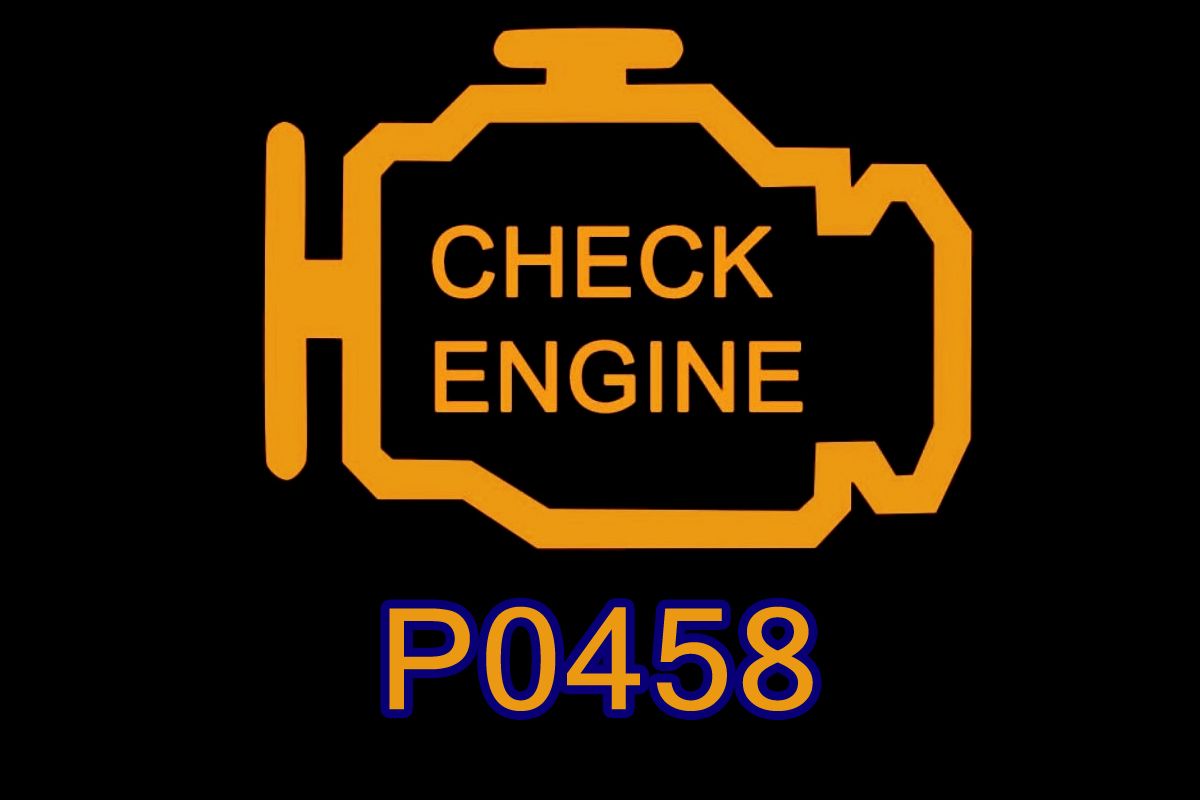
P0458 Evaporative Emission System Purge Control Valve Circuit Low
The P0458 diagnostic trouble code means the engine control module (ECM/PCM) has detected an abnormally low electrical condition in the EVAP purge control valve circuit.
In simpler terms, the computer is commanding or monitoring the EVAP purge valve, but the electrical signal in its control circuit is lower than expected.
This is primarily an electrical circuit fault. It does not automatically mean that the purge valve itself is defective, and it does not mean that EVAP pressure or purge flow is necessarily too low.
The distinction matters because “Low” in P0458 refers to the electrical circuit, not the amount of fuel vapor flowing through the system.
What the EVAP purge valve does
The EVAP system prevents fuel vapors from escaping from the fuel tank into the atmosphere.
Fuel vapors are stored in a charcoal canister. When the engine is operating under suitable conditions, the ECM opens the purge valve and allows those vapors to enter the intake system, where they are burned by the engine.
The basic path is:
Fuel tank → charcoal canister → purge valve → intake manifold → engine
The purge valve therefore acts like an electronically controlled gate between the EVAP system and the engine.
When the valve is commanded to open, vapor can be drawn into the intake. When it is closed, the system should prevent unwanted vapor flow.
P0458 indicates that there is an abnormal electrical condition in the circuit controlling this valve.
What does “Circuit Low” mean?
This is where P0458 is often misunderstood.
P0458 does not mean “low purge flow.”
It means the ECM is seeing a voltage or electrical condition in the purge-control circuit that is lower than the expected value.
Depending on the particular vehicle's electrical design, a low circuit condition can be caused by:
-
A short to ground
-
Damaged wiring
-
A faulty purge valve solenoid
-
A failed internal valve coil
-
A connector problem
-
Poor electrical connections
-
Incorrect wiring repairs
-
A power-supply problem
-
A control-side problem
-
In rare cases, an ECM fault
The exact circuit behavior depends on how the manufacturer controls the purge valve.
The purge valve is not necessarily the problem
A common diagnostic mistake is to see P0458 and immediately replace the EVAP purge valve.
Sometimes that will fix the problem. Sometimes it will not.
For example, imagine that the purge valve itself is perfectly healthy but the control wire has been rubbed against the engine block and is shorted to ground.
The ECM can still detect a low circuit condition and set P0458.
Replacing the valve would leave the shorted wire untouched.
The same applies to a poor connector, damaged terminal or power-supply problem.
Common causes of P0458
Short to ground
A control wire touching ground can pull the circuit voltage lower than expected.
This is one of the important possibilities when diagnosing a circuit-low DTC.
Faulty purge control valve
The solenoid inside the purge valve can develop an internal electrical fault.
A shorted or damaged coil can alter the electrical load on the circuit and cause the ECM to detect a low condition.
Damaged wiring
The wiring can become:
-
Chafed
-
Cut
-
Melted
-
Pinched
-
Corroded
-
Broken
-
Contaminated with oil or fuel
EVAP wiring around the engine bay can be exposed to considerable heat and vibration.
Corroded or loose connector
A connector does not have to be completely disconnected to cause an electrical problem.
Corrosion, poor terminal tension or a partially pushed-out terminal can alter the circuit enough to trigger P0458.
Poor power supply
Depending on the vehicle's circuit design, the purge valve may receive battery voltage through a fuse or relay while the ECM controls the other side of the circuit.
A problem with the power supply can therefore affect the circuit.
Incorrect previous repair
A previous wiring repair can create problems if the wrong wire was connected, insulation was damaged or the harness was routed incorrectly.
ECM fault
An internal ECM driver failure is possible, but it should generally be considered only after the valve, wiring, power supply, connectors and circuit have been tested.
Symptoms of P0458
EVAP purge faults do not always produce obvious drivability symptoms.
Possible symptoms include:
-
Check Engine Light
-
Rough idle
-
Slight hesitation
-
Difficult starting
-
Hard starting after refueling
-
Engine stumble
-
Poor fuel economy
-
Fuel odor
-
Increased emissions
-
Failed emissions inspection
-
EVAP-related warning messages
Some vehicles may show only the Check Engine Light.
This is because the EVAP system is primarily an emissions-control system and is not continuously required for normal engine operation.
Why hard starting after refueling can happen
A faulty purge valve can sometimes contribute to difficult starting after filling the fuel tank.
During normal operation, the ECM controls when fuel vapors are allowed into the engine.
If the purge valve is electrically or mechanically faulty and remains open when it should be closed, excessive fuel vapor may enter the intake.
The engine can then become temporarily too rich during starting.
This can result in:
-
Extended cranking
-
Rough starting
-
Temporary stumbling
-
Poor idle immediately after refueling
However, P0458 itself is an electrical circuit code. Hard starting after refueling should not automatically be blamed on the purge valve without checking the actual circuit.
P0458 can exist with normal purge flow
It is possible for the vehicle to have P0458 while the EVAP system appears to function normally under some conditions.
For example, an intermittent wiring or control problem may only occur when the engine vibrates or reaches a certain temperature.
The valve may operate correctly during a quick workshop test and then fail when the harness moves during actual driving.
This is why the electrical circuit should be tested rather than relying solely on whether the purge valve appears to open.
How P0458 should be diagnosed
The best approach is to separate the electrical problem from the EVAP flow problem.
Start with the other fault codes
Scan the ECM/PCM for all stored and pending DTCs.
Pay attention to additional EVAP codes involving:
-
Purge flow
-
Vent control
-
EVAP pressure
-
Fuel tank pressure
-
EVAP leaks
-
Sensor circuits
If multiple codes are present, they may point toward a common electrical supply, wiring or EVAP-system problem.
Check the freeze-frame data
Freeze-frame information can show what the vehicle was doing when P0458 was stored.
Useful information includes:
-
Engine temperature
-
Engine RPM
-
Vehicle speed
-
Engine load
-
Battery voltage
-
Purge command
-
Fuel level
This can help determine whether the fault occurs during a particular operating condition.
Inspect the purge valve connector
The purge valve is often located in the engine compartment, making its connector vulnerable to heat and vibration.
Check for:
-
Corrosion
-
Water intrusion
-
Loose terminals
-
Damaged pins
-
Broken locking mechanisms
-
Oil contamination
-
Poor terminal tension
A connector that appears visually normal should still be electrically tested.
Inspect the wiring
Follow the harness from the purge valve toward the engine-control system.
Look for places where the wiring may have:
-
Rubbed against metal
-
Melted against an exhaust component
-
Been pinched
-
Been pulled tight
-
Been repaired incorrectly
-
Become contaminated
Pay particular attention to areas where the harness moves with the engine.
Check the electrical supply
The exact circuit design varies.
On some vehicles, the purge valve receives battery voltage from a fuse or relay and the ECM switches the ground side.
On others, the arrangement can be different.
The manufacturer's wiring diagram should therefore be used to determine:
-
Which terminal receives power
-
Which terminal is controlled by the ECM
-
Where the circuit is grounded
-
What voltage should be present
-
How the ECM monitors the circuit
There is no universal voltage value that should be applied to every EVAP purge valve.
Test for a short to ground
Because P0458 identifies a low circuit condition, a short to ground should be considered carefully.
A technician can isolate the relevant circuit and check whether the control wire is unintentionally connected to ground.
The test procedure must follow the manufacturer's specifications because directly applying voltage to an ECM-controlled circuit can damage electronic components.
Test the purge valve itself
The purge valve's electrical characteristics should be checked according to manufacturer specifications.
Depending on the design, the technician may measure:
-
Coil resistance
-
Power supply
-
Control signal
-
Current draw
-
Valve operation
Resistance alone is not always enough to prove a solenoid is healthy.
A valve can have acceptable resistance while still sticking mechanically or behaving incorrectly under operating conditions.
Use a bidirectional scan tool
A scan tool capable of commanding the EVAP purge valve can be particularly helpful.
The technician can command different purge levels and observe whether:
-
The valve responds
-
The control signal changes
-
EVAP pressure changes appropriately
-
Purge flow responds
-
The ECM continues to report a circuit problem
This can help distinguish an electrical fault from a mechanical EVAP problem.
Check the EVAP system after the electrical fault is repaired
Once the circuit problem is repaired, the rest of the EVAP system should be evaluated if symptoms or additional codes remain.
This may include checking:
-
Purge valve operation
-
EVAP hoses
-
Charcoal canister
-
Vent valve
-
Fuel tank pressure sensor
-
EVAP leaks
A circuit fault and a separate EVAP flow problem can occasionally exist at the same time.
P0458 vs P0459
These codes are closely related.
P0458 – EVAP System Purge Control Valve Circuit Low
The ECM detects a low electrical condition in the purge-control circuit.
P0459 – EVAP System Purge Control Valve Circuit High
The ECM detects a high electrical condition.
So the distinction is primarily the direction of the electrical abnormality.
Neither code automatically proves that the purge valve itself has failed.
P0458 vs P0443
P0443 – EVAP Purge Control Valve Circuit
This is a more general purge-control circuit malfunction.
P0458 provides additional information that the circuit is specifically being detected as low.
If the ECM detects a general circuit problem without classifying it as low or high, P0443 may be stored instead.
P0458 vs P0497
These codes should not be confused.
P0458 is an electrical circuit-low fault involving the purge control valve.
P0497 indicates low EVAP purge flow.
A vehicle can have low purge flow because of a restricted EVAP line, defective purge valve or other physical problem without necessarily having an electrical circuit-low condition.
P0458 vs P0465
P0465 concerns a purge-flow sensor circuit malfunction.
P0458 concerns the purge control valve circuit being electrically low.
They involve different parts of the EVAP monitoring and control process.
A vehicle can potentially have both codes if it has multiple EVAP-related problems.
Does P0458 mean the EVAP system has a leak?
Not necessarily.
An EVAP leak and an EVAP electrical circuit fault are different problems.
A leaking fuel cap, cracked vapor hose or damaged canister can cause EVAP leak codes.
P0458, however, points toward the electrical control circuit of the purge valve.
If another leak code is stored alongside P0458, both faults should be investigated.
Can you drive with P0458?
In many cases, the vehicle remains driveable with P0458.
If the engine starts normally, runs smoothly and there is no fuel leakage or strong fuel odor, the code usually does not represent an immediate mechanical failure.
However, it should still be repaired.
An unresolved purge-control problem can lead to:
-
Increased emissions
-
Failed inspection
-
Rough running
-
Starting problems
-
Additional EVAP codes
-
Poor fuel economy
If the vehicle develops severe rough running, stalling or a strong raw-fuel smell, the problem should be addressed more urgently.
The most useful way to think about P0458
P0458 should not be interpreted as:
“Replace the EVAP purge valve.”
A better interpretation is:
“The ECM is seeing a lower-than-expected electrical condition in the purge-control valve circuit. Find out why.”
That means the diagnosis should move logically through the circuit:
Purge valve → connector → power supply → control wire → ground/reference as applicable → ECM control → mechanical EVAP operation
The actual repair might be a purge valve, but it could just as easily be a damaged wire, short to ground, corroded connector, power-supply problem or terminal fault.
Once the electrical circuit is restored and the purge valve responds correctly to ECM commands, the code should be cleared and the vehicle tested under the conditions in which the EVAP monitor operates.
That approach avoids replacing perfectly good EVAP components and gets to the real cause of the P0458 fault.