TR
TR EN
EN

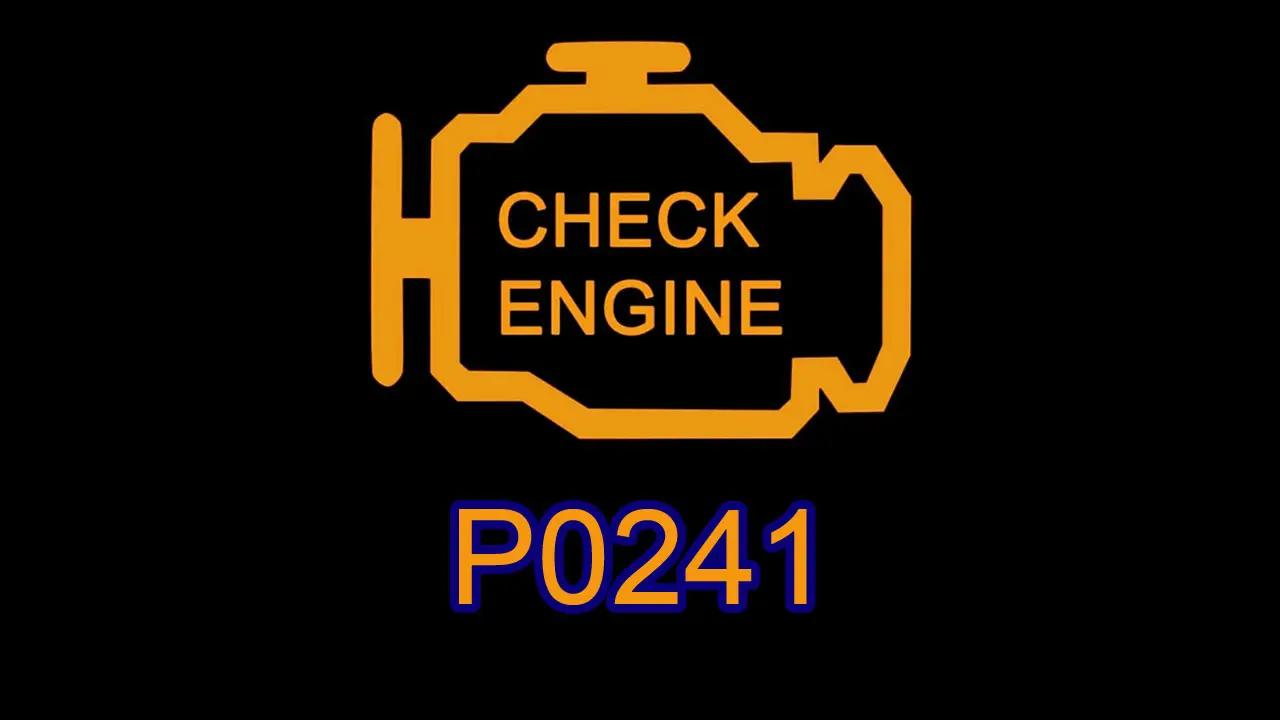
P0241 Turbocharger / Supercharger Boost Sensor "B" Circuit Low
P0241 is an OBD-II diagnostic trouble code that means the engine control module (ECM/PCM) has detected an abnormally low electrical signal from the Turbocharger/Supercharger Boost Sensor “B” circuit.
In simple terms, the ECU is monitoring a sensor that reports boost or intake pressure, and the electrical signal coming from that sensor is lower than the expected range.
One important detail is that “Circuit Low” does not necessarily mean that the engine has low turbo boost. The code specifically describes an electrical signal problem. Actual low boost can be a consequence of the fault, but it is not what the code itself directly proves.
What Does the Boost Sensor “B” Do?
Turbocharged and supercharged engines need to know how much pressure is present in the intake system.
The boost pressure sensor measures pressure in the intake or charge-air system and sends a corresponding electrical signal to the ECM/PCM. The control module uses this information to determine whether the turbocharger or supercharger is producing the pressure it expects.
Depending on the vehicle, this sensor may be referred to as a:
Boost Pressure Sensor
Turbocharger Boost Sensor
MAP/Boost Sensor
Charge Pressure Sensor
The exact terminology and sensor arrangement vary between manufacturers.
The letter “B” is also manufacturer-specific. It does not universally mean a particular physical sensor location. Some vehicles may have multiple pressure sensors, so the manufacturer's wiring diagram and service information should be used to identify exactly which sensor is designated as “B.”
What Does “Circuit Low” Mean?
The word “Low” is important in P0241.
The ECM has detected a signal voltage or electrical condition below the expected range for the boost sensor “B” circuit.
This can happen because of:
-
A short to ground
-
Damaged sensor wiring
-
A corroded connector
-
A loose connector terminal
-
A faulty boost sensor
-
A problem with the sensor's power supply
-
A sensor ground problem
-
Excessive resistance in the circuit
-
Damaged wiring inside the harness
-
A problem with a shared 5-volt reference circuit
-
An ECM/PCM fault
It does not automatically mean that the turbocharger itself is producing insufficient boost.
For example, if the sensor signal wire is shorted to ground, the ECM can see a very low signal even though the turbocharger is mechanically capable of producing normal boost.
What Causes P0241?
Faulty boost pressure sensor
The most straightforward possibility is a defective boost sensor. Internal sensor failure can cause the output signal to remain lower than expected or behave incorrectly.
However, replacing the sensor immediately is not always the correct repair.
Short to ground
A short between the sensor signal wire and ground can pull the sensor signal down. This is one of the conditions that can directly produce a “Circuit Low” fault.
Damaged wiring
The harness between the sensor and ECM can be damaged by heat, vibration, rubbing against other components, previous repairs, or contact with oil and other contaminants.
Turbocharged engines can be particularly hard on wiring because sensors and harnesses are often located close to hot components.
Corroded or loose connector
Water, oil contamination, corrosion or a loose terminal can change the electrical characteristics of the circuit.
A connector may appear connected while one terminal has poor contact.
Sensor power or ground problem
Many pressure sensors use a reference voltage, a ground circuit and a signal circuit. A problem with the reference or ground can cause the sensor's output to become incorrect.
A ground problem can be particularly misleading because the sensor itself may test normally when removed or tested separately.
Problem with the shared reference circuit
Several sensors may sometimes share a reference voltage circuit. If another sensor or its wiring pulls the reference voltage down, P0241 can appear even though the boost sensor itself is not defective.
This is why related sensor codes should always be considered.
ECM/PCM fault
An engine control module can have an internal circuit problem, but this should normally be considered only after the sensor, wiring, power, ground, reference and signal circuits have been properly tested.
Symptoms of P0241
The symptoms depend on the vehicle and the reason the boost sensor signal is low.
Possible symptoms include:
-
Check Engine Light
-
Reduced engine power
-
Poor acceleration
-
Slow turbocharger response
-
Hesitation under acceleration
-
Incorrect boost control
-
Limp-home mode
-
Unstable engine performance
-
Poor throttle response
-
Increased fuel consumption
-
Excessive or insufficient boost
-
Difficulty maintaining requested boost pressure
Some vehicles may continue to drive relatively normally when P0241 is stored.
The ECM may substitute a calculated or default pressure value when it does not trust the sensor signal. In other vehicles, the ECU may significantly reduce engine torque to protect the engine and turbocharger.
Can P0241 Cause Low Turbo Boost?
Yes, it can, but there is an important distinction.
P0241 itself means that the boost sensor “B” circuit is electrically low. It does not directly say that the turbocharger is producing low boost.
However, the ECM uses boost pressure information to control engine operation and turbocharger boost. If the ECU receives an implausibly low signal, it may change boost control, limit engine torque or enter a protection strategy.
Therefore, a vehicle with P0241 may experience:
Low boost → possible
Reduced engine power → possible
Limp mode → possible
But the code alone is not proof that the turbocharger is damaged.
P0241 Diagnosis
A proper diagnosis should begin with the electrical circuit rather than immediately replacing the turbocharger or boost sensor.
1. Scan all stored codes
Use a diagnostic scanner to check all ECM/PCM fault codes.
P0241 may appear together with other sensor, turbocharger, boost-control or reference-voltage codes. Those additional codes can provide an important clue.
Freeze-frame data should also be recorded. Engine RPM, load, throttle position, calculated boost and other parameters can show under which conditions the fault occurred.
2. Identify Boost Sensor “B”
Do not assume that “B” is the same sensor on every vehicle.
Check the manufacturer's wiring diagram and service information to determine which physical sensor corresponds to Boost Sensor “B.”
This is particularly important on engines equipped with multiple pressure sensors.
3. Inspect the sensor connector
Look carefully for:
-
Bent terminals
-
Loose terminals
-
Corrosion
-
Water intrusion
-
Oil contamination
-
Broken locking mechanisms
-
Damaged insulation
A poor connector can create an intermittent or low signal even when the sensor itself is good.
4. Inspect the wiring
Follow the harness from the sensor toward the ECM.
Look for wires that are:
-
Chafed
-
Melted
-
Pinched
-
Broken internally
-
Pulled tight
-
Contaminated with oil
-
Rubbing against engine components
Pay particular attention to areas near the turbocharger, exhaust components and engine movement points.
5. Check the sensor power and ground
The exact circuit configuration varies by vehicle.
Do not rely on a universal voltage value simply because another boost sensor uses it. The vehicle's wiring diagram and manufacturer specifications should be used.
The technician should verify that the sensor receives the correct supply/reference and has a proper ground.
6. Check the signal circuit
The sensor signal should be compared with the manufacturer's specifications.
A signal that remains abnormally low, does not respond to changing pressure or is shorted to ground can lead directly to P0241.
A multimeter may be useful, but an oscilloscope can provide additional information when the signal is unstable or intermittent.
7. Compare pressure data with actual conditions
If the scan tool provides live boost/MAP data, compare the reported pressure with the actual operating condition.
For example, if the sensor reports an extremely low or implausible value while the engine is operating under conditions where pressure should be changing, the sensor circuit deserves close attention.
A mechanical pressure test can also be useful when necessary.
8. Check the turbocharger system separately
Only after the sensor circuit has been evaluated should the technician investigate the turbocharger system itself.
Depending on the engine, this may include:
-
Charge-air hoses
-
Intercooler
-
Intake plumbing
-
Wastegate
-
Variable geometry mechanism
-
Boost control solenoid
-
Vacuum lines
-
Electronic turbo actuator
-
Turbocharger operation
A boost leak can cause actual boost problems, but a boost leak by itself does not automatically explain a “Circuit Low” sensor code.
P0241 Does Not Automatically Mean the Turbocharger Is Bad
This is one of the most important points when diagnosing this code.
A vehicle can have a perfectly healthy turbocharger and still store P0241 because the boost sensor's electrical circuit is faulty.
For example:
A boost sensor signal wire becomes damaged and touches ground.
The ECM sees an abnormally low signal.
P0241 is stored.
The ECU may then reduce engine power because it cannot reliably determine boost pressure.
The driver experiences poor acceleration.
The turbocharger may be mechanically healthy even though the vehicle now behaves as if it has a boost problem.
Replacing the turbocharger in this situation would not solve the underlying fault.
P0241 vs Other Boost Sensor Codes
P0241 is specifically associated with the Boost Sensor “B” circuit being electrically low.
Other codes can describe different conditions.
P0235 – Turbocharger/Supercharger Boost Sensor “A” Circuit Malfunction
This concerns Boost Sensor “A” and represents a broader circuit malfunction.
P0236 – Turbocharger/Supercharger Boost Sensor “A” Circuit Range/Performance
The sensor signal is outside the expected operating relationship or range.
P0237 – Turbocharger/Supercharger Boost Sensor “A” Circuit Low
Similar “Low” logic, but for sensor “A.”
P0238 – Turbocharger/Supercharger Boost Sensor “A” Circuit High
The sensor circuit is reporting an abnormally high electrical signal.
P0241 – Turbocharger/Supercharger Boost Sensor “B” Circuit Low
This specifically identifies the “B” sensor circuit and an abnormally low electrical condition.
The exact relationship between these sensors depends on the vehicle manufacturer.
Is It Safe to Drive With P0241?
It depends on the symptoms.
If the engine is running normally and the vehicle has only stored the code, a short trip to a repair facility may be possible.
However, continued driving should be avoided if the vehicle has:
-
Severe power loss
-
Sudden changes in boost
-
Heavy smoke
-
Abnormal turbocharger noise
-
Engine overheating
-
Oil pressure warnings
-
Severe hesitation
-
Uncontrolled acceleration
-
Other serious engine or turbocharger symptoms
A malfunctioning boost-pressure signal can affect how the ECU controls engine load and turbocharger operation, so the fault should not be ignored simply because the vehicle still drives.
Common Diagnostic Mistakes
One of the most common mistakes is assuming:
P0241 = bad turbocharger
That conclusion is not justified by the code.
Another mistake is assuming:
Circuit Low = low boost pressure
Again, these are different things.
“Low” in the DTC description refers primarily to the electrical signal or circuit condition detected by the control module.
Another common mistake is replacing the boost sensor without checking its connector and wiring. If the signal wire is shorted to ground, a new sensor can produce exactly the same P0241 code.
What Should Be Repaired?
The correct repair depends entirely on the diagnostic findings.
Possible repairs include:
-
Replacing the Boost Sensor “B”
-
Repairing damaged wiring
-
Repairing a short to ground
-
Repairing a sensor ground circuit
-
Repairing a reference-voltage circuit
-
Cleaning or replacing a damaged connector
-
Correcting a shared sensor circuit problem
-
Repairing a vacuum or pressure-control problem
-
Repairing a turbo actuator or wastegate mechanism when separately confirmed
-
Repairing or replacing the ECM only after other possibilities have been eliminated
There is no single repair that applies to every vehicle displaying P0241.
A Practical Diagnostic Order for P0241
A sensible troubleshooting sequence is:
P0241 → identify Boost Sensor “B” → check all DTCs and freeze-frame data → inspect connector → inspect wiring → verify power/reference and ground → test signal circuit → compare live pressure data → check the intake/boost system → test turbocharger control → consider ECM only after everything else checks out.
This approach prevents a relatively simple wiring or connector problem from being mistaken for a failed turbocharger.
Conclusion
P0241 means the ECM/PCM has detected an abnormally low electrical signal in the Turbocharger/Supercharger Boost Sensor “B” circuit.
The fault may be caused by the sensor itself, but wiring, connectors, ground, reference voltage, a short to ground or another problem affecting the sensor circuit can produce exactly the same code.
Actual low turbo boost can occur as a secondary symptom, especially if the ECU enters a protective strategy, but P0241 should first be treated as a boost-sensor electrical-circuit fault.
The most reliable diagnosis is therefore not to replace the turbocharger based on the code. First identify the correct “B” sensor, verify its power, ground and signal circuits, inspect the wiring and connector carefully, and then compare the sensor's reported pressure with the engine's actual operating conditions.