TR
TR EN
EN

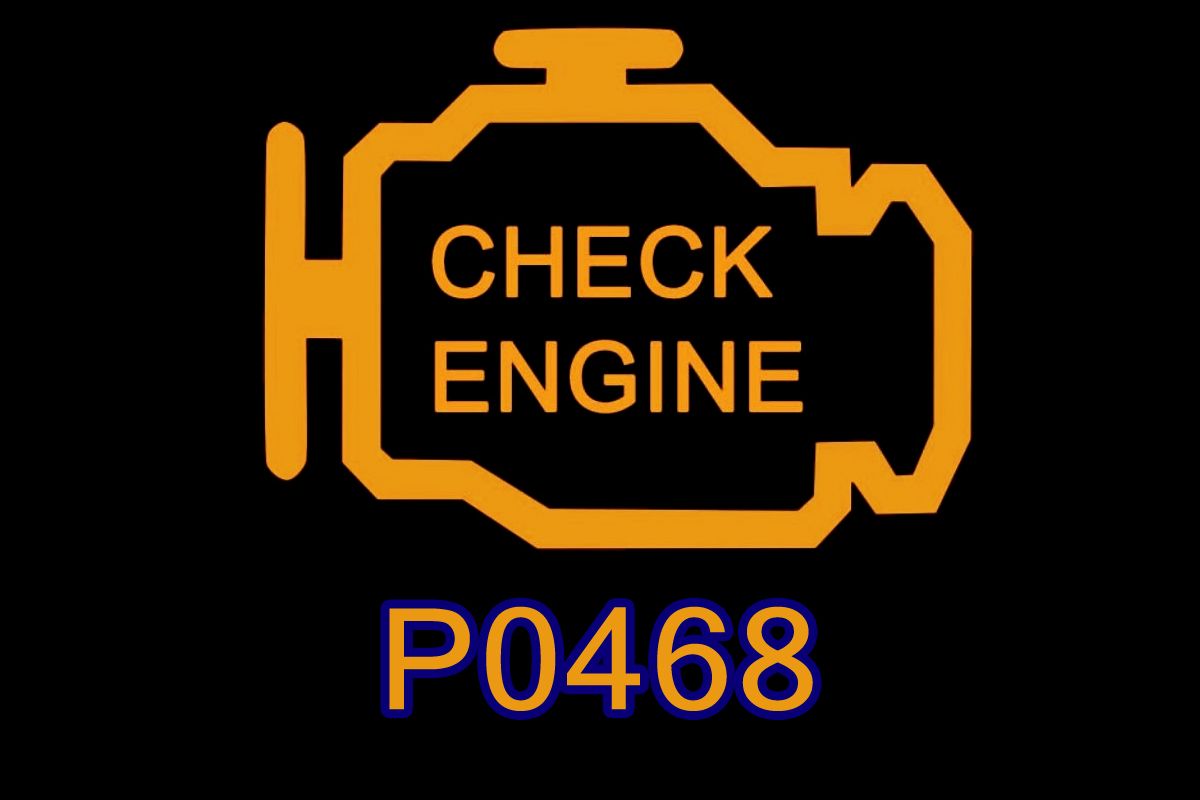
P0468 Evaporative Emission (EVAP) System Flow Sensor Circuit High Input
The P0468 trouble code indicates that the ECM/PCM has detected a higher-than-expected electrical input from the EVAP system flow sensor circuit.
The important distinction is that “High Input” refers primarily to the electrical signal, not necessarily excessive fuel-vapor flow through the EVAP system.
The EVAP system is responsible for capturing fuel vapors from the fuel tank and preventing them from being released directly into the atmosphere. The ECM controls and monitors this vapor flow under specific operating conditions.
P0468 means the computer is seeing an electrical signal from the flow-sensing circuit that is above the expected range.
How the EVAP System Works
Fuel naturally produces vapor inside the fuel tank, especially as the fuel warms.
Instead of allowing these vapors to escape into the atmosphere, the EVAP system stores them temporarily in a charcoal canister.
When operating conditions are suitable, the ECM opens the EVAP purge valve and allows the stored vapors to be drawn into the engine and burned.
A typical system may include:
-
Fuel tank
-
Charcoal canister
-
EVAP purge valve
-
EVAP vent valve
-
EVAP hoses and pipes
-
Fuel tank pressure sensor
-
EVAP flow-related sensing/control components
-
ECM/PCM
The exact components and their arrangement vary by manufacturer.
Some vehicles use a dedicated EVAP flow sensor, while others use a different pressure/flow monitoring arrangement.
What Does “Flow Sensor Circuit High” Actually Mean?
The ECM is monitoring an electrical signal associated with EVAP flow.
When that signal becomes higher than the expected threshold, P0468 can be stored.
Depending on the system, a high input can result from:
-
A signal wire shorted to voltage
-
An open circuit interacting with an internal pull-up
-
Faulty flow sensor electronics
-
Poor sensor ground
-
Incorrect reference voltage
-
Damaged wiring
-
Corroded connector
-
Incorrectly installed component
-
Fault in the EVAP control module or ECM
This is why P0468 should initially be approached as an electrical circuit problem, rather than assuming that the EVAP system is physically flowing too much vapor.
Symptoms of P0468
P0468 may produce very few noticeable symptoms.
Possible symptoms include:
-
Check Engine Light
-
Slightly increased fuel consumption
-
EVAP system monitoring failure
-
Difficulty completing an emissions readiness test
-
Fuel odor in some cases
-
Rough idle in certain situations
-
Poor engine operation during purge events
-
Hard starting after refueling in some vehicle designs
Many drivers will simply notice the Check Engine Light.
The vehicle may otherwise drive normally because the ECM can often continue engine operation while modifying or disabling EVAP monitoring.
What Causes P0468?
There are several possible causes.
Faulty EVAP flow sensor
The sensor may internally produce a signal that is higher than the ECM expects.
However, the sensor should not automatically be replaced before its power, ground and signal circuits are tested.
Signal wire shorted to voltage
This is an important possibility with a high-input code.
If the sensor signal wire contacts a power source, the ECM may see an abnormally high voltage.
For example:
Signal wire damaged → contacts voltage supply → ECM sees high EVAP flow signal → P0468
Open circuit
Depending on the sensor and ECM circuit design, an open signal or ground circuit can also result in a high reading because of the way the ECM's internal pull-up or pull-down circuitry works.
Therefore, “open circuit” cannot be ruled out simply because the code says “high.”
Poor sensor ground
A weak or unstable ground can alter the sensor's output and make the ECM interpret the signal incorrectly.
Damaged wiring
EVAP wiring is commonly routed underneath the vehicle and around the fuel tank, where it can be exposed to:
-
Water
-
Road salt
-
Dirt
-
Vibration
-
Chafing
-
Corrosion
A damaged wire may produce an intermittent or high signal.
Connector corrosion
A connector near the fuel tank can be particularly vulnerable to moisture and corrosion.
Check for:
-
Green/oxidized terminals
-
Loose pins
-
Poor terminal tension
-
Water intrusion
-
Broken locking mechanisms
Can a Blocked EVAP System Cause P0468?
A physical EVAP restriction can affect the way the system behaves, but it does not automatically explain a high electrical input.
A blocked hose, restricted canister or stuck vent valve can create abnormal pressure or flow conditions.
However, if the ECM specifically sees an electrically high sensor signal, the electrical circuit needs to be tested first.
This distinction prevents an EVAP hose or charcoal canister from being replaced unnecessarily.
Can a Stuck Purge Valve Cause P0468?
A purge valve stuck open can certainly create abnormal EVAP flow.
However, a stuck-open purge valve and a high sensor circuit input are not the same diagnosis.
A mechanically leaking purge valve can cause excessive vapor flow while its electrical circuit remains completely normal.
P0468 specifically directs attention toward the flow sensor circuit.
If the vehicle also has a purge-flow code such as an incorrect purge-flow fault, the purge valve should be tested separately.
How Is P0468 Diagnosed?
The diagnosis should begin by determining what the vehicle manufacturer actually calls the EVAP flow sensor and how it is electrically connected.
The generic OBD-II description does not identify the exact physical component on every vehicle.
Start With a Complete Scan
Check all control modules for additional faults.
Pay particular attention to codes involving:
-
EVAP purge
-
EVAP vent
-
Fuel tank pressure
-
EVAP leaks
-
Fuel system
-
Sensor reference voltage
-
Sensor ground
-
System voltage
-
Communication
Multiple sensor codes appearing simultaneously can point toward a shared power, ground or reference problem.
Check the Freeze-Frame Data
Look at the operating conditions when P0468 was stored.
Useful information includes:
-
Engine RPM
-
Vehicle speed
-
Engine coolant temperature
-
Fuel level
-
Fuel tank pressure
-
EVAP purge command
-
EVAP vent status
-
Sensor voltage
-
Battery voltage
If the code appears only when the purge system is activated, the diagnostic direction may be different from a code that appears immediately after the ignition is switched on.
Check the Flow Sensor Signal
If the system uses a conventional electronic sensor, identify its:
-
Power/reference circuit
-
Ground
-
Signal circuit
Then compare the measured values with the manufacturer's specifications.
Do not assume every EVAP flow sensor uses the same voltage range.
A common mistake is to apply a generic “5-volt sensor” assumption to every EVAP system.
The actual circuit may be different.
Check the Signal for a Short to Voltage
Because P0468 indicates a high input, inspect the signal wire carefully.
Look for contact with:
-
Battery voltage
-
Ignition voltage
-
Another powered circuit
A damaged harness can cause a permanently high signal even when the sensor itself is perfectly healthy.
This is especially important if the sensor signal remains high regardless of EVAP operating conditions.
Check the Ground
A sensor ground should be checked for excessive resistance or voltage drop.
A simple continuity test is not always enough.
A wire can show continuity with a multimeter and still have enough resistance to create an abnormal sensor signal when the circuit is operating.
Use Live Data
Live data can provide much more information than the stored code.
Monitor:
-
EVAP flow-related value
-
Sensor voltage
-
Fuel tank pressure
-
Purge command
-
Vent command
Then observe what happens when the ECM commands an EVAP purge event.
If the sensor signal remains abnormally high regardless of purge command, the sensor or electrical circuit becomes more suspicious.
If the signal responds normally electrically but the actual EVAP flow is incorrect, the physical EVAP system needs more attention.
Inspect the EVAP Plumbing
Although P0468 is primarily an electrical code, the physical EVAP system should not be ignored.
Inspect the hoses and pipes for:
-
Cracks
-
Disconnections
-
Kinks
-
Collapsed sections
-
Incorrect routing
-
Damaged fittings
Also inspect the charcoal canister and vent system where accessible.
The EVAP system operates with relatively small pressure and flow changes, so even a small plumbing problem can influence diagnostic results.
Check the Purge and Vent Valves
If the electrical circuit for the flow sensor is correct, verify the operation of the other EVAP components.
A purge valve should not allow uncontrolled vapor flow when it is commanded closed.
A vent valve should respond correctly to the ECM's commands.
A malfunctioning valve can produce abnormal EVAP behavior and potentially lead to additional EVAP codes.
But the technician should keep the distinction clear:
A mechanical EVAP flow problem is not automatically an electrical flow-sensor circuit problem.
P0468 and Fuel Tank Pressure
The fuel tank pressure sensor can provide valuable supporting information.
If the ECM commands an EVAP event, fuel-tank pressure should respond in a way that is appropriate for that vehicle.
If the flow sensor reports a high value while the pressure data shows no corresponding system response, the sensor or its circuit becomes more suspicious.
On the other hand, if both pressure and flow data behave abnormally, a broader EVAP-system problem may exist.
Can a Bad Charcoal Canister Cause P0468?
A damaged, saturated or restricted charcoal canister can affect EVAP flow.
For example, a canister contaminated with liquid fuel can interfere with normal vapor movement.
However, the canister does not directly create a high electrical signal from the flow sensor.
If P0468 is present, the sensor circuit should still be tested independently.
P0468 vs Other EVAP Codes
P0468 should not be confused with other EVAP faults.
P0468 – EVAP System Flow Sensor Circuit High Input
The ECM detects an abnormally high electrical signal from the EVAP flow-sensing circuit.
P0443 – EVAP Purge Control Valve Circuit
This concerns the electrical control circuit of the purge valve.
P0441 – EVAP System Incorrect Purge Flow
This concerns EVAP purge flow that does not match what the ECM expects.
P0498 – EVAP Vent Valve Control Circuit Low
This concerns a low electrical condition in the vent-valve control circuit.
P0499 – EVAP Vent Valve Control Circuit High
This concerns a high electrical condition in the vent-valve control circuit.
These codes can involve related components, but they identify different parts of the EVAP control and monitoring system.
A Useful Diagnostic Clue
One of the most valuable observations is when the high signal occurs.
If P0468 is present immediately after the ignition is switched on and before an EVAP purge event has occurred, an electrical problem becomes much more likely.
If the signal becomes abnormal only during an EVAP purge operation, the diagnosis should include the sensor, purge system and actual EVAP flow behavior.
This simple distinction can save considerable diagnostic time.
Should the EVAP Flow Sensor Be Replaced?
Not necessarily.
Before replacing it, verify:
-
Sensor power/reference
-
Sensor ground
-
Signal voltage
-
Wiring integrity
-
Connector condition
-
Signal response during operation
-
Related EVAP pressure/flow data
If the circuit is correct and the sensor consistently produces an abnormally high signal, sensor replacement becomes justified.
If the signal is high because the wiring is shorted to voltage, replacing the sensor will not solve the problem.
Final Diagnostic Summary
P0468 indicates that the ECM/PCM is receiving a higher-than-expected electrical signal from the EVAP system flow sensor circuit.
The code does not automatically mean that the EVAP system is physically flowing too much fuel vapor.
The correct approach is to first identify the exact flow-sensing system used by the vehicle, then check related codes and freeze-frame data. After that, verify the sensor's power/reference, ground and signal circuits, inspect the wiring and connectors, and monitor live data during EVAP operation.
If the electrical circuit is correct, then investigate the actual EVAP flow system, including the purge valve, vent system, hoses, charcoal canister and fuel-tank pressure behavior.
The most important question is:
Is the EVAP system actually flowing more vapor than it should, or is the ECM simply receiving an artificially high electrical signal from the flow-sensor circuit?
That distinction is the key to diagnosing P0468 correctly without unnecessarily replacing EVAP components.