TR
TR EN
EN

P0383 Glow Plug Control Module 1 Control Circuit Low
The P0383 diagnostic trouble code (DTC) means that the engine control module (ECM/PCM) has detected a low electrical condition in the control circuit for Glow Plug Control Module 1.
This code is found primarily on diesel engines, where glow plugs are used to help the engine start and run smoothly when the combustion chamber is cold.
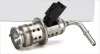
The glow plug control module controls the electrical power supplied to the glow plugs according to commands from the ECM. Depending on the vehicle, it may also monitor individual glow plug circuits, current consumption, temperature and system operation.
The word “Low” in P0383 refers to an electrical control-circuit condition. It does not simply mean that the glow plugs are not getting hot enough or that the engine temperature is low.
A low control signal can be caused by the control module itself, wiring, connectors, power supply, ground, a short circuit, or a problem with the ECM's control signal.
What Does the Glow Plug Control Module Do?
Glow plugs are heating elements installed in diesel engine cylinders.
Unlike a gasoline engine, a diesel engine does not normally use spark plugs to initiate combustion. Diesel combustion depends on the heat created by compressing air inside the cylinder.
When the engine is cold, however, the combustion chamber may not be hot enough for reliable ignition.
The glow plug system helps overcome this problem.
The glow plug control module receives information from the ECM and determines when and how much electrical power should be supplied to the glow plugs.
Depending on the vehicle, the system can operate during:
-
Pre-glow before starting
-
Engine cranking
-
Post-glow after startup
-
Cold engine operation
Modern systems can control glow plug operation much more precisely than older simple relay-based systems.
What Does “Control Circuit Low” Mean?
The “Low” designation in P0383 describes the electrical condition detected in the control circuit.
It does not necessarily mean:
-
Low engine temperature
-
Low glow plug temperature
-
Low battery temperature
-
Low diesel fuel pressure
-
Low glow plug resistance
The ECM has detected that the control signal associated with Glow Plug Control Module 1 is lower than the expected electrical condition.
Depending on the particular system, this could be caused by:
-
A short to ground
-
A control wire pulled low
-
Internal control-module failure
-
Poor power supply
-
Poor ground
-
Damaged wiring
-
Connector problems
-
Excessive circuit resistance
-
An abnormal module feedback signal
-
ECM/PCM control problems
The exact circuit architecture varies considerably between manufacturers.
What Is Glow Plug Control Module 1?
The term “Glow Plug Control Module 1” does not necessarily mean that the vehicle has two identical glow plug modules.
The number is used to distinguish the module or circuit within the manufacturer's control strategy.
Some diesel engines use a dedicated glow plug control module, while others use an intelligent glow plug controller, relay assembly, or an integrated control unit.
Therefore, the exact location and circuit configuration should be confirmed using the vehicle's wiring diagram.
Symptoms of P0383
The symptoms depend on how serious the electrical problem is and how the vehicle's glow plug system is designed.
Possible symptoms include:
-
Check Engine Light
-
Glow plug warning light
-
Difficult cold starting
-
Longer cranking time
-
Rough cold start
-
White or gray smoke during cold start
-
Misfire-like behavior immediately after starting
-
Poor cold-engine performance
-
Increased cold-start emissions
-
Reduced fuel economy
-
Glow plug system disabled
-
Reduced engine performance in cold conditions
In warm weather, the vehicle may start and drive almost normally even though P0383 is stored.
This happens because diesel engines generally need less glow plug assistance when the engine and ambient temperature are higher.
Can P0383 Cause a No-Start?
It can, particularly under very cold conditions.
A diesel engine depends on sufficient cylinder temperature for reliable combustion. If the glow plug system is not functioning properly, starting may become significantly more difficult.
However, a glow plug control circuit fault does not automatically mean that the vehicle will refuse to start.
The severity depends on:
-
Ambient temperature
-
Engine temperature
-
Engine condition
-
Compression
-
Fuel system condition
-
Glow plug design
-
Glow plug control strategy
A vehicle that starts normally in summer may become extremely difficult to start during a cold winter if the glow plug system is malfunctioning.
Common Causes of P0383
Faulty glow plug control module
The control module itself may have an internal electrical failure.
The module may fail to respond correctly to the ECM command or may report an abnormal control condition.
Short to ground
A control wire that is unintentionally connected to ground can pull the circuit voltage down.
This is one of the conditions that can produce a “Low” circuit fault.
Damaged wiring
Glow plug wiring operates in a high-temperature engine environment.
Harness problems can develop because of:
-
Exhaust heat
-
Engine vibration
-
Chafing
-
Oil contamination
-
Previous repairs
-
Incorrect routing
-
Melted insulation
-
Corrosion
A damaged wire can create a low circuit condition even if the control module is perfectly functional.
Connector problems
Check the connectors associated with the glow plug control module for:
-
Corrosion
-
Loose terminals
-
Bent pins
-
Water intrusion
-
Poor terminal tension
-
Heat damage
-
Broken locking mechanisms
A connector may look normal externally while having poor electrical contact internally.
Poor module power supply
The glow plug system can require substantial electrical current.
If the control module does not receive the correct power supply, its control circuitry may not operate correctly.
Battery condition, main power connections, fuses and high-current wiring should therefore be checked.
Poor ground connection
A weak or corroded ground can create abnormal module behavior.
Glow plug control modules can draw significant current, making good ground connections particularly important.
Blown fuse or fusible link
The glow plug system may use one or more dedicated high-current fuses or fusible links.
A blown fuse can disable the system.
However, the reason the fuse failed should also be investigated.
Simply replacing a blown high-current fuse without checking for a short circuit can cause the fuse to fail again.
Faulty glow plugs
A failed glow plug can alter the electrical load seen by the control system.
Depending on the system architecture, this may contribute to additional glow plug circuit codes.
However, a glow plug failure does not automatically explain P0383.
The control-module circuit itself should be tested.
ECM control problem
The ECM may control the glow plug module through a dedicated command circuit or communication network.
A problem with the ECM output, wiring between the ECM and module, or communication system can cause a control fault.
Low battery voltage
Glow plug systems place a substantial electrical demand on the vehicle.
A weak battery or poor battery connection can affect system operation, particularly during cold starting.
Low system voltage can also create multiple unrelated diagnostic codes at the same time.
Communication problem
Some modern glow plug controllers communicate with the ECM digitally.
A communication or network problem can therefore produce a glow plug control fault even when the individual glow plugs are physically healthy.
Glow Plug Control Module vs. Glow Plug
These components should not be confused.
The glow plug is the heating element installed in the engine.
The glow plug control module controls the electrical supply to the glow plugs.
P0383 specifically points toward a problem involving the control circuit of the glow plug control module.
Therefore, replacing all the glow plugs without testing the controller and its wiring may not solve the problem.
Likewise, replacing the control module without checking the glow plug circuits can lead to unnecessary parts replacement.
How to Diagnose P0383
A proper diagnosis should begin with the electrical system and the control circuit.
1. Scan for all DTCs
Start by scanning the vehicle for all stored codes.
Look for additional codes related to:
-
Individual glow plugs
-
Glow plug circuits
-
Glow plug modules
-
Battery voltage
-
ECM communication
-
Engine temperature
-
Diesel fuel system
Multiple glow plug codes can provide important clues.
2. Check freeze-frame data
Look at the conditions when P0383 was stored.
Useful information may include:
-
Engine coolant temperature
-
Intake air temperature
-
Battery voltage
-
Engine RPM
-
Engine operating time
If the code appears only during cold starts, that information can help reproduce the problem.
3. Locate Glow Plug Control Module 1
Confirm the exact module and control circuit using the vehicle-specific wiring diagram.
Do not assume that every diesel vehicle uses the same glow plug control architecture.
4. Inspect the module and connectors
Look for:
-
Water intrusion
-
Corrosion
-
Burn marks
-
Heat damage
-
Loose terminals
-
Bent pins
-
Damaged connector locks
Pay particular attention to high-current connections.
5. Check fuses and power supply
Verify all relevant fuses and power feeds.
Do not stop at checking whether a fuse looks intact. The power supply should be tested according to the manufacturer's procedure.
A high-current voltage-drop test can be useful when a poor connection is suspected.
6. Check the module ground
Verify the ground connection under load.
A ground that appears satisfactory with a basic continuity test can still have excessive resistance when the glow plug system is operating.
7. Test the control circuit
The control circuit between the ECM and glow plug module should be checked according to the vehicle's wiring diagram.
Depending on the system, this may involve checking:
-
Control voltage
-
Ground
-
Continuity
-
Short to ground
-
Short to voltage
-
Communication signal
Do not apply a generic voltage test to an unknown control circuit because modern glow plug modules can use different communication strategies.
8. Check glow plug operation
If the module and control circuit appear functional, test the individual glow plugs according to the manufacturer's specifications.
Resistance alone is not always sufficient for diagnosing modern glow plugs. Current draw and actual heating behavior can provide more useful information on some systems.
Why Voltage-Drop Testing Can Be Important
Glow plug systems can draw significant current.
A cable or connection may show battery voltage with almost no load but develop a substantial voltage drop when the glow plug system is activated.
For this reason, testing should sometimes be performed under operating load.
Check:
-
Battery positive to module
-
Module ground
-
High-current connections
-
Relevant fuse connections
This can reveal corrosion or resistance that a simple continuity test cannot detect.
Do Not Use a Larger Fuse
If a glow plug fuse repeatedly fails, installing a higher-rated fuse is dangerous.
The fuse is designed to protect the wiring and components from excessive current.
A repeated fuse failure can indicate:
-
Shorted wiring
-
Faulty glow plug
-
Failed control module
-
Damaged harness
-
High-current circuit problem
The cause should be diagnosed rather than bypassed.
Why P0383 Does Not Automatically Mean the Module Is Bad
The code identifies a low condition in the module control circuit, not necessarily an internal module failure.
For example, a damaged control wire shorted to ground can produce the same diagnostic result.
Likewise:
-
A poor ground
-
Corroded connector
-
Low system voltage
-
Damaged power feed
-
ECM control problem
can all prevent the glow plug module from operating correctly.
The module should therefore be condemned only after its power, ground, control signals and associated circuits have been tested.
P0383 and Cold-Start Problems
A useful diagnostic clue is the relationship between the fault and engine temperature.
If the vehicle:
-
Starts normally when warm
-
Becomes difficult to start when cold
-
Produces white smoke after starting
-
Runs roughly for several seconds
-
Then operates normally once warm
the glow plug system deserves close attention.
However, cold-start problems are not exclusive to glow plugs.
Other possible causes include:
-
Low compression
-
Injector problems
-
Incorrect injection timing
-
Coolant temperature sensor problems
-
Fuel pressure problems
-
Air entering the fuel system
-
Battery weakness
Therefore, P0383 should be diagnosed alongside the actual engine symptoms.
P0383 vs. Other Glow Plug Codes
Glow plug-related DTCs can describe different parts of the system.
P0383 indicates a low condition involving the control circuit for Glow Plug Control Module 1.
Other codes may identify:
-
Individual glow plug circuit faults
-
Glow plug relay problems
-
Control-module circuit problems
-
General glow plug system faults
-
Communication problems
The exact combination of codes can help determine whether the problem is located at an individual glow plug or at the controller and its electrical circuit.
Can You Drive With P0383?
If the diesel engine starts normally and operates normally once running, the vehicle may remain driveable, especially in warm weather.
However, the problem should not be ignored.
A malfunctioning glow plug system can cause:
-
Difficult cold starting
-
Increased starter load
-
Increased smoke
-
Higher cold-start emissions
-
Rough operation
-
Battery and starter stress from extended cranking
The issue becomes more important as ambient temperatures fall.
If the vehicle is already difficult to start or repeatedly fails to start, the glow plug system should be diagnosed before relying on the vehicle for normal transportation.
A Practical Diagnostic Sequence
A sensible diagnostic path for P0383 is:
P0383 → scan all codes → check freeze-frame data → identify Glow Plug Control Module 1 → inspect connectors and wiring → check fuses → verify power supply → verify ground → test the control circuit → check communication if applicable → test glow plug operation → repair the actual fault → clear the code and perform a cold-start verification.
P0383 should therefore be viewed as a control-circuit diagnosis rather than a simple glow-plug replacement code. The most reliable repair comes from determining whether the low electrical condition originates in the controller, its power and ground circuits, the control wiring, the glow plug load, or the ECM command itself.