TR
TR EN
EN

What Is a Manifold Absolute Pressure (MAP) Sensor? What Are the Symptoms of Failure?
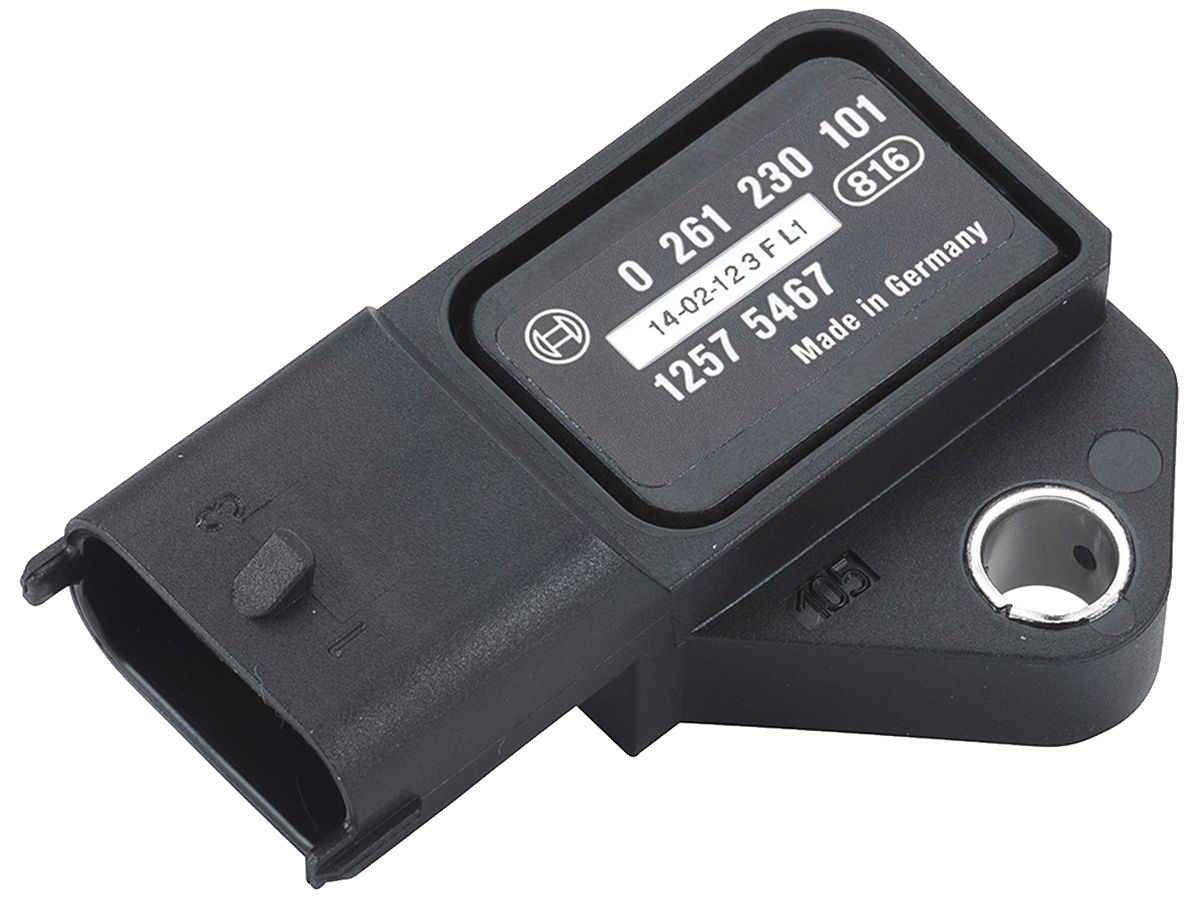
The Manifold Absolute Pressure (MAP) sensor is an important component of a modern engine management system. It measures the absolute pressure inside the intake manifold and sends this information to the engine control unit (ECU).
The ECU uses the MAP signal to determine engine load and adjust important parameters such as fuel injection, ignition timing, turbocharger control, and, depending on the engine, exhaust gas recirculation and other systems.
A faulty MAP sensor can therefore affect engine performance significantly. Symptoms may range from poor acceleration and increased fuel consumption to rough idle, difficult starting, misfires, and an illuminated check engine light.
What Does a MAP Sensor Measure?
The MAP sensor measures absolute pressure, not simply the difference between atmospheric pressure and intake pressure.
When the engine is idling with the throttle mostly closed, the intake manifold is under relatively high vacuum. When the throttle opens and the engine load increases, manifold pressure rises toward atmospheric pressure.
On a naturally aspirated engine, manifold pressure generally remains below atmospheric pressure during normal operation.
On a turbocharged or supercharged engine, manifold pressure can rise above atmospheric pressure when the engine is under boost.
The MAP sensor converts these pressure changes into an electrical signal that the ECU can interpret.
How Does a MAP Sensor Work?
Inside the MAP sensor is a pressure-sensitive element that responds to changes in intake manifold pressure.
The sensor typically receives:
-
A reference voltage from the ECU
-
A ground connection
-
A signal circuit
As manifold pressure changes, the sensor's output signal changes accordingly.
The ECU continuously monitors this signal and compares it with information from other sensors.
For example, the ECU can compare MAP data with:
-
Throttle position
-
Engine RPM
-
Intake air temperature
-
Oxygen sensor readings
-
Crankshaft position
-
Camshaft position
-
Mass airflow data, if the vehicle also uses a MAF sensor
This allows the ECU to determine whether the pressure reading makes sense for the current operating condition.
Where Is the MAP Sensor Located?
The MAP sensor is usually mounted directly on the intake manifold or connected to it through a short vacuum passage or hose.
On some engines, the sensor is attached to the intake manifold with an O-ring seal. On other designs, it may be connected through a small hose.
Turbocharged engines can have more complex pressure-sensing arrangements because the ECU needs to monitor pressure under both vacuum and boost conditions.
The exact location varies considerably between engine designs.
Why Is the MAP Sensor Important?
The MAP sensor gives the ECU information about engine load.
When the driver presses the accelerator, the throttle opens and the pressure inside the intake manifold changes. The ECU uses this information to determine how much air is likely entering the engine and how much fuel should be supplied.
The MAP signal can also influence ignition timing.
If the ECU determines that the engine is operating under high load, it may adjust ignition timing to reduce the risk of knock.
In turbocharged engines, MAP information is also important for monitoring and controlling boost pressure.
A problem with the sensor can therefore affect several different engine functions at the same time.
What Are the Symptoms of a Bad MAP Sensor?
A faulty MAP sensor can produce different symptoms depending on whether it is reporting pressure that is too high, too low, unstable, or completely missing.
Common symptoms include:
-
Rough or unstable idle
-
Poor acceleration
-
Loss of engine power
-
Hesitation
-
Difficult starting
-
Engine stalling
-
Increased fuel consumption
-
Black exhaust smoke
-
Misfires
-
Surging
-
Poor throttle response
-
Check engine light
-
Reduced turbocharger performance
-
Emissions problems
The symptoms can sometimes appear intermittently, particularly when the sensor or its wiring has an electrical fault.
Rough or Unstable Idle
One of the most common symptoms of a MAP sensor problem is an unstable idle.
At idle, the ECU expects a relatively stable manifold pressure signal. If the MAP signal fluctuates unexpectedly or does not correspond to the actual pressure, the ECU may continually adjust fuel delivery and ignition timing.
This can cause:
-
Engine RPM fluctuations
-
Engine vibration
-
Rough running
-
Occasional stalling
-
Unstable fuel trims
However, a rough idle does not automatically indicate a faulty MAP sensor.
Vacuum leaks, throttle body problems, ignition faults, injector problems, and PCV system faults can produce very similar symptoms.
Poor Acceleration and Loss of Power
If the MAP sensor provides an incorrect pressure reading, the ECU may calculate engine load incorrectly.
For example, if the ECU believes the engine is under a lighter load than it actually is, fuel delivery and ignition timing may not be appropriate for the real operating condition.
The driver may notice:
-
Weak acceleration
-
Hesitation when pressing the accelerator
-
Poor response at low RPM
-
Reduced power under load
-
Uneven acceleration
On turbocharged engines, incorrect MAP information can also interfere with boost control.
Increased Fuel Consumption
A MAP sensor that incorrectly reports manifold pressure can cause the ECU to calculate the air-fuel mixture incorrectly.
If the ECU receives a signal suggesting that the engine requires more fuel than it actually does, the mixture may become excessively rich.
This can result in:
-
Increased fuel consumption
-
Strong fuel smell
-
Black exhaust smoke
-
Carbon buildup
-
Fouled spark plugs
-
Increased emissions
Fuel consumption can also increase because of many other faults, so MAP sensor diagnosis should include other engine parameters.
Difficult Starting
A MAP sensor problem can sometimes make the engine difficult to start.
During starting, the ECU needs to estimate engine load and determine an appropriate fuel quantity.
If the MAP sensor sends an implausible pressure signal, the initial fuel calculation may be incorrect.
The result can be:
-
Long cranking
-
Multiple starting attempts
-
Poor cold starts
-
Engine starting and immediately stalling
This symptom can be more noticeable if the sensor produces a signal that is incorrect even before the engine starts.
Engine Stalling
A MAP sensor that intermittently loses its signal or provides highly inaccurate pressure information can contribute to engine stalling.
The problem may occur when:
-
The throttle is suddenly closed
-
The vehicle comes to a stop
-
The accelerator is released
-
The engine transitions from high load to idle
-
The engine is started
If the engine stalls repeatedly, the MAP sensor should be considered along with fuel pressure, ignition, throttle control, vacuum leaks, and idle-control problems.
Black Smoke From the Exhaust
Black exhaust smoke generally indicates that the engine is running with an excessively rich air-fuel mixture.
A faulty MAP sensor can contribute to this condition if it causes the ECU to calculate an incorrect engine load and inject too much fuel.
Other possible causes include:
-
Leaking fuel injectors
-
Excessive fuel pressure
-
Faulty coolant temperature sensor
-
Incorrect MAF readings
-
Restricted air intake
-
Fuel pressure regulator problems
Therefore, black smoke alone does not prove that the MAP sensor is defective.
Check Engine Light
A MAP sensor fault can trigger the check engine light when the ECU detects an electrical problem or an implausible pressure reading.
Depending on the vehicle, diagnostic trouble codes may relate to:
-
MAP sensor circuit malfunction
-
MAP sensor range or performance
-
MAP sensor signal too high
-
MAP sensor signal too low
-
Correlation problems between MAP and other sensors
A fault code should always be interpreted together with live data and the actual engine symptoms.
MAP Sensor Signal Too High or Too Low
A MAP sensor signal that is too high or too low can indicate several different problems.
A high signal may indicate that the ECU is receiving a voltage corresponding to unusually high manifold pressure.
Possible causes include:
-
Faulty sensor
-
Wiring short to voltage
-
Incorrect reference voltage
-
Pressure problem
-
Connector fault
A low signal can be caused by:
-
Faulty sensor
-
Wiring short to ground
-
Damaged connector
-
Incorrect reference voltage
-
Sensor contamination
-
Actual manifold pressure conditions
The exact interpretation depends on the vehicle's sensor design and calibration.
What Causes a MAP Sensor to Fail?
MAP sensors can fail for several reasons.
Contamination
Oil vapor, dirt, moisture, and other contaminants can enter the sensor's pressure port and affect its ability to measure pressure accurately.
Electrical problems
Damaged wiring, corroded terminals, poor grounds, or loose connectors can interrupt the MAP signal.
Vacuum or pressure hose problems
If the sensor uses a hose or passage to measure manifold pressure, cracks, blockages, or leaks can affect the reading.
Internal sensor failure
The pressure-sensing element can deteriorate or fail electronically over time.
Excessive pressure
On turbocharged engines, abnormal boost pressure or incorrect boost-control operation can potentially expose the sensor to conditions outside its intended range.
Can a Dirty MAP Sensor Cause Problems?
Yes.
Because the MAP sensor measures intake manifold pressure through a small pressure port or passage, contamination can interfere with its operation.
Oil mist from the crankcase ventilation system can accumulate around the sensor opening, particularly on engines with significant blow-by or oil vapor.
A contaminated sensor may produce an inaccurate or slow-changing signal.
Cleaning may help if the problem is caused by contamination, but the sensor should be handled carefully.
The sensing element should not be scratched, forced, or exposed to inappropriate solvents. The correct cleaning procedure depends on the specific sensor design.
Can a Vacuum Leak Cause MAP-Related Symptoms?
Yes, and this is an important diagnostic consideration.
A MAP sensor measures actual manifold pressure. If there is an unexpected air leak in the intake system, the manifold pressure may no longer behave as expected.
Vacuum leaks can cause:
-
Rough idle
-
Lean fuel trims
-
Hesitation
-
Stalling
-
Poor acceleration
-
High idle speed
A technician should therefore inspect vacuum hoses, intake manifold seals, PCV components, brake-booster connections, and other possible sources of unmetered air before replacing the MAP sensor.
Can a MAP Sensor Cause Misfires?
A faulty MAP sensor can contribute to engine misfires if it causes the ECU to calculate the wrong air-fuel mixture or ignition timing.
However, misfires have many possible causes.
Common alternatives include:
-
Worn spark plugs
-
Faulty ignition coils
-
Injector problems
-
Low fuel pressure
-
Vacuum leaks
-
Low compression
-
Valve problems
-
Timing problems
A MAP sensor should not be replaced simply because the engine is misfiring.
MAP Sensor Problems on Turbocharged Engines
The MAP sensor is particularly important on turbocharged engines because intake pressure can change dramatically.
During low-load operation, the intake system may be under vacuum.
During acceleration, the turbocharger increases intake pressure.
The ECU uses pressure information to monitor whether the engine is producing the expected boost.
A faulty MAP sensor can therefore contribute to:
-
Low boost
-
Excessive boost
-
Poor acceleration
-
Turbocharger control problems
-
Reduced engine power
-
Limp mode
Some turbocharged engines use more than one pressure sensor to monitor different sections of the intake and charge-air system.
How Is a MAP Sensor Diagnosed?
A proper diagnosis should begin with a visual inspection.
The technician should check:
-
Sensor connector
-
Wiring
-
Ground
-
Reference voltage
-
Sensor signal
-
Vacuum passages
-
Intake manifold
-
Vacuum hoses
-
Intake leaks
-
Sensor contamination
A scan tool can then be used to examine MAP readings in real time.
With the engine switched off and the ignition turned on, the MAP reading should generally correspond closely to the local atmospheric pressure.
Once the engine starts, manifold pressure should change significantly because engine vacuum is created.
On a naturally aspirated engine, the MAP reading should respond predictably to throttle changes.
On a turbocharged engine, the reading should also increase as boost builds.
A technician can compare the MAP signal with engine RPM, throttle position, intake air temperature, fuel trims, and other available data.
Can You Test a MAP Sensor With a Multimeter?
Many MAP sensors can be tested with a multimeter.
The exact voltage values vary depending on the sensor and vehicle, so manufacturer specifications should be used rather than relying on a universal voltage range.
The basic test involves checking:
-
Reference voltage
-
Ground
-
Signal voltage
-
Wiring continuity
The signal should change as manifold pressure changes.
If the reference voltage and ground are correct but the signal remains fixed, changes erratically, or falls outside the manufacturer's specified range, the sensor may be defective.
A scan tool is often more useful because it allows the technician to compare the MAP value with actual engine operating conditions.
Should a MAP Sensor Be Replaced Immediately After a Fault Code?
Not necessarily.
A diagnostic trouble code identifies a condition detected by the ECU, but it does not always identify the component that must be replaced.
For example, a MAP sensor circuit code could be caused by:
-
The sensor itself
-
Wiring
-
Connector corrosion
-
Poor ground
-
Reference voltage problems
-
Intake pressure problems
-
Contamination
-
ECU-related issues
Replacing the sensor without checking these possibilities can result in unnecessary expense.
How Can MAP Sensor Problems Be Prevented?
MAP sensors generally require little routine maintenance, but keeping the engine's intake and ventilation systems in good condition can help.
Good practices include:
-
Replace the air filter at the recommended interval.
-
Repair intake and vacuum leaks promptly.
-
Maintain the crankcase ventilation system.
-
Avoid unnecessary contamination of the intake system.
-
Keep electrical connectors clean and secure.
-
Address engine oil consumption problems.
-
Do not ignore repeated check engine light warnings.
If the engine has significant oil vapor or blow-by, the MAP sensor and intake system may become contaminated more quickly.
MAP Sensor Replacement
If testing confirms that the MAP sensor itself has failed, replacement is usually straightforward.
After installing the correct sensor, the technician should verify:
-
Correct electrical connection
-
Proper sealing
-
Correct manifold pressure readings
-
Absence of intake leaks
-
Normal fuel trims
-
Normal engine operation
Depending on the vehicle, diagnostic trouble codes may need to be cleared and the engine management system may need to relearn certain parameters.
The important point is that the new sensor must be compatible with the exact engine and ECU calibration.
Why the MAP Sensor Is Important
The MAP sensor provides the ECU with essential information about intake manifold pressure and engine load. Because fuel delivery and ignition timing depend heavily on accurate load information, a faulty MAP sensor can affect almost every aspect of engine operation.
Typical symptoms include rough idle, poor acceleration, increased fuel consumption, difficult starting, stalling, misfires, black smoke, and a check engine light.
However, many of these symptoms can also be caused by vacuum leaks, wiring faults, fuel-system problems, ignition faults, or throttle-related issues. A proper diagnosis should therefore focus on the MAP sensor signal and its relationship with actual manifold pressure rather than simply replacing the sensor when a fault code appears.