TR
TR EN
EN

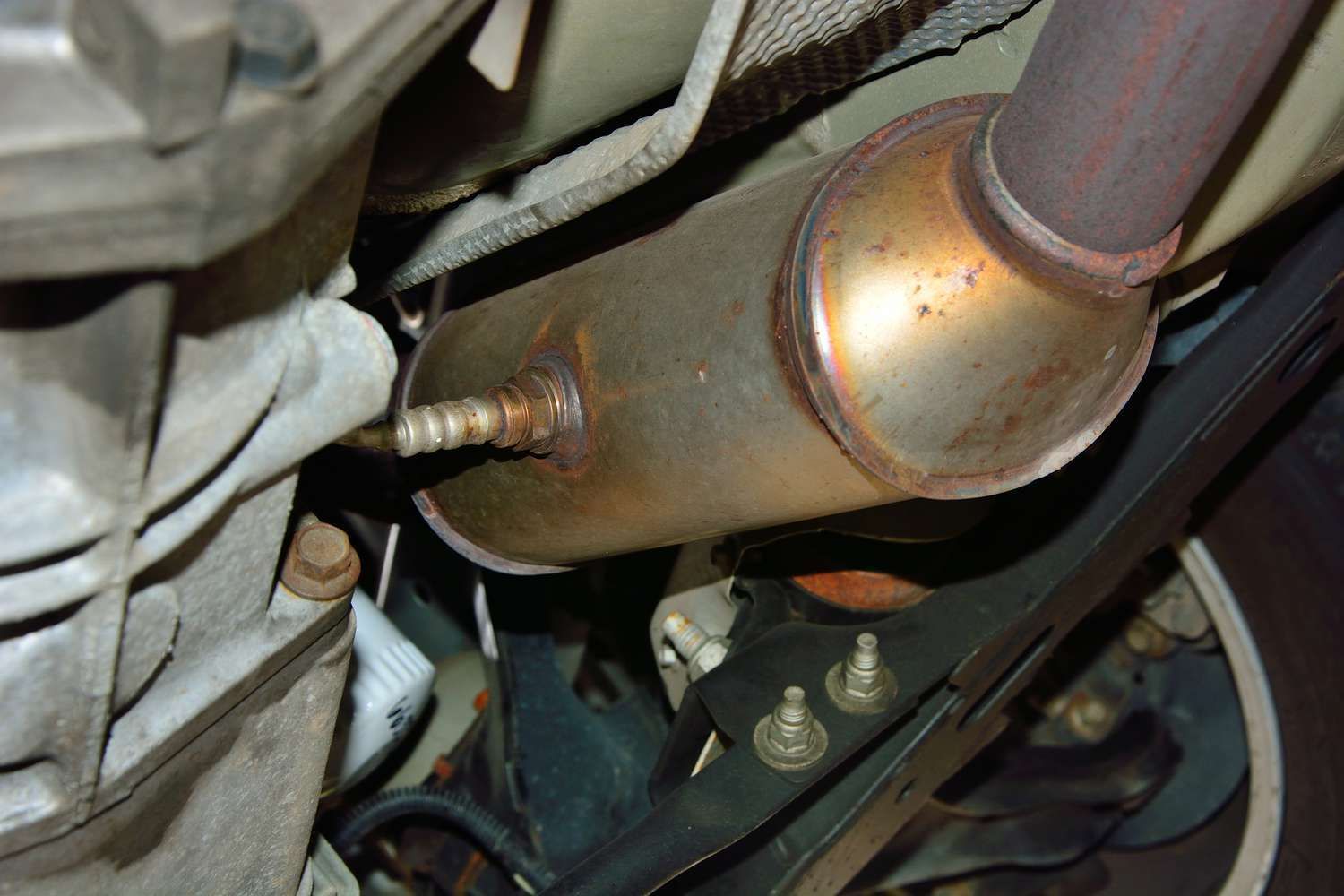
Catalytic Converter Removal and Its Harmful Effects
A catalytic converter is one of the most important components of a modern vehicle's exhaust emission control system. Its primary purpose is to convert harmful gases produced during combustion into less harmful substances before they are released into the atmosphere.
Despite this, some vehicle owners consider catalytic converter removal, also known as catalytic converter deletion or "cat delete," when they experience a clogged converter, reduced engine performance, an expensive replacement cost, or the belief that removing it will increase engine power.
Removing a catalytic converter may sometimes change exhaust flow or alter the sound of the vehicle, but it can also create significant problems involving emissions, engine management, oxygen sensor readings, exhaust noise, legal compliance, and vehicle inspection.
It is also important to distinguish between a catalytic converter that is genuinely restricting exhaust flow because it has failed and a catalytic converter that is simply being blamed for poor engine performance without proper diagnosis.
What Does a Catalytic Converter Do?
A catalytic converter is installed in the exhaust system, generally relatively close to the engine so that it can reach its operating temperature quickly.
Its job is to chemically convert harmful exhaust gases into less harmful compounds.
A modern three-way catalytic converter primarily helps control:
-
Carbon monoxide (CO)
-
Unburned hydrocarbons (HC)
-
Nitrogen oxides (NOx)
During normal operation, the catalyst promotes chemical reactions that convert carbon monoxide and hydrocarbons primarily into carbon dioxide and water, while nitrogen oxides are reduced into nitrogen and oxygen.
The exact catalyst design varies depending on the engine and emissions system.
Diesel engines use different exhaust after-treatment arrangements, which can include diesel oxidation catalysts, diesel particulate filters, selective catalytic reduction systems, and other components.
Therefore, not every catalytic converter operates in exactly the same way.
What Is Catalytic Converter Removal?
Catalytic converter removal means physically removing the catalytic converter from the exhaust system and replacing it with a section of exhaust pipe or another exhaust component.
This is sometimes referred to as:
-
Catalytic converter delete
-
Cat delete
-
Catalytic converter bypass
-
Catalytic converter removal
Some people remove the converter because it has become clogged or damaged.
Others remove it intentionally in an attempt to increase exhaust flow, change exhaust sound, or reduce the cost of replacing a failed converter.
However, removing the catalytic converter does not automatically solve the underlying cause of an engine problem.
Why Do Some People Remove the Catalytic Converter?
There are several reasons why vehicle owners consider catalytic converter removal.
A clogged catalytic converter
A converter that has melted internally or become severely restricted can create excessive exhaust backpressure.
This may cause:
-
Loss of engine power
-
Poor acceleration
-
Difficulty reaching high RPM
-
Engine hesitation
-
Poor fuel economy
-
Excessive exhaust temperature
In this situation, the actual problem is a failed or restricted catalytic converter, not the normal operation of a healthy converter.
Cost of replacement
Catalytic converters can be expensive because they contain precious metals such as platinum, palladium, and rhodium.
This can make replacement costly, especially on vehicles with multiple converters.
Attempt to increase performance
Some owners believe that removing the converter will significantly increase horsepower because exhaust gases can leave the engine more freely.
The actual performance effect depends heavily on the engine and exhaust system.
A healthy factory catalytic converter is generally not an enormous restriction on a properly designed modern engine.
Changes to exhaust sound
Removing the converter can make the exhaust louder and sometimes changes the character of the exhaust note.
However, louder does not necessarily mean more powerful.
Does Removing the Catalytic Converter Increase Engine Power?
This is one of the most common questions about catalytic converter removal.
The answer is not necessarily.
If the catalytic converter is healthy and correctly sized for the engine, removing it may provide little or no meaningful improvement in normal driving performance.
A severely clogged or melted catalytic converter is different.
If the converter is restricting exhaust flow, replacing it with a properly functioning converter can restore lost performance.
In other words, the improvement comes from removing an abnormal restriction, not from the absence of a catalytic converter itself.
Modern engines are designed around a complete intake, combustion, exhaust, and emissions-control system.
Changing one component can also affect engine calibration.
What Happens to the Oxygen Sensors After Catalytic Converter Removal?
This is one of the most important technical consequences.
Many modern gasoline vehicles use oxygen sensors both before and after the catalytic converter.
The upstream oxygen sensor is primarily used to monitor the air-fuel mixture and help the ECU control combustion.
The downstream oxygen sensor is generally used to monitor catalytic converter performance.
When the catalytic converter is removed, the downstream oxygen sensor may detect exhaust gases that indicate insufficient catalyst activity.
The ECU can then determine that the catalytic converter is not operating as expected.
This can trigger diagnostic trouble codes such as:
-
P0420 – Catalyst System Efficiency Below Threshold
-
P0430 – Catalyst System Efficiency Below Threshold (Bank 2)
The exact codes depend on the vehicle and engine configuration.
Can Catalytic Converter Removal Cause the Check Engine Light to Come On?
Yes.
On many modern vehicles, catalytic converter removal can cause the Check Engine Light to illuminate.
The ECU continuously evaluates emissions-related data.
If the downstream oxygen sensor detects that the exhaust gas composition before and after the catalyst does not show the expected conversion efficiency, the ECU may interpret this as a catalyst efficiency problem.
A diagnostic scanner may then reveal a catalyst-related fault code.
This can leave the vehicle with:
-
Check Engine Light
-
Stored diagnostic trouble codes
-
Failed emissions monitoring
-
Readiness monitors that do not complete
The vehicle may continue to run, but that does not mean the modification is harmless.
Does Catalytic Converter Removal Damage the Engine?
Catalytic converter removal does not automatically cause immediate mechanical engine damage.
However, saying that it is completely harmless would also be incorrect.
The consequences depend on the engine, ECU calibration, exhaust design, oxygen sensor configuration, and the reason why the converter was removed.
More importantly, if the original catalytic converter failed because of another engine problem, removing it without repairing that underlying problem can allow the original fault to continue.
For example, a rich-running engine can send excessive unburned fuel into the exhaust.
This can overheat and damage a catalytic converter.
If the converter is then removed but the rich-running condition is not repaired, the engine still has a problem.
What Causes Catalytic Converter Failure?
Catalytic converters often fail because of another problem rather than simply wearing out on their own.
Common causes include:
Engine misfires
A misfiring cylinder can send unburned fuel into the exhaust.
The fuel can ignite inside the catalytic converter and produce extremely high temperatures.
Severe overheating can melt the catalyst substrate.
Rich air-fuel mixture
Too much fuel can increase the amount of unburned hydrocarbons entering the exhaust.
This can overheat the converter.
Oil consumption
If the engine burns excessive amounts of oil, oil-derived contaminants can eventually damage or contaminate the catalyst.
Coolant entering the combustion chamber
A head gasket problem, cracked cylinder head, or another internal engine fault can allow coolant into the combustion chamber.
The resulting exhaust contamination can damage the catalytic converter.
Physical damage
The converter housing or internal substrate can be damaged by impacts from road debris.
Age and thermal stress
Repeated heating and cooling cycles can eventually degrade the catalyst and substrate.
What Are the Symptoms of a Clogged Catalytic Converter?
A severely restricted catalytic converter can cause noticeable performance problems.
Possible symptoms include:
-
Significant loss of engine power
-
Poor acceleration
-
Difficulty climbing hills
-
Engine struggling at higher RPM
-
Excessive exhaust backpressure
-
Poor fuel economy
-
Engine hesitation
-
Engine misfire
-
Excessive exhaust temperature
-
Rattling from the catalytic converter
-
Stalling in severe cases
A vehicle that feels normal at low RPM but becomes extremely weak at higher RPM may warrant an exhaust restriction test.
However, these symptoms can also be caused by fuel, ignition, turbocharger, intake, or engine problems.
A proper diagnosis is therefore important.
How Can a Clogged Catalytic Converter Be Diagnosed?
A catalytic converter should not be removed simply because the engine is losing power.
A technician can perform several tests.
Scan for diagnostic trouble codes
OBD-II codes can provide useful information, especially when catalyst efficiency, misfire, oxygen sensor, or fuel-mixture codes are present.
Check exhaust backpressure
A backpressure test can help determine whether the exhaust system is excessively restricted.
Compare oxygen sensor data
The behavior of the upstream and downstream oxygen sensors can provide information about catalytic converter operation.
Check exhaust temperature
Temperature measurements before and after the catalytic converter can provide useful diagnostic clues.
Inspect the converter
If the internal substrate has broken apart, melted, or shifted, physical inspection may reveal the problem.
The best diagnostic method depends on the vehicle and the symptoms.
What Are the Harmful Effects of Catalytic Converter Removal?
The most important disadvantage is the increase in harmful emissions.
Without a functioning catalytic converter, pollutants that would normally be chemically converted can pass into the atmosphere.
These can include:
-
Carbon monoxide
-
Unburned hydrocarbons
-
Nitrogen oxides
These pollutants contribute to poor air quality and can be harmful to human health and the environment.
The catalytic converter is therefore not simply an exhaust restriction. It is an important part of the vehicle's emissions-control system.
Increased Exhaust Pollution
A vehicle without a functioning catalytic converter can produce significantly higher levels of certain pollutants.
Carbon monoxide is a toxic gas.
Hydrocarbons contribute to photochemical smog.
Nitrogen oxides contribute to air pollution and can participate in the formation of ground-level ozone.
The catalytic converter is designed specifically to reduce these pollutants.
Removing it therefore directly undermines the emissions-control system.
Catalytic Converter Removal Can Affect Vehicle Inspection
Another major issue is vehicle inspection and emissions compliance.
Many countries and regions require vehicles to meet specific emissions standards and equipment requirements.
A vehicle that has had its catalytic converter removed may fail inspection if the modification is detectable or if emissions exceed the applicable limits.
The exact legal consequences vary by country and vehicle type.
For road-going vehicles, emissions-control components should therefore not be removed without checking the regulations that apply in the vehicle's jurisdiction.
Can a Car Pass Inspection Without a Catalytic Converter?
There is no universal answer because inspection requirements differ between countries and vehicle categories.
In many jurisdictions, a vehicle that was originally equipped with a catalytic converter is expected to retain an appropriate emissions-control system.
Even if the vehicle appears to run normally, it may fail because of:
-
Excessive emissions
-
Missing emissions equipment
-
Check Engine Light
-
OBD-II readiness problems
-
Visible modifications
-
Failed emissions testing
For this reason, catalytic converter removal can create practical problems even when the vehicle remains mechanically drivable.
Does Catalytic Converter Removal Increase Fuel Consumption?
It can, but not necessarily.
Simply removing the catalytic converter does not automatically make a vehicle consume more fuel.
However, if the modification causes oxygen sensor readings, fuel control, or ECU operation to deviate from the intended calibration, drivability and fuel economy can be affected.
In addition, the original reason for the catalytic converter failure may still exist.
For example, if the engine is already running excessively rich, removing the converter does not solve the rich condition.
The engine may continue consuming excessive fuel.
Can Catalytic Converter Removal Cause Engine Performance Problems?
It can contribute to drivability problems depending on the vehicle's engine management system.
Modern ECUs are designed to work with feedback from oxygen sensors and other emissions components.
When exhaust components are changed, the expected sensor behavior may no longer match actual conditions.
This can result in diagnostic faults or changes in engine management behavior.
The severity varies from one vehicle to another.
Some vehicles may continue to run apparently normally apart from the Check Engine Light, while others can develop noticeable drivability problems depending on how the engine management system is configured.
Catalytic Converter Removal Does Not Fix the Root Cause
This is perhaps the most important point when dealing with a failed catalytic converter.
If the converter has melted, something may have caused it to overheat.
If it is contaminated with oil or coolant, there may be an engine problem behind the contamination.
If it has been damaged by excessive fuel, the fuel system or ignition system may need attention.
Replacing or removing the converter without finding the original cause can result in another catalytic converter failing later.
For example:
Misfire → unburned fuel → excessive converter temperature → catalyst damage
If only the damaged converter is replaced but the misfire remains, the replacement converter can suffer the same fate.
Is Catalytic Converter Cleaning Better Than Removal?
If a catalytic converter is only mildly contaminated, certain professional cleaning procedures may sometimes be considered.
However, cleaning cannot restore a catalyst that has been physically melted, broken, or chemically poisoned beyond recovery.
A severely damaged converter generally needs replacement.
Products marketed as universal catalytic converter cleaners should also not be considered a guaranteed solution.
The correct approach depends on the actual failure.
Should You Remove a Clogged Catalytic Converter?
If the catalytic converter is clogged, the better solution for a road-going vehicle is generally to diagnose why it failed and replace it with the correct emissions-compliant component, rather than simply removing it.
A clogged converter represents a fault condition.
The appropriate repair is to restore the exhaust system to proper operation.
Before replacement, the technician should investigate possible causes such as:
-
Misfires
-
Rich mixture
-
Excessive oil consumption
-
Coolant consumption
-
Ignition problems
-
Injector problems
-
Sensor faults
-
Engine mechanical problems
This reduces the risk of damaging the replacement converter.
Catalytic Converter Removal vs. Catalytic Converter Replacement
These two approaches have very different consequences.
Removing the catalytic converter eliminates an emissions-control component and can cause emissions, diagnostic, and inspection problems.
Replacing a failed converter restores the vehicle's emissions-control system and, when the correct component is used, allows the engine management system to operate as designed.
If the converter is clogged and causing a genuine restriction, replacing it can restore lost performance without sacrificing the emissions-control function.
Final Thoughts
Catalytic converter removal is not a proper solution for a faulty exhaust system on a normal road-going vehicle.
If a catalytic converter is clogged, melted, broken, or otherwise damaged, the important question is not simply how to remove it. The underlying reason for the failure should first be identified.
Removing the converter can lead to increased exhaust emissions, Check Engine Light warnings, catalyst-efficiency fault codes, OBD-II readiness problems, inspection issues, increased exhaust noise, and possible drivability problems, depending on the vehicle.
A healthy catalytic converter is an essential part of the modern emissions-control system. If it becomes restricted, the best approach is to diagnose the restriction, identify what caused the converter to fail, repair the underlying engine problem, and replace the catalytic converter with a suitable compliant component.
In short, a catalytic converter should not be removed simply to solve a performance or fault problem. A properly diagnosed and correctly repaired exhaust system is a safer, cleaner, and more reliable solution.