TR
TR EN
EN

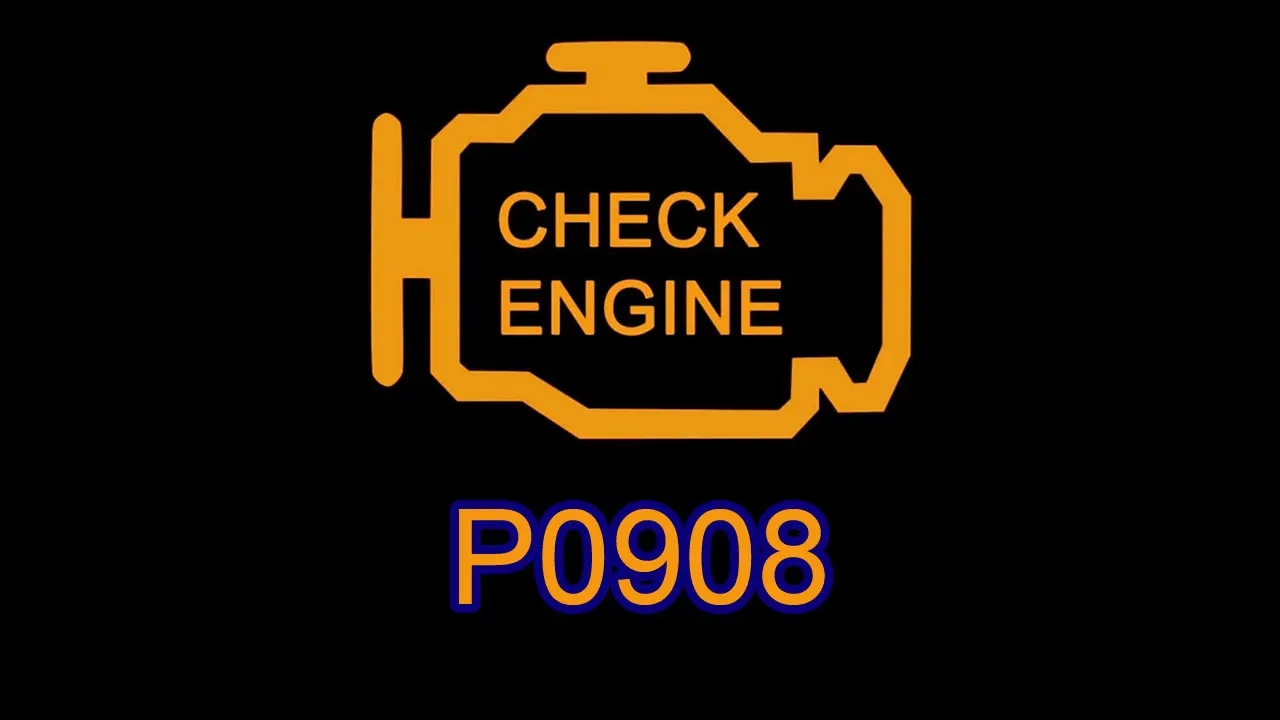
P0908 Gate Select Position Circuit Intermittent
The P0908 trouble code is an OBD-II diagnostic trouble code related to the gate select position circuit.
P0908 – Gate Select Position Circuit Intermittent
This code means that the transmission control module (TCM) has detected an intermittent or unstable signal from the gate select position circuit.
The gate select position system tells the TCM where the transmission's selector mechanism is positioned. In automated manual transmissions (AMT), dual-clutch transmissions (DCT), and other electronically controlled transmissions, this information is essential for determining whether the transmission is actually in the position commanded by the control module.
When the position signal repeatedly appears, disappears, changes unexpectedly, or does not remain within the expected parameters, the TCM may store P0908.
Possible causes include:
-
Faulty gate select position sensor
-
Intermittent wiring connection
-
Damaged wiring harness
-
Loose electrical connector
-
Corroded connector terminals
-
Poor sensor ground
-
Unstable sensor power supply
-
Damaged sensor signal wire
-
Internal actuator problem
-
Mechanical play in the selector mechanism
-
Worn selector shaft
-
Incorrect actuator calibration
-
Mechatronic unit problem
-
Low or unstable battery voltage
-
Transmission control module fault
The exact sensor and actuator arrangement varies between transmission manufacturers.
What Does P0908 Mean?
P0908 – Gate Select Position Circuit Intermittent
The transmission control module needs accurate information about the position of the transmission's selector mechanism.
A simplified system can be represented as:
Gate Select Mechanism → Position Sensor → TCM
The sensor produces an electrical signal corresponding to the selector's position.
The TCM continuously monitors this signal.
If the signal suddenly changes, disappears, returns, or becomes inconsistent with the actual selector position, the TCM can identify the condition as intermittent and store P0908.
For example:
Selector in correct position → Sensor signal normal → Signal suddenly drops → Signal returns → TCM detects intermittent condition → P0908
This is different from a permanently high or low circuit.
What Does “Intermittent” Mean?
The word “Intermittent” is particularly important in P0908.
It means that the problem does not necessarily exist continuously.
The system may operate normally for several minutes, hours, or even days before the fault occurs.
For example:
Normal signal → Temporary interruption → Normal signal → Incorrect reading → Normal signal
This makes P0908 more difficult to diagnose than a permanent electrical fault.
The problem may only appear when:
-
The transmission is hot
-
The vehicle is vibrating
-
The wiring moves
-
The connector shifts
-
The selector is under load
-
The vehicle travels over rough roads
-
Moisture reaches a connector
-
Battery voltage drops
-
The actuator operates repeatedly
What Is a Gate Select Position Sensor?
The gate select position sensor monitors the position of the transmission selector mechanism.
The sensor allows the TCM to determine whether the selector is:
-
In the correct gate
-
Between positions
-
At the commanded position
-
Outside the expected position
Depending on the transmission, the position sensor may be integrated into:
-
Gate select actuator
-
Gear selector
-
Mechatronic unit
-
Transmission position sensor assembly
Some systems use a potentiometer, Hall-effect sensor, magnetic sensor or another type of position-sensing technology.
Symptoms of P0908
Because the fault is intermittent, symptoms can also come and go.
Possible symptoms include:
-
Check Engine Light
-
Transmission warning light
-
Intermittent difficulty selecting gears
-
Delayed gear engagement
-
Harsh shifting
-
Incorrect gear indication
-
Transmission stuck in one gear
-
Transmission temporarily remaining in Neutral
-
Loss of Reverse
-
Loss of certain gears
-
Limp mode
-
Gear selection that works after restarting the vehicle
-
Intermittent clutch engagement problems
-
Transmission warning message
One of the most characteristic symptoms is that the transmission may work normally at one moment and then suddenly have difficulty selecting a gear.
Common Causes of P0908
Faulty gate select position sensor
The sensor may have an internal intermittent fault.
A worn sensor can produce an unstable position signal as the selector moves through its range.
Damaged wiring
A partially broken conductor can make electrical contact under some conditions and lose contact under others.
For example:
Vibration → Wire moves → Connection opens → P0908
Then:
Wire returns to position → Connection restored → Transmission works normally
Loose connector
A connector that is not securely locked can produce intermittent contact.
Corroded terminals
Corrosion can create unstable electrical resistance.
The signal may be correct at one moment and incorrect at another.
Poor sensor ground
An unstable ground can cause the position signal to fluctuate.
Unstable sensor power supply
If the sensor receives inconsistent voltage, its output can become unreliable.
Damaged signal wire
A signal wire can intermittently contact ground, another circuit or battery voltage.
Mechanical selector wear
Excessive mechanical play can cause the actual selector position to change relative to the expected position.
Actuator problem
A weak or sticking actuator may cause the selector to move inconsistently.
Incorrect calibration
If the transmission has lost its learned position values, the TCM may interpret normal movement as an incorrect position.
Mechatronic unit fault
An internal mechatronic problem can affect both actuator operation and position feedback.
Low battery voltage
Unstable vehicle voltage can affect electronic transmission control systems.
Transmission control module fault
A TCM input circuit problem can cause intermittent interpretation of the position sensor signal.
Can Low Transmission Fluid Cause P0908?
Low transmission fluid does not normally cause P0908 directly.
P0908 is primarily an electrical position-sensing problem.
However, on transmissions that use hydraulic actuation, incorrect fluid level can affect selector operation and actuator performance.
For this reason, fluid level may still need to be checked as part of a complete transmission diagnosis.
Can Dirty Transmission Fluid Cause P0908?
Dirty transmission fluid can contribute to:
-
Mechatronic problems
-
Valve sticking
-
Hydraulic restrictions
-
Actuator problems
-
Poor gear engagement
However, contaminated fluid does not normally create an intermittent electrical position signal by itself.
If P0908 is stored, the position sensor and its wiring should be carefully inspected.
Is P0908 a Serious Problem?
P0908 can become a serious transmission problem, especially if the intermittent fault becomes more frequent.
Initially, the vehicle may continue to operate normally.
However, an unstable gate position signal can eventually cause:
-
Incorrect gear selection
-
Limp mode
-
Loss of Reverse
-
Loss of certain gears
-
Transmission remaining in Neutral
-
Complete loss of drive
The fact that the vehicle currently shifts normally does not mean the fault should be ignored.
Can You Drive With P0908?
If the vehicle is shifting normally and the problem occurs only occasionally, it may be possible to drive it carefully to a repair facility.
However, intermittent transmission faults can become permanent without warning.
Avoid continued driving if:
-
Gear selection becomes unpredictable
-
The transmission enters limp mode
-
The vehicle remains in Neutral
-
Reverse stops working
-
The vehicle loses drive
-
Severe or repeated shifting problems occur
If the transmission cannot reliably determine or select the correct gear, professional diagnosis should be performed as soon as possible.
P0908 vs. P0907
These codes are closely related.
P0908 – Gate Select Position Circuit Intermittent
The position circuit produces an intermittent or unstable signal.
P0907 – Gate Select Position Circuit High
The TCM detects a higher-than-expected signal from the gate select position circuit.
In simple terms:
P0908 → Signal is intermittent
P0907 → Signal is too high
P0908 vs. P0906
P0906 – Gate Select Position Circuit Low
The TCM detects a lower-than-expected signal.
P0908 – Gate Select Position Circuit Intermittent
The signal is unstable or intermittently lost.
The distinction is important because P0906 may point more directly toward a low-signal condition, while P0908 requires investigation into why the signal is dropping in and out.
P0908 vs. P0909
P0908 – Gate Select Position Circuit Intermittent
Focuses on an unstable position signal.
P0909 – Gate Select Control Error
Indicates a broader control problem involving the gate selection system.
A faulty position sensor can potentially cause both codes.
P0908 vs. P0910
P0908 concerns the gate select position signal.
P0910 concerns an open gate select actuator circuit.
Therefore, P0908 is generally associated with position feedback, while P0910 points toward an interruption in the actuator control circuit.
How to Diagnose P0908
P0908 can be challenging because the fault may disappear while the vehicle is being tested.
A good diagnosis should therefore focus on finding the cause of the intermittent signal.
1. Scan all transmission modules
Use a professional diagnostic scanner and check:
-
TCM
-
PCM
-
Mechatronic unit
-
Transmission-related modules
Record stored and pending codes.
Look for other position, actuator or communication codes.
2. Check freeze-frame data
Review:
-
Engine RPM
-
Vehicle speed
-
Transmission temperature
-
Selected gear
-
Commanded gear
-
Actual gear
-
Battery voltage
-
Position sensor value
This can show when the intermittent problem occurred.
3. Monitor live position data
Watch the gate select position signal while operating the transmission.
The signal should change smoothly and consistently as the selector moves.
Look for:
-
Sudden jumps
-
Signal dropouts
-
Unexpected changes
-
Frozen values
-
Position values that do not match the commanded gate
4. Perform a wiggle test
If appropriate for the system, gently move the wiring harness and connectors while monitoring the position signal.
If the signal suddenly changes, the wiring or connector may have an intermittent fault.
Care must be taken not to damage the harness during this test.
5. Inspect the position sensor connector
Check for:
-
Corrosion
-
Loose terminals
-
Bent pins
-
Moisture
-
Oil contamination
-
Damaged locking mechanism
6. Inspect the wiring harness
Look for:
-
Broken wires
-
Chafing
-
Pinched wiring
-
Damaged insulation
-
Previous repairs
-
Harness movement near the transmission
A wire can look normal externally but have broken internal strands.
7. Check sensor power and ground
Verify that the position sensor receives a stable power supply and ground.
An intermittent power or ground connection can create an intermittent signal.
8. Check the signal circuit
Monitor the signal while moving the selector through its operating range.
Depending on the sensor design, the signal should change according to manufacturer specifications.
9. Test the position sensor
If the sensor is accessible and separately serviceable, test it according to the manufacturer's procedure.
Check for:
-
Correct resistance
-
Smooth signal change
-
Correct reference voltage
-
Stable output
The exact values depend on the sensor type.
10. Check actuator operation
If the actuator moves the selector, test whether it operates smoothly.
A sticking actuator can cause the selector position to change unexpectedly.
11. Inspect the mechanical selector
Check for:
-
Excessive play
-
Binding
-
Worn components
-
Damaged selector shaft
-
Damaged shift fork
-
Mechanical obstruction
12. Check battery and charging voltage
Verify:
-
Battery voltage
-
Charging voltage
-
Main grounds
-
Transmission power supply
Voltage instability can cause intermittent electronic faults.
13. Check mechatronic unit
If the position sensor is integrated into the mechatronic system, additional testing may be required.
14. Check calibration and adaptation
Some transmissions require a gate position learning procedure.
If the learned values are incorrect, perform the manufacturer-specified adaptation procedure.
15. Evaluate the TCM
Only after the sensor, wiring, power supply, actuator, mechanical selector and mechatronic system have been tested should the TCM be considered as a possible cause.
Why P0908 Can Be Difficult to Diagnose
The biggest problem with P0908 is that the fault may disappear.
A technician may inspect the vehicle and find:
Sensor signal → Normal
Wiring → Normal
Connector → Normal
Transmission operation → Normal
Yet the vehicle may still have an intermittent fault.
The problem may occur only when:
-
The wiring is hot
-
The transmission is hot
-
The harness vibrates
-
The connector moves
-
The selector reaches a particular position
-
The vehicle travels over bumps
For this reason, freeze-frame data and live-data monitoring are particularly useful.
P0908 After Transmission Repair
If P0908 appears immediately after transmission work, inspect the components that were disconnected or moved.
Pay particular attention to:
-
Gate position sensor
-
Actuator connector
-
Mechatronic connectors
-
Transmission harness
-
Sensor wiring
-
Ground connections
Also check whether the transmission requires a gate position calibration or adaptation procedure after the repair.
A connector that is not fully locked can cause an intermittent fault even if it appears visually connected.
P0908 After Transmission Replacement
If P0908 appears after transmission replacement, check:
-
Correct transmission installation
-
Correct position sensor
-
Sensor compatibility
-
Connector compatibility
-
Wiring connections
-
TCM communication
-
Mechatronic configuration
-
Software compatibility
-
Position calibration
-
Required adaptation procedures
The replacement transmission may be mechanically correct but still require electronic adaptation.
Can P0908 Damage the Transmission?
P0908 itself does not automatically mean that the transmission has internal damage.
However, an incorrect or unstable position signal can cause the TCM to make incorrect decisions about gear selection.
Repeated incorrect gear-selection attempts can potentially increase stress on:
-
Actuators
-
Clutches
-
Selector components
-
Transmission gears
-
Mechatronic components
Therefore, an intermittent fault should be diagnosed before it develops into a more serious transmission problem.
Common Diagnostic Mistakes With P0908
Common mistakes include:
-
Replacing the position sensor immediately
-
Ignoring the wiring harness
-
Ignoring connector terminals
-
Not checking sensor ground
-
Failing to monitor live data
-
Not performing a wiggle test
-
Ignoring mechanical selector wear
-
Replacing the actuator without testing the position sensor
-
Replacing the TCM prematurely
-
Skipping adaptation
-
Assuming the transmission itself is damaged
What Is the Correct Repair for P0908?
The correct repair depends on the actual cause.
Possible repairs include:
-
Replacing the gate select position sensor
-
Repairing damaged wiring
-
Repairing broken conductors
-
Replacing damaged connector terminals
-
Cleaning or replacing corroded connectors
-
Repairing sensor power or ground connections
-
Repairing the actuator
-
Repairing the mechanical selector
-
Replacing worn selector components
-
Repairing or replacing the mechatronic unit
-
Correcting transmission fluid level where applicable
-
Performing position sensor calibration
-
Performing actuator adaptation
-
Performing transmission relearn procedures
-
Updating TCM software where applicable
-
Replacing the TCM only after proper diagnosis
After the repair, clear the diagnostic codes and perform a complete transmission test.
The vehicle should be tested under different operating conditions to confirm that the intermittent fault does not return.
Final Thoughts on P0908
P0908 – Gate Select Position Circuit Intermittent indicates that the transmission control module has detected an unstable, intermittent or temporarily lost signal from the gate select position circuit.
The most important areas to investigate are the position sensor, wiring harness, connector terminals, sensor power and ground, actuator, mechanical selector, mechatronic unit and calibration.
Because P0908 is an intermittent code, the vehicle may appear to operate normally during a basic inspection. The fault can return only when the transmission becomes hot, the wiring moves, vibration occurs or the selector reaches a particular position.
The most effective diagnostic approach is to monitor live gate position data, compare commanded and actual positions, inspect the wiring and connectors, verify sensor power and ground, test the position sensor, inspect actuator operation and check the mechanical selector.
P0908 does not automatically mean that the transmission needs to be replaced. In many cases, the underlying problem can be traced to a faulty sensor, damaged wiring, poor connector contact, calibration problem or actuator issue.