TR
TR EN
EN

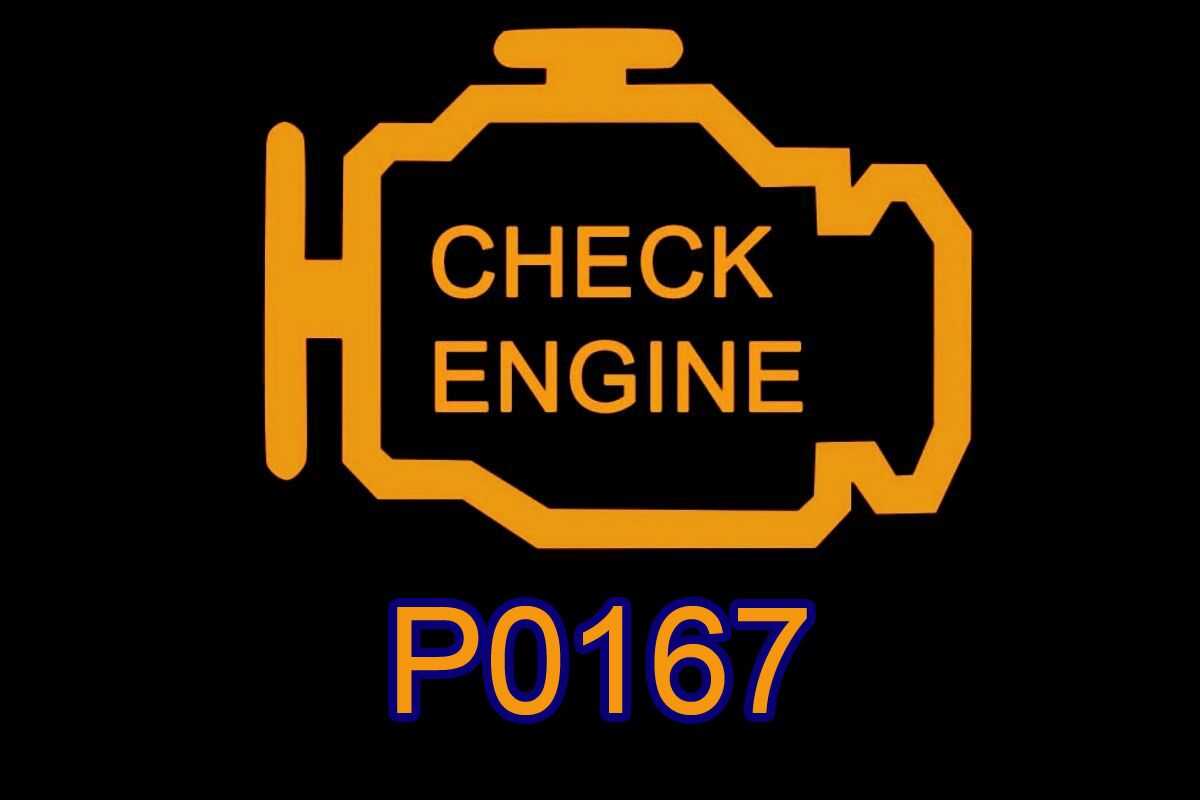
P0167 O2 Sensor Heater Circuit Malfunction (Bank 2, Sensor 3)
The P0167 trouble code indicates that the engine control module (ECM/PCM) has detected a malfunction in the oxygen sensor heater circuit for Bank 2, Sensor 3.
Unlike an oxygen-sensor code that indicates a problem with the sensor's actual oxygen reading, P0167 is primarily concerned with the electrical heating element inside the oxygen sensor and the circuit that controls it.
The sensor may still be capable of producing a signal, but if its heater does not operate correctly, it may take too long to reach operating temperature or may not reach the temperature required for accurate measurement.
This is particularly important during cold starts, because an oxygen sensor normally needs to reach a certain temperature before its output becomes useful to the engine control system.
First, What Are Bank 2 and Sensor 3?
Understanding the sensor location is essential before diagnosing P0167.
Bank 2 refers to the side of the engine that does not contain cylinder number 1.
On an inline four-cylinder or inline six-cylinder engine, there is normally only one cylinder bank, so Bank 2 may not exist.
Bank 2 is generally found on engines such as:
-
V6
-
V8
-
V10
-
V12
The exact physical location depends on the engine.
Sensor 3 identifies the third oxygen sensor position associated with that bank in the manufacturer's sensor numbering system.
It is important not to assume that Sensor 3 is always located in exactly the same place on every vehicle.
Depending on the exhaust configuration, it may be positioned farther downstream in the exhaust system, potentially after one or more catalytic converters.
The vehicle's wiring diagram and service information should be used to identify the correct sensor.
What Does the Heater Actually Do?
An oxygen sensor needs to reach an appropriate operating temperature before it can accurately measure oxygen content in the exhaust.
Modern oxygen sensors therefore commonly contain an internal electric heating element.
The heater allows the sensor to reach operating temperature much faster than it would using exhaust heat alone.
The system can then begin using the sensor's information sooner after startup.
The heater circuit generally consists of:
-
Heating element inside the oxygen sensor
-
Power supply
-
Ground or control circuit
-
Wiring
-
Connector
-
ECM/PCM control
The exact arrangement varies between manufacturers.
Why Does the ECM Monitor the Heater?
The ECM does not simply switch the heater on and forget about it.
It monitors the electrical behavior of the circuit.
If the expected electrical characteristics are not present, the ECM can determine that the heater circuit is malfunctioning and store P0167.
Possible problems include:
-
Open heater circuit
-
Short circuit
-
Damaged heater element
-
Wiring problem
-
Connector problem
-
Power supply problem
-
Ground/control problem
-
ECM driver problem
P0167 Is Not Primarily an Oxygen Reading Problem
This distinction can save unnecessary parts replacement.
A code such as P0136, for example, concerns oxygen sensor circuit behavior.
P0167 specifically concerns the heater circuit.
The sensor's sensing element and the heating element are different parts of the same oxygen sensor assembly.
Therefore, an oxygen sensor can potentially produce a reasonable oxygen signal while still having a failed heater.
Conversely, a heater circuit problem does not automatically mean that the sensing element itself is defective.
Common Causes of P0167
Failed oxygen sensor heater element
The internal heating element can burn out or develop an electrical fault.
This is one of the more common causes.
Blown fuse
Many vehicles supply power to multiple oxygen sensor heaters through one or more fuses.
A blown fuse can disable the heater circuit.
If a fuse has failed, however, replacing the fuse without finding out why it failed may only result in another failure.
Damaged wiring
The oxygen sensor wiring is exposed to a harsh environment.
It can be affected by:
-
Exhaust heat
-
Vibration
-
Road debris
-
Oil contamination
-
Chafing
-
Previous repairs
A wire that has melted against the exhaust can create an open or short circuit.
Corroded connector
Moisture or contamination can cause poor electrical contact at the sensor connector.
Loose connector
If the connector is not fully seated, the heater circuit may intermittently lose power or ground.
Short to ground
A damaged wire can contact the engine, exhaust system, chassis, or another grounded component.
Short to voltage
Depending on circuit design, unwanted voltage on the heater control circuit can also cause a malfunction.
Poor ground
Some heater circuits use a controlled ground from the ECM.
A problem with that circuit can prevent the heater from operating correctly.
ECM/PCM driver fault
The ECM may control the heater directly or indirectly.
A failed control driver is possible, but it should normally be investigated only after the sensor, fuse, power supply, wiring and connectors have been tested.
Symptoms of P0167
The symptoms can vary considerably.
Possible symptoms include:
-
Check Engine Light
-
Increased emissions
-
Poor fuel economy
-
Slightly rough operation during warm-up
-
Longer period before closed-loop operation
-
Cold-start drivability problems
-
Hesitation after startup
-
Increased fuel consumption
In many vehicles, the driver may notice almost nothing except the Check Engine Light.
This is because the heater primarily helps the oxygen sensor reach operating temperature quickly.
Once the exhaust becomes hot enough naturally, the sensor may begin working despite the heater fault.
Why the Vehicle May Still Run Normally
Suppose the oxygen sensor heater fails.
During the first part of a cold start, the sensor may not reach its normal operating temperature quickly.
The ECM can continue using other strategies while waiting for reliable sensor information.
Once exhaust temperature rises sufficiently, the sensor may begin operating normally.
As a result, the vehicle may:
Start normally → drive normally → illuminate the Check Engine Light → show no obvious performance problem.
This does not mean the heater circuit is healthy.
How to Diagnose P0167
The most effective approach is to treat P0167 as an electrical circuit diagnosis, rather than immediately replacing the oxygen sensor.
Confirm the Correct Sensor
Before touching the wiring, verify exactly which sensor the manufacturer identifies as Bank 2 Sensor 3.
Do not rely solely on assumptions based on physical position.
Check:
-
Engine configuration
-
Cylinder numbering
-
Bank identification
-
Sensor numbering
-
Wiring diagram
-
Exhaust layout
This is especially important on vehicles with several oxygen sensors.
Scan for Other Codes
Read all stored and pending DTCs.
Look for additional codes relating to:
-
Other oxygen sensors
-
Oxygen sensor heaters
-
Heater power supply
-
Fuel mixture
-
Catalytic converter operation
-
Engine coolant temperature
-
Battery voltage
If several oxygen sensor heater codes appear simultaneously, a shared fuse, power supply, ground or wiring problem becomes more likely.
Check the Fuse
If the vehicle uses a shared fuse for oxygen sensor heaters, inspect the relevant fuse.
A blown fuse is an important clue.
But do not simply install another fuse and assume the repair is complete.
If the new fuse immediately fails, there may be a short circuit in the heater wiring or another component supplied by that fuse.
Inspect the Sensor Wiring
The oxygen sensor is mounted close to the exhaust, which exposes its wiring to substantial heat.
Look for:
-
Melted insulation
-
Burn marks
-
Chafing
-
Broken wires
-
Stretched wiring
-
Previous repairs
-
Wiring touching the exhaust
-
Wiring trapped against brackets
A harness that has melted against an exhaust component can create exactly the kind of electrical fault that produces a heater code.
Inspect the Connector
Check the connector for:
-
Corrosion
-
Bent pins
-
Loose terminals
-
Water intrusion
-
Damaged locking tabs
-
Terminals pushed backward
-
Contamination
Do not overlook the connector simply because the sensor itself looks normal.
Test the Heater Element
The heater element can be tested electrically according to the manufacturer's specifications.
Depending on the sensor design, a technician may measure resistance across the heater terminals.
If the heating element is electrically open or outside the manufacturer's specified range, the sensor may need replacement.
There is no universal oxygen-sensor heater resistance value that applies to every vehicle.
The correct specification must come from the vehicle manufacturer.
Check Heater Power
The heater needs an appropriate electrical supply.
The technician should verify whether the sensor is receiving the required voltage under the conditions specified by the manufacturer.
If power is missing, replacing the oxygen sensor will not solve the problem.
The investigation should continue toward:
-
Fuse
-
Relay, if equipped
-
Wiring
-
Power distribution
-
Connector
-
Control circuit
Check the Heater Control Circuit
Some systems provide battery voltage to the heater and control the other side through the ECM.
Other designs may differ.
The technician therefore needs the vehicle-specific wiring diagram to determine which side is power and which side is controlled.
A missing control signal can be caused by:
-
Broken wiring
-
Poor connection
-
Short circuit
-
ECM driver problem
Check for Voltage Drop
A circuit may show voltage with a basic test but still fail under load.
A poor connection or corroded terminal can create excessive resistance.
The result may be:
Voltage appears correct with little or no load → heater cannot receive sufficient current when operating.
Voltage-drop testing can reveal this type of problem.
A Multimeter Is Not Always Enough
A multimeter is useful for basic circuit checks, but intermittent or load-related problems may require additional testing.
Depending on the vehicle, a technician may use:
-
Test light
-
Multimeter
-
Current measurement
-
Oscilloscope
-
Scan-tool heater status
-
Manufacturer-specific diagnostic equipment
The correct tool depends on how the heater is controlled.
Check Battery and Charging Voltage
The oxygen sensor heater is an electrical load.
If system voltage is unusually low, heater operation may be affected.
If P0167 appears alongside battery or charging-system codes, the electrical supply should be evaluated.
However, a normal battery voltage does not rule out a localized heater-circuit problem.
P0167 and a Failed Oxygen Sensor
If the heater element inside the sensor is open, replacing the sensor may correct P0167.
But that conclusion should come from testing.
For example:
Heater resistance out of specification → sensor likely faulty
is very different from:
P0167 stored → replace sensor without testing
The second approach can result in unnecessary parts replacement.
P0167 and Wiring Damage
Oxygen sensor wiring failures are particularly important because of the sensor's location.
The wiring can become damaged if it is routed too close to the exhaust.
Over time, heat can harden or melt the insulation.
The wire may then:
-
Short to ground
-
Short to another circuit
-
Break internally
-
Intermittently lose contact
If the code appeared after exhaust work, engine work, or oxygen sensor replacement, inspect the wiring carefully.
What If P0167 Appears After Replacing the Oxygen Sensor?
If the code returns immediately after installing a new sensor, do not automatically assume that the new sensor is defective.
Check:
-
Correct sensor part number
-
Connector compatibility
-
Connector seating
-
Wiring
-
Fuse
-
Heater power
-
Heater control circuit
-
Sensor installation
An incorrect replacement sensor can have a different heater configuration or electrical characteristic.
Can a Blown Fuse Cause P0167?
Yes.
If the oxygen sensor heater receives power through a fuse and that fuse is open, the heater cannot operate.
But the fuse itself may not be the root cause.
If it has blown because of a short circuit, simply replacing it may cause the same problem again.
The cause of the blown fuse should be identified.
Can P0167 Affect Fuel Economy?
It can.
The oxygen sensor heater allows the sensor to become operational sooner.
If the sensor remains cold for longer than expected, the ECM may delay or modify certain closed-loop fuel-control strategies.
The actual effect on fuel economy depends on the vehicle and the operating conditions.
A failed heater does not necessarily cause a dramatic increase in fuel consumption.
Can P0167 Damage the Catalytic Converter?
P0167 does not automatically mean that the catalytic converter is being damaged.
However, if the heater problem contributes to incorrect fueling during operation or exists together with other fuel-control faults, emissions can increase.
If additional mixture or misfire codes are present, they should be diagnosed rather than focusing only on P0167.
Can You Drive With P0167?
Usually, a vehicle with an isolated P0167 and normal drivability can still be driven for a limited period.
However, the fault should be repaired rather than ignored.
Continued operation may result in:
-
Increased emissions
-
Poor fuel economy
-
Delayed oxygen-sensor operation
-
Cold-start drivability problems
If the vehicle also has severe misfire, major power loss, overheating, or other serious symptoms, the situation should be treated separately and more urgently.
P0167 vs Other Oxygen Sensor Heater Codes
P0167 belongs to a family of oxygen-sensor heater-related diagnostic codes.
The sensor location is what makes the codes different.
For example:
P0165 relates to an oxygen sensor circuit on Bank 2 Sensor 3.
P0167 specifically identifies a heater circuit malfunction for Bank 2 Sensor 3.
The distinction between the sensor circuit and the heater circuit is important.
An oxygen sensor assembly contains multiple electrical functions, so a fault in one part does not necessarily mean every part of the sensor has failed.
A Practical Diagnostic Example
Imagine a V6 vehicle with P0167.
The Check Engine Light is on, but the vehicle drives normally.
The technician identifies Bank 2 Sensor 3 and inspects its wiring.
The harness has melted against the exhaust pipe.
The heater circuit is now shorted.
In this situation, replacing the oxygen sensor alone may not be sufficient if the wiring is also damaged.
The correct repair involves restoring the wiring and confirming that the heater circuit is operating correctly.
Now consider another vehicle.
The wiring, connector, fuse, power supply and control circuit all test correctly.
The heater element itself is electrically open.
In this case, the oxygen sensor assembly is the likely source of the fault.
Final Thoughts on P0167
P0167 O2 Sensor Heater Circuit Malfunction (Bank 2, Sensor 3) is primarily an electrical heater-circuit problem, not a direct statement that the oxygen sensor's ability to measure exhaust oxygen has failed.
The diagnosis should establish:
Is the heater receiving power?
Is the ground or control circuit functioning?
Is the wiring intact?
Is the connector making reliable contact?
Is the heater element within specification?
Only after these questions have been answered should the oxygen sensor itself be condemned.
Because the sensor is located close to the exhaust, heat-damaged wiring and connectors deserve particular attention. A blown fuse, open heater element, poor connection, or damaged harness can all produce P0167.
In other words, the code identifies the heater circuit that is malfunctioning. It does not, by itself, tell you which component in that circuit needs to be replaced.