TR
TR EN
EN

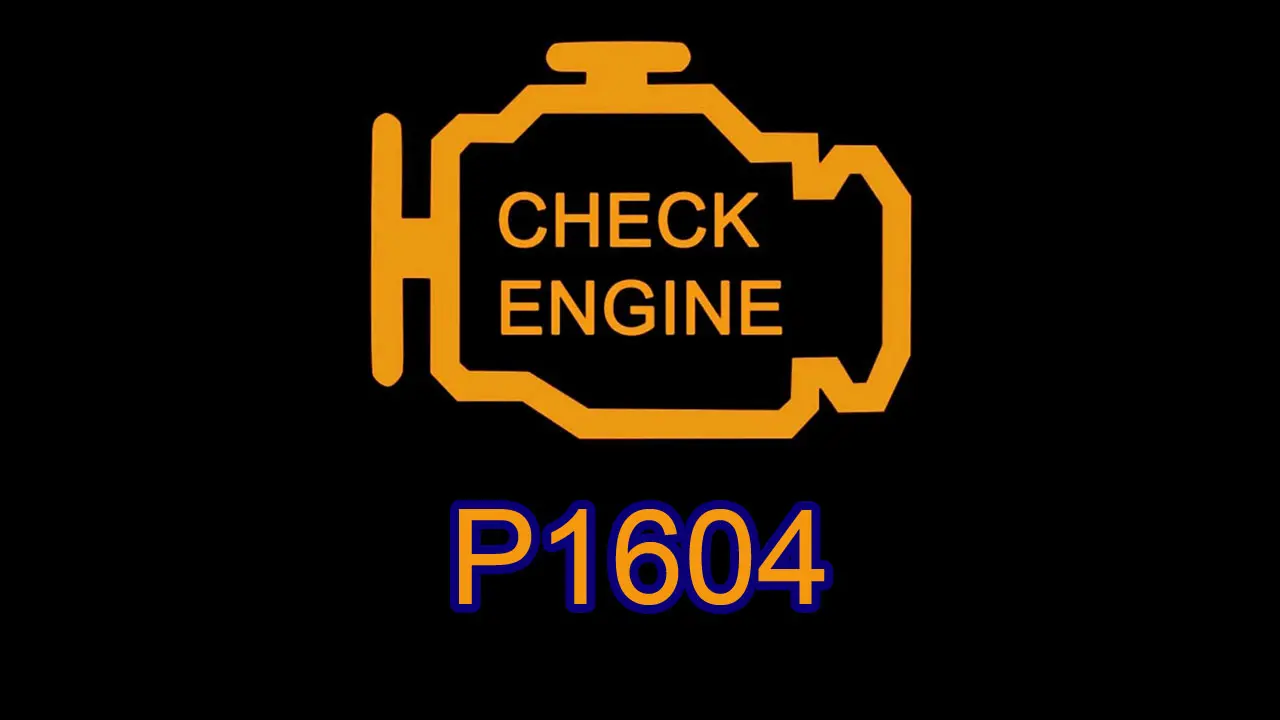
P1604 Startability Malfunction
The P1604 Startability Malfunction trouble code is associated with a problem detected during the engine starting process. In simple terms, the engine control system has determined that the vehicle did not start, did not start correctly, or did not achieve the expected running condition within the required time.
P1604 is particularly associated with Toyota and Lexus vehicles, although the exact definition and diagnostic strategy can vary between manufacturers. This is an important point because P1604 is not a universal OBD-II code with exactly the same meaning on every vehicle.
The code itself does not identify one specific failed component. A weak battery, fuel delivery problem, ignition problem, immobilizer issue, crankshaft position signal problem, or an engine that takes too long to start can all potentially lead to a startability-related fault.
What Does P1604 Mean?
P1604 generally means that the engine control module has detected an abnormal starting condition.
The ECU monitors several parameters when the ignition is switched on and the starter is operated. It can evaluate things such as:
-
Engine cranking speed
-
Crankshaft position signal
-
Camshaft position signal
-
Fuel injection operation
-
Fuel pressure
-
Ignition operation
-
Immobilizer authorization
-
Battery voltage
-
Engine coolant temperature
-
Air and fuel mixture conditions
-
Whether the engine actually begins running
If the expected starting sequence does not occur, the ECU may store P1604.
This means P1604 should be considered a starting-system or engine-starting diagnostic clue rather than proof that a particular component has failed.
What Is a Startability Malfunction?
A normal engine start consists of several systems working together.
When the driver turns the key or presses the start button, the starter motor must rotate the engine at an adequate speed. The ECU must recognize crankshaft movement, determine engine position, activate fuel injection and ignition where applicable, and establish a stable combustion process.
If one of these conditions is missing or takes too long, the engine may crank without starting, start and immediately stall, or require an unusually long cranking period.
The ECU can interpret this as a startability malfunction.
For example, a vehicle with a weak battery may still crank the engine, but the voltage can fall low enough during cranking that the ECU, ignition system, fuel system, or electronic throttle system does not operate correctly. The engine may then fail to start and P1604 may be stored.
Symptoms of P1604
The symptoms can vary considerably depending on the actual cause.
Common symptoms include:
-
Engine cranks but does not start
-
Long cranking time before starting
-
Intermittent no-start condition
-
Engine starts only after several attempts
-
Engine starts and immediately stalls
-
Rough running immediately after startup
-
Check Engine Light
-
Starting difficulty when the engine is cold
-
Starting difficulty when the engine is hot
-
Weak or slow starter operation
-
Other engine or immobilizer-related warning lights
In some cases, the vehicle may start and drive normally after the problem has occurred. This can make P1604 particularly difficult to diagnose because the original starting condition may no longer be present.
Common Causes of P1604
There is no single cause that applies to every vehicle. The most likely causes should be determined from the vehicle's symptoms and additional diagnostic codes.
Weak or discharged battery
Battery condition should be one of the first things checked.
A battery can have enough power to illuminate the dashboard and operate accessories but still have insufficient reserve capacity during cranking. Excessive voltage drop while the starter is operating can interfere with electronic control systems.
Battery terminals and ground connections should also be checked for corrosion, looseness, or excessive resistance.
Starter motor problems
A worn starter can rotate the engine too slowly.
The engine may sound as though it is cranking, but if cranking speed is below the required level, fuel and ignition systems may not be able to establish combustion properly.
A starter that draws excessive current can also cause significant battery voltage drop.
Fuel delivery problems
Insufficient fuel pressure or inadequate fuel delivery can result in a crank-no-start condition.
Possible causes include:
-
Weak fuel pump
-
Fuel pump electrical problem
-
Restricted fuel filter
-
Fuel pressure regulator problem
-
Faulty fuel pressure sensor
-
Injector problem
-
Fuel supply restriction
On direct-injection engines and diesel engines, the required pressure and diagnostic procedure can be considerably different from a conventional gasoline fuel system.
Ignition problems
On gasoline engines, the ECU needs a reliable ignition system to start combustion.
Possible problems include:
-
Worn or damaged spark plugs
-
Faulty ignition coil
-
Ignition power supply problem
-
Wiring or connector problems
-
Incorrect ignition control
-
Engine timing problems
If the engine cranks normally but there is no spark, the diagnosis should move toward the ignition and engine-position systems rather than immediately replacing parts associated with P1604.
Crankshaft or camshaft position signal problems
The ECU needs to know where the engine is during cranking.
A faulty crankshaft position sensor, camshaft position sensor, wiring problem, damaged connector, or an abnormal timing signal can prevent the ECU from correctly determining engine position.
This can result in a crank-no-start condition.
If codes such as P0335, P0336, P0340, P0341, or related manufacturer-specific codes are stored together with P1604, they should be investigated carefully.
Immobilizer or key authorization problem
Modern vehicles often prevent the engine from starting unless the immobilizer system authorizes the key.
A problem with the key transponder, immobilizer antenna, body control module, communication network, or ECU authorization can result in a no-start condition.
Depending on the vehicle, an immobilizer warning may also appear on the instrument cluster.
Fuel mixture problems
An engine may crank normally but fail to start because the air-fuel mixture is incorrect.
Possible causes include:
-
Faulty MAF sensor
-
MAP sensor problem
-
Excessive intake air leak
-
Stuck-open injector
-
Insufficient fuel pressure
-
Excessive fuel pressure
-
EVAP purge valve stuck open
-
Coolant temperature sensor problem
A severely incorrect temperature signal can also cause the ECU to calculate an inappropriate starting fuel mixture.
P1604 and the Battery
The battery deserves special attention because starting is one of the most demanding electrical operations in a vehicle.
During cranking, battery voltage naturally drops. If the battery is weak or the electrical connections have excessive resistance, the voltage may fall further than expected.
This can produce multiple apparently unrelated symptoms.
For example, the vehicle might show:
-
Multiple warning lights
-
Communication codes
-
Electronic throttle warnings
-
Immobilizer-related messages
-
Starting problems
-
Stored low-voltage codes
Therefore, if P1604 appears together with several communication or voltage-related codes, checking the battery and charging system before replacing engine components can save considerable diagnostic time.
P1604 Does Not Automatically Mean the Starter Is Bad
One common misunderstanding is to interpret "startability malfunction" as a starter motor failure.
That is not necessarily correct.
The starter is responsible for rotating the engine, but P1604 concerns the overall ability of the engine to reach a successful starting condition.
A vehicle can crank strongly and still store P1604 because of:
-
No fuel
-
No spark
-
Missing crankshaft signal
-
Immobilizer authorization problem
-
Incorrect fuel mixture
-
Incorrect engine timing
-
Insufficient fuel pressure
Likewise, a weak starter can contribute to the problem if the engine is not cranking fast enough.
How Is P1604 Diagnosed?
A proper diagnosis should begin with the actual starting behavior.
The first question is:
Does the engine crank normally?
If the engine does not crank, attention should move toward the battery, starter, starter relay, power supply, grounds, and starting control circuit.
If the engine cranks normally but does not start, the diagnostic direction changes significantly.
The next checks should include:
1. Scan all stored codes
Do not diagnose P1604 in isolation.
Look for crankshaft, camshaft, fuel pressure, ignition, immobilizer, communication, battery voltage, and other engine-related codes.
Additional codes may identify the actual cause.
2. Check battery condition
Inspect battery voltage, terminal condition, ground connections, and voltage drop during cranking.
A battery should not be condemned solely because the vehicle has P1604. Its actual condition should be tested.
3. Observe engine RPM while cranking
A diagnostic scanner can often display engine speed during cranking.
If the ECU shows no engine RPM while the starter is turning the engine, a crankshaft position signal problem becomes an important possibility.
The exact expected cranking speed depends on the engine and vehicle.
4. Check fuel pressure
If the engine cranks but does not start, verify whether the actual fuel pressure reaches the required level during the starting event.
On vehicles with electronically controlled fuel systems, compare commanded and actual pressure where the scan tool supports it.
5. Check ignition
On gasoline engines, verify whether ignition is actually occurring during cranking.
A no-spark condition can result from the ignition coils, spark plugs, wiring, ECU control, crankshaft/camshaft signals, or other related systems.
6. Check injector operation
Fuel injection should also be evaluated.
An injector problem can cause a no-start condition, but so can a lack of fuel pressure or an ECU that is not commanding injection because a required engine-position or immobilizer condition is missing.
7. Check immobilizer status
If the vehicle has an immobilizer warning or a key-related message, check whether the ECU is receiving the required authorization.
Do not overlook this system simply because the engine and starter appear mechanically normal.
P1604 and Crank-No-Start
A useful diagnostic distinction is between three different situations:
No crank:
The starter does not rotate the engine. Investigate battery, starter, relays, wiring, grounds, and starting authorization.
Crank but no start:
The starter rotates the engine but combustion does not begin. Investigate fuel, ignition, engine-position signals, immobilizer, compression, and timing.
Long crank before starting:
The engine eventually starts, but it takes much longer than normal. Fuel pressure retention, temperature inputs, mixture problems, battery performance, starter speed, and sensor signals become important possibilities.
P1604 can be associated with any of these situations depending on the vehicle and manufacturer's diagnostic logic.
Can a Faulty Crankshaft Sensor Cause P1604?
Yes, it can be a possible cause.
The ECU needs a reliable crankshaft signal to determine engine speed and position. If that signal is missing or implausible during starting, the ECU may be unable to synchronize fuel injection and ignition correctly.
However, P1604 by itself does not prove that the crankshaft position sensor is defective.
The sensor, wiring, connector, trigger wheel, sensor gap, power supply, ground, or signal circuit may all need to be considered.
Can a Bad Fuel Pump Cause P1604?
Yes.
If the fuel pump cannot generate or maintain the required fuel pressure, the engine may crank normally without starting.
However, the correct approach is to measure fuel pressure and compare it with the manufacturer's specifications rather than replacing the pump simply because P1604 is present.
A fuel pressure sensor, wiring problem, fuel filter restriction, regulator, or injector-related problem can create similar symptoms.
Can P1604 Be Caused by Low Battery Voltage?
Yes.
Low voltage during starting can interfere with the operation of multiple electronic systems.
This is especially important if P1604 appears after:
-
The vehicle has been parked for a long time
-
The battery is old
-
The vehicle has recently required a jump start
-
The starter sounds slow
-
Several unrelated warning lights appear simultaneously
Nevertheless, the battery should be tested rather than assumed to be the cause.
Does P1604 Mean the Engine Is Damaged?
Not necessarily.
P1604 is not an engine-damage code.
It indicates a starting-related malfunction detected by the control system. The underlying cause could be something relatively simple such as a weak battery or poor electrical connection, or something more involved such as fuel pressure, engine timing, sensor synchronization, or an immobilizer problem.
The presence of P1604 alone does not justify replacing major engine components.
Is It Safe to Drive With P1604?
This depends on whether the vehicle currently starts and operates normally.
If the vehicle starts normally and the only symptom is a stored P1604, it may still be possible to drive temporarily while arranging diagnosis.
However, if the vehicle has:
-
Repeated no-start conditions
-
Severe hesitation
-
Engine stalling
-
Flashing Check Engine Light
-
Severe misfire
-
Very low battery voltage
-
Fuel leakage
-
Overheating
-
Major loss of power
continued driving may not be appropriate.
A vehicle that has already demonstrated an intermittent starting problem can also leave you stranded if the underlying fault becomes permanent.
What Should Be Replaced for P1604?
There is no universal P1604 repair.
Depending on the diagnosis, the repair could involve:
-
Battery
-
Battery terminals or ground connection
-
Starter motor
-
Starter circuit wiring
-
Fuel pump
-
Fuel pressure regulator
-
Fuel pressure sensor
-
Injector
-
Spark plug
-
Ignition coil
-
Crankshaft position sensor
-
Camshaft position sensor
-
Wiring or connector
-
Immobilizer-related component
-
Engine timing components
-
Air or fuel system components
In some cases, no component needs to be replaced at all. A loose connector, corroded terminal, poor ground, or other electrical connection can be enough to create a starting problem.
P1604 Diagnostic Approach
A sensible diagnostic sequence is:
-
Confirm whether the engine cranks.
-
Scan for all stored and pending codes.
-
Check battery condition and voltage during cranking.
-
Verify starter operation and engine cranking speed.
-
Check engine RPM on the scan tool during cranking.
-
Verify crankshaft and camshaft synchronization.
-
Check fuel pressure and fuel delivery.
-
Check ignition on gasoline engines.
-
Verify injector operation.
-
Check immobilizer authorization if applicable.
-
Inspect relevant wiring, connectors, grounds, and power supplies.
-
Check compression and mechanical timing if electrical and fuel tests are normal.
-
Clear the code after the repair and verify that the engine starts normally under the conditions that originally produced the fault.
The important point is that P1604 should be treated as a starting-system symptom recorded by the ECU, not as a diagnosis of one particular component.
Final Point About P1604
P1604 Startability Malfunction can look like a simple "engine won't start" code, but the underlying diagnostic possibilities are much broader. The starting process depends on adequate electrical power, sufficient cranking speed, correct engine-position information, fuel delivery, ignition or injection control, immobilizer authorization, and proper mechanical engine operation.
For that reason, replacing the battery, starter, fuel pump, crankshaft sensor, or ECU without testing can easily lead to unnecessary repairs.
The most useful clues are how the engine behaves during the failed start, what other DTCs are stored, engine RPM during cranking, battery voltage under load, fuel pressure, and whether the ECU is receiving valid crankshaft/camshaft signals. Those observations usually narrow the problem much faster than P1604 alone.