TR
TR EN
EN

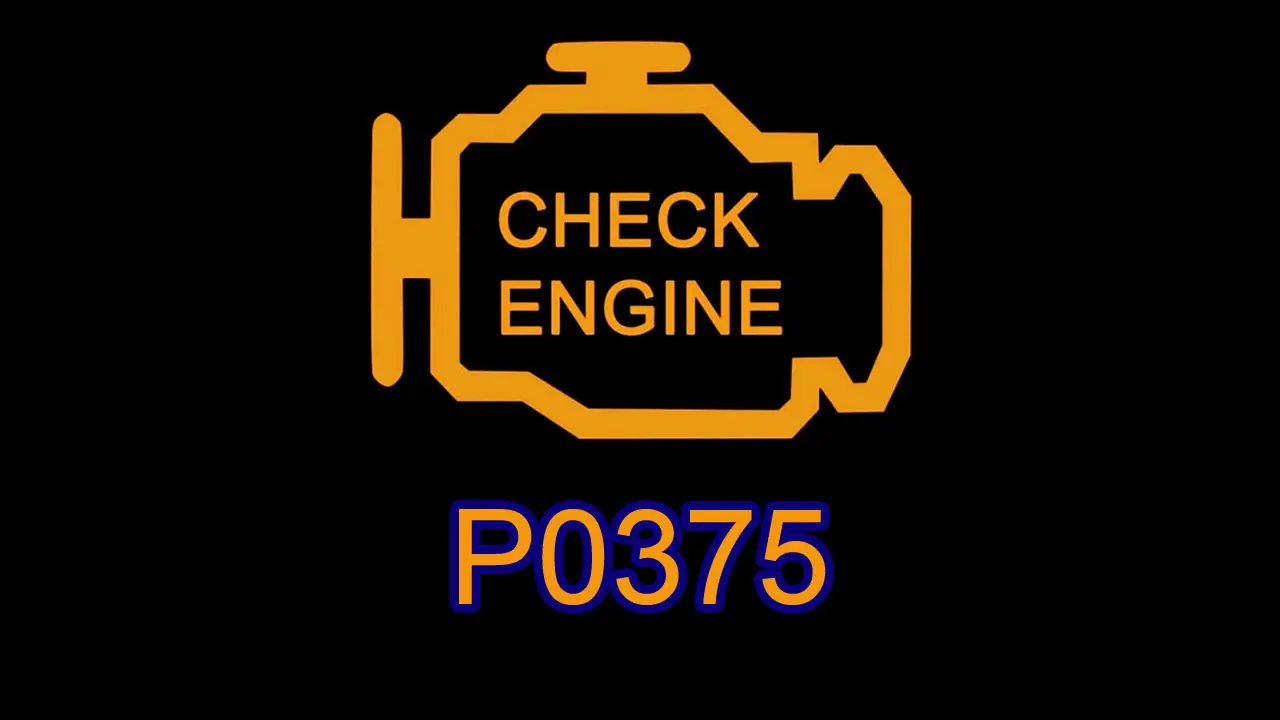
P0375 Timing Reference High Resolution Signal "B" Malfunction
The P0375 diagnostic trouble code means that the engine control module (ECM/PCM) has detected a malfunction in the Timing Reference High Resolution Signal “B” circuit.
This signal provides the engine computer with precise information about engine rotation and timing. The ECM relies on this information to determine engine position and coordinate functions such as fuel injection, ignition, camshaft synchronization, and variable valve timing.
Unlike codes that specifically identify low input, high input, intermittent pulses, too few pulses, or no pulses, P0375 is a more general malfunction code. The ECM knows that the Signal “B” system is not behaving correctly, but the code itself does not necessarily identify the exact electrical or mechanical reason.
What Is the Timing Reference High Resolution Signal?
An engine control system needs accurate information about where the crankshaft and camshafts are located as the engine rotates.
Timing reference signals are generated by sensors and timing targets that create a series of pulses. The ECM reads these pulses to calculate:
-
Engine speed
-
Crankshaft position
-
Camshaft position
-
Ignition timing
-
Fuel injection timing
-
Camshaft synchronization
-
Variable valve timing
-
Misfire detection
The word “High Resolution” means that the signal provides a relatively large number of timing events, allowing the ECM to determine engine position with greater precision.
The exact source of Signal “B” depends on the vehicle. It could be associated with a crankshaft, camshaft, dedicated timing sensor, or another manufacturer-specific timing reference system.
Therefore, P0375 should not automatically be interpreted as a particular sensor failure.
What Does “Malfunction” Mean?
In P0375, “Malfunction” is a broad description.
The ECM has detected that the expected behavior of Signal B is incorrect, but the DTC does not specify whether the signal is:
-
Too low
-
Too high
-
Missing
-
Intermittent
-
Distorted
-
Out of frequency
-
Out of synchronization
-
Electrically abnormal
Other related timing codes may provide more specific information.
For example, a vehicle may use separate codes for too many pulses, too few pulses, intermittent pulses, or no pulses. P0375 is more general and can therefore require a broader diagnostic process.
Why Is Signal B Important?
Precise timing information is fundamental to engine operation.
The ECM needs to know when the crankshaft and camshaft are moving through specific positions so it can control the engine correctly.
If the timing reference signal becomes unreliable, the ECM may have difficulty determining:
-
When to fire the ignition system
-
When to activate fuel injectors
-
Whether the camshaft and crankshaft are synchronized
-
Whether the engine is accelerating or decelerating
-
Whether a misfire has occurred
-
Whether variable valve timing is responding correctly
The consequences depend on the vehicle's control strategy and whether another timing signal is available as a backup.
Symptoms of P0375
A vehicle with P0375 may show only a Check Engine Light, or it may develop significant engine-running problems.
Possible symptoms include:
-
Check Engine Light
-
Difficult starting
-
Extended cranking
-
Intermittent no-start
-
Engine stalling
-
Rough idle
-
Hesitation
-
Poor acceleration
-
Reduced engine power
-
Unstable engine RPM
-
Misfire
-
Poor fuel economy
-
Incorrect ignition timing
-
Incorrect injection timing
-
Variable valve timing problems
-
Limp-home mode
In some cases, the engine may run normally because the ECM can still obtain sufficient timing information from another sensor.
In more severe cases, the engine may stall or refuse to start.
Can P0375 Cause a No-Start?
Yes, depending on the vehicle.
If Signal B is necessary for the ECM to establish accurate engine synchronization, a malfunctioning signal can prevent the control module from determining the correct timing for ignition or fuel injection.
The starter may turn the engine normally while the engine fails to start.
However, this behavior is not universal. Some engine-management systems can use other position signals and continue operating with limited functionality.
Common Causes of P0375
Faulty timing reference sensor
The sensor generating Signal B may be defective or deteriorating. Some sensors work normally when cold but become unreliable as temperature increases.
Damaged wiring
A broken, corroded, chafed, or high-resistance wire can alter the timing signal.
Poor connector contact
Loose terminals, corrosion, water intrusion, oil contamination, or damaged connector pins can cause an otherwise good sensor to produce an unacceptable signal at the ECM.
Sensor power or ground problem
Some timing sensors require an external power supply and ground. A problem in either circuit can affect the signal.
Short circuit
The Signal B wire may be shorted to ground, battery voltage, another signal wire, or another electrical circuit.
Incorrect sensor installation
Incorrect sensor positioning, excessive air gap, or a sensor that is not seated correctly can affect the generated signal.
Damaged reluctor or trigger wheel
The sensor depends on a precisely shaped target. A damaged, loose, bent, cracked, or contaminated trigger wheel can produce an incorrect pulse pattern.
Electrical interference
Ignition components, alternator problems, poor grounding, or improperly routed wiring can introduce electrical noise into sensitive timing circuits.
Mechanical timing problem
A stretched timing chain, incorrect timing installation, damaged sprocket, or another mechanical timing problem can change the expected relationship between the sensor and its target.
Variable valve timing problem
On engines where Signal B is related to camshaft timing, a VVT actuator, solenoid, oil-pressure problem, or contaminated oil system can contribute to an abnormal timing relationship.
ECM/PCM problem
A control-module fault is possible, but it should generally be considered only after the signal circuit and mechanical components have been properly tested.
P0375 Does Not Mean “Replace the Sensor”
This is especially important with a general Malfunction code.
The DTC tells you that the ECM has detected a problem with the Signal B system. It does not prove that the sensor itself is defective.
For example, a perfectly functional timing sensor can produce P0375 if:
-
The connector terminal is loose.
-
The ground connection is poor.
-
The power supply is unstable.
-
The signal wire has excessive resistance.
-
The wire is intermittently shorting.
-
The trigger wheel is damaged.
-
The sensor air gap is incorrect.
Replacing the sensor without testing these possibilities can leave the original problem unresolved.
How to Diagnose P0375
A systematic diagnosis is the best approach.
1. Scan for all DTCs
Do not look at P0375 in isolation.
Check for additional codes relating to:
-
Crankshaft position
-
Camshaft position
-
Timing synchronization
-
VVT
-
Misfire
-
Engine speed
-
Ignition
-
Fuel injection
-
Communication
A group of related codes can provide much more information than P0375 by itself.
2. Check freeze-frame information
Determine the conditions under which the code was stored.
Useful information includes:
-
Engine RPM
-
Engine temperature
-
Battery voltage
-
Engine load
-
Vehicle speed
-
Whether the engine was cranking or running
If P0375 occurs only when the engine is hot, for example, a temperature-sensitive sensor or wiring problem becomes more suspicious.
3. Identify exactly what Signal B represents
This is essential.
The meaning of Signal “B” is manufacturer-specific. The technician should use the vehicle's wiring diagram and service information to identify:
-
The relevant sensor
-
Sensor type
-
Connector pinout
-
Power supply
-
Ground
-
Signal wire
-
Timing target
-
Expected waveform
-
ECM input
Guessing the component based solely on the generic code description can lead to unnecessary parts replacement.
4. Inspect the sensor and connector
Check for:
-
Bent pins
-
Loose terminals
-
Corrosion
-
Oil contamination
-
Water intrusion
-
Damaged connector locks
-
Chafed wiring
-
Broken insulation
-
Harness contact with hot or moving components
Physical inspection is particularly important because timing sensors are often located close to heat, vibration, rotating components, or oil.
5. Verify power and ground
If the sensor requires an external supply, measure it according to the manufacturer's test procedure.
Check the ground under operating conditions as well.
A poor ground can sometimes appear normal with a basic voltage measurement but fail when the circuit is under load.
Voltage-drop testing can help reveal these problems.
6. Test the signal
This is one of the most valuable steps.
Depending on the sensor design, the signal can be checked with a scan tool, multimeter, or preferably an oscilloscope when waveform analysis is necessary.
Look for:
-
Missing pulses
-
Weak pulses
-
Excessive electrical noise
-
Incorrect frequency
-
Irregular pulse spacing
-
Distorted waveform
-
Signal dropouts
-
Incorrect amplitude
The correct waveform depends on the sensor technology and engine.
Why an Oscilloscope Can Be Useful
A scan tool may show an engine RPM value even when the high-resolution timing signal is not completely correct.
An oscilloscope can reveal the actual electrical waveform.
For example, it may show that the signal:
-
Looks normal at idle
-
Develops distortion at higher RPM
-
Loses pulses when the engine becomes hot
-
Drops out when the wiring moves
-
Contains excessive electrical noise
This information can distinguish a sensor problem from a wiring or trigger-wheel problem much more effectively than simply replacing components.
Hall-Effect and Variable-Reluctance Sensors
Timing systems can use different sensor technologies.
A Hall-effect sensor generally requires an electrical supply and generates a digital switching signal as the timing target passes.
A variable-reluctance sensor generates an alternating electrical signal as the magnetic field changes with movement of the trigger target.
These systems require different diagnostic procedures.
For this reason, there is no universal resistance, voltage, or waveform value that applies to every vehicle with P0375.
Always use the specifications for the particular engine and sensor.
Could the Trigger Wheel Cause P0375?
Yes.
The sensor is only one part of the timing-reference system.
If the trigger mechanism is damaged, the sensor may be unable to generate the expected signal even though the sensor itself is perfectly functional.
Possible problems include:
-
Damaged reluctor teeth
-
Bent trigger wheel
-
Loose reluctor
-
Cracked timing target
-
Contamination
-
Incorrect positioning
-
Damaged camshaft target
-
Damaged crankshaft target
A physical inspection may therefore be necessary if electrical testing does not identify the problem.
Could a Timing Chain Problem Cause P0375?
It can, depending on the engine design.
A stretched or incorrectly installed timing chain can change the relationship between the crankshaft, camshaft, and timing targets.
Possible mechanical causes include:
-
Stretched timing chain
-
Incorrect timing-chain installation
-
Damaged timing sprocket
-
Loose timing component
-
Incorrect camshaft timing
-
Variable valve timing malfunction
Mechanical timing deserves particular attention if P0375 appears with cam/crank correlation codes, abnormal timing-chain noise, difficult starting, backfiring, or sudden engine stalling.
Could Low Battery Voltage Cause P0375?
Low system voltage can sometimes contribute to timing-reference problems.
During engine cranking, battery voltage drops. If the voltage becomes too low for the sensor or related electronics to operate correctly, the ECM may receive an abnormal timing signal.
However, low battery voltage should not automatically be blamed for P0375.
The battery, starter, charging system, power connections, and grounds should be tested when there is evidence of a voltage problem.
P0375 Compared With Related Timing Codes
The distinction between related codes can help narrow the diagnosis.
P0375 – Timing Reference High Resolution Signal “B” Malfunction
A general malfunction has been detected in Signal B.
P0376 – Signal “B” Too Many Pulses
The ECM detects more timing pulses than expected.
P0377 – Signal “B” Too Few Pulses
The ECM detects fewer pulses than expected.
P0378 – Signal “B” Intermittent/Erratic Pulses
The signal is present but becomes unstable or irregular.
P0379 – Signal “B” No Pulses
The expected timing pulses are not detected.
These codes describe different observations by the ECM, although the underlying causes can overlap.
Can P0375 Be Intermittent?
Absolutely.
A general malfunction code does not necessarily mean that the problem is present continuously.
A loose connector or partially broken wire can work normally under one condition and fail under another.
For example, the fault might occur:
-
Only when the engine is hot
-
Only during cranking
-
Only at high RPM
-
During hard acceleration
-
When the engine vibrates
-
When the wiring harness moves
If the problem cannot be reproduced while the vehicle is stationary, monitoring the signal during the conditions that originally triggered the code can be particularly useful.
Is It Safe to Drive With P0375?
If the engine starts normally, runs smoothly, and the Check Engine Light remains steady, the vehicle may be driven a short distance for diagnosis.
However, P0375 should not be ignored.
A timing-reference problem can become worse and potentially lead to stalling or a no-start condition.
Driving should be avoided if the vehicle has:
-
Repeated stalling
-
Severe misfire
-
Major power loss
-
Difficult starting
-
Sudden hesitation
-
Abnormal timing-chain noise
-
Unstable engine operation
An engine that unexpectedly loses an important timing reference while driving can stall without much warning.
A Practical Diagnostic Sequence
A sensible diagnostic process for P0375 is:
P0375 → scan all modules → check freeze-frame → identify Signal B → inspect sensor and connector → check wiring → verify power and ground → test signal → inspect trigger mechanism → check cam/crank synchronization → investigate VVT → verify mechanical timing if necessary → repair → clear codes → road test → confirm the fault does not return.
This approach is considerably more reliable than replacing the sensor simply because the code mentions a timing reference.
Final Thoughts
P0375 – Timing Reference High Resolution Signal “B” Malfunction indicates that the ECM/PCM has detected an abnormal condition in a high-resolution engine timing reference circuit.
The problem may be caused by a sensor, but the diagnosis should also consider wiring, connectors, power, ground, signal integrity, the trigger or reluctor mechanism, electrical interference, VVT operation, and mechanical engine timing.
Because P0375 is a general malfunction code, the most important first step is determining exactly what Signal B represents on the particular vehicle. Once that is known, checking the circuit and observing the actual timing signal can usually narrow the problem down far more effectively than replacing parts based on the DTC alone.