TR
TR EN
EN

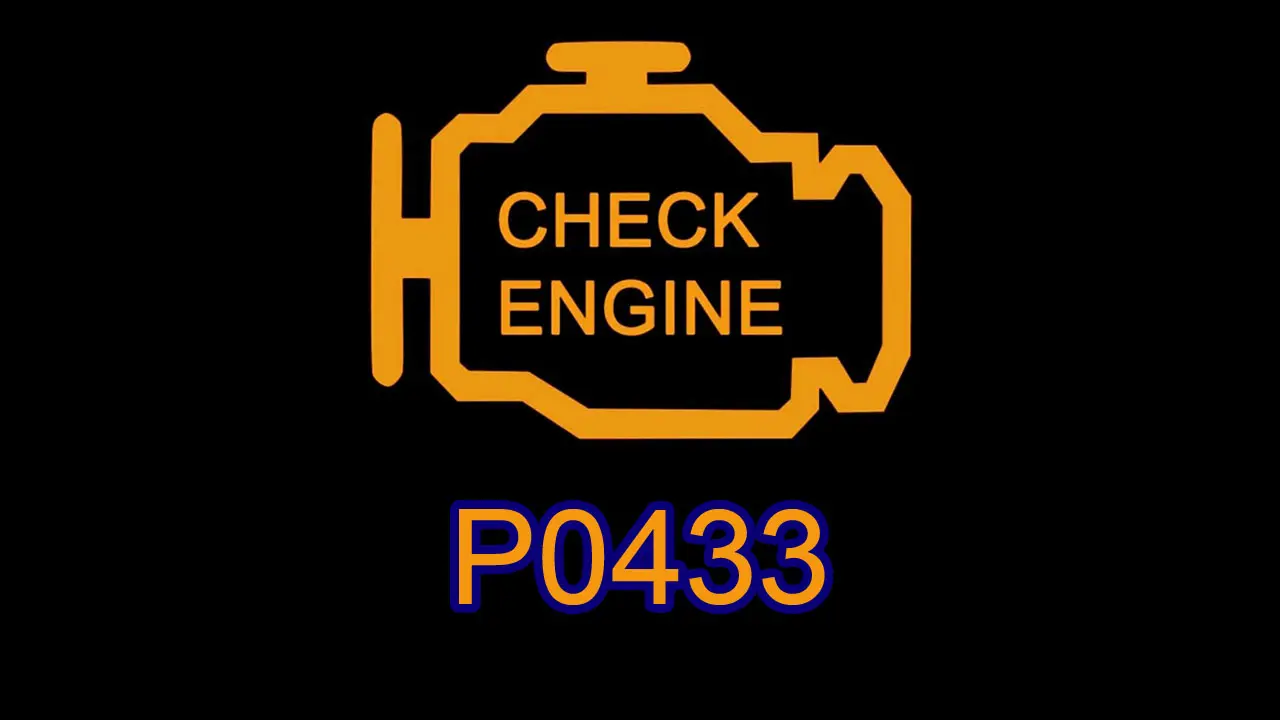
P0433 Heated Catalyst Efficiency Below Threshold (Bank 2)
The P0433 diagnostic trouble code means the engine control module (ECM/PCM) has determined that the heated catalytic converter on Bank 2 is not performing as efficiently as expected.
This code is different from a simple catalyst temperature-sensor circuit fault. With P0433, the ECM is primarily concerned with catalyst efficiency. It has detected that the Bank 2 catalyst is not reducing exhaust pollutants at the expected level under the conditions used for the diagnostic test.
The word “heated” does not necessarily mean that the catalytic converter contains a separate electric heating element. In many applications, “heated catalyst” refers to the catalyst being brought to its effective operating temperature through the engine's exhaust and emissions-control strategy.
P0433 therefore requires more than simply checking whether the catalyst gets hot. The ECM is evaluating whether the catalyst behaves like an effective emissions-control device.
What Does Bank 2 Mean?
Bank 2 is the engine bank containing cylinder number 2.
This terminology is mainly used on engines with two cylinder banks, such as:
-
V6 engines
-
V8 engines
-
V10 engines
-
Other engines with separate cylinder banks
Bank 2 is not universally the left or right side of the engine.
Its physical location depends on the engine design, so the manufacturer's service information should be used to identify the correct bank.
What Does “Below Threshold” Mean?
The phrase “below threshold” means the ECM has determined that catalyst performance has fallen below the minimum efficiency level it expects.
The ECM generally evaluates catalyst performance by analyzing oxygen-sensor or air-fuel-sensor behavior before and after the catalytic converter.
A properly functioning catalyst stores and releases oxygen as part of the chemical reactions occurring inside it.
Because of this, the downstream sensor signal should behave differently from the upstream sensor signal.
If the downstream signal begins to resemble the upstream signal too closely, the ECM can conclude that the catalyst is not storing oxygen and converting pollutants as effectively as expected.
That can lead to P0433.
How a Catalytic Converter Is Monitored
The catalytic converter contains precious-metal catalyst materials that promote chemical reactions in the exhaust.
These reactions help convert harmful gases such as:
-
Carbon monoxide
-
Unburned hydrocarbons
-
Oxides of nitrogen
into less harmful substances.
The ECM cannot directly look inside the catalytic converter.
Instead, it uses sensor information and operating conditions to estimate whether the catalyst is doing its job.
A typical gasoline engine may have:
Upstream oxygen or air-fuel sensor → catalytic converter → downstream oxygen sensor
The upstream sensor monitors exhaust conditions entering the catalyst.
The downstream sensor helps the ECM determine how the exhaust has changed after passing through the catalyst.
When the catalyst is functioning properly, the downstream oxygen signal is generally more stable than the upstream signal during the conditions used for catalyst monitoring.
If the catalyst loses its oxygen-storage capability, the downstream signal may begin to fluctuate more like the upstream signal.
The ECM can then identify reduced catalyst efficiency.
Why the Catalyst Must Be Hot
A catalytic converter does not operate at maximum efficiency when it is cold.
It needs to reach an appropriate operating temperature before the catalyst reactions become highly effective.
This is why the word “heated” appears in the description.
The engine management system may use specific strategies to heat the catalyst quickly after startup.
These can include:
-
Ignition timing adjustments
-
Air-fuel mixture control
-
Increased exhaust temperature
-
Secondary-air strategies on some vehicles
-
Other manufacturer-specific catalyst heating methods
If the catalyst does not reach the required temperature, the ECM may not be able to achieve the expected emissions performance.
However, this does not automatically mean the catalytic converter itself has failed.
Common Causes of P0433
A P0433 code can have several causes.
Aging or degraded catalytic converter
This is one of the most important possibilities.
Catalyst materials can gradually lose their effectiveness because of age, contamination, thermal damage, or prolonged exposure to abnormal engine operation.
A catalyst may still physically look normal while its chemical efficiency has deteriorated.
Engine misfire
A misfire can send unburned fuel into the exhaust.
That fuel can burn inside the catalytic converter and create extremely high temperatures.
Repeated misfire can permanently damage the catalyst.
If P0433 appears together with misfire codes, the misfire should be investigated before replacing the catalyst.
Rich or lean air-fuel mixture
An engine that consistently runs too rich or too lean can place abnormal chemical and thermal loads on the catalytic converter.
Potential causes include:
-
Fuel injector problems
-
Vacuum leaks
-
MAF sensor problems
-
MAP sensor problems
-
Oxygen or air-fuel sensor faults
-
Fuel-pressure problems
-
Intake leaks
-
Exhaust leaks
The catalyst may be the victim rather than the original cause.
Faulty oxygen or air-fuel sensor
The ECM depends heavily on exhaust sensor information when evaluating catalyst performance.
A sensor that is biased, slow, contaminated, or otherwise inaccurate can make catalyst efficiency appear incorrect.
This is why the sensor signals should be verified before condemning the catalytic converter.
Exhaust leak
An exhaust leak near an oxygen sensor can allow outside air to enter the exhaust stream.
This can alter the oxygen content detected by the sensor and potentially interfere with catalyst monitoring.
A small leak can be particularly difficult to notice because it may become more or less significant depending on temperature and exhaust flow.
Catalyst temperature problem
If the catalyst does not reach the temperature required for efficient operation, the ECM may detect poor performance.
Possible causes can include:
-
Engine operating-temperature problems
-
Catalyst heating strategy faults
-
Exhaust sensor problems
-
Air-fuel mixture problems
-
Other emissions-control faults
Contamination
Catalysts can be damaged or contaminated by substances entering the exhaust.
Examples include excessive oil consumption, coolant entering the combustion chamber, or prolonged exposure to abnormal fuel mixtures.
Physical catalyst damage
The substrate inside the catalytic converter can crack, melt, collapse, or become contaminated.
A physically damaged catalyst may also create an exhaust restriction.
Wiring or connector problems
Although P0433 is primarily an efficiency code rather than a simple circuit code, sensor wiring and connector problems can still influence the data used to evaluate the catalyst.
Incorrect replacement parts
A catalyst that physically fits the vehicle may not have the same emissions performance as the original specification.
An unsuitable aftermarket converter can therefore cause a catalyst-efficiency code to return.
Symptoms of P0433
Some vehicles will drive almost normally with P0433.
Possible symptoms include:
-
Check Engine Light
-
Failed emissions inspection
-
Increased emissions
-
Reduced fuel economy
-
Reduced engine performance
-
Hesitation
-
Poor acceleration
-
Exhaust odor
-
Rough running if another engine problem is present
-
Additional oxygen-sensor or catalyst codes
In many cases, the driver notices only the Check Engine Light.
This happens because catalyst efficiency can decline without significantly changing the way the engine feels during normal driving.
P0433 Does Not Automatically Mean “Replace the Catalytic Converter”
This is probably the most important diagnostic point.
A catalyst-efficiency code does not prove that the catalytic converter itself is the original cause of the problem.
For example, an engine that has been running excessively rich may eventually damage the catalyst.
If the catalyst is replaced without repairing the rich-running condition, the new catalyst may eventually fail as well.
The same applies to:
-
Misfires
-
Oil consumption
-
Coolant contamination
-
Fuel-system problems
-
Exhaust leaks
-
Faulty sensors
A good diagnosis determines why catalyst efficiency is below the expected threshold, not merely what component is closest to the code description.
How to Diagnose P0433
Diagnosis should begin by examining the complete engine and emissions system.
1. Scan for all DTCs
Do not diagnose P0433 alone.
Look for codes involving:
-
Misfires
-
Oxygen sensors
-
Air-fuel sensors
-
Fuel mixture
-
Fuel pressure
-
MAF/MAP sensors
-
Exhaust temperature
-
Catalyst temperature
-
EVAP
-
EGR
A related code may identify the actual problem.
2. Check freeze-frame data
Review the engine conditions when P0433 was recorded.
Useful information includes:
-
Engine coolant temperature
-
RPM
-
Vehicle speed
-
Engine load
-
Fuel trims
-
Fuel-system status
-
Sensor readings
This can reveal whether the catalyst monitor ran during a normal operating condition.
3. Check fuel trims
Fuel-trim data is extremely useful when diagnosing catalyst efficiency codes.
Large positive or negative corrections can indicate that the engine is not maintaining the expected air-fuel mixture.
If the engine is running abnormally rich or lean, that problem should be addressed before blaming the catalyst.
4. Check for misfires
Look for stored or pending misfire codes.
Even if there is no P0300-series code, misfire counters or Mode $06 data may reveal combustion problems.
A catalyst that has been repeatedly exposed to unburned fuel may be thermally damaged.
5. Inspect for exhaust leaks
Inspect the Bank 2 exhaust system, especially around:
-
Exhaust manifold
-
Manifold gasket
-
Oxygen/air-fuel sensor fittings
-
Flex section
-
Catalyst connections
-
Flanges
An exhaust leak upstream of a sensor can affect the oxygen reading and distort catalyst monitoring.
6. Examine upstream and downstream sensor data
This is one of the most important parts of catalyst diagnosis.
With the engine fully warmed up, compare the behavior of the upstream and downstream sensors under the conditions specified by the manufacturer.
A healthy catalyst generally reduces the rapid oxygen fluctuations seen before the catalyst.
If the downstream sensor closely follows the upstream sensor, catalyst oxygen-storage performance may be reduced.
However, sensor behavior must be interpreted according to the particular engine and sensor type.
Using a Scan Tool to Evaluate Catalyst Efficiency
A capable diagnostic scanner can provide considerably more information than simply reading the DTC.
Depending on the vehicle, you may be able to monitor:
-
Upstream oxygen-sensor voltage
-
Downstream oxygen-sensor voltage
-
Air-fuel ratio
-
Fuel trims
-
Catalyst temperature
-
Exhaust temperature
-
Catalyst monitor status
-
Catalyst efficiency calculations
-
Misfire counters
-
Mode $06 catalyst-monitor results
Mode $06 data can be particularly useful because it may show the actual test results that caused the ECM to consider catalyst efficiency insufficient.
The exact data available depends on the vehicle.
Why Sensor Replacement Should Not Be the First Response
It can be tempting to replace the downstream oxygen sensor because the code concerns catalyst efficiency.
But the downstream sensor may simply be correctly reporting a catalyst that has lost efficiency.
Likewise, replacing both oxygen sensors without testing them can create unnecessary expense.
The sensor signals should be evaluated first.
If the sensors are functioning correctly and the catalyst is demonstrably failing its efficiency test, then catalyst replacement becomes much more reasonable.
Check the Catalyst Temperature
Catalyst temperature can provide another important clue.
A catalyst that remains too cool may not achieve the chemical activity required for effective emissions conversion.
However, the exact temperature range depends on the catalyst and vehicle.
There is no single universal temperature value that proves a catalyst is good or bad.
Temperature should be evaluated together with:
-
Engine operating temperature
-
Air-fuel mixture
-
Engine load
-
Exhaust flow
-
Sensor readings
-
Manufacturer specifications
A Damaged Catalyst Can Also Become Restricted
A catalyst that has overheated severely can suffer internal substrate damage.
The substrate can melt or collapse, restricting exhaust flow.
In such a case, the vehicle may develop:
-
Significant power loss
-
Poor acceleration
-
High engine load
-
Poor fuel economy
-
Excessive exhaust backpressure
-
Engine performance problems
If P0433 is accompanied by major power loss, an exhaust restriction test may be appropriate.
Do not assume that every catalyst-efficiency code means the catalyst is physically blocked, however. A catalyst can lose chemical efficiency while still allowing normal exhaust flow.
P0433 vs P0430
These codes are closely related.
P0430 – Catalyst System Efficiency Below Threshold (Bank 2)
This is a general catalyst-efficiency code for Bank 2.
P0433 – Heated Catalyst Efficiency Below Threshold (Bank 2)
This specifically identifies the catalyst efficiency monitoring strategy as involving a heated catalyst.
The exact implementation is vehicle-dependent.
Both codes indicate that the ECM believes Bank 2 catalyst performance is below the expected threshold, but P0433 provides additional information about the type of catalyst-monitoring strategy involved.
P0433 vs P0434
P0433 indicates that heated catalyst efficiency is below the expected threshold.
P0434 indicates that the heated catalyst temperature is below the expected level.
This distinction matters.
P0433 is primarily about catalyst efficiency.
P0434 is primarily about catalyst temperature.
A catalyst can be at the correct temperature but still have poor chemical efficiency.
Likewise, a catalyst can be healthy but fail to reach the expected temperature because of another problem.
P0433 vs P0435
These codes involve different diagnostic areas.
P0433 concerns heated catalyst efficiency.
P0435 concerns a catalyst temperature sensor circuit malfunction.
A P0435 points toward the electrical circuit associated with temperature sensing.
P0433 indicates that the ECM has determined that catalyst efficiency is below its expected threshold.
The two codes can occur together if a temperature-sensing problem interferes with catalyst monitoring, but they do not mean the same thing.
P0433 vs P0437
P0437 indicates a low electrical input or signal condition from the catalyst temperature sensor circuit.
P0433 indicates insufficient heated-catalyst efficiency.
Therefore, P0437 is primarily an electrical sensor-circuit diagnosis, while P0433 is primarily a catalyst-performance diagnosis.
Can You Drive With P0433?
In many cases, the vehicle can still be driven with P0433 if the engine is running normally.
The immediate concern is usually emissions performance rather than sudden engine failure.
However, the vehicle may fail an emissions inspection, and an underlying engine problem could continue damaging the catalyst.
Driving should be treated more seriously if the vehicle also has:
-
Flashing Check Engine Light
-
Severe misfire
-
Major power loss
-
Strong exhaust odor
-
Excessive exhaust heat
-
Signs of a blocked catalytic converter
A flashing Check Engine Light accompanied by a misfire should not be ignored.
What Happens If P0433 Is Ignored?
If the catalyst is genuinely degraded, the vehicle may continue to produce excessive emissions.
More importantly, if the catalyst failure is being caused by another engine problem, continuing to drive can make the damage worse.
For example:
Rich mixture → excessive catalyst temperature → catalyst damage → P0433
Replacing only the catalyst without fixing the rich mixture simply repeats the cycle.
The same principle applies to misfires, oil consumption, coolant contamination, and other problems that can damage catalyst materials.
Common Diagnostic Mistakes
The most expensive mistake is usually replacing the catalytic converter without identifying the underlying cause.
Another mistake is assuming that the downstream oxygen sensor is automatically defective.
It is also important not to confuse catalyst efficiency with catalyst temperature.
A catalyst can reach a high temperature and still have poor chemical efficiency.
Likewise, an electrical temperature-sensor fault does not automatically mean that the catalyst itself has failed.
What Is the Correct Repair?
The repair depends entirely on the diagnosis.
Possible repairs include:
-
Repairing an exhaust leak
-
Replacing a defective oxygen or air-fuel sensor
-
Repairing fuel-mixture problems
-
Repairing ignition or misfire problems
-
Correcting fuel-pressure problems
-
Repairing wiring or connectors
-
Correcting engine oil or coolant contamination
-
Repairing catalyst heating problems
-
Replacing a genuinely degraded catalytic converter
-
Replacing a physically damaged or restricted catalyst
If the catalyst has failed because of another engine problem, both problems must be addressed.
Otherwise, the replacement catalyst may suffer the same fate.
A Useful Diagnostic Sequence
When P0433 appears, a practical diagnostic sequence is:
Check other codes → check misfires → check fuel trims → inspect exhaust leaks → evaluate sensor signals → check catalyst temperature → evaluate catalyst efficiency → test for restriction if symptoms suggest it → replace the catalyst only when testing confirms failure
This approach helps separate a genuine catalyst failure from a sensor, exhaust, fuel, ignition, or temperature problem.
Final Takeaway
P0433 – Heated Catalyst Efficiency Below Threshold (Bank 2) means the ECM has determined that the heated catalytic converter on Bank 2 is not achieving the expected emissions-control efficiency under the conditions used for its diagnostic test.
The catalytic converter itself may be degraded, but the code does not prove that immediately.
A proper diagnosis should examine oxygen/air-fuel sensor behavior, fuel trims, misfires, exhaust leaks, catalyst temperature, engine operating conditions, and the actual catalyst-monitor results before replacing expensive components.
If the catalyst has genuinely lost its efficiency, replacement may ultimately be necessary. But if an underlying misfire, rich mixture, oil consumption, coolant contamination, or exhaust problem caused the catalyst to fail, that underlying fault must be repaired as well.