TR
TR EN
EN

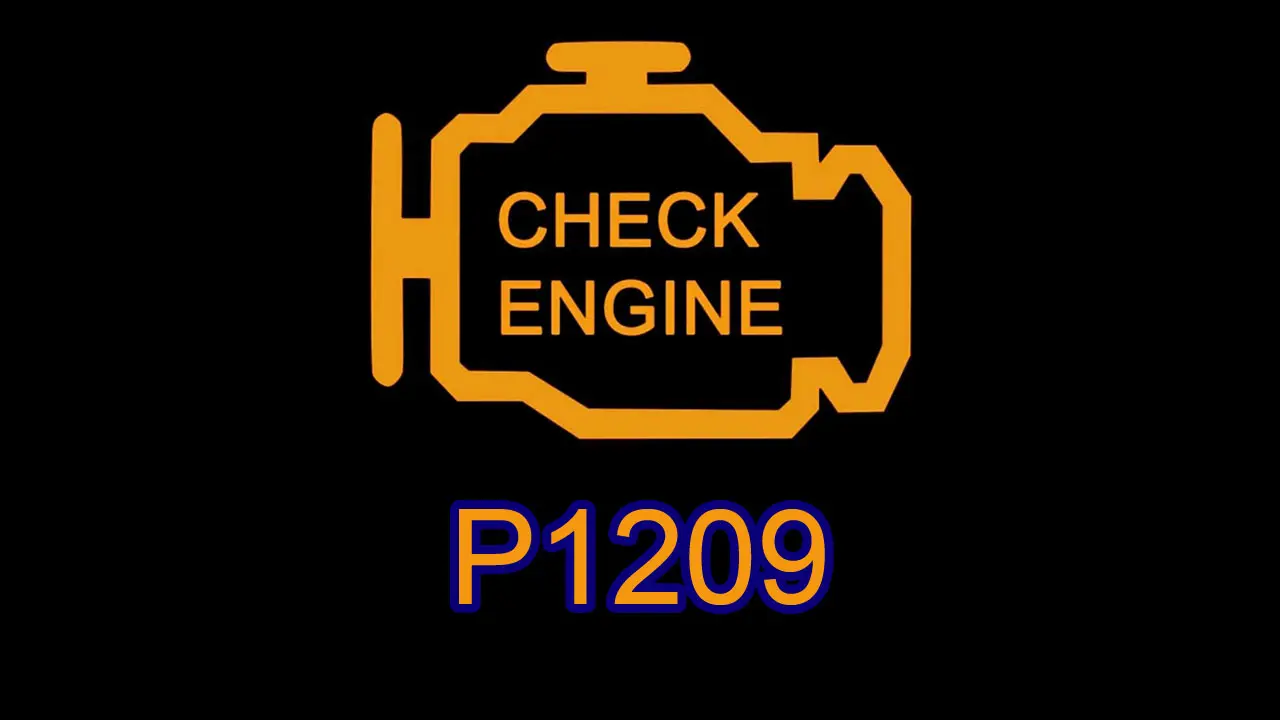
P1209 Injection Control Pressure (ICP) System Peak Malfunction
The P1209 trouble code indicates that the engine control system has detected a problem with the Injection Control Pressure (ICP) system reaching or controlling its required peak pressure.
This code is most commonly associated with electronically controlled diesel engines that use a high-pressure oil system to operate the fuel injectors. A well-known example is the HEUI (Hydraulically Actuated Electronically Controlled Unit Injector) system used on certain diesel engines.
In these systems, engine oil is not simply used for lubrication. High-pressure engine oil is also used as the hydraulic force that actuates the injectors.
When the ECM commands a particular injection control pressure, it expects the system to build and maintain the required pressure. P1209 indicates that the expected pressure behavior, particularly during a peak-pressure event, was not achieved correctly.
The code does not automatically mean that the ICP sensor is defective. The actual cause can be hydraulic, mechanical, electrical, or related to the injection-control components.
Understanding the ICP System
To understand P1209, it helps to separate the fuel-pressure system from the injection-control-pressure system.
In a conventional diesel system, fuel pressure is used directly to prepare and deliver fuel to the injectors.
In a HEUI-type system, the injectors are hydraulically actuated.
The basic process is:
Engine oil → high-pressure oil pump → high-pressure oil circuit → injector actuator → fuel injection
The ECM controls the system by monitoring and adjusting injection control pressure.
The major components can include:
-
High-pressure oil pump
-
Injection pressure regulator or control valve
-
ICP sensor
-
High-pressure oil rails/passages
-
Injector hydraulic circuits
-
Injectors
-
Engine oil supply
-
ECM
-
Wiring and connectors
A problem anywhere along this chain can affect the pressure that the ECM expects to see.
What Does “Peak Malfunction” Mean?
The word Peak refers to the system's ability to reach a required high or peak injection-control pressure under specific operating conditions.
This does not necessarily mean the pressure is permanently too high.
Instead, the ECM may command a high pressure during a particular event and determine that the system did not reach the expected peak, did not respond correctly, or did not behave within the expected limits.
This is why P1209 should not be interpreted simply as:
“ICP pressure is high.”
It is more accurately viewed as a problem with the system's ability to achieve or control the required injection-control pressure.
Why Does Injection Control Pressure Matter?
On a hydraulically actuated injector system, injection control pressure directly affects the force available to operate the injector.
If the pressure is too low or cannot respond quickly enough, the injector may not operate as the ECM expects.
That can affect:
-
Fuel injection quantity
-
Injection timing
-
Injector response
-
Engine starting
-
Idle quality
-
Acceleration
-
Engine power
-
Emissions
A diesel engine can therefore experience significant drivability problems even though the basic fuel supply system appears to be functioning.
Common Causes of P1209
P1209 can have several different causes.
Low engine oil level
Because the high-pressure injection system relies on engine oil, insufficient oil can interfere with high-pressure oil generation.
This is one of the simplest things to check.
The oil should be checked on level ground using the correct procedure and should be at the manufacturer's specified level.
Incorrect or unsuitable engine oil
The condition and specification of the engine oil matter.
Oil that is badly degraded, contaminated, excessively thin, or not appropriate for the engine can affect the operation of a hydraulically actuated injection system.
This is particularly relevant on systems that depend heavily on oil viscosity and hydraulic sealing.
High-pressure oil leak
An internal or external leak can prevent the system from reaching the required pressure.
Possible leak locations include:
-
High-pressure oil lines
-
Rail connections
-
Injector seals
-
Injector-related hydraulic passages
-
High-pressure pump components
-
Pressure-control components
An internal leak can be particularly difficult to identify because there may be no obvious oil dripping onto the ground.
Failing high-pressure oil pump
The high-pressure pump is responsible for generating the pressure required by the injection system.
If the pump is worn or mechanically damaged, it may produce adequate pressure under some conditions but fail to reach the required peak under high demand.
This can result in difficult starting, power loss, or a P1209 fault.
Injection pressure regulator/control valve problem
The pressure-control valve regulates the high-pressure oil system.
If it sticks, becomes contaminated, responds slowly, or develops an electrical problem, the ECM may be unable to control injection pressure correctly.
Depending on the system, this component may be referred to by different names, including an injection pressure regulator or injection pressure control valve.
Faulty ICP sensor
The ECM needs feedback from the ICP sensor to determine actual injection control pressure.
If the sensor reports an incorrect pressure, the ECM may believe the system has failed to reach the commanded pressure even when hydraulic pressure is actually different.
A sensor fault can therefore produce a pressure-related diagnostic code without the hydraulic system itself being the original problem.
ICP sensor wiring or connector
The sensor's signal, power and ground circuits must be reliable.
Problems can include:
-
Broken wires
-
Corroded terminals
-
Loose connections
-
Short circuits
-
Poor grounds
-
Oil contamination inside connectors
-
Harness damage from heat or vibration
An intermittent electrical problem can be especially difficult because the vehicle may operate normally during some conditions.
Injector internal leakage
A worn injector can allow excessive high-pressure oil leakage.
When several injectors are leaking internally, the high-pressure pump may be unable to maintain the required pressure, especially during cranking or high-demand conditions.
This is an important reason not to condemn the high-pressure pump immediately.
Air entering the oil system
Depending on the system design, aerated oil can interfere with hydraulic pressure generation.
Oil aeration may be associated with low oil level, pickup problems, or other oil-supply issues.
Mechanical engine problems
A worn or damaged component within the engine can indirectly affect the hydraulic injection system.
For example, problems with the oil supply or engine lubrication system may prevent the high-pressure injection system from operating correctly.
ECM problem
The ECM controls the injection pressure system and interprets the ICP sensor signal.
A control-module fault is possible, but it should generally be investigated only after the hydraulic system, sensor, wiring and pressure-control components have been verified.
Symptoms of P1209
The symptoms can vary considerably depending on how severe the pressure problem is.
Possible symptoms include:
-
Check Engine Light
-
Hard starting
-
Long cranking
-
Crank-no-start
-
Rough idle
-
Misfire-like operation
-
Hesitation
-
Poor acceleration
-
Reduced engine power
-
Engine stalling
-
Poor throttle response
-
Increased smoke
-
Poor fuel economy
-
Limp or reduced-power operation
Some vehicles may only exhibit the problem during cold starting, while others may show it when the engine is under heavy load or when the ECM requests a high injection-control pressure.
Why Starting Problems Are So Important
A diesel engine using a hydraulically actuated injection system may require a minimum injection-control pressure before the injectors can operate correctly.
If the high-pressure oil system cannot build enough pressure during cranking, the injectors may not receive sufficient hydraulic force.
The result can be:
Engine cranks normally but does not start.
This is a valuable diagnostic clue.
If the engine starts easily once warm but struggles badly when cold, the technician should consider oil condition, pressure buildup, leakage, sensor accuracy and high-pressure pump performance.
Cold vs. Hot Engine Behavior
P1209 may behave differently depending on engine temperature.
A worn high-pressure pump or leaking injector can sometimes produce acceptable pressure when the oil is cold but lose performance as the oil becomes hot and thinner.
The opposite situation can also occur.
A system may have difficulty building pressure during cold cranking because the oil is more viscous, while operating normally once the engine is running.
This is why testing should ideally include the conditions under which the fault actually occurs.
How P1209 Should Be Diagnosed
The most useful diagnostic approach is to compare commanded injection-control pressure with actual injection-control pressure.
Start with the basics
Check:
-
Engine oil level
-
Oil condition
-
Correct oil specification
-
Battery condition
-
Other stored and pending DTCs
Battery voltage is especially relevant during cranking. A weak battery or poor starting speed can make it harder for the engine and injection system to reach the conditions required for proper operation.
Check ICP Commanded vs. Actual
Using a suitable scan tool, monitor the injection-control pressure data while:
-
Cranking
-
Idling
-
Accelerating
-
Increasing engine load
Compare the actual pressure with the pressure commanded by the ECM.
The exact pressure values vary by engine and system, so manufacturer specifications should be used.
A useful pattern might look like this:
Commanded pressure rises but actual pressure remains low
This points toward a hydraulic pressure-generation or leakage problem, although the ICP sensor circuit must also be verified.
Actual pressure appears excessively high while command remains lower
This can suggest a pressure-control problem or inaccurate sensor information.
Actual pressure jumps or drops suddenly
This can indicate a sensor, wiring, connector, control-valve or intermittent hydraulic problem.
Check the ICP Sensor Signal
The ICP sensor should be tested using the manufacturer's wiring diagram and specifications.
Check:
-
Reference voltage
-
Sensor ground
-
Signal circuit
-
Connector condition
-
Harness continuity
-
Shorts to ground
-
Shorts to voltage
The live-data reading should also be compared with the actual operating conditions.
For example, an implausible pressure reading with the engine off can provide an important clue.
A sensor that reports an abnormal pressure before the engine is even cranking may have an electrical or sensor problem rather than a genuine hydraulic pressure problem.
Inspect the Pressure-Control System
If the sensor and electrical circuit are functioning correctly, attention should shift toward the hydraulic side.
The technician may need to evaluate:
-
High-pressure pump output
-
Pressure-control valve operation
-
High-pressure oil leakage
-
Injector leakage
-
Oil supply
-
Hydraulic passages
-
Seals and fittings
Depending on the engine, specialized pressure-testing equipment may be required.
Injector Leakage Can Mimic Pump Failure
This is an important diagnostic distinction.
Imagine the high-pressure oil pump is capable of producing the required pressure, but one or more injectors are allowing excessive oil to escape internally.
The pump may then be unable to maintain pressure.
The scan tool may show low actual ICP.
Replacing the pump without checking for internal injector leakage could therefore fail to solve the problem.
The same logic applies in reverse: replacing injectors when the pump itself cannot generate sufficient pressure will not fix the underlying fault.
Electrical Problems Can Look Like Hydraulic Problems
The ICP system combines electronics and hydraulics.
That means an electrical problem can create what looks like a pressure problem.
For example, a damaged signal wire could cause the ECM to receive an incorrect pressure value.
The ECM may then command the pressure-control system incorrectly or interpret normal hydraulic behavior as a fault.
Likewise, a faulty pressure-control valve can create a genuine hydraulic problem even though the ICP sensor itself is perfectly healthy.
This is why P1209 requires both electrical diagnosis and hydraulic diagnosis.
P1209 and Engine Oil
Engine oil deserves more attention with this code than it would with many ordinary engine-control faults.
On a hydraulically actuated injection system, the oil is part of the injection mechanism.
Check for:
-
Low oil level
-
Incorrect oil viscosity
-
Wrong oil specification
-
Excessively old oil
-
Fuel dilution
-
Coolant contamination
-
Heavy sludge
-
Poor oil pickup conditions
If the oil is contaminated or severely degraded, correcting the oil condition may be necessary before meaningful pressure diagnosis can be performed.
P1209 vs ICP Sensor Faults
It is useful to distinguish a system pressure problem from a pressure-sensor circuit problem.
A sensor-related code may indicate an electrical issue involving the ICP sensor.
P1209, on the other hand, can indicate that the overall injection-control-pressure system did not achieve the expected peak performance.
Therefore, replacing the ICP sensor simply because P1209 mentions injection control pressure is not a reliable diagnostic strategy.
Can You Drive With P1209?
If the engine is running normally, the vehicle may still be driveable for a short distance.
However, continued driving is not ideal if the engine is experiencing:
-
Severe power loss
-
Stalling
-
Hard starting
-
Heavy smoke
-
Rough running
-
Repeated no-start conditions
A failure in the injection-control-pressure system can eventually leave the engine unable to start.
If the vehicle is already difficult to start, repeatedly cranking it for long periods can also place additional stress on the starter and battery.
Possible Repairs
The repair depends entirely on what testing finds.
Possible repairs include:
-
Correcting low engine oil level
-
Performing an oil and filter service with the correct specification
-
Repairing an oil leak
-
Replacing a faulty high-pressure oil pump
-
Repairing or replacing the pressure-control valve
-
Replacing a defective ICP sensor
-
Repairing ICP wiring
-
Repairing connector terminals
-
Correcting injector hydraulic leakage
-
Replacing damaged seals or high-pressure components
-
Repairing the engine oil supply system
-
Repairing or reprogramming the ECM when specifically confirmed
The most expensive components should not be replaced simply because the code points toward the injection-control-pressure system.
A Practical Diagnostic Pattern
P1209 becomes much easier to understand when the system is viewed as a chain:
Engine oil supply → high-pressure pump → pressure control → high-pressure oil circuit → injectors → ICP sensor feedback → ECM
A fault anywhere in this chain can prevent the expected peak injection-control pressure from being achieved.
The diagnosis should therefore determine where the chain stops behaving correctly.
If oil supply is good, the pump must be tested.
If the pump is capable of producing pressure, leakage should be investigated.
If hydraulic pressure is correct, the ICP sensor and its wiring should be verified.
If sensor feedback is correct but control remains abnormal, the pressure-control components and ECM commands need further investigation.
Final Perspective on P1209
P1209 Injection Control Pressure (ICP) System Peak Malfunction is fundamentally a pressure-control performance problem.
It is especially important on engines where high-pressure engine oil is used to hydraulically operate the fuel injectors.
The code can be caused by something as basic as incorrect oil level or condition, but it can also result from high-pressure oil leakage, injector leakage, a weak high-pressure pump, a pressure-control problem, an inaccurate ICP sensor, wiring faults, or a control-module issue.
The most effective diagnosis is not to ask, “Which part does P1209 identify?”
Instead, determine:
What injection-control pressure is the ECM commanding?
What pressure is actually being produced?
Is the ICP sensor reporting that pressure correctly?
Can the hydraulic system reach and maintain the required peak pressure?
Once those questions are answered, the difference between a sensor problem, a control problem, a hydraulic leak, and a failing high-pressure pump becomes much easier to establish.