TR
TR EN
EN

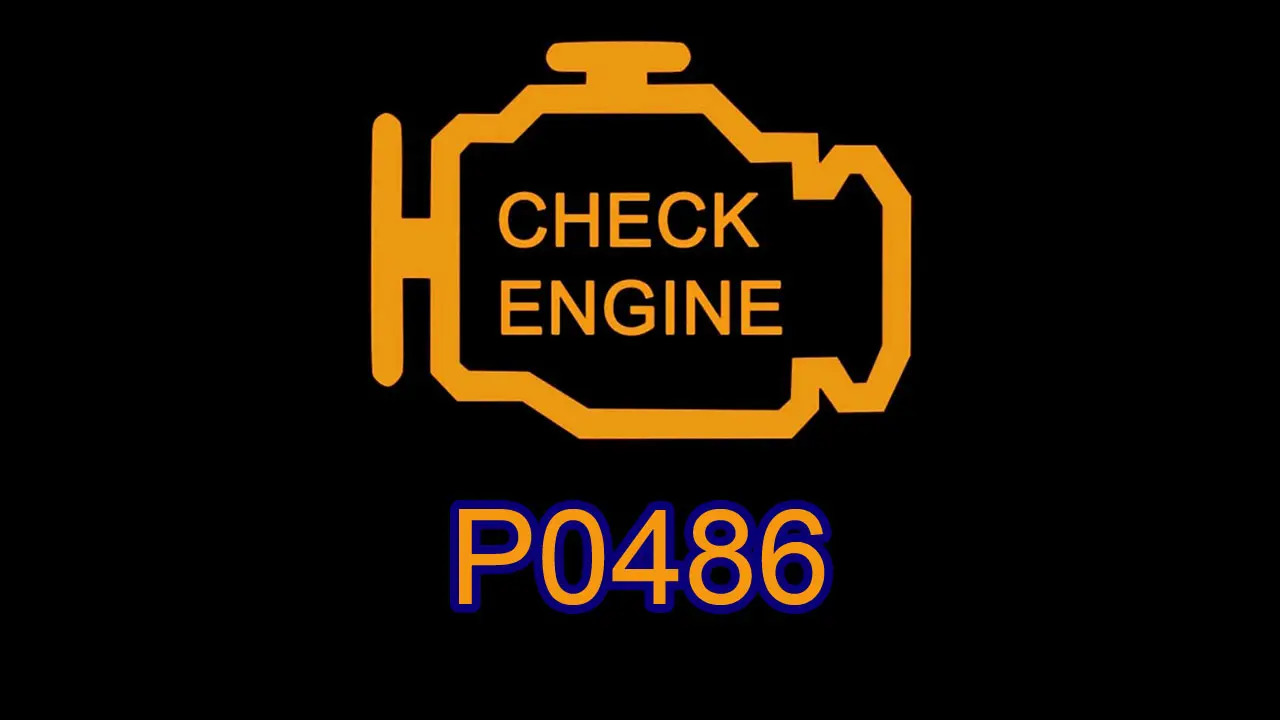
P0486 Exhaust Gas Recirculation (EGR) Sensor "B" Circuit Malfunction
The P0486 trouble code means the engine control module (ECM/PCM) has detected a malfunction in the circuit associated with the Exhaust Gas Recirculation (EGR) Sensor "B".
This is primarily a sensor-circuit fault. It does not automatically mean that the EGR valve is stuck open, clogged, or mechanically defective.
The term “Sensor B” identifies a particular EGR sensor or feedback circuit according to the vehicle manufacturer's diagnostic strategy. It does not mean that every vehicle has an identical physical sensor called “EGR Sensor B.”
This distinction is important because EGR systems vary considerably between manufacturers and engine designs.
What Does the EGR Sensor Do?
The EGR system controls the amount of exhaust gas returned to the intake.
The ECM needs feedback to determine whether the EGR system is responding correctly. Depending on the vehicle, this feedback can come from:
-
An EGR valve position sensor
-
An EGR differential-pressure sensor
-
An exhaust-pressure sensor
-
An EGR flow-related sensor
-
A sensor integrated into the EGR valve assembly
-
Another pressure or position sensor used to calculate EGR flow
Therefore, the exact physical meaning of “EGR Sensor B” must be determined from the vehicle's wiring diagram and service information.
On one engine, Sensor B may be associated with an EGR position circuit. On another, the manufacturer may use a different EGR feedback arrangement.
What Does “Circuit Malfunction” Mean?
The word “Malfunction” makes P0486 relatively broad.
Unlike a code specifically identifying a high or low input, P0486 does not tell you that the signal is necessarily stuck high or low.
The ECM may have detected:
-
An open circuit
-
A short circuit
-
Intermittent signal
-
Incorrect voltage
-
Incorrect sensor response
-
Missing reference voltage
-
Poor sensor ground
-
Wiring resistance
-
Connector problems
-
Implausible sensor behavior
-
Internal sensor failure
-
A communication problem on systems where the sensor communicates through another module
The ECM has essentially determined that the electrical behavior of the designated EGR Sensor B circuit is not behaving as expected.
Why Sensor “B” Is Important
The letter “B” is a diagnostic designation, not a universal component name.
This means it would be incorrect to tell every vehicle owner to “replace the EGR Sensor B” without first identifying the manufacturer's system.
Some vehicles may have multiple EGR-related feedback signals, while others may have an EGR valve with integrated sensors.
The correct diagnostic procedure therefore begins with identifying:
What does Sensor B measure on this particular engine?
Once that is known, the circuit can be tested properly.
Common Symptoms of P0486
Depending on the vehicle and the type of EGR feedback involved, possible symptoms include:
-
Check Engine Light
-
Reduced engine performance
-
Poor acceleration
-
Hesitation
-
Rough running
-
Increased emissions
-
Increased fuel consumption
-
EGR operation being disabled
-
Limp-home mode
-
Poor diesel emissions-system operation
-
DPF-related problems on some diesel engines
-
Difficulty completing emissions-related strategies
Some vehicles may show almost no noticeable symptoms.
This is possible because the ECM may detect an electrical problem with the EGR feedback circuit even though the engine continues to run reasonably well.
Common Causes of P0486
Faulty EGR sensor
The sensor itself may have an internal electrical failure or may produce an unstable or incorrect signal.
However, P0486 alone does not prove that the sensor is defective.
Damaged wiring
EGR components are often located near hot exhaust components.
Repeated exposure to heat can damage insulation and cause:
-
Open circuits
-
Short circuits
-
High resistance
-
Intermittent connections
Corroded connector
Moisture, oil, dirt and heat can cause connector terminals to corrode or lose their proper contact.
Loose terminal
A terminal may appear connected but have insufficient contact pressure.
This can cause an intermittent EGR sensor signal.
Missing reference voltage
Many electronic sensors require a regulated reference voltage from the ECM.
If the reference is missing or outside specification, the sensor signal may become invalid.
Poor sensor ground
A bad ground can alter the sensor's signal voltage and create an incorrect reading.
Signal wire problem
The signal circuit can be:
-
Open
-
Shorted to ground
-
Shorted to voltage
-
High resistance
-
Intermittently disconnected
EGR valve mechanical problem
A mechanically sticking EGR valve can sometimes produce sensor behavior that the ECM considers abnormal.
This is particularly relevant if the sensor is integrated into the EGR valve and measures its position.
Carbon buildup
Heavy deposits can restrict EGR movement or passages.
If the EGR valve cannot move as commanded, the feedback signal may not behave as expected.
Incorrect replacement component
Installing an incorrect EGR valve or sensor can produce an electrical or position-feedback mismatch even if the component physically fits.
ECM/PCM problem
A control-module fault is possible but should normally be considered only after the sensor, wiring, reference, ground and connectors have been properly tested.
P0486 Does Not Automatically Mean the EGR Valve Is Bad
This is one of the most important points when diagnosing this code.
An EGR valve can be mechanically healthy while the Sensor B circuit is faulty.
For example:
EGR valve works → sensor wiring open → ECM loses feedback → P0486
The opposite can also happen:
Sensor circuit works → EGR valve mechanically sticks → feedback does not change as expected → EGR-related fault
Therefore, the electrical feedback system and the mechanical EGR system should be evaluated separately.
How to Diagnose P0486
A proper diagnosis should start by identifying exactly what the manufacturer means by EGR Sensor B.
1. Scan all control modules
Do not diagnose P0486 in isolation.
Look for additional codes related to:
-
EGR position
-
EGR flow
-
MAF
-
MAP
-
Exhaust pressure
-
Intake pressure
-
Turbocharger control
-
DPF
-
Electrical supply
-
CAN communication
Another code may provide the missing part of the diagnosis.
2. Check freeze-frame data
Determine the conditions under which P0486 was recorded.
Useful information includes:
-
Engine RPM
-
Engine load
-
Coolant temperature
-
Vehicle speed
-
MAF
-
MAP
-
EGR commanded position
-
EGR actual position
-
EGR sensor data
-
System voltage
If the code occurs only after the engine warms up or under a particular load, that can point toward a heat-related or vibration-related wiring problem.
3. Identify Sensor B
Before testing anything, consult the manufacturer's wiring diagram and service information.
Determine:
-
Sensor location
-
Sensor type
-
Number of wires
-
Reference voltage
-
Ground circuit
-
Signal circuit
-
Expected signal behavior
-
Whether the sensor is integrated into the EGR valve
This step prevents incorrect diagnosis.
Check the Sensor Reference and Ground
If Sensor B is a conventional electronic sensor, it may use a reference voltage, ground and signal circuit.
Check the circuits according to manufacturer specifications.
A missing reference voltage does not automatically mean the sensor is bad.
The same reference circuit may supply other sensors, so a shorted sensor elsewhere can sometimes pull down a shared reference circuit.
Likewise, a poor ground can affect several sensors simultaneously.
Check the Sensor Signal
Monitor the Sensor B signal while changing the conditions that should affect it.
Depending on the sensor, this could mean:
-
EGR valve movement
-
Engine load
-
Intake pressure
-
Exhaust pressure
-
EGR flow
The signal should change in a predictable way according to the manufacturer's specifications.
A signal that is frozen, erratic, intermittent or outside the specified range deserves further investigation.
Use Live Data
If the scan tool provides EGR-related parameters, compare:
EGR commanded value
with
EGR actual value
and the relevant Sensor B reading.
This can help distinguish between an electrical sensor problem and a mechanical EGR problem.
For example, if the ECM commands the EGR valve to move but Sensor B remains unchanged, investigate:
-
Sensor
-
Wiring
-
Connector
-
Mechanical valve movement
-
Reference
-
Ground
If Sensor B responds correctly but another EGR parameter is incorrect, the problem may be elsewhere in the system.
Perform a Wiggle Test
Intermittent EGR sensor faults can be difficult to reproduce.
With the engine operating and the appropriate live data being monitored, gently manipulate the wiring harness and connectors.
If the Sensor B value suddenly changes, disappears or becomes erratic, inspect that section of the harness carefully.
This is particularly useful for wiring routed near:
-
Exhaust manifolds
-
Turbochargers
-
EGR coolers
-
Cylinder heads
-
Engine brackets
Heat and engine vibration can produce intermittent faults that disappear when the vehicle is stationary.
Check for Carbon and Mechanical Restriction
If the sensor circuit passes electrical testing, inspect the mechanical EGR system.
Look for:
-
Carbon buildup
-
Sticking EGR valve
-
Restricted EGR passages
-
Damaged valve mechanism
-
Incorrect installation
-
Excessive deposits around the intake
A mechanical restriction can prevent the sensor from producing the expected feedback because the valve or EGR system cannot respond correctly.
Can Carbon Buildup Cause P0486?
Yes, but indirectly in many cases.
Carbon buildup does not necessarily create an electrical circuit malfunction by itself.
However, if deposits cause the EGR valve to stick, the associated position sensor may fail to produce the expected response.
The diagnostic sequence could therefore be:
Carbon buildup → EGR valve movement restricted → Sensor B feedback does not follow command → ECM detects abnormal EGR feedback → P0486
If the EGR sensor is integrated into the valve, this relationship becomes particularly important.
Can a Bad EGR Sensor Cause P0486?
Yes.
A sensor with an internal electrical fault is one of the direct possibilities.
However, the sensor should be tested before replacement.
A sensor can appear defective when the actual problem is:
-
Missing reference voltage
-
Poor ground
-
Damaged signal wire
-
Corroded connector
-
Shared reference-circuit fault
-
Wiring resistance
Replacing the sensor without checking these circuits can result in the same code returning.
Can P0486 Be Caused by Wiring?
Absolutely.
In fact, wiring should be considered carefully because EGR components operate in a harsh environment.
A harness may be exposed to:
-
High temperatures
-
Vibration
-
Oil contamination
-
Water
-
Road debris
-
Repeated engine movement
An apparently intact wire may have internal damage.
This is why both visual inspection and electrical testing are important.
P0486 and the 5-Volt Reference Circuit
If the EGR Sensor B uses a regulated reference voltage, check whether other sensor codes are present.
A shorted sensor on a shared reference circuit can sometimes affect several sensors.
For example:
Shared 5V reference problem → EGR sensor signal incorrect → additional sensor readings abnormal → P0486
Therefore, multiple simultaneous sensor codes can sometimes point toward a common reference or ground problem rather than multiple failed sensors.
P0486 vs P0405
These codes can appear similar because both may involve EGR sensor circuits.
P0405 – EGR Sensor "A" Circuit Low
P0405 specifically indicates a low electrical signal associated with EGR Sensor A.
P0486 – EGR Sensor "B" Circuit Malfunction
P0486 is a broader malfunction code associated with the designated Sensor B circuit.
They may refer to different sensors or feedback circuits, depending on the vehicle.
P0486 vs P0487
P0487 – EGR Throttle Control Circuit "A" Open
This code is associated with the EGR throttle control circuit.
P0486 instead concerns the EGR Sensor B circuit.
These are therefore not necessarily the same physical component.
This distinction is particularly important on diesel engines where the EGR valve and EGR throttle/intake throttle can be separate electronically controlled devices.
P0486 vs P0488
P0488 – EGR Throttle Control Circuit "A" Range/Performance
P0488 concerns the operation or performance of the EGR throttle control system.
P0486 concerns the designated EGR Sensor B circuit.
A vehicle can have both codes if an EGR throttle system has both an actuator problem and a feedback problem, but the two codes should not automatically be treated as identical.
Can P0486 Cause Limp Mode?
Yes, depending on the manufacturer's strategy.
If the ECM cannot reliably determine EGR position or operation, it may disable EGR functionality or limit engine operation.
Possible responses include:
-
Reduced engine power
-
Limited boost
-
EGR disabled
-
Increased emissions
-
Limp-home mode
-
Additional emissions-related warnings
The exact response depends on the vehicle.
Is It Safe to Drive With P0486?
If the vehicle runs normally, P0486 is generally not an immediate indication of catastrophic engine damage.
However, it should not be ignored indefinitely.
An incorrect EGR feedback signal can cause the ECM to operate the emissions system incorrectly, and some vehicles may eventually develop additional problems.
If the vehicle has severe power loss, heavy smoke, stalling or multiple engine-management codes, the vehicle should be diagnosed promptly.
Should You Replace the EGR Sensor?
Not simply because P0486 is stored.
A proper diagnosis should establish:
Sensor identity → reference → ground → signal → wiring → connector → mechanical EGR operation → live-data response
If the reference, ground and wiring are correct but the sensor produces an incorrect or unstable signal, sensor replacement becomes much more justified.
If the sensor signal is correct but the EGR valve cannot physically move, the mechanical problem needs to be addressed instead.
Final Diagnostic Summary
P0486 – Exhaust Gas Recirculation (EGR) Sensor "B" Circuit Malfunction means the ECM/PCM has detected an abnormal electrical or feedback condition in the circuit associated with the designated EGR Sensor B.
It does not automatically mean that the EGR valve is defective, and it does not by itself prove that the EGR system is clogged.
The first step is to determine exactly what Sensor B represents on the particular engine. After that, test its reference voltage, ground, signal circuit, wiring and connector, followed by the mechanical operation of the EGR system.
The most useful diagnostic sequence is:
Identify Sensor B → check all codes → inspect wiring/connector → verify reference and ground → monitor signal → compare commanded vs actual EGR operation → inspect mechanical EGR components
The key question is not simply:
“Is the EGR sensor bad?”
It is:
“What part of the EGR Sensor B circuit is preventing the ECM from receiving the expected feedback?”
That distinction is essential for avoiding unnecessary EGR-valve or sensor replacement.