TR
TR EN
EN

What Does the "Engine Power is Reduced" Warning Mean?
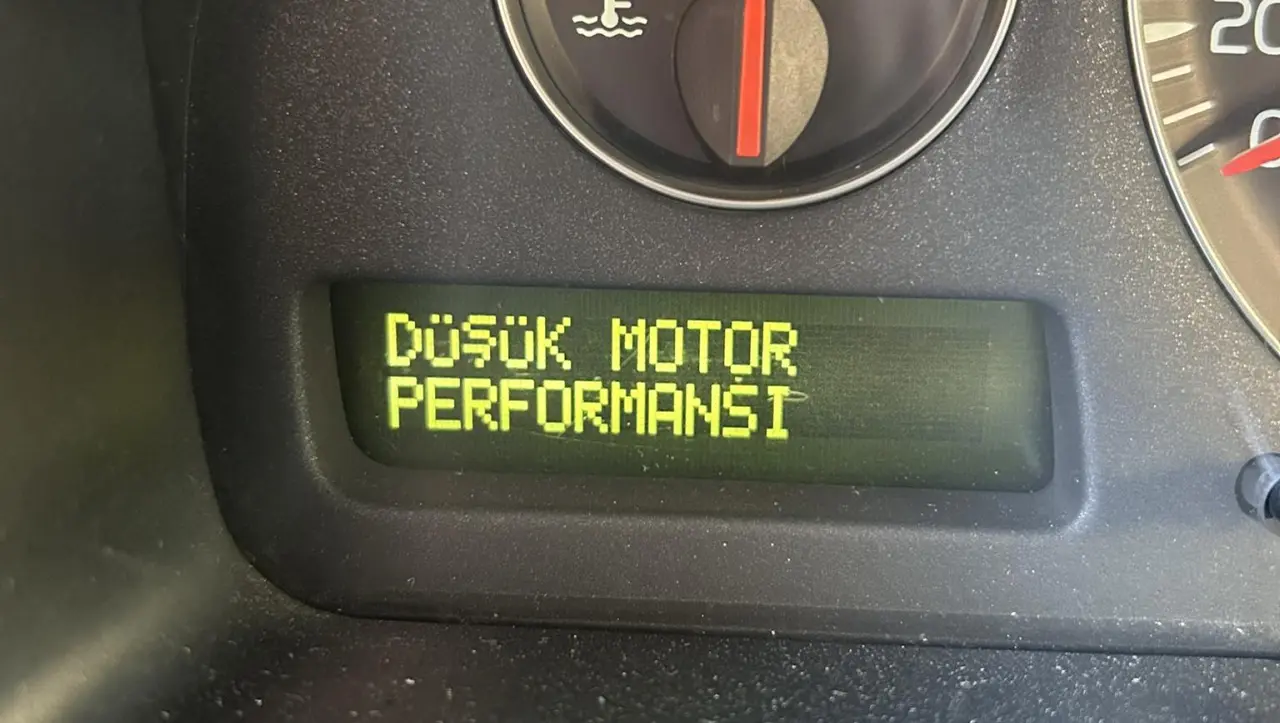
Seeing the "Engine Power is Reduced" message on your dashboard can be alarming. In many cases, the warning appears suddenly, and you may notice that your vehicle no longer accelerates normally or responds as quickly to the accelerator pedal.
Although the vehicle may still be drivable, this warning should never be ignored. It usually indicates that the engine management system has detected a problem and has intentionally limited engine performance to prevent further damage or improve safety.
In this guide, we'll explain what the Engine Power is Reduced warning means, why it appears, the most common causes, symptoms, and what you should do if you encounter it.
What Does "Engine Power is Reduced" Mean?
The Engine Power is Reduced message indicates that your vehicle has entered reduced power mode, also known as limp mode or fail-safe mode.
When the engine control unit (ECU) detects a fault that could potentially damage the engine, transmission, or emissions system, it intentionally limits engine output.
This protective mode may include:
-
Reduced engine power
-
Limited throttle response
-
Lower maximum RPM
-
Slower acceleration
-
Restricted vehicle speed
The goal is to allow you to safely reach a repair facility while minimizing the risk of expensive mechanical damage.
How Does Reduced Power Mode Work?
Modern vehicles constantly monitor hundreds of sensors.
If one or more sensors detect abnormal operating conditions, the ECU may:
-
Reduce fuel injection
-
Limit throttle opening
-
Lower turbocharger boost pressure
-
Restrict ignition timing
-
Disable certain performance functions
These changes protect critical engine components until the fault is repaired.
Common Symptoms
Besides the dashboard warning, you may experience:
-
Poor acceleration
-
Vehicle struggles to climb hills
-
Engine feels sluggish
-
Limited top speed
-
Delayed throttle response
-
Check Engine Light illuminated
-
Rough idle
-
Transmission shifting differently
-
Increased fuel consumption
In some vehicles, cruise control may also become unavailable.
Common Causes of the "Engine Power is Reduced" Warning
Several different faults can trigger reduced engine power.
Throttle Body Problems
Electronic throttle bodies control airflow into the engine.
If carbon deposits build up or the throttle motor fails, the ECU may reduce engine output.
Symptoms include:
-
Slow acceleration
-
Hesitation
-
Rough idle
-
Engine warning light
Cleaning or replacing the throttle body often resolves the issue.
Accelerator Pedal Position Sensor Failure
Modern vehicles use electronic accelerator pedals instead of mechanical cables.
If the pedal sensor sends incorrect signals, the ECU cannot accurately determine the driver's throttle request.
To prevent unintended acceleration, the system limits engine power.
Common signs include:
-
Delayed acceleration
-
Reduced response
-
Intermittent warning messages
Mass Air Flow (MAF) Sensor Failure
The MAF sensor measures the amount of air entering the engine.
Incorrect airflow readings cause improper fuel delivery, resulting in:
-
Poor performance
-
Rough running
-
Increased fuel consumption
-
Reduced engine power
A dirty MAF sensor can often be cleaned, while a failed sensor requires replacement.
Turbocharger Problems
Turbocharged engines commonly enter reduced power mode when boost pressure is abnormal.
Possible causes include:
-
Boost leaks
-
Damaged intercooler hoses
-
Turbo actuator failure
-
Wastegate problems
-
Turbocharger wear
These faults reduce engine performance significantly.
Fuel System Problems
An engine requires adequate fuel pressure.
Reduced fuel delivery may be caused by:
-
Weak fuel pump
-
Clogged fuel filter
-
Dirty fuel injectors
-
Faulty fuel pressure regulator
The ECU limits power to prevent lean combustion.
Ignition System Faults
Misfires caused by ignition problems can also activate reduced power mode.
Possible causes include:
-
Worn spark plugs
-
Faulty ignition coils
-
Damaged ignition wiring
Persistent misfires can damage the catalytic converter if ignored.
Oxygen Sensor Failure
Oxygen sensors monitor exhaust gases and help maintain the correct air-fuel ratio.
Faulty sensors may cause:
-
Rich fuel mixture
-
Lean fuel mixture
-
Poor emissions
-
Reduced engine efficiency
Eventually, the ECU may reduce engine performance.
Catalytic Converter Restriction
A clogged catalytic converter restricts exhaust flow.
Common symptoms include:
-
Severe power loss
-
Poor acceleration
-
Engine overheating
-
High fuel consumption
Replacing the damaged converter may be necessary.
Transmission Problems
Some automatic transmissions communicate directly with the engine ECU.
If the transmission detects serious faults, the vehicle may reduce engine power to prevent additional drivetrain damage.
Transmission-related causes include:
-
Low transmission fluid
-
Internal gearbox damage
-
Torque converter issues
-
Transmission control module faults
Cooling System Problems
An overheating engine is one of the most common reasons for reduced power mode.
Possible causes include:
-
Low coolant level
-
Faulty thermostat
-
Water pump failure
-
Radiator blockage
-
Cooling fan malfunction
Limiting engine power helps reduce heat generation.
Electrical Problems
Modern vehicles rely heavily on electrical systems.
Low battery voltage or charging issues may trigger multiple warning messages, including reduced engine power.
Possible causes include:
-
Weak battery
-
Faulty alternator
-
Corroded battery terminals
-
Wiring faults
-
Poor electrical connections
Sensor Failures
Many engine sensors can trigger reduced power mode, including:
-
Crankshaft position sensor
-
Camshaft position sensor
-
MAP sensor
-
Coolant temperature sensor
-
Knock sensor
-
Boost pressure sensor
Even a single faulty sensor may cause the ECU to activate limp mode.
Is It Safe to Continue Driving?
It depends on the severity of the problem.
If the vehicle still drives smoothly but has reduced acceleration:
-
Drive cautiously.
-
Avoid heavy acceleration.
-
Avoid towing heavy loads.
-
Schedule repairs as soon as possible.
If you notice any of the following:
-
Engine overheating
-
Loud knocking noises
-
Heavy smoke
-
Severe shaking
-
Flashing Check Engine Light
-
Loss of braking or steering assistance
Stop driving immediately and arrange for professional assistance.
Continuing to drive could lead to severe engine damage.
What Should You Do When the Warning Appears?
If the Engine Power is Reduced message appears:
-
Stay calm and avoid sudden acceleration.
-
Move to a safe location if necessary.
-
Check engine temperature.
-
Verify coolant and engine oil levels.
-
Look for obvious fluid leaks.
-
Restart the vehicle once it has been safely stopped.
-
If the warning disappears, continue driving cautiously.
-
If the warning returns, have the vehicle scanned with an OBD-II diagnostic tool.
-
Repair the underlying fault rather than simply clearing the codes.
Can You Reset the Warning Yourself?
Sometimes.
Temporary software glitches may disappear after restarting the engine.
However, if a mechanical or electrical fault still exists, the warning will usually return immediately.
Simply clearing fault codes without fixing the problem is not recommended.
How to Prevent Reduced Engine Power Warnings
Many causes can be avoided with regular maintenance.
Helpful preventive measures include:
-
Change engine oil on schedule.
-
Replace air and fuel filters regularly.
-
Use high-quality fuel.
-
Replace spark plugs at recommended intervals.
-
Clean the throttle body when necessary.
-
Inspect coolant levels frequently.
-
Service the transmission according to manufacturer recommendations.
-
Replace worn sensors promptly.
-
Repair Check Engine Light faults without delay.
Frequently Asked Questions
Can low battery voltage cause the warning?
Yes. Low system voltage can interfere with electronic engine management systems and trigger reduced power mode.
Will reduced power mode damage my engine?
No. It is actually designed to protect the engine from more serious damage.
Can bad fuel trigger reduced power mode?
Yes. Poor-quality or contaminated fuel can cause misfires, fuel pressure issues, and sensor faults that activate limp mode.
Will replacing the throttle body always solve the problem?
Not necessarily. The throttle body is only one of many possible causes. Proper diagnosis is essential before replacing parts.
Final Thoughts
The Engine Power is Reduced warning is your vehicle's way of protecting itself from potentially serious mechanical or electronic failures. While the car may still be drivable, reduced performance is a clear indication that something requires attention.
Ignoring the warning can turn a relatively inexpensive repair—such as replacing a sensor or cleaning the throttle body—into a much more costly engine or transmission repair. If the message appears repeatedly, have the vehicle diagnosed with a professional scan tool and address the root cause as soon as possible.
Early diagnosis and regular maintenance remain the best ways to keep your vehicle running safely, efficiently, and reliably.