TR
TR EN
EN

Why Does an Engine Burn Oil or Consume Oil? Causes and Solutions
Engine oil consumption is not always caused by the same problem. In some vehicles, the oil level drops because of an external oil leak. In others, engine oil enters the combustion chamber and burns with the air-fuel mixture. Oil can also be consumed through the PCV system or a turbocharger.
A small amount of oil consumption can occur naturally depending on the engine design and operating conditions. However, if oil consumption suddenly increases, the exhaust produces bluish smoke, or the oil level drops noticeably between services, the cause should be investigated.
Continuously adding oil without finding the reason for the loss can hide a developing engine problem.
Is Oil Consumption the Same as Burning Oil?
The terms are often used interchangeably, but they do not describe exactly the same thing.
Oil consumption means that the engine's oil level decreases over time.
This can happen because of:
-
External oil leaks
-
Oil entering the combustion chamber
-
Oil passing through the PCV system
-
Turbocharger-related oil consumption
Burning oil specifically means that engine oil enters the combustion chamber and burns with the air-fuel mixture.
Therefore, an engine can consume oil without actually burning it. For example, a leaking oil pan gasket can cause the oil level to drop even though no oil is entering the cylinders.
Why Does an Engine Burn Oil?
Engine oil can enter the combustion chamber through several different paths.
Common causes include:
-
Worn piston rings
-
Stuck or worn oil-control rings
-
Cylinder wall wear
-
Worn valve stem seals
-
Worn valve guides
-
PCV system problems
-
Turbocharger oil leakage
-
Engine-specific oil consumption characteristics
The source cannot always be identified simply by looking at the exhaust smoke. A proper diagnosis may require several different tests.
Worn Piston Rings
One of the major causes of excessive oil consumption is wear or malfunction of the piston rings.
Piston rings perform several functions inside the cylinder. The oil-control ring, in particular, helps regulate the amount of oil remaining on the cylinder wall.
If the rings become worn or the oil-control rings become stuck with carbon deposits, excessive oil may remain on the cylinder wall and enter the combustion chamber.
Possible symptoms include:
-
Increased oil consumption
-
Bluish or blue-gray exhaust smoke
-
Oil-fouled spark plugs
-
Reduced engine performance
-
Increased emissions
-
Possible catalytic converter damage
However, high oil consumption alone does not prove that the piston rings are worn.
Stuck Oil-Control Rings
Oil-control rings can sometimes become stuck because of carbon and deposit buildup without being severely worn.
When the ring cannot properly control the oil film on the cylinder wall, excessive oil can remain in the combustion chamber and burn.
In this situation, the engine may consume a significant amount of oil without producing obvious blue smoke all the time.
This is one reason why visual inspection of the exhaust is not enough to diagnose an oil-consumption problem.
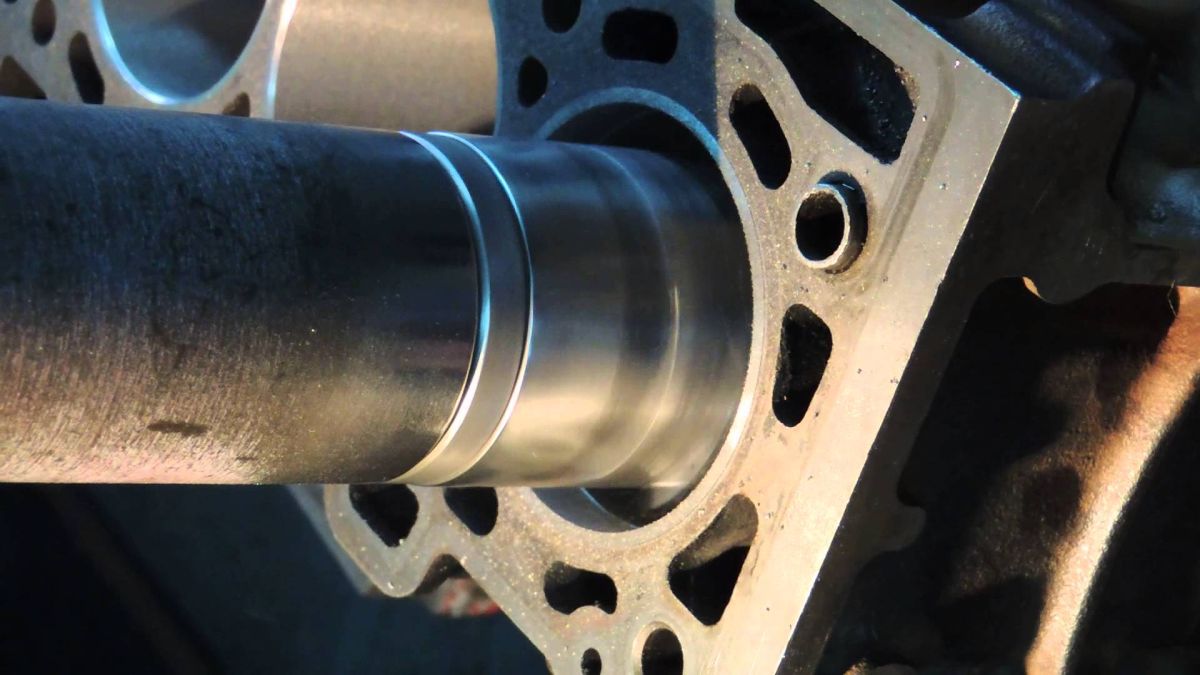
Cylinder and Piston Wear
High mileage, poor lubrication, overheating, or prolonged severe operating conditions can contribute to wear in the piston and cylinder assembly.
Excessive cylinder wear can prevent the piston rings from maintaining proper sealing.
Possible consequences include:
-
Increased oil consumption
-
Reduced compression
-
Blow-by
-
Poor combustion
-
Increased crankcase pressure
However, oil consumption and compression loss do not always increase at the same rate. An engine can consume oil even when compression readings appear relatively normal.
Worn Valve Stem Seals
Valve stem seals help prevent excessive engine oil from entering the combustion chamber through the valve area.
When these seals harden, crack, or lose their sealing ability, engine oil can enter the combustion chamber.
A particularly useful clue can be when blue smoke appears:
-
After the engine has been idling for a while
-
After a long downhill descent
-
After engine braking
-
When accelerating again after deceleration
This pattern can point toward oil entering through the valve mechanism, although it is not sufficient by itself to confirm worn valve seals.
Worn Valve Guides
Excessive clearance between the valve stem and valve guide can allow engine oil to enter the combustion chamber.
This type of wear is more likely to be considered on higher-mileage engines.
If replacing valve stem seals does not solve excessive oil consumption, the valve guides and cylinder head should also be inspected.
Can the PCV System Cause Oil Consumption?
Yes. The Positive Crankcase Ventilation system can play an important role in oil consumption.
The PCV system manages blow-by gases from the crankcase and routes them back into the intake system under controlled conditions.
If the PCV valve or related ventilation system is faulty, excessive oil vapor or liquid oil can be pulled into the intake.
This may cause:
-
Increased oil consumption
-
Oil accumulation in the intake system
-
Rough idle
-
Changes in crankcase pressure
-
Drivability problems
-
Increased intake deposits
A PCV system should therefore be checked when there is significant oil consumption but no obvious external leak.
Can a Turbocharger Cause Oil Consumption?
Turbocharged engines have another possible source of oil consumption.
A turbocharger operates at very high rotational speeds and requires proper lubrication. Problems involving the turbocharger or its oil-management system can allow oil to reach either the intake or exhaust side.
Possible symptoms include:
-
Increased oil consumption
-
Bluish exhaust smoke
-
Excessive oil accumulation in the intake system
-
Reduced engine performance
-
Changes in turbocharger noise
-
Boost-related problems
However, finding some oil residue inside a turbocharged engine's intake system does not automatically mean the turbocharger has failed. Oil vapor can enter the intake through the crankcase ventilation system, and a certain amount of residue may be normal depending on the engine design.
External Oil Leaks Can Also Cause Oil Loss
Engine oil does not have to enter the combustion chamber for the oil level to decrease.
Common external leak points include:
-
Oil pan gasket
-
Oil filter
-
Oil filter housing
-
Drain plug
-
Valve cover gasket
-
Crankshaft seals
-
Camshaft seals
-
Oil cooler connections
-
Turbocharger oil lines
-
Oil pressure sensor area
Some leaks leave visible oil spots under the vehicle, while others may reach hot engine components and evaporate.
Therefore, the absence of oil spots on the ground does not automatically rule out an external leak.
Can the Wrong Engine Oil Increase Oil Consumption?
Yes. Engine oil selection is not only about viscosity.
For example, choosing between 5W-30 and 5W-40 is only part of the decision. The engine manufacturer's required oil specification and approval are equally important.
Using an unsuitable oil may contribute to:
-
Increased oil consumption
-
Incorrect lubrication behavior
-
Turbocharger problems
-
Changes in emissions-system operation
-
Increased deposits in some applications
The correct oil should therefore be selected according to the manufacturer's specification rather than simply choosing an oil based on viscosity or brand.
Can Overfilling the Engine With Oil Cause Problems?
Yes. Having too much oil can also cause problems.
If the oil level is significantly above the manufacturer's maximum specification, the crankshaft may come into excessive contact with the oil, potentially causing aeration. Excess oil can also increase the amount of oil entering the crankcase ventilation system.
This is why adding more oil than necessary is not a solution to oil consumption.
The oil level should be checked using the vehicle manufacturer's recommended procedure and kept within the specified range.
Why Does Burning Oil Produce Blue Smoke?
When engine oil enters the combustion chamber and burns, the exhaust may produce blue or blue-gray smoke.
However, smoke color alone cannot provide a definitive diagnosis.
For example, smoke that appears:
-
Only during cold starts
-
After extended idling
-
During acceleration
-
After engine braking
-
Under turbo boost
-
Continuously under most operating conditions
may point toward different possible causes.
The timing of the smoke should therefore be considered together with oil consumption, engine operating conditions, and diagnostic test results.
Not Every Oil Loss Means the Engine Is Burning Oil
This distinction is extremely important.
If the oil level is dropping, the first question should be:
Where is the oil going?
The engine may be:
-
Losing oil externally
-
Pulling oil through the PCV system
-
Consuming oil through the turbocharger
-
Burning oil through the piston rings
-
Allowing oil past the valve stem seals or guides
Therefore, saying “the engine is consuming oil, so the engine is worn out” is not a reliable diagnosis.
How Much Oil Consumption Is Normal?
There is no single universal oil-consumption figure that applies to every engine.
Some manufacturers allow a certain amount of oil consumption depending on the engine design and operating conditions.
Oil consumption can vary according to:
-
Engine design
-
Engine displacement
-
Turbocharging
-
Mileage
-
Oil specification
-
Driving style
-
Engine operating temperature
-
High-RPM operation
-
Vehicle load
-
Driving conditions
The manufacturer's specification for the particular engine is therefore the most useful reference.
A sudden increase compared with the vehicle's previous oil consumption is often more significant than simply comparing the vehicle with a generic number.
How Can You Tell if an Engine Is Burning Oil?
Several symptoms can indicate oil burning:
-
Regularly falling oil level
-
Bluish exhaust smoke
-
Oil-fouled spark plugs
-
Excessive oil inside the intake system
-
Oil-related turbocharger symptoms
-
No obvious external oil leak
-
Changes in engine performance
-
Abnormal compression or leak-down results
It is important to remember that some engines can consume considerable amounts of oil without producing clearly visible blue smoke at all times.
How Is Excessive Oil Consumption Diagnosed?
A proper diagnosis should be systematic.
The first step is usually to inspect the engine for external oil leaks.
If no obvious leak is found, the technician may examine:
-
PCV operation
-
Intake system
-
Turbocharger
-
Turbo oil lines
-
Spark plugs
-
Engine operating data
-
Compression
-
Cylinder leak-down
-
Cylinder condition
A borescope may also be used to inspect the combustion chambers and cylinder walls.
A compression test can provide useful information, but normal compression does not automatically prove that the oil-control rings are healthy. Oil-control problems and compression sealing problems are related but not identical.
Can Oil Consumption Affect Engine Performance?
Not necessarily at first.
An engine may consume oil for a long time while maintaining normal performance.
However, excessive oil entering the combustion chamber can eventually contribute to:
-
Spark plug fouling
-
Misfires
-
Compression-related problems
-
Catalytic converter damage
-
Oxygen sensor contamination
-
Turbocharger-related problems
-
Increased deposits
As the underlying problem becomes more severe, engine performance may eventually decline.
Can Burning Oil Damage the Catalytic Converter?
Yes. Excessive oil consumption can affect more than the engine itself.
When oil enters the combustion chamber and burns, oil-derived combustion products can reach the exhaust system.
Long-term excessive oil consumption can contribute to damage or contamination of:
-
Catalytic converters
-
Oxygen sensors
-
Other emissions-control components
This is another reason why significant oil consumption should not simply be managed by repeatedly topping up the oil.
How Can Excessive Oil Consumption Be Prevented?
Not every form of oil consumption can be prevented, but good maintenance can help identify problems early.
Important practices include:
-
Check the engine oil level regularly.
-
Use the manufacturer's specified oil.
-
Follow the appropriate oil-change schedule.
-
Replace the oil filter as required.
-
Repair external oil leaks promptly.
-
Inspect the PCV system when necessary.
-
Check turbocharger oil lines and intake plumbing on turbocharged engines.
-
Avoid prolonged operation with an overheated engine.
-
Do not routinely operate the engine at unnecessarily high RPM.
-
Never fill the engine above the specified maximum oil level.
What Happens If the Oil Level Becomes Too Low?
Severe oil loss can eventually create a much more serious problem: insufficient lubrication.
If the oil level becomes dangerously low:
-
Oil pressure may fall
-
Engine bearings can be damaged
-
Crankshaft and camshaft components can wear
-
Turbocharger bearings can be damaged
-
Engine temperatures can increase
-
Severe engine damage can occur
If a red oil-pressure warning appears while the engine is running, simply adding oil and continuing to drive is not an appropriate response. The engine should be stopped safely and the cause of the low oil pressure should be investigated.
What Should You Do If Your Engine Is Burning Oil?
The first step should be to determine where the oil is going.
If there is an external leak, the leak source should be identified and repaired. If there is no external leak, the PCV system, turbocharger, valve mechanism, piston rings, and cylinder condition may need to be investigated.
It is also useful to measure oil consumption over a known distance rather than estimating it from occasional oil top-ups. The result can then be compared with the manufacturer's specification for that particular engine.
The operating conditions should also be recorded. Oil consumption during prolonged high-RPM driving, for example, may behave differently from consumption during normal urban driving.
Finding the Real Cause of Oil Consumption
Engine oil consumption does not automatically mean that the engine needs a complete rebuild. The cause can range from a relatively simple external leak or PCV problem to a turbocharger issue or significant internal engine wear.
The correct approach is to first check for external leaks, then evaluate the PCV and turbo systems, observe exhaust behavior, and perform compression, leak-down, or cylinder inspections when necessary.
The most important point is not simply to keep adding oil. The reason for the oil loss should be identified first. Early diagnosis can prevent further engine damage and may also protect expensive components such as the turbocharger, catalytic converter, and oxygen sensors.