TR
TR EN
EN

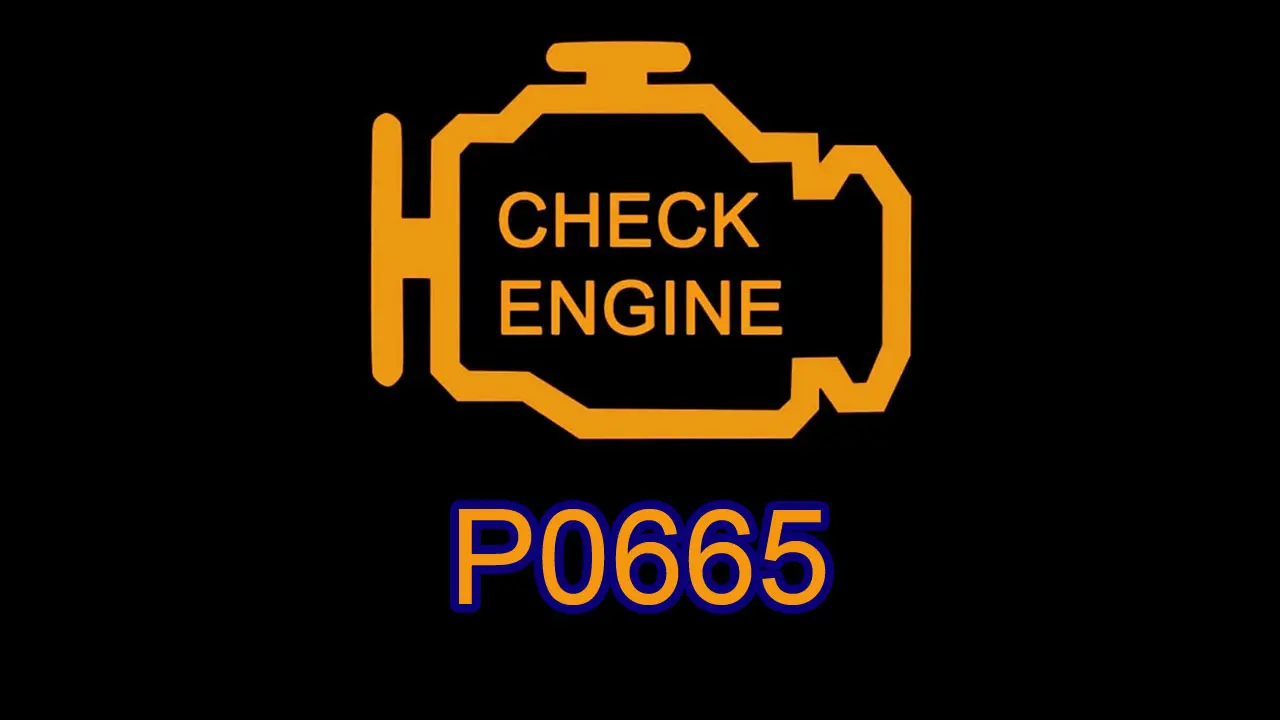
P0665 Intake Manifold Tuning Valve Control Circuit High (Bank 2)
The P0665 – Intake Manifold Tuning Valve Control Circuit High (Bank 2) diagnostic trouble code (DTC) indicates that the Engine Control Module (ECM/PCM) has detected an excessively high electrical signal in the control circuit of the Intake Manifold Tuning Valve on Bank 2.
The intake manifold tuning system is used to modify the airflow characteristics inside the intake manifold. Depending on engine speed and load, the system can change the effective length or airflow path of the intake runners to improve torque, throttle response, fuel economy, and emissions.
P0665 specifically indicates a high circuit condition, meaning the control module is seeing a voltage or electrical condition higher than the expected range.
What Does P0665 Mean?
In simple terms:
The ECM has detected a high electrical signal in the intake manifold tuning valve control circuit for Bank 2.
The system generally consists of:
ECM/PCM → Control Wiring → Intake Manifold Tuning Valve / Actuator → Intake Manifold Runner Mechanism
Depending on the vehicle, the actuator can be:
-
Electrically operated
-
Vacuum operated with an electronic control solenoid
-
Motor-driven with position feedback
The exact design varies significantly between manufacturers.
What Is an Intake Manifold Tuning Valve?
An Intake Manifold Tuning Valve (IMTV) controls airflow through different intake manifold passages.
Modern engines can use variable intake geometry to optimize airflow at different engine speeds.
At lower RPM, a longer intake path can help improve low-speed torque.
At higher RPM, a shorter or different airflow path can improve breathing and high-speed performance.
The tuning valve allows the engine computer to change the airflow path according to operating conditions.
What Does "Bank 2" Mean?
Bank 2 refers to the side of the engine that does not contain cylinder 1 on engines with two cylinder banks.
This terminology is mainly relevant to:
-
V6 engines
-
V8 engines
-
V10 engines
-
V12 engines
-
Other multi-bank engine configurations
On a typical inline four-cylinder engine, there is normally only one cylinder bank, so Bank 2 would not apply.
What Does "Circuit High" Mean?
The word "High" refers to the electrical signal in the control circuit.
It does not necessarily mean that the intake manifold tuning valve is physically stuck open.
A high circuit condition can be caused by:
-
Short to voltage
-
Open control circuit depending on system design
-
Failed actuator
-
Internal actuator electrical failure
-
Damaged wiring
-
Connector problems
-
Incorrect voltage
-
ECM driver failure
The actual diagnosis depends on the electrical design of the vehicle.
What Causes P0665?
Common possible causes include:
-
Faulty intake manifold tuning valve actuator
-
Failed intake manifold runner control motor
-
Faulty control solenoid
-
Damaged wiring
-
Short to voltage
-
Open circuit
-
Corroded connector
-
Loose electrical terminal
-
Stuck intake manifold runner
-
Carbon buildup
-
Broken intake runner linkage
-
Vacuum system problem on vacuum-operated systems
-
Faulty position sensor
-
ECM/PCM driver failure
-
Poor electrical ground
-
Previous incorrect repair
Can a Bad Intake Manifold Tuning Valve Cause P0665?
Yes.
The actuator or valve itself can develop an electrical or mechanical problem.
For example, an internal actuator failure may cause the control circuit voltage to remain outside the expected range.
If the valve mechanism becomes physically stuck, the actuator may also fail to achieve the commanded position.
Can Carbon Buildup Cause P0665?
Yes, indirectly.
Carbon deposits can accumulate around intake manifold runner mechanisms.
This can cause the tuning flaps or runners to become:
-
Sticky
-
Restricted
-
Slow to move
-
Completely stuck
However, carbon buildup alone does not always create a high electrical circuit condition.
If the code specifically indicates a high electrical signal, the electrical circuit should be tested rather than assuming carbon buildup is the only problem.
Can a Short to Voltage Cause P0665?
Yes.
A short to battery voltage can raise the control circuit above the expected level.
Inspect the wiring for:
-
Melted insulation
-
Chafing
-
Pinched wires
-
Incorrect repairs
-
Contact with power circuits
A wiring diagram and manufacturer specifications are important for identifying the correct circuit.
Can a Bad Connector Cause P0665?
Yes.
A poor connector can cause abnormal voltage readings or interrupt actuator operation.
Check for:
-
Corrosion
-
Loose terminals
-
Bent pins
-
Water intrusion
-
Damaged locking tabs
-
Poor terminal tension
Can a Vacuum Leak Cause P0665?
Usually not directly.
A vacuum-operated intake tuning system can experience vacuum-related problems, but a simple vacuum leak would not normally explain a high electrical control-circuit signal by itself.
If the actuator is electronically controlled and vacuum-operated, inspect both:
Electrical control → Vacuum supply → Actuator movement
Can the Intake Manifold Runner Be Stuck?
Yes.
A mechanically stuck runner can prevent the actuator from achieving the commanded position.
Possible causes include:
-
Carbon buildup
-
Dirt
-
Broken linkage
-
Worn bushings
-
Damaged runner mechanism
-
Internal manifold damage
A stuck runner can produce additional intake-manifold tuning or position-related codes.
Symptoms of P0665
Possible symptoms include:
-
Check Engine Light
-
Reduced engine performance
-
Poor acceleration
-
Reduced low-RPM torque
-
Poor throttle response
-
Hesitation
-
Rough engine operation
-
Reduced fuel economy
-
Increased emissions
-
Engine performance that changes with RPM
Some vehicles may show almost no noticeable symptoms apart from the Check Engine Light.
Can P0665 Cause Reduced Power?
Yes.
If the intake manifold tuning system cannot operate correctly, the engine may not receive the ideal airflow characteristics for a particular RPM and load.
The result can be:
-
Reduced torque
-
Slower acceleration
-
Poor high-RPM breathing
-
Hesitation
Some vehicles may also activate a reduced-power strategy.
Can P0665 Cause Poor Fuel Economy?
It can.
If the intake airflow is not optimized, combustion efficiency can decrease.
The actual fuel-economy effect depends on how the engine uses the intake tuning system.
Can P0665 Cause Rough Idle?
Sometimes, but it is not the most characteristic symptom.
If the tuning valve is stuck in an inappropriate position, airflow at idle can be affected.
However, rough idle can have many other causes, including:
-
Vacuum leaks
-
Throttle body problems
-
MAF sensor problems
-
Fuel-system issues
-
Ignition problems
These should not be overlooked.
Can P0665 Cause a No-Start Condition?
Normally, no.
An intake manifold tuning valve problem generally does not prevent the engine from starting.
However, if additional faults are present, a no-start condition may have another cause.
Can P0665 Cause Engine Damage?
Usually, P0665 does not directly cause immediate mechanical engine damage.
The engine may continue operating with the intake tuning system malfunctioning.
However, prolonged operation with poor airflow control can result in:
-
Reduced performance
-
Increased fuel consumption
-
Increased emissions
If the intake manifold mechanism has broken internally and parts can enter the engine, the situation can be more serious. This depends on the engine design.
How Is P0665 Diagnosed?
A systematic diagnosis is recommended.
1. Scan for all DTCs
Look for additional codes involving:
-
Intake manifold runners
-
Position sensors
-
MAF
-
MAP
-
Throttle
-
Vacuum
-
Engine performance
Additional codes can significantly narrow the diagnosis.
2. Identify Bank 2
Confirm which cylinder bank is Bank 2 using the manufacturer's service information.
3. Locate the intake manifold tuning actuator
Determine whether the system uses:
-
Electric motor
-
Solenoid
-
Vacuum actuator
-
Integrated position sensor
4. Inspect the connector
Look for:
-
Corrosion
-
Water
-
Bent pins
-
Loose terminals
-
Damaged wiring
5. Inspect the wiring
Look for short circuits, open circuits, and damaged insulation.
6. Check power and ground
Verify that the actuator receives the correct voltage and ground.
7. Check the control signal
Measure the control circuit according to the manufacturer's specifications.
Do not assume that a particular voltage should always be present because different systems use different control strategies.
8. Test actuator operation
If supported, use a scan tool to command the intake tuning valve.
Observe whether the actuator moves correctly.
9. Inspect mechanical movement
Verify that the runner mechanism moves freely.
10. Check position feedback
If the actuator includes a position sensor, compare commanded and actual positions.
Can a Scan Tool Diagnose P0665?
Yes.
An advanced diagnostic scanner can be very useful.
Depending on the vehicle, you may be able to:
-
Command the intake tuning valve
-
Monitor commanded position
-
Monitor actual position
-
Read actuator status
-
View related sensor data
-
Check freeze-frame information
A basic OBD scanner may only provide the P0665 code.
Can You Test the Actuator With a Multimeter?
Yes, depending on the actuator design.
A multimeter can be used to check:
-
Power supply
-
Ground
-
Continuity
-
Resistance where applicable
-
Control signal
-
Short circuits
However, actuator resistance specifications are vehicle-specific.
Do not apply battery voltage directly to an actuator unless the manufacturer's test procedure specifically instructs you to do so.
Can an Oscilloscope Help Diagnose P0665?
Yes.
An oscilloscope can be useful for systems that use:
-
PWM control
-
Electronic motor control
-
Position feedback
-
Variable control signals
It can help identify abnormal control signals that may not be obvious with a basic multimeter.
Can P0665 Be Caused by the ECM?
Yes, but ECM failure should generally be considered after external causes have been eliminated.
The ECM controls the intake manifold tuning system.
An internal ECM driver fault could theoretically create an abnormal control signal.
Before condemning the ECM, verify:
-
Power
-
Ground
-
Wiring
-
Connector
-
Actuator
-
Position feedback
-
Mechanical operation
What If P0665 Returns Immediately After Clearing?
If the code returns immediately, the electrical problem is likely still present.
Focus on:
-
Actuator wiring
-
Short to voltage
-
Connector condition
-
Power supply
-
Ground
-
Actuator internal failure
-
ECM control circuit
If the code returns only under certain RPM or load conditions, mechanical movement and position feedback should also be investigated.
What If P0665 Is Intermittent?
An intermittent fault can be caused by:
-
Loose connector
-
Corroded terminal
-
Broken wire inside insulation
-
Harness movement
-
Heat-related wiring problem
-
Intermittent actuator failure
-
Mechanical sticking
A visual inspection should be combined with electrical testing and, when possible, actuator testing.
Is P0665 a Serious Code?
Usually, P0665 is a moderate-severity fault rather than an immediate engine emergency.
The vehicle will often remain drivable.
However, ignoring the problem can result in:
-
Reduced engine performance
-
Poor acceleration
-
Increased fuel consumption
-
Increased emissions
-
Limp-mode operation on some vehicles
If the vehicle has severe power loss or unusual engine behavior, diagnosis should be performed promptly.
Can You Drive With P0665?
Usually, short-term driving is possible if the engine runs normally.
However, avoid unnecessary prolonged driving if:
-
Engine power is significantly reduced
-
The engine runs poorly
-
The Check Engine Light is flashing
-
The vehicle enters limp mode
-
Severe hesitation occurs
A flashing Check Engine Light indicates a potentially more serious engine problem and should not be ignored.
How Is P0665 Repaired?
The repair depends on the confirmed cause.
Possible repairs include:
-
Repairing damaged wiring
-
Repairing a short circuit
-
Replacing a damaged connector
-
Repairing a vacuum line
-
Replacing the intake manifold tuning actuator
-
Replacing a control solenoid
-
Cleaning carbon from the runner mechanism
-
Repairing the runner linkage
-
Replacing the intake manifold assembly
-
Repairing the position sensor
-
Repairing or replacing the ECM in rare cases
The correct repair should be based on testing rather than simply replacing parts.
Does P0665 Mean the Intake Manifold Must Be Replaced?
No.
A complete intake manifold replacement is not automatically necessary.
The fault may be caused by a much simpler problem such as:
-
Damaged wiring
-
Bad connector
-
Failed actuator
-
Vacuum problem
-
Carbon buildup
-
Broken linkage
The manifold should only be replaced if inspection confirms internal damage or if the actuator/runner mechanism is not separately serviceable.
P0665 vs. Other Intake Manifold Tuning Codes
P0665 specifically identifies:
P0665 – Intake Manifold Tuning Valve Control Circuit High (Bank 2)
The important elements are:
Intake Manifold Tuning Valve → Control Circuit → High Signal → Bank 2
Other intake manifold tuning codes can indicate different electrical conditions or performance/position problems.
Therefore, the exact DTC should always be interpreted together with the vehicle's wiring diagram and manufacturer-specific diagnostic procedure.
Common Diagnostic Mistakes
Assuming the intake manifold itself is defective
The actuator, wiring, connector, or control circuit may be the actual problem.
Assuming "High" means high airflow
It refers to an electrical circuit condition, not necessarily excessive intake airflow.
Replacing the actuator without testing the wiring
A short to voltage can damage or falsely trigger the circuit.
Ignoring mechanical movement
Electrical testing alone cannot determine whether the runner mechanism is physically stuck.
Ignoring Bank 2
The correct cylinder bank must be identified before testing or replacing components.
Replacing the ECM too quickly
ECM failure is possible but usually much less common than wiring, connector, actuator, or mechanical problems.
How Do You Clear P0665?
The proper procedure is:
Scan all modules → Record all DTCs → Check freeze-frame data → Identify Bank 2 → Inspect actuator and connector → Check power and ground → Test the control circuit → Test actuator operation → Inspect runner mechanism → Check position feedback → Repair the confirmed fault → Clear DTCs → Test-drive → Rescan
If P0665 returns, the underlying problem has not been corrected.
Final Thoughts on P0665
P0665 – Intake Manifold Tuning Valve Control Circuit High (Bank 2) means that the ECM has detected an abnormally high electrical condition in the intake manifold tuning valve control circuit for Bank 2.
The most common areas to investigate are:
Actuator → Connector → Wiring → Power/ground → Control signal → Runner mechanism → Position feedback → ECM
Possible causes include a failed actuator, shorted wiring, damaged connector, mechanical runner problem, carbon buildup, vacuum problem on applicable systems, or ECM failure.
The important point is that P0665 does not automatically mean the intake manifold needs to be replaced.
A proper diagnosis should determine whether the problem is electrical, mechanical, vacuum-related, or control-module related before any major component is replaced.