TR
TR EN
EN

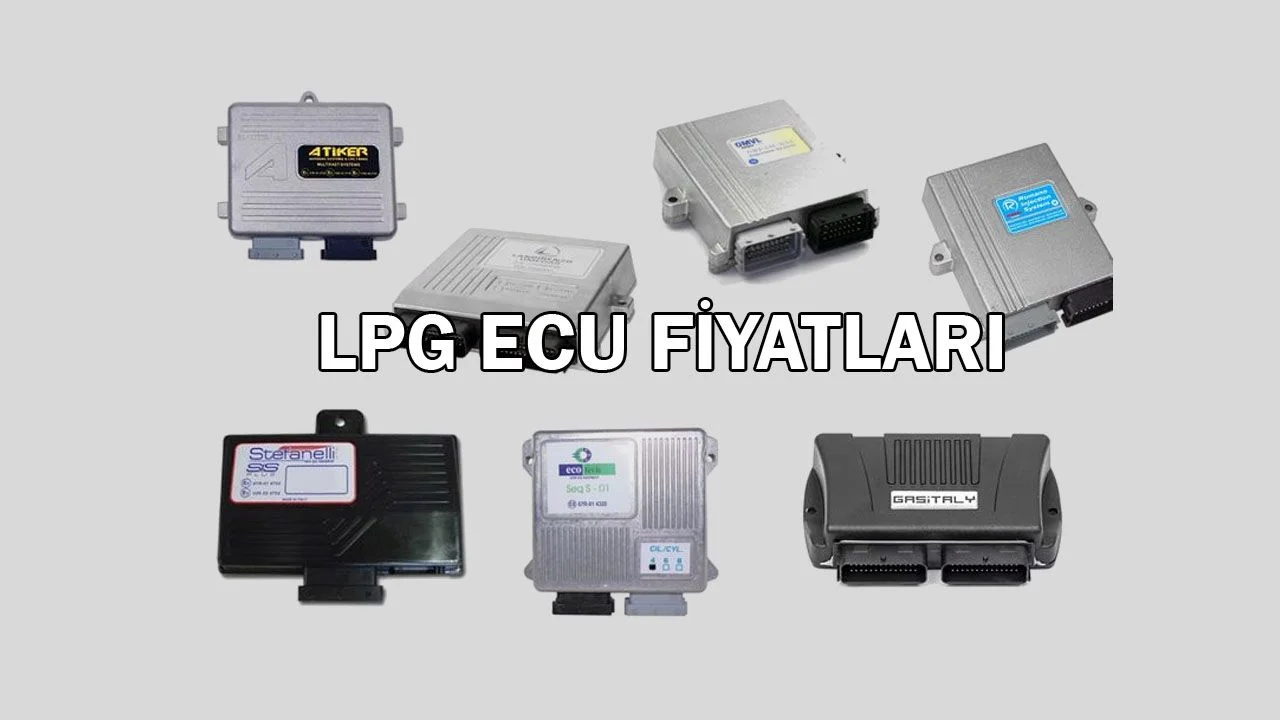
LPG ECU Prices in Turkey 2026: Price List
The LPG ECU (Electronic Control Unit), also commonly referred to as the LPG control unit or LPG “brain,” is one of the most important components of an LPG conversion system. It manages many operating parameters, including LPG injector opening times, gas pressure, engine RPM, temperature values, and communication with the vehicle's engine management system.
For this reason, choosing an ECU that is fully compatible with the vehicle's engine and the rest of the LPG system is essential for proper performance, accurate calibration, and long-term reliability.
As of 2026, LPG ECU prices vary depending on several factors, including brand, cylinder count (3-4 / 5-6-8), OBD or DI (Direct Injection) support, software capabilities, and exchange rates.
OBD-supported ECUs can communicate with the vehicle's engine ECU and allow more precise fuel-trim adjustments. DI ECUs, on the other hand, are specifically designed for vehicles with direct-injection engines and generally require more specialized calibration.
📅 Last Updated: January 1, 2026
2026 Current LPG ECU Prices
The following list represents LPG ECU product prices in the Turkish market for 2026. Prices are listed in Turkish lira or euros according to the original market price information.
AEB
-
4-Cylinder MP48 ECU: 4,500 TL
-
MP48 OBDII ECU: 5,500 TL
-
5-6-8 Cylinder ECU: 7,000 TL
AKL
-
3-4 Cylinder AKL OBD2 ECU: 4,500 TL
Aldesa
-
3-4 Cylinder Start ECU: 3,000 TL
-
3-4 Cylinder Galaxy ECU: 4,000 TL
Atiker
-
3-4 Cylinder Safefast ECU: 4,500 TL
-
3-4 Cylinder Safefast OBD2 ECU: 5,500 TL
-
5-6-8 Cylinder Safefast OBD2 ECU: 7,500 TL
-
3-4 Cylinder Fast 100 ECU: 4,500 TL
-
3-4 Cylinder Fast 101 OBD2 ECU: 6,000 TL
-
3-4 Cylinder Nanofast ECU: 4,500 TL
-
3-4 Cylinder Microfast OBDII ECU: 5,500 TL
-
3-4 Cylinder Atikfast 200 ECU: 4,500 TL
-
3-4 Cylinder Atikfast 201 OBDII ECU: 6,500 TL
-
3-4 Cylinder Atikfast 202 DI ECU: 7,000 TL
-
5-6-8 Cylinder Atikfast 203 OBDII ECU: 9,000 TL
-
5-6-8 Cylinder Atikfast 204 DI ECU: 9,000 TL
BRC
-
Sequent 32 ECU: €175
-
Sequent MY11 ECU: €130
Cangas
-
4-Cylinder CG24 ECU: 4,500 TL
-
4-Cylinder Plus ECU: 5,500 TL
-
5-6-8 Cylinder Plus ECU: 7,000 TL
GFI
-
EZ-GO ECU: €140
KME
-
4-Cylinder NEVO ECU: €90
-
6-Cylinder NEVO Plus ECU: €150
-
8-Cylinder NEVO Plus ECU: €175
-
4-Cylinder NEVO PRO ECU: €120
-
6-Cylinder NEVO PRO ECU: €170
-
8-Cylinder NEVO PRO ECU: €200
Landirenzo
-
3-4 Cylinder EVO OBD ECU: €130
-
3-4 Cylinder Omegas OBD ECU: €200
-
5-6-8 Cylinder Omegas OBD ECU: €240
-
4-Cylinder Omegas DI ECU: €225
Lovato
-
4-Cylinder Smart ECU: €100
-
4-Cylinder EGO ECU: €100
-
4-Cylinder Easyfast C OBDII ECU: €130
-
4-Cylinder Dual-Connector OBDII ECU: €130
-
5-6 Cylinder Easyfast C OBDII ECU: €140
-
8-Cylinder Easyfast C OBDII ECU: €150
Mimgas
-
3-4 Cylinder Genius ECU: 4,000 TL
-
3-4 Cylinder PRO ECU: 5,000 TL
Prins
-
4-Cylinder Ecomax ECU: 7,000 TL
-
4-Cylinder Technomax ECU: 8,500 TL
-
4-Cylinder Silverline ECU: 9,000 TL
-
VSI-2 ECU: 12,000 TL
Romano
-
AIS ECU: 4,500 TL
Tartarini
-
3-4 Cylinder EVO ECU: €140
Vikars
-
4-Cylinder Europe ECU: 4,500 TL
-
4-Cylinder Easy ECU: 5,500 TL
Wentgas
-
4-Cylinder ECU: 4,500 TL
Zavoli
-
Winner ECU: 5,500 TL
-
4-Cylinder Bora S32 ECU: 6,000 TL
What Determines LPG ECU Prices?
There can be a significant price difference between LPG ECUs even when they are designed for the same number of cylinders.
One of the main factors is OBD support. An OBD-compatible LPG ECU can communicate with the vehicle's engine management system and use information such as fuel trims to improve LPG calibration.
Direct Injection (DI) support is another important factor. Direct-injection gasoline engines require different LPG conversion strategies compared with conventional port-injection engines. Therefore, a DI-compatible ECU is usually more specialized.
The number of cylinders also affects the price. A 3- or 4-cylinder ECU generally costs less than a unit designed to control 5, 6, or 8 LPG injectors.
Software capabilities, firmware, injector compatibility, calibration options, and the availability of technical support can also affect the price.
LPG ECU Selection: What Should You Check?
Price should not be the only consideration when choosing an LPG ECU.
The following points should be checked before purchasing:
-
Number of engine cylinders
-
OBD compatibility
-
Direct Injection (DI) compatibility
-
Compatibility with the LPG injectors
-
Compatibility with the LPG pressure and temperature sensors
-
ECU software and calibration capabilities
-
Compatibility with the existing LPG wiring harness
-
Availability of calibration and service support
-
Compatibility with the vehicle's engine management system
An ECU that is cheaper but incompatible with the vehicle may create much higher costs later through poor calibration, drivability problems, increased fuel consumption, or repeated service work.
OBD and Non-OBD LPG ECUs
OBD-supported LPG ECUs have an important advantage because they can communicate with the vehicle's original engine ECU.
This allows the LPG system to monitor and respond to information such as fuel trims and other engine-management parameters.
However, OBD support does not automatically mean that an ECU will work correctly on every vehicle. The ECU must still be compatible with the engine, LPG injectors, sensors, wiring, and calibration software.
A properly calibrated non-OBD system can also operate successfully when it is correctly matched to the vehicle.
Direct Injection LPG ECUs
Direct-injection gasoline engines require special consideration during LPG conversion.
A DI LPG ECU is designed to work with the specific strategy required by direct-injection engines. Depending on the system, the original gasoline injectors may also continue to operate under certain conditions.
Therefore, installing a conventional LPG ECU on a direct-injection engine simply because the engine has four cylinders is not sufficient.
The ECU must specifically support the engine's injection technology and the LPG conversion system being installed.
Does a More Expensive LPG ECU Mean Better Performance?
Not necessarily.
A more expensive ECU may offer additional features, broader compatibility, OBD communication, DI support, more advanced calibration functions, or compatibility with a wider range of injectors.
However, the quality of the installation and calibration is just as important.
A correctly installed and calibrated mid-range ECU can provide better results than a more expensive ECU that has been installed incorrectly or poorly calibrated.
The injector characteristics, reducer/regulator capacity, gas pressure, sensor readings, wiring, engine condition, and calibration must all work together.
Can a Faulty LPG ECU Cause Engine Problems?
Yes. A malfunctioning or incorrectly calibrated LPG ECU can affect the way the engine operates on LPG.
Possible symptoms include:
-
Poor acceleration
-
Hesitation
-
Rough idle
-
Engine stalling
-
Difficult switching to LPG
-
Increased LPG consumption
-
Lean or rich mixture problems
-
Check Engine light
-
LPG system warning messages
-
Incorrect injector operation
-
Unstable fuel trims
However, these symptoms do not automatically mean that the ECU is defective.
A similar problem can be caused by LPG injectors, the regulator, gas pressure, pressure sensors, temperature sensors, wiring, vacuum leaks, ignition components, or incorrect calibration.
The ECU should therefore be tested before being replaced.
Should the LPG ECU Be Replaced Immediately?
No.
If an LPG system develops a problem, replacing the ECU should normally come after basic diagnostic checks.
The technician should first check:
-
LPG ECU power and ground
-
Wiring and connectors
-
Communication with the ECU
-
LPG software and firmware
-
Gas pressure
-
LPG injector operation
-
Temperature and pressure sensors
-
Regulator performance
-
Calibration values
-
OBD data where supported
Only after these checks should ECU replacement be considered.
LPG ECU Prices Can Change During 2026
The prices listed above represent product prices in the Turkish market based on the information available as of January 1, 2026.
Prices can change during the year because of:
-
Exchange-rate fluctuations
-
Supplier pricing
-
Import costs
-
Stock availability
-
Product revisions
-
Regional differences
-
Dealer pricing
-
Changes in demand
This is particularly relevant for products listed in euros. Their equivalent price in Turkish lira can change significantly depending on the exchange rate at the time of purchase.
The prices should therefore be considered a 2026 reference price list rather than fixed retail prices.
Choosing the Right LPG ECU
The correct LPG ECU is not necessarily the cheapest or the most expensive unit on the market. The important issue is whether the ECU is correctly matched to the vehicle and the complete LPG system.
The engine's cylinder count, injection technology, LPG injector type, OBD capability, DI compatibility, regulator capacity, sensors, wiring, software, and available calibration support should all be considered together.
A suitable ECU combined with a quality installation and accurate calibration can provide stable LPG operation, good drivability, and reasonable fuel consumption. Conversely, choosing an incompatible ECU simply because it is cheaper can lead to calibration difficulties and recurring LPG problems.
Price is only one part of the decision. Compatibility and correct calibration are ultimately much more important than the ECU's purchase price.