TR
TR EN
EN

What Are the Common Automatic Transmission Problems and Their Symptoms?
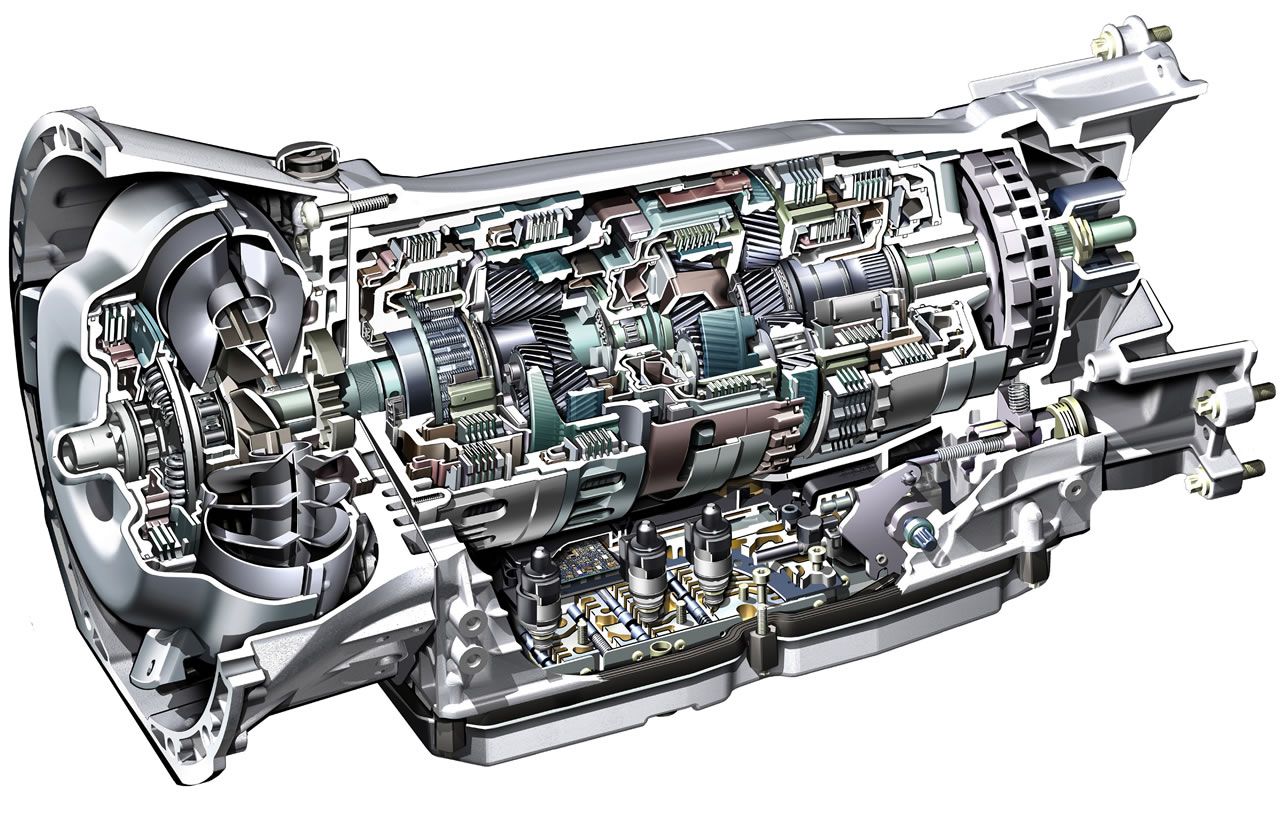
An automatic transmission is a complex system that transfers engine power to the wheels while automatically selecting suitable gear ratios. Modern vehicles use several different types of automatic transmissions, including traditional torque-converter automatics, CVTs, and dual-clutch transmissions such as DCT and DSG systems.
Because these transmission types work differently, their failure symptoms can also vary. However, harsh shifting, delayed engagement, slipping, shuddering, unusual noises, fluid leaks, overheating, and transmission warning messages are among the most common signs of an automatic transmission problem.
One important point should be made from the beginning: a transmission symptom does not automatically mean that the transmission itself needs to be rebuilt or replaced. Low fluid, incorrect fluid, a faulty solenoid, a sensor, wiring, a valve body, software, an adaptation problem, or even an engine fault can produce similar symptoms.
Harsh or Jerky Gear Changes
One of the most noticeable automatic transmission problems is a hard or jerky gear change.
The vehicle may shift harshly between gears such as 1-2 or 2-3, or produce a noticeable thump when selecting Drive or Reverse.
Possible causes include:
-
Low transmission fluid
-
Incorrect or degraded fluid
-
Shift solenoid problems
-
Valve body problems
-
Hydraulic pressure abnormalities
-
Transmission adaptation problems
-
Worn engine or transmission mounts
-
Internal mechanical wear
The conditions under which the harsh shift occurs are important. A transmission that shifts harshly only when cold may have a different problem from one that shifts harshly after reaching operating temperature.
Delayed Engagement
A transmission should normally engage Drive or Reverse shortly after the gear is selected.
If there is a noticeable delay before the vehicle begins moving, the condition is known as delayed engagement.
Possible causes include:
-
Low transmission fluid
-
Hydraulic pressure loss
-
Worn internal seals
-
Valve body problems
-
Faulty solenoids
-
Transmission pump problems
-
Internal clutch wear
If the delay becomes progressively longer, the transmission should be inspected rather than continuing to drive until the problem becomes severe.
Transmission Slipping
Transmission slipping occurs when engine speed increases without a corresponding increase in vehicle speed.
For example, the engine RPM may suddenly rise during acceleration while the vehicle does not accelerate as expected.
Slipping can become particularly noticeable:
-
Under heavy acceleration
-
When climbing hills
-
When towing
-
At higher speeds
-
During gear changes
Possible causes include:
-
Worn clutch packs
-
Low transmission fluid
-
Incorrect fluid
-
Hydraulic pressure problems
-
Faulty solenoids
-
Torque converter problems
-
Internal mechanical wear
Continued slipping can generate excessive heat and accelerate damage to internal transmission components.
Shuddering and Vibration During Gear Changes
Some automatic transmissions develop a vibration or shudder during low-speed driving or light acceleration.
In torque-converter automatic transmissions, a problem with the lock-up clutch can cause shuddering at certain speeds.
The vehicle may feel as though it is repeatedly and lightly applying and releasing the brakes while cruising under light throttle.
However, not every transmission shudder originates inside the transmission.
Other possible causes include:
-
Engine misfires
-
Worn spark plugs
-
Ignition coil problems
-
Engine mounts
-
Driveshaft or axle problems
-
CV joints
-
Fuel-system problems
The engine and drivetrain should therefore be evaluated alongside the transmission.
Transmission Stuck in One Gear
Modern automatic transmissions can enter a protective operating mode when the control unit detects a serious fault.
This is commonly called limp mode, fail-safe mode, or transmission protection mode.
The vehicle may:
-
Remain in one gear
-
Refuse to shift normally
-
Start in a higher gear
-
Have limited performance
-
Display a transmission warning
-
Store transmission-related diagnostic trouble codes
Entering limp mode does not automatically mean that the transmission has suffered major mechanical damage.
A failed sensor, solenoid, wiring problem, power supply issue, communication fault, or control-unit problem can also trigger protective operation.
Unusual Transmission Noises
New or unusual noises from an automatic transmission should not be ignored.
Whining or humming
A whining sound may be associated with the transmission pump, bearings, gears, differential, or fluid-related problems.
Clunking or knocking
A clunk may be related to internal mechanical wear, gear engagement, mounts, or other drivetrain components.
Grinding
Grinding can indicate a serious mechanical problem, although the actual source should be confirmed because axle, differential, wheel bearing, and other drivetrain problems can sometimes sound like transmission damage.
The conditions under which the noise occurs are extremely useful for diagnosis.
Transmission Fluid Leaks
Automatic transmission fluid leaking underneath the vehicle is an important warning sign.
Potential leak locations include:
-
Transmission pan
-
Pan gasket
-
Drain plug
-
Axle seals
-
Input shaft seal
-
Transmission cooler lines
-
Transmission oil cooler
-
Electrical connector seals
-
Transmission housing seals
A transmission with insufficient fluid may develop lubrication and hydraulic-pressure problems.
This can result in:
-
Delayed engagement
-
Slipping
-
Harsh shifting
-
Overheating
-
Premature internal wear
A fluid leak should therefore be repaired rather than simply topping up the transmission repeatedly.
Burnt Transmission Fluid Smell
Overheated transmission fluid can produce a strong burnt smell.
Excessive heat may occur because of:
-
Clutch slipping
-
Heavy load
-
Towing
-
Low fluid level
-
Cooling-system problems
-
Internal transmission problems
-
Restricted transmission cooling
-
Excessive operating temperature
Overheating can accelerate fluid degradation and internal wear.
However, a burnt smell by itself does not prove that the transmission is beyond repair. The fluid condition, temperature, pressure, and transmission operation should be evaluated together.
Reverse Gear Does Not Engage
If Reverse is selected but the vehicle does not move backward, several different problems are possible.
Potential causes include:
-
Low transmission fluid
-
Hydraulic pressure problems
-
Faulty solenoid
-
Valve body problems
-
Electronic control problems
-
Gear selector problems
-
Wiring or connector faults
-
Internal clutch or mechanical failure
If Drive operates normally but Reverse does not, the diagnostic process should pay particular attention to the hydraulic and mechanical circuits responsible for Reverse operation.
Hard Impact When Selecting Drive or Reverse
A strong thump when moving the selector from Park or Neutral into Drive or Reverse can have several causes.
Possible problems include:
-
Excessive hydraulic pressure
-
Solenoid control problems
-
Valve body issues
-
Transmission adaptation problems
-
Low or incorrect fluid
-
Worn engine mounts
-
Worn transmission mounts
This is another example of why a transmission should not automatically be blamed for every harsh engagement.
A damaged engine or transmission mount can produce a surprisingly strong impact even when the internal transmission components are operating correctly.
Gear Hunting
Gear hunting occurs when an automatic transmission repeatedly shifts between two gears under relatively steady driving conditions.
It can be noticeable when driving:
-
At constant speed
-
On mild inclines
-
On rolling roads
-
With light throttle input
Transmission shift decisions depend on information such as:
-
Vehicle speed
-
Engine RPM
-
Throttle position
-
Engine load
-
Transmission temperature
-
Accelerator position
-
Input and output shaft speeds
A faulty sensor can therefore cause abnormal shifting even when the transmission's mechanical components are still functional.
Potential causes include:
-
Throttle position problems
-
Accelerator pedal sensor problems
-
MAF/MAP sensor problems
-
Transmission speed sensors
-
Transmission temperature sensor
-
Brake switch problems
-
Transmission pressure sensors
-
Software or adaptation issues
Transmission Warning Light or Message
Modern vehicles may display different warnings when the transmission control system detects a problem.
Depending on the manufacturer, messages may include:
-
Transmission Fault
-
Gearbox Fault
-
Check Transmission
-
Service Transmission
-
Transmission Overheating
-
Gearbox Malfunction
The exact wording varies between manufacturers.
When a transmission warning appears, scanning only the engine ECU may not be sufficient. The TCM or TCU should also be scanned because many transmission faults are stored in the transmission control module.
Automatic Transmission Fault Codes
Transmission control modules can store codes related to many different systems, including:
-
Shift solenoids
-
Pressure-control solenoids
-
Transmission pressure sensors
-
Transmission temperature sensors
-
Input shaft speed sensors
-
Output shaft speed sensors
-
Gear-position sensors
-
Clutch control
-
Hydraulic pressure
-
Torque converter operation
-
CAN communication
An important diagnostic rule is that a fault code does not automatically prove that the named component has failed.
For example, a shift-solenoid circuit code could be caused by:
-
The solenoid itself
-
Wiring
-
A connector
-
Power supply
-
Ground
-
Control signal
-
TCM driver circuitry
-
Internal hydraulic problems
The circuit should therefore be tested before replacing the component.
Shift Solenoid Problems
Shift solenoids are electro-hydraulic components that control transmission fluid flow according to commands from the transmission control unit.
A faulty solenoid can cause:
-
Harsh shifts
-
Delayed shifts
-
Missing gears
-
Gear slipping
-
Limp mode
-
Incorrect shift timing
-
Transmission fault codes
A solenoid should not automatically be replaced simply because a diagnostic code mentions it.
Depending on the transmission, testing may include electrical measurements, wiring checks, live data, commanded-actuation tests, hydraulic pressure measurements, and inspection of the valve body.
Valve Body Problems
The valve body is responsible for directing hydraulic fluid to different transmission circuits.
Wear, contamination, sticking valves, internal leakage, or solenoid problems can interfere with hydraulic control.
Possible symptoms include:
-
Harsh shifting
-
Delayed engagement
-
Gear slipping
-
Missing gears
-
Gear hunting
-
Pressure-control problems
-
Limp mode
In some transmissions, replacing a solenoid without addressing valve-body wear will not solve the underlying problem.
Torque Converter Problems
Traditional automatic transmissions use a torque converter to transfer power between the engine and transmission.
A torque converter or lock-up clutch problem can cause:
-
Shuddering
-
Abnormal RPM fluctuations
-
Poor acceleration
-
Vibration at cruising speed
-
Delayed lock-up
-
Excessive heat
-
Increased fuel consumption
A particularly noticeable symptom can occur during light-throttle cruising when the lock-up clutch repeatedly engages and disengages.
However, engine misfires can produce similar sensations, so the engine should also be checked.
Dual-Clutch Transmission Problems
Dual-clutch transmissions such as DCT and DSG systems operate differently from conventional torque-converter automatics.
Common symptoms include:
-
Shuddering during takeoff
-
Jerky low-speed operation
-
Harsh gear changes
-
Delayed engagement
-
Clutch slipping
-
Reverse-gear problems
-
Mechatronic faults
-
Transmission warning messages
A worn clutch pack and a mechatronic problem can produce similar symptoms.
Transmission adaptation values and manufacturer-specific diagnostic procedures can therefore be important before deciding whether the clutch assembly or mechatronic unit needs replacement.
CVT Transmission Problems
CVT transmissions use a continuously variable ratio rather than conventional fixed gears.
Typical CVT problems may include:
-
RPM rising without proportional acceleration
-
Shuddering
-
Whining noises
-
Overheating
-
Poor takeoff
-
Transmission warning messages
-
Fail-safe operation
CVT fluid is particularly important because CVT systems are designed around specific friction and lubrication characteristics.
A generic automatic transmission fluid should not be used simply because it is labeled as “ATF.” The manufacturer's required fluid specification should always be followed.
Transmission Mount Problems Can Mimic Transmission Failure
A worn engine or transmission mount can produce symptoms that appear to come from inside the transmission.
For example, a worn mount can cause:
-
A clunk when selecting Drive
-
A clunk when selecting Reverse
-
A jolt when accelerating
-
Excessive movement when changing between forward and reverse
-
Vibration at idle
Therefore, transmission diagnosis should include inspection of the engine and transmission mounting system.
When Should Automatic Transmission Fluid Be Changed?
There is no universal fluid-change interval that applies to every automatic transmission.
Maintenance requirements vary according to:
-
Transmission design
-
Manufacturer recommendations
-
Fluid specification
-
Driving conditions
-
Ambient temperature
-
Towing or heavy-load use
-
Stop-and-go traffic
-
Transmission operating temperature
Some manufacturers specify a service interval, while others describe the fluid as “lifetime” under certain operating conditions.
“Lifetime fluid” does not mean that the fluid can never deteriorate. It means the manufacturer has defined a particular maintenance strategy for that transmission.
The correct service procedure and fluid specification should always take priority over a generic mileage recommendation.
What Happens If the Wrong Transmission Fluid Is Used?
Automatic transmission fluid does more than lubricate internal components. It also plays an important role in hydraulic control and clutch operation.
Using the wrong fluid can contribute to:
-
Harsh shifting
-
Shuddering
-
Incorrect clutch engagement
-
Slipping
-
Pressure-control problems
-
Overheating
-
Premature wear
Fluid selection should therefore be based on the manufacturer's required specification or approval, not simply the brand, color, or the fact that the fluid is labeled “automatic transmission fluid.”
How Is an Automatic Transmission Diagnosed?
Proper diagnosis usually starts with the symptoms rather than immediately replacing parts.
First, determine exactly when the problem occurs:
-
When cold or hot?
-
During acceleration or deceleration?
-
At low or high speed?
-
During a specific gear change?
-
Only in Drive?
-
Only in Reverse?
-
Under heavy load?
-
After the transmission reaches operating temperature?
The technician can then proceed with appropriate tests.
These may include:
-
Checking transmission fluid level
-
Inspecting fluid condition
-
Looking for leaks
-
Checking engine and transmission mounts
-
Scanning the TCM/TCU
-
Reading stored and pending fault codes
-
Examining freeze-frame data where available
-
Monitoring live transmission data
-
Checking input and output shaft speeds
-
Checking transmission temperature
-
Testing solenoids
-
Checking wiring and connectors
-
Measuring hydraulic pressure when required
-
Performing mechanical tests when necessary
Modern automatic transmissions are highly electronically controlled, so a diagnostic scan alone is often not enough. Live data and manufacturer-specific testing procedures can be just as important as the fault codes themselves.
Can You Continue Driving With a Transmission Problem?
It depends on the severity of the symptom.
A mild shift-quality issue is not necessarily as urgent as severe slipping or a major fluid leak.
However, continued driving can be risky when the vehicle has:
-
Severe transmission slipping
-
No Drive or Reverse
-
Major fluid leakage
-
Strong burning smell
-
Severe overheating
-
Loud mechanical noises
-
Repeated limp-mode operation
-
Sudden loss of a gear
-
Severe impact during gear engagement
Driving with low transmission fluid is particularly dangerous because insufficient fluid can affect both lubrication and hydraulic pressure.
A relatively small problem can become a much more expensive transmission repair if it is ignored.
Common Mistakes When Diagnosing Automatic Transmission Problems
“The transmission shifts hard, so the transmission is finished.”
Not necessarily. Fluid, solenoids, valve-body problems, adaptations, mounts, wiring, and control systems can all cause harsh shifting.
Replacing a component immediately after seeing a fault code
A fault code identifies a detected problem or circuit. It does not always identify the failed component.
Using a random transmission fluid
Different transmissions require different fluid specifications. The wrong fluid can alter clutch and hydraulic behavior.
Ignoring the engine
Engine misfires, throttle problems, torque delivery issues, and engine mounts can sometimes feel like transmission problems.
Continuing to drive while the transmission is slipping
Slipping generates heat and friction. Continued operation can increase internal damage significantly.
Resetting transmission adaptations without fixing the cause
Adaptation procedures can be useful after certain repairs, but they should not be treated as a universal cure for transmission problems.
Recognizing Transmission Problems Early
Automatic transmission failures do not always begin with a dramatic breakdown. In many cases, the first warning is a small change in vehicle behavior: a slightly delayed engagement, a new vibration, an unusual shift, a small fluid leak, or an occasional warning message.
Recognizing these changes early can prevent a relatively simple electrical, hydraulic, or maintenance-related problem from developing into major internal damage.
The best approach is to determine when and how the symptom occurs, scan the transmission control module, inspect the fluid and mechanical components, and test the relevant electrical and hydraulic systems before replacing expensive parts.
An automatic transmission fault code or symptom should be treated as the starting point of the diagnosis—not as automatic proof that the entire transmission needs to be replaced.