TR
TR EN
EN

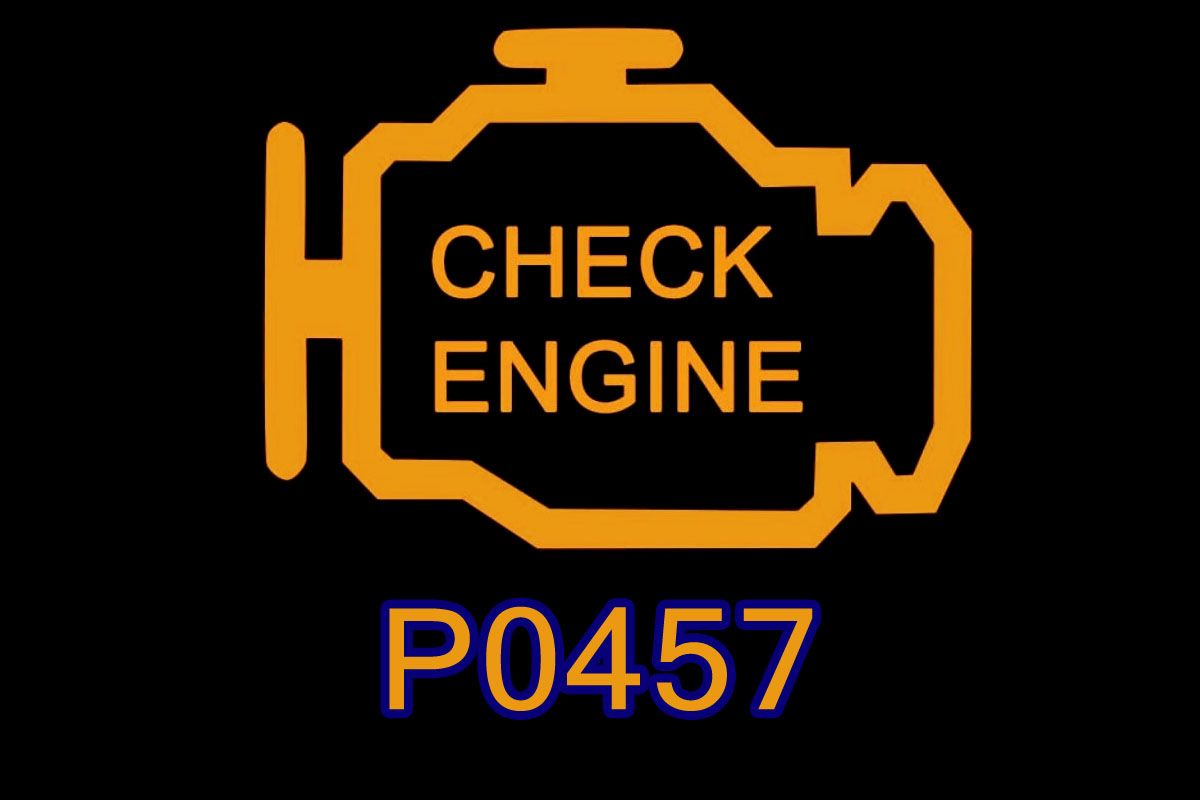
P0457 Evaporative Emission Control System Leak Detected
P0457 is an EVAP system leak code. The engine control module (ECM/PCM) has determined that the fuel vapor system is not sealing as tightly as expected during an EVAP leak test.
Unlike an electrical circuit code such as P0458 or P0459, P0457 is primarily a system sealing problem. The important question is not simply “which sensor is bad?” but where is the EVAP system allowing air to enter or fuel vapor to escape?
In many vehicles, the leak is relatively small and the vehicle may drive completely normally.
What the EVAP system does
The Evaporative Emission Control System prevents gasoline vapors from escaping from the fuel tank into the atmosphere.
Fuel naturally produces vapor, especially when the fuel and tank temperature increase. Instead of allowing these vapors to vent directly into the atmosphere, the EVAP system stores them in a charcoal canister.
When operating conditions are appropriate, the ECM opens the purge valve and draws the stored vapor into the engine, where it is burned as part of the normal combustion process.
The system generally includes:
-
Fuel tank
-
Fuel filler neck and fuel cap
-
Charcoal canister
-
EVAP purge valve
-
EVAP vent valve
-
EVAP hoses and pipes
-
Fuel tank pressure sensor on many vehicles
-
Check valves or other vapor-control components depending on design
-
ECM/PCM
The exact arrangement varies considerably between manufacturers.
What P0457 actually means
P0457 means the ECM has detected an EVAP leak large enough to fail its sealing test.
The wording can sometimes be interpreted as a major fuel leak, but that is not necessarily the case.
The leak may be extremely small.
A loose fuel cap, damaged cap seal, cracked EVAP hose, improperly installed filler cap, or disconnected vapor line can all produce this code.
On some vehicles, P0457 is strongly associated with a loose, missing, incorrectly installed, or poorly sealing fuel filler cap. However, the code should not automatically be treated as a fuel-cap problem on every vehicle.
Why the fuel cap is such an important suspect
The fuel cap is part of the EVAP system's sealing boundary.
When the vehicle performs an EVAP leak test, the system is expected to hold a certain pressure or vacuum for a specified period.
If the cap does not seal correctly, the system cannot maintain the expected pressure.
Common fuel-cap problems include:
-
Cap not tightened correctly
-
Damaged rubber seal
-
Cracked cap
-
Incorrect replacement cap
-
Dirt around the filler-neck sealing surface
-
Damaged filler neck
-
Missing cap
-
Cap that clicks but does not actually seal properly
This is one of the easiest things to inspect, but it should not lead to unnecessary parts replacement.
If the cap is visibly damaged, replacing it is reasonable. If it appears normal, the rest of the EVAP system still needs to be considered.
A leak does not necessarily mean you can smell fuel
A common misconception is that an EVAP leak should always produce a noticeable gasoline smell.
That is not true.
A very small leak may allow enough air into the system to fail the ECM's diagnostic test while releasing too little vapor for a person to notice.
Also, the EVAP system operates under different conditions depending on temperature, fuel level and purge/vent operation.
Therefore, a vehicle can have P0457 with:
-
No fuel smell
-
No drivability problem
-
Normal fuel economy
-
Normal engine idle
-
No visible fluid leak
The Check Engine Light may be the only obvious symptom.
Common causes of P0457
The most common causes are related to the physical sealing of the EVAP system.
Loose or damaged fuel cap
This is one of the first things worth checking, particularly if the code appeared shortly after refueling.
Damaged fuel-cap seal
The cap may look fine externally while the sealing surface or O-ring is damaged.
Cracked EVAP hose
EVAP hoses can become brittle with age and may crack around their connections.
Disconnected EVAP line
A hose can become disconnected during fuel-system, intake, exhaust or other service work.
Damaged filler neck
Rust, deformation or damage around the filler neck can prevent the fuel cap from sealing.
Cracked charcoal canister
The canister or its connections can develop physical damage.
Faulty EVAP vent valve
A vent valve that does not close or seal correctly can prevent the system from holding the pressure or vacuum required for the leak test.
Purge valve that does not seal
The purge valve is normally expected to control when vapor is allowed into the intake. If it leaks internally when commanded closed, it can interfere with EVAP testing.
Damaged vapor lines
Plastic EVAP pipes can crack, especially near connections and areas exposed to heat, vibration, road debris or corrosion.
Fuel tank or tank connection problem
Less commonly, the leak can originate around the fuel tank, pump module seal, rollover valve or another tank-mounted component.
Can a bad purge valve cause P0457?
It can, but this needs some clarification.
A purge valve that is electrically functional can still have a mechanical sealing problem.
For example, the ECM may command the purge valve closed, but the valve may allow vapor or air to pass through internally.
That can interfere with the EVAP leak test.
However, this does not mean every P0457 requires a purge valve replacement.
The valve should be tested for electrical operation and, where applicable, for its ability to seal when closed.
Can the vent valve cause P0457?
Yes.
The vent valve controls the fresh-air side of the EVAP system and is involved in the system's ability to seal during certain diagnostic tests.
If the vent valve is stuck open, contaminated, damaged or unable to seal, the ECM may detect a leak.
This is particularly important because the vent valve is often mounted in an area exposed to:
-
Dust
-
Mud
-
Water
-
Road salt
-
Corrosion
-
Dirt and debris
A vent valve can therefore become contaminated or mechanically stuck even when its electrical circuit is still functioning.
How the ECM detects the leak
The exact EVAP diagnostic strategy depends on the vehicle.
The ECM may use a fuel tank pressure sensor or another pressure/vacuum measurement to determine whether the EVAP system can maintain a specified pressure condition.
A simplified test may work like this:
-
The vehicle reaches suitable operating conditions.
-
The ECM commands specific EVAP valves.
-
The system is isolated or pressurized/vacuum-tested.
-
The pressure or vacuum response is monitored.
-
The ECM compares the measured behavior with its expected values.
-
If the system loses pressure/vacuum faster than permitted, an EVAP leak code can be stored.
Therefore, P0457 is generally a system-level diagnostic conclusion rather than a statement identifying the exact leaking component.
Why a smoke test is often the best diagnostic method
When the fuel cap has been checked and the code returns, a smoke test can be extremely useful.
A diagnostic smoke machine introduces a small amount of visible smoke into the EVAP system. The technician can then inspect the system for smoke escaping from the leak point.
This can reveal problems that are almost impossible to find visually, such as:
-
Tiny hose cracks
-
Loose hose connections
-
Cracked plastic pipes
-
Damaged canister connections
-
Filler-neck leaks
-
Tank-top leaks
-
Valve sealing problems
A very small EVAP leak can be difficult to locate simply by looking at the hoses.
A proper diagnostic approach
Start with the simple things before replacing expensive EVAP components.
First, check the fuel cap carefully. Inspect its seal, the filler-neck sealing surface and whether the cap is the correct type for the vehicle.
Then inspect the EVAP hoses and pipes, particularly around the fuel tank, charcoal canister and valve connections.
After that, use a scan tool to check all stored and pending codes. Other EVAP codes can provide important clues about which part of the system is malfunctioning.
If the leak is not visually obvious, perform an EVAP leak test or smoke test according to the manufacturer's procedure.
Where the vehicle provides live fuel-tank pressure data, compare the reported pressure behavior with the commands being issued to the purge and vent valves.
The goal is to identify where the system loses its seal, rather than simply replacing the component most commonly associated with the code.
What happens if you continue driving?
P0457 usually does not cause an immediate engine failure.
In many cases, the vehicle will continue to drive normally.
However, the EVAP system is part of the vehicle's emissions-control system, so leaving the problem unresolved can cause:
-
Check Engine Light to remain illuminated
-
EVAP readiness monitor to remain incomplete
-
Emissions-test failure in jurisdictions where EVAP faults are checked
-
Fuel vapor emissions
-
Fuel odor in some cases
-
Difficulty diagnosing future engine/emissions faults because the warning light is already active
If there is an actual fuel leak rather than simply a vapor-system leak, however, the situation is more serious and should be inspected immediately.
P0457 is not the same as P0442
Both codes involve EVAP leaks, but they should not automatically be treated as identical.
P0442 is commonly associated with a small EVAP leak, while P0457 is often used when the system detects a leak condition associated with the fuel-cap/filler area or a relatively significant loss of EVAP sealing, depending on manufacturer strategy.
The exact threshold and code definition can vary between vehicles.
This is why the manufacturer's diagnostic information is important when interpreting the code.
P0457 vs. P0455 and P0456
These codes are all associated with EVAP leakage, but the diagnostic thresholds and descriptions differ.
P0455 is generally associated with a large EVAP leak.
P0456 is generally associated with a very small EVAP leak.
P0457 is commonly associated with an EVAP leak condition, frequently involving the fuel cap or filler area, but the exact interpretation is manufacturer-dependent.
The practical diagnostic principle remains the same: find the point where the EVAP system fails to seal.
Don't replace the purge valve just because P0457 is present
This is one of the most important points when diagnosing EVAP codes.
P0457 does not identify the purge valve as the failed component.
The fault could be a $10 sealing problem, a cracked hose, a vent valve, a filler-neck problem, a tank seal, a canister connection or another component in the EVAP system.
Replacing the purge valve without performing a leak test can therefore waste money and leave the original problem untouched.
Final diagnostic perspective
P0457 means the ECM has detected an EVAP system sealing failure.
The fuel cap should be checked first because it is simple, accessible and commonly responsible for EVAP leaks. But if the cap is correct and properly sealed, the diagnosis needs to continue through the hoses, filler neck, charcoal canister, purge valve, vent valve, tank connections and pressure-monitoring system.
The most effective approach is to treat P0457 as a system leak to be located, not as an automatic instruction to replace a particular part.
A good diagnosis ultimately answers one question:
Where is the EVAP system losing its ability to remain sealed?