TR
TR EN
EN

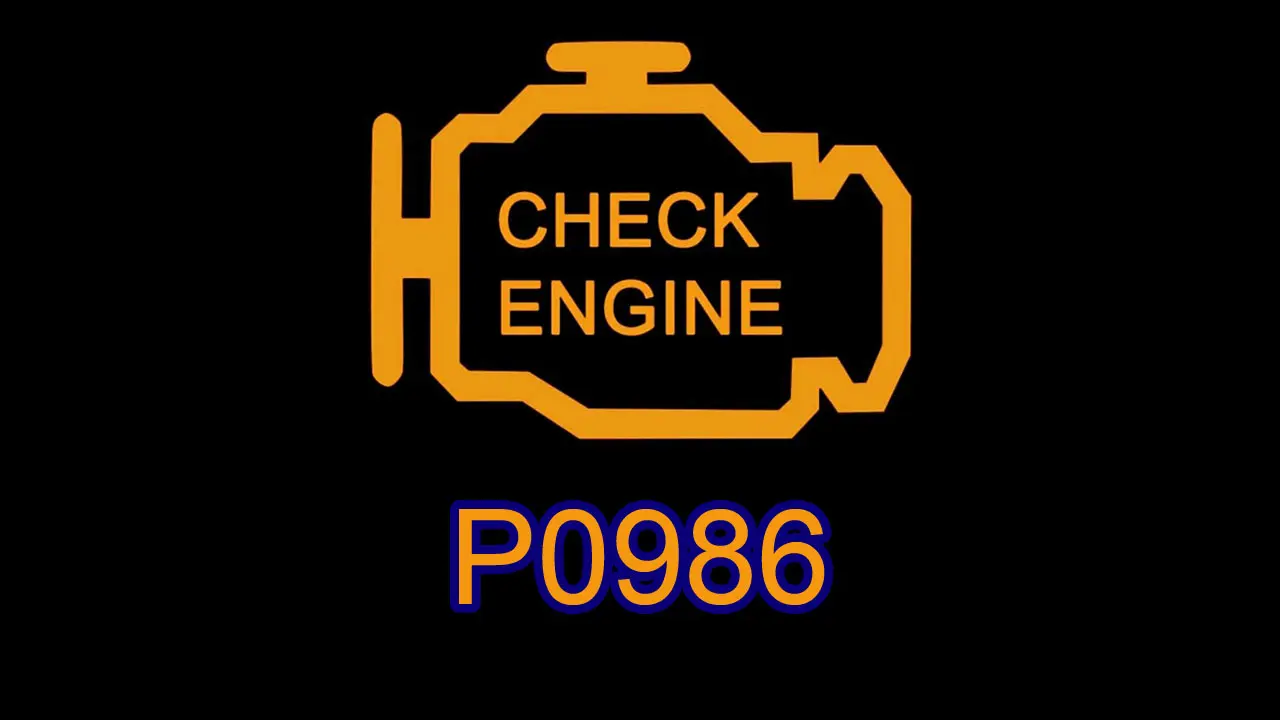
P0986 Shift Solenoid "E" Control Circuit High
The P0986 trouble code is an OBD-II diagnostic trouble code related to the automatic transmission's electronic shift-control system.
P0986 – Shift Solenoid “E” Control Circuit High
This code means that the transmission control module (TCM) or powertrain control module (PCM) has detected an abnormally high electrical signal in the control circuit of Shift Solenoid “E.”
The important word here is “High.” In this context, it generally refers to the electrical condition of the solenoid control circuit, not necessarily to high hydraulic transmission pressure.
A faulty shift solenoid can cause P0986, but the solenoid itself is not the only possible cause. Wiring problems, connector faults, a short to voltage, an incorrect electrical load or a control-module problem can also trigger this code.
What Does P0986 Mean?
P0986 – Shift Solenoid “E” Control Circuit High
Automatic transmissions use electrically controlled solenoids to regulate hydraulic fluid.
The transmission control module commands these solenoids to control hydraulic pressure and determine when specific transmission circuits should be activated.
Shift Solenoid “E” is one of these electronically controlled components.
When the TCM detects an electrical condition in the Shift Solenoid “E” control circuit that is higher than expected, it can store P0986.
Depending on the transmission design, the solenoid may be responsible for controlling:
-
A particular gear
-
A clutch circuit
-
A brake circuit
-
Hydraulic pressure
-
A shift valve
-
A combination of transmission functions
The exact function of Shift Solenoid “E” varies by transmission.
What Is a Shift Solenoid?
A shift solenoid is an electrically controlled valve used inside an automatic transmission.
The TCM sends an electrical command to the solenoid.
The solenoid then controls transmission fluid flow through a hydraulic circuit.
This allows the transmission to control the application and release of different clutch packs and other internal components.
In a simplified sequence:
TCM command → Solenoid activation → Hydraulic fluid control → Clutch/valve operation → Gear change
If the electrical circuit controlling the solenoid develops a problem, the transmission may not be able to perform the intended gear change correctly.
What Does the “E” Mean?
The “E” identifies a specific shift-solenoid circuit according to the transmission manufacturer's design.
It does not necessarily mean that Shift Solenoid “E” is physically the fifth solenoid.
Transmission manufacturers use different naming conventions and layouts.
The solenoid may be located:
-
Inside the valve body
-
Inside the transmission
-
On a transmission control assembly
-
In a mechatronic unit
The exact location should be determined using the vehicle-specific transmission documentation.
What Does “Circuit High” Mean?
Circuit High means that the TCM has detected an electrical condition that is higher than the expected value in the Shift Solenoid “E” control circuit.
This can occur because of:
-
Short to battery voltage
-
Open or disconnected solenoid circuit
-
Faulty solenoid
-
Damaged wiring
-
Poor connector connection
-
Incorrect resistance
-
Internal solenoid failure
-
Control-module fault
The exact electrical behavior depends on how the manufacturer designed the solenoid circuit.
Does P0986 Mean the Solenoid Is Bad?
Not necessarily.
A faulty solenoid is one possible cause, but P0986 does not prove that the solenoid itself has failed.
For example, a damaged wire that is shorted to battery voltage can cause the TCM to detect a high control-circuit condition.
Similarly, a connector problem can prevent the control module from controlling the solenoid correctly.
Therefore, the solenoid should be tested before it is replaced.
Symptoms of P0986
The symptoms depend on the transmission design and which hydraulic circuit Shift Solenoid “E” controls.
Possible symptoms include:
-
Check Engine Light
-
Transmission warning light
-
Harsh shifting
-
Delayed gear changes
-
Erratic shifting
-
Transmission slipping
-
Transmission stuck in one gear
-
Missing a particular gear
-
Unexpected downshifts
-
Unexpected upshifts
-
Delayed engagement of Drive
-
Delayed engagement of Reverse
-
Poor acceleration
-
Increased engine RPM
-
Reduced fuel economy
-
Transmission limp mode
Some vehicles may have very few symptoms initially.
The Check Engine Light may be the only obvious indication.
Common Causes of P0986
There are several possible causes of a Shift Solenoid “E” control-circuit-high condition.
Faulty Shift Solenoid “E”
The solenoid may have an internal electrical failure.
Possible problems include:
-
Internal short
-
Incorrect resistance
-
Open winding
-
Mechanical sticking
-
Internal coil failure
A solenoid with incorrect electrical characteristics can cause the TCM to detect an abnormal circuit condition.
Short to battery voltage
A short between the solenoid control wire and a high-voltage source can cause a circuit-high condition.
This can happen when wiring insulation becomes damaged.
For example, a damaged harness may allow the solenoid control wire to contact a power supply wire.
Open circuit
Depending on the circuit design, a disconnected solenoid or broken control wire can also cause the control module to identify an abnormal high-circuit condition.
This is why the circuit should be diagnosed according to the manufacturer's electrical strategy rather than assuming that “high” always means a short to battery voltage.
Damaged wiring
Transmission wiring is exposed to:
-
Heat
-
Vibration
-
Oil
-
Transmission fluid
-
Movement
-
Road contamination
The harness can become damaged, resulting in an abnormal solenoid control signal.
Connector problems
A loose, corroded or contaminated connector can interrupt solenoid control.
Possible problems include:
-
Bent pins
-
Loose terminals
-
Corrosion
-
Water intrusion
-
Transmission fluid contamination
-
Broken connector locks
Incorrect solenoid resistance
The resistance of the solenoid coil should fall within a specified range.
If the resistance is significantly different from specification, the solenoid may be defective.
The correct resistance value varies by transmission and solenoid.
Valve body problems
A solenoid can be electrically functional but mechanically unable to control hydraulic pressure correctly.
A sticking valve, contamination or valve-body wear can cause shifting problems even when the solenoid circuit itself is electrically sound.
Transmission control module fault
A TCM fault is possible but should generally be considered only after the solenoid and wiring have been thoroughly tested.
Can Low Transmission Fluid Cause P0986?
Low transmission fluid can cause shifting and hydraulic pressure problems.
However, low fluid does not normally create an electrical circuit-high condition by itself.
The fluid level should still be checked because it is an important part of any transmission diagnosis.
If the fluid is low, the source of the loss should also be identified.
Can Dirty Transmission Fluid Cause P0986?
Contaminated transmission fluid can cause:
-
Sticking valves
-
Solenoid contamination
-
Hydraulic pressure problems
-
Erratic shifting
However, dirty fluid alone does not necessarily explain a circuit-high electrical code.
If P0986 is present, the solenoid circuit should be electrically tested.
How Serious Is P0986?
P0986 can be relatively simple to repair if the cause is wiring or a connector.
However, the code can also lead to significant transmission problems if Shift Solenoid “E” controls an important hydraulic circuit.
Continued operation with an incorrectly controlled transmission can potentially cause:
-
Harsh shifts
-
Clutch slipping
-
Excessive heat
-
Accelerated internal wear
-
Limp mode
Therefore, P0986 should be diagnosed rather than ignored.
Can You Drive With P0986?
If the transmission still operates normally, a short drive to a repair facility may be possible.
However, prolonged driving is not recommended without diagnosis.
Driving should be minimized if you experience:
-
Severe slipping
-
Violent gear changes
-
Loss of Drive
-
Loss of Reverse
-
Transmission overheating
-
Limp mode
-
Burning transmission fluid smell
These symptoms can indicate that the transmission is not controlling hydraulic pressure correctly.
How to Diagnose P0986
A proper diagnosis should begin with the electrical control circuit.
1. Scan the TCM
Use a professional diagnostic scanner to read all stored and pending codes.
Check for additional codes involving:
-
Other shift solenoids
-
Pressure-control solenoids
-
Transmission temperature
-
Gear ratios
-
Transmission communication
-
Power supply
Multiple solenoid codes can point toward a common wiring or power-supply problem.
2. Check freeze-frame data
Review the operating conditions when P0986 was stored.
Pay attention to:
-
Vehicle speed
-
Engine RPM
-
Transmission temperature
-
Selected gear
-
Throttle position
-
Solenoid command
-
Other transmission parameters
This can help determine when the control-circuit problem occurs.
3. Identify Shift Solenoid “E”
Use the transmission-specific service documentation to identify:
-
Solenoid location
-
Connector
-
Control wire
-
Power supply
-
Ground/control strategy
-
TCM connection
Do not assume that the “E” solenoid has the same physical location on different transmissions.
4. Inspect the wiring
Inspect the complete circuit for:
-
Damaged insulation
-
Chafing
-
Pinched wires
-
Melted sections
-
Corrosion
-
Previous repairs
-
Loose harness clips
Pay particular attention to areas exposed to high heat.
5. Inspect the connector
Check the solenoid and transmission connectors for:
-
Bent pins
-
Loose terminals
-
Corrosion
-
Fluid contamination
-
Water intrusion
-
Broken locking tabs
A poor connection can create an electrical fault without obvious external damage.
6. Measure solenoid resistance
Disconnect the appropriate connector and measure the resistance of Shift Solenoid “E” according to the manufacturer's specifications.
If the resistance is outside the specified range, the solenoid may be defective.
Do not use a generic resistance value because solenoid specifications vary considerably between transmissions.
7. Check for a short to voltage
Because P0986 identifies a circuit-high condition, the control wire should be checked for unintended voltage.
The technician should determine whether the circuit is contacting:
-
Battery voltage
-
Ignition voltage
-
Another power circuit
This is particularly important when the solenoid itself tests correctly.
8. Check the control circuit
Depending on the transmission design, the TCM may control the solenoid using different electrical strategies.
The technician should verify:
-
Power supply
-
Ground/control circuit
-
Voltage
-
Continuity
-
Resistance
-
Voltage drop
-
TCM command
The exact test procedure must follow the manufacturer's wiring diagram.
9. Use a bidirectional scan tool
If supported by the vehicle, a professional scan tool can command Shift Solenoid “E” on and off.
This can help determine whether:
-
The TCM can command the solenoid
-
The electrical circuit responds
-
The solenoid operates
-
The transmission responds hydraulically
This is often more informative than simply clearing the code and taking a test drive.
10. Check hydraulic operation
If the electrical circuit and solenoid pass testing but the transmission still behaves incorrectly, hydraulic operation should be investigated.
Possible problems include:
-
Sticking valves
-
Valve body wear
-
Restricted hydraulic passages
-
Internal leakage
-
Incorrect hydraulic pressure
Why a Circuit-High Code Does Not Automatically Mean a Bad Solenoid
P0986 is a good example of why a diagnostic code should not be treated as a direct parts-replacement instruction.
The code tells you that the electrical control circuit is high.
It does not necessarily tell you:
“Replace Shift Solenoid E.”
A shorted wire, damaged connector or control-circuit problem can produce the same code.
The electrical circuit should therefore be tested before replacing the solenoid.
P0986 After Transmission Repair
If P0986 appears immediately after transmission repair or replacement, inspect the components that were disturbed.
Possible causes include:
-
Connector not fully seated
-
Bent connector terminal
-
Pinched wiring
-
Damaged harness
-
Incorrect harness routing
-
Solenoid connector contamination
-
Wiring contacting a hot component
The timing of the fault can provide a valuable diagnostic clue.
P0986 After a Transmission Fluid Change
A fluid change is not normally the direct cause of an electrical circuit-high code.
However, if P0986 appeared after transmission service, inspect the transmission area for:
-
Damaged connectors
-
Fluid contamination
-
Wiring damage
-
Incorrectly routed harnesses
Also verify that the correct transmission fluid and correct fluid level were used.
Can P0986 Cause Limp Mode?
Yes.
Depending on the transmission, the TCM may enter a protective strategy when it detects that a shift solenoid cannot be controlled correctly.
Possible results include:
-
Limited gears
-
Fixed gear operation
-
Harsh shifting
-
Delayed engagement
-
Increased line pressure
-
Reduced transmission functionality
Not every vehicle with P0986 will enter limp mode.
The exact response depends on the transmission design and control software.
Can P0986 Damage the Transmission?
The code itself does not automatically mean damage has occurred.
However, if Shift Solenoid “E” controls an important clutch or pressure circuit and the transmission continues operating incorrectly, abnormal clutch engagement or shifting can increase heat and wear.
Therefore, it is better to diagnose the problem promptly rather than continue driving indefinitely with the code active.
Common Diagnostic Mistakes With P0986
One of the biggest mistakes is immediately replacing Shift Solenoid “E.”
The solenoid may be perfectly functional while the wiring has a short to voltage.
Another mistake is assuming that “Circuit High” means hydraulic pressure is too high.
The code describes an electrical circuit condition.
Another common mistake is replacing the transmission without performing basic electrical testing.
P0986 alone does not prove that the transmission needs to be rebuilt or replaced.
What Is the Correct Repair for P0986?
The correct repair depends on the confirmed cause.
Possible repairs include:
-
Replacing Shift Solenoid “E”
-
Repairing damaged wiring
-
Removing a short to voltage
-
Repairing an open circuit
-
Replacing damaged connector terminals
-
Cleaning or replacing a contaminated connector
-
Repairing the solenoid power/control circuit
-
Correcting a poor electrical connection
-
Repairing valve-body problems when confirmed
-
Repairing internal hydraulic problems when confirmed
-
Repairing or replacing the TCM when it is conclusively diagnosed as faulty
Final Thoughts on P0986
P0986 – Shift Solenoid “E” Control Circuit High indicates that the transmission control module has detected an abnormally high electrical condition in the Shift Solenoid “E” control circuit.
The most important areas to inspect are the solenoid, wiring, connectors, power supply and control circuit.
A short to voltage, damaged wiring or connector problem can produce the same code as a failed solenoid. Therefore, replacing the solenoid without testing the circuit can result in unnecessary repairs.
It is also important to remember that P0986 does not automatically mean that the transmission itself is damaged. If the electrical circuit checks out, the technician can then investigate the solenoid's mechanical operation, valve body and hydraulic system.
A systematic electrical diagnosis is the best starting point for P0986 and can prevent an inexpensive wiring or connector problem from being mistaken for a major transmission failure.