TR
TR EN
EN

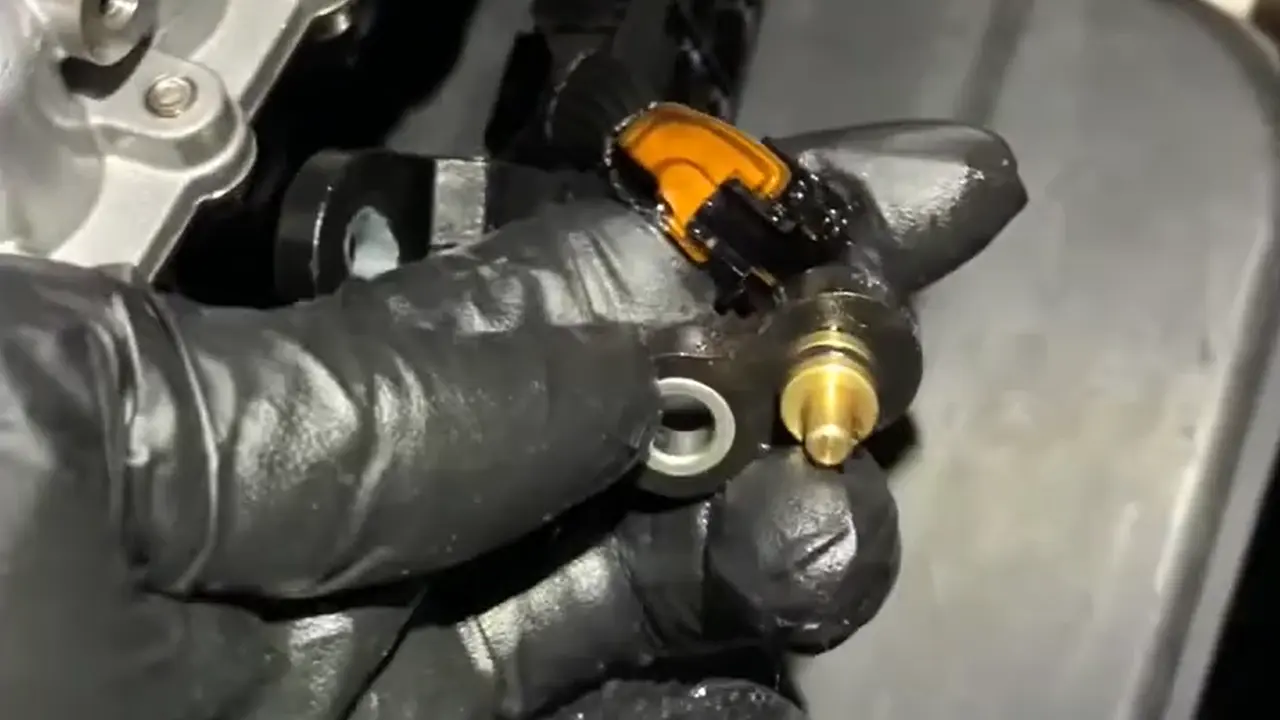
What Is a Transmission Fluid Temperature Sensor (TFT Sensor)? Symptoms, Causes and Solutions
The Transmission Fluid Temperature Sensor (TFT Sensor) is an important component in modern automatic transmission systems.
Its main function is to measure the temperature of the transmission fluid and send this information to the Transmission Control Module (TCM) or Powertrain Control Module (PCM).
The control module uses transmission fluid temperature information to adjust various transmission functions, including shift timing, hydraulic pressure, torque converter operation and transmission protection strategies.
If the TFT sensor provides an incorrect temperature signal, the transmission may not operate as intended.
A faulty Transmission Fluid Temperature Sensor can cause hard shifting, delayed gear changes, incorrect shift timing, transmission overheating, reduced performance, warning lights and diagnostic trouble codes.
What Is a Transmission Fluid Temperature Sensor?
A Transmission Fluid Temperature Sensor, commonly abbreviated as TFT Sensor, is a temperature-sensing device that measures the temperature of the transmission fluid.
The sensor is usually an electronic thermistor.
As the transmission fluid temperature changes, the electrical resistance of the sensor changes.
The transmission control module interprets this electrical signal and determines the approximate transmission fluid temperature.
This information is then used to adjust transmission operation.
What Does the TFT Sensor Do?
The primary function of the TFT sensor is to provide accurate transmission fluid temperature information to the control module.
The TCM can use this information to control:
-
Gear-shift timing
-
Hydraulic pressure
-
Torque converter lock-up
-
Transmission warm-up strategy
-
Cooling strategies
-
Transmission protection
-
Shift quality
Transmission fluid behaves differently at different temperatures.
For this reason, knowing the actual fluid temperature is important for proper transmission control.
Why Is Transmission Fluid Temperature Important?
Transmission fluid temperature has a major influence on transmission operation.
When the fluid is cold, its viscosity is higher.
As the fluid becomes warmer, its viscosity decreases.
The transmission control system must account for these changes.
If the TCM incorrectly believes that the transmission is cold or excessively hot, it may adjust transmission operation incorrectly.
This can affect:
-
Shift quality
-
Hydraulic pressure
-
Shift timing
-
Torque converter operation
-
Transmission protection
How Does a TFT Sensor Work?
Most TFT sensors operate using a thermistor.
The basic operating principle is:
1. Transmission fluid temperature changes.
The transmission fluid becomes colder or hotter depending on operating conditions.
2. Sensor resistance changes.
The thermistor's electrical resistance changes according to temperature.
3. The control module reads the electrical signal.
The TCM or PCM monitors the sensor circuit.
4. The control module calculates fluid temperature.
The measured electrical value is converted into a temperature value.
5. The TCM adjusts transmission operation.
The control module uses the temperature information to modify shift and pressure strategies.
The exact electrical characteristics depend on the sensor design.
Where Is the Transmission Fluid Temperature Sensor Located?
The location varies by transmission design.
The TFT sensor may be:
-
Inside the transmission
-
Installed in the transmission valve body
-
Mounted on the valve body
-
Integrated into the transmission wiring harness
-
Located inside a mechatronic unit
-
Installed near the transmission fluid circuit
In some transmissions, the TFT sensor is integrated into a larger sensor or internal wiring assembly.
Accessing it may therefore require transmission pan removal or other transmission service.
Is the TFT Sensor the Same as an Engine Coolant Temperature Sensor?
No.
The Engine Coolant Temperature (ECT) Sensor measures engine coolant temperature.
The Transmission Fluid Temperature (TFT) Sensor measures transmission fluid temperature.
They provide information to different control strategies.
A vehicle can therefore have both sensors operating independently.
Symptoms of a Faulty TFT Sensor
A defective TFT sensor can cause several transmission-related symptoms.
Common symptoms include:
-
Hard shifting
-
Delayed shifting
-
Incorrect shift timing
-
Transmission slipping
-
Unusual gear changes
-
Transmission overheating
-
Reduced transmission performance
-
Limp mode
-
Transmission warning light
-
Check Engine Light
-
Increased fuel consumption
-
Diagnostic trouble codes
The exact symptoms depend on whether the sensor reports a temperature that is too high, too low or completely implausible.
Hard Gear Shifting
One common symptom is harsh or abnormal gear shifting.
The TCM uses temperature information to determine the appropriate hydraulic pressure and shift strategy.
If the sensor incorrectly reports the fluid temperature, the TCM may apply an inappropriate shift strategy.
The driver may experience:
-
Hard upshifts
-
Harsh downshifts
-
Jerking
-
Sudden engagement
Delayed Gear Changes
A faulty TFT sensor can contribute to delayed shifts.
The transmission may behave as though it is extremely cold or hot even when the actual fluid temperature is normal.
This can alter shift timing and hydraulic control.
Transmission Slipping
A temperature-sensor problem can indirectly contribute to transmission slipping if the incorrect temperature information causes inappropriate pressure control.
However, slipping is more commonly associated with:
-
Low transmission fluid
-
Worn clutch packs
-
Hydraulic pressure problems
-
Valve-body problems
-
Internal transmission wear
Therefore, a TFT sensor should not automatically be blamed for transmission slipping.
Incorrect Shift Timing
The TCM uses temperature information to modify transmission operation.
If the sensor reports an incorrect value, the transmission may shift:
-
Too early
-
Too late
-
Too aggressively
-
Too softly
The driver may notice that the transmission behaves differently as the vehicle warms up.
Transmission Overheating
A faulty TFT sensor can cause problems with temperature monitoring.
If the sensor reports an artificially low temperature, the control module may not recognize an overheating condition correctly.
Conversely, if the sensor reports an excessively high temperature, the transmission may enter a protective operating strategy even when the actual temperature is normal.
The sensor itself does not normally cause the transmission to physically overheat, but incorrect temperature information can affect how the transmission responds to heat.
Limp Mode
If the TCM detects an implausible TFT signal, it may activate a protective operating strategy.
The transmission may enter limp mode.
Possible symptoms include:
-
Limited gear selection
-
Fixed gear operation
-
Harsh shifting
-
Reduced vehicle performance
This is designed to protect the transmission when the control system cannot reliably determine operating conditions.
Transmission Warning Light
A faulty TFT sensor or sensor circuit can trigger:
-
Transmission warning light
-
Check Engine Light
-
Service transmission message
The TCM may store a diagnostic trouble code related to the temperature sensor circuit.
Common Causes of TFT Sensor Failure
Several problems can cause a transmission fluid temperature sensor to malfunction.
Sensor failure
The internal thermistor can fail or develop an abnormal resistance value.
Damaged wiring
Transmission heat and vibration can damage the internal or external wiring.
Connector problems
Loose, corroded or contaminated connectors can interrupt the sensor signal.
Short circuit
The sensor circuit may short to ground or voltage.
Open circuit
A broken wire can interrupt the signal.
Transmission fluid contamination
Contaminated fluid can contribute to sensor or connector problems.
Internal transmission wiring damage
On transmissions with internal sensor harnesses, wiring damage can cause intermittent faults.
Control module problems
In rare cases, the TCM or PCM may have an internal electrical fault.
Wiring and Connector Problems
The TFT sensor circuit is particularly important because the sensor may be located in a high-temperature environment.
Possible wiring problems include:
-
Broken wires
-
Chafed insulation
-
Corroded terminals
-
Loose connectors
-
Internal harness damage
-
Short circuits
-
High electrical resistance
An electrical fault can produce exactly the same symptoms as a failed sensor.
Low or High Temperature Signal
A TFT sensor fault may cause the control module to see an unrealistic temperature.
For example, the scan tool may show:
-
Extremely low temperature
-
Extremely high temperature
-
Temperature that does not change
-
Temperature that changes suddenly
-
Temperature that does not match actual transmission conditions
These readings can provide important diagnostic clues.
Temperature Reading That Never Changes
If the scan tool shows exactly the same transmission temperature regardless of driving conditions, the sensor or circuit may have a problem.
For example, if the transmission temperature remains at an implausible fixed value after the vehicle has been driven for an extended period, the sensor signal should be investigated.
Temperature Reading That Changes Suddenly
A healthy TFT signal should generally change progressively as transmission temperature changes.
A sudden jump from a normal temperature to an extremely high or low value may indicate:
-
Wiring problem
-
Connector problem
-
Intermittent sensor failure
-
Electrical interference
The sensor circuit should be inspected carefully.
How Is a TFT Sensor Diagnosed?
A proper diagnosis should begin with a diagnostic scan.
The technician should check:
-
Transmission fault codes
-
TFT sensor reading
-
Transmission fluid temperature
-
Sensor voltage
-
Sensor resistance
-
Wiring
-
Connectors
-
Transmission operation
The temperature displayed by the scan tool should be compared with the actual transmission conditions.
Comparing TFT Temperature With Actual Temperature
If there is doubt about the sensor reading, the actual transmission temperature can be measured using an appropriate external temperature measurement method.
The measured temperature can then be compared with the value reported by the scan tool.
If there is a significant and consistent difference, the sensor or its circuit may be faulty.
The manufacturer's specified testing procedure should always be followed.
Testing TFT Sensor Resistance
Many TFT sensors are thermistors whose resistance changes with temperature.
A technician can measure sensor resistance and compare it with the manufacturer's temperature-resistance specifications.
The correct resistance depends on the particular sensor.
There is no universal resistance value for all TFT sensors.
Checking the TFT Sensor Circuit
The electrical circuit should also be tested.
Possible checks include:
-
Reference voltage
-
Ground
-
Signal voltage
-
Wiring continuity
-
Short circuits
-
Connector condition
If the sensor itself tests correctly but the signal reaching the TCM is incorrect, the wiring or connector may be the cause.
Can a TFT Sensor Be Cleaned?
Cleaning is generally not a reliable repair for an internally failed temperature sensor.
If the problem is caused by:
-
Corroded connector
-
Contaminated electrical terminal
-
External wiring problem
the connection may be cleaned or repaired.
However, a defective thermistor normally requires sensor replacement.
Should the TFT Sensor Be Replaced Immediately?
No.
A TFT-related diagnostic trouble code does not automatically prove that the sensor itself has failed.
Before replacing the sensor, technicians should check:
-
Sensor resistance
-
Sensor signal
-
Reference voltage
-
Ground
-
Wiring
-
Connectors
-
Transmission fluid level
-
Actual transmission temperature
-
TCM data
This helps prevent unnecessary replacement.
Can a Faulty TFT Sensor Damage the Transmission?
A faulty temperature sensor does not normally cause direct mechanical damage.
However, incorrect temperature information can affect transmission control.
If the TCM responds incorrectly to the false temperature information, it may alter:
-
Hydraulic pressure
-
Shift timing
-
Torque converter operation
If this results in prolonged slipping or harsh operation, secondary wear can occur.
Can You Drive With a Faulty TFT Sensor?
It depends on the symptoms.
If the vehicle drives normally and only a diagnostic code is stored, short-term operation may be possible.
However, continued driving is not recommended if there are:
-
Severe shifting problems
-
Transmission slipping
-
Overheating
-
Limp mode
-
Loss of drive
The transmission should be diagnosed promptly.
TFT Sensor vs Transmission Pressure Sensor
These sensors perform different functions.
The TFT sensor measures transmission fluid temperature.
A transmission pressure sensor measures hydraulic pressure.
Both can provide information to the transmission control module, but they monitor different parameters.
A pressure sensor fault can also cause shifting symptoms that may be confused with a TFT sensor problem.
TFT Sensor vs Transmission Speed Sensor
A transmission speed sensor measures the rotational speed of an input or output shaft.
The TFT sensor measures transmission fluid temperature.
The TCM can use both types of information to determine appropriate transmission operation.
How to Prevent TFT Sensor Problems
Proper transmission maintenance can help protect the sensor and its circuit.
-
Use the correct transmission fluid.
-
Maintain the correct fluid level.
-
Follow the manufacturer's service schedule.
-
Replace the transmission filter where applicable.
-
Repair transmission-fluid leaks promptly.
-
Avoid prolonged transmission overheating.
-
Inspect transmission wiring during service.
-
Do not ignore transmission warning lights.
Correct transmission fluid and temperature control are particularly important because excessive heat can accelerate deterioration of transmission components and wiring.
Frequently Asked Questions
What does a TFT sensor do?
The Transmission Fluid Temperature Sensor measures transmission fluid temperature and sends this information to the transmission control module.
Can a faulty TFT sensor cause hard shifting?
Yes. Incorrect temperature information can cause the TCM to use an inappropriate shift or pressure strategy.
Can a TFT sensor cause transmission slipping?
It can contribute indirectly in some situations, but slipping is more commonly caused by hydraulic, fluid or internal transmission problems.
Can a faulty TFT sensor cause limp mode?
Yes. If the TCM receives an implausible temperature signal, it may activate a protective operating strategy.
Where is the TFT sensor located?
It is commonly located inside the transmission, on the valve body or integrated into an internal transmission wiring assembly.
Can a bad TFT sensor cause a Check Engine Light?
Yes. The control module can detect electrical or plausibility problems and store a diagnostic trouble code.
How can I tell if the TFT sensor is faulty?
A diagnostic scan can reveal an implausible temperature reading. Electrical testing and comparison with actual transmission temperature can help confirm the problem.
Can a TFT sensor be repaired?
The wiring and connectors can often be repaired. An internally failed sensor generally needs to be replaced.
Can I drive with a faulty TFT sensor?
Short-term driving may be possible if the transmission operates normally, but severe shifting problems, overheating, slipping or limp mode should be diagnosed immediately.
Final Thoughts
The Transmission Fluid Temperature Sensor (TFT Sensor) is an important part of modern automatic transmission control systems.
Its primary function is to measure transmission fluid temperature and provide this information to the TCM or PCM.
The control module uses the temperature signal to adjust shift timing, hydraulic pressure, torque converter operation and transmission protection strategies.
A faulty TFT sensor can cause hard shifting, delayed gear changes, incorrect shift timing, warning lights, limp mode and abnormal transmission behaviour.
However, these symptoms do not automatically mean that the sensor itself has failed.
Damaged wiring, poor connectors, short circuits, open circuits and transmission control module problems can produce similar symptoms.
The most reliable diagnosis combines diagnostic scan data, temperature comparison, sensor resistance testing and electrical circuit inspection.
Correct diagnosis is important because replacing the TFT sensor without checking the wiring and actual transmission temperature may not resolve the underlying problem.
Maintaining the correct transmission fluid level, using the correct fluid specification and preventing excessive transmission heat can help protect the entire transmission temperature-monitoring system.