TR
TR EN
EN

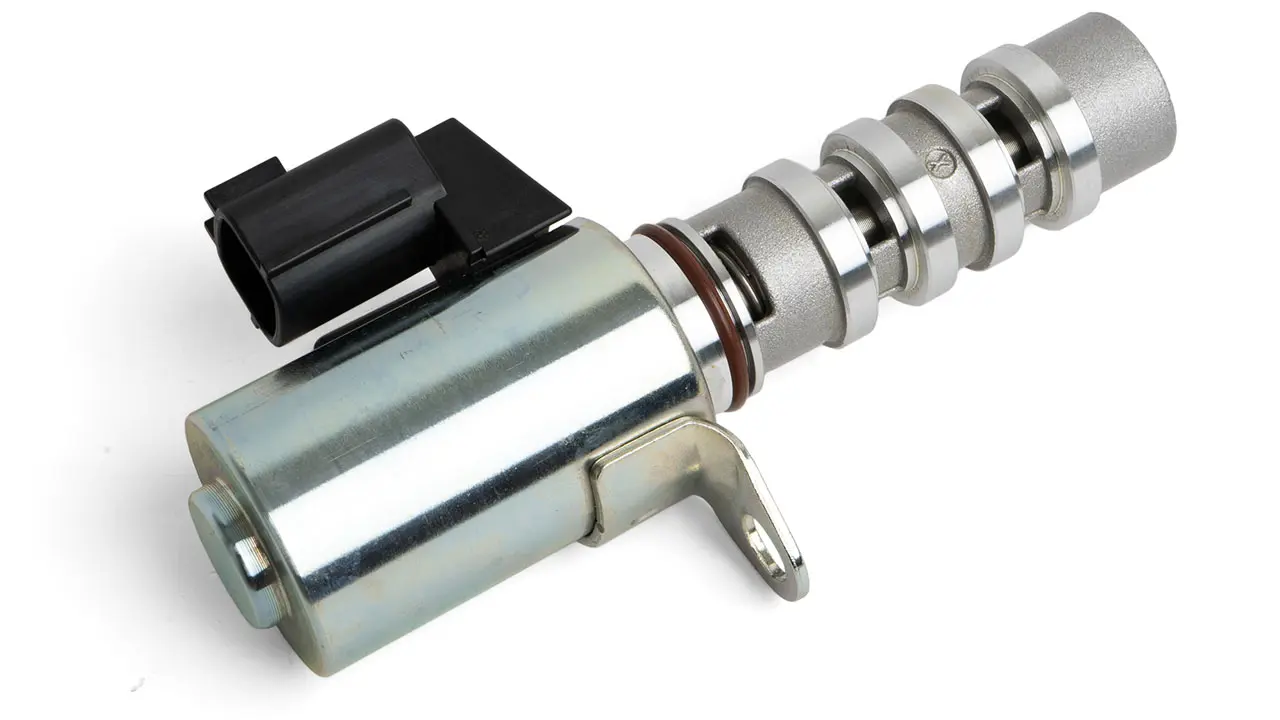
What Is a Transmission Shift Solenoid? Symptoms, Causes and Solutions
The Transmission Shift Solenoid is an electronically controlled component used in automatic transmissions to control the flow and pressure of transmission fluid during gear changes.
Shift solenoids are an important part of the transmission's hydraulic control system. They receive electrical commands from the Transmission Control Module (TCM) or Powertrain Control Module (PCM) and direct transmission fluid to specific hydraulic circuits.
This allows the transmission to control when individual gears are engaged or released.
A faulty transmission shift solenoid can cause hard shifting, delayed gear changes, transmission slipping, incorrect gear selection, failure to shift, transmission warning lights and limp mode.
Because modern automatic transmissions rely heavily on electronic and hydraulic control, a relatively small solenoid problem can significantly affect transmission operation.
What Is a Transmission Shift Solenoid?
A Transmission Shift Solenoid is an electrically operated valve that controls transmission fluid flow inside an automatic transmission.
The solenoid itself does not physically move the gears.
Instead, it controls hydraulic pressure that operates components such as:
-
Clutch packs
-
Brake bands
-
Hydraulic pistons
-
Valves
-
Gear-selection mechanisms
When the transmission control module determines that a gear change is required, it sends an electrical signal to one or more shift solenoids.
The solenoid then opens, closes or modulates the flow of transmission fluid.
This changes hydraulic pressure within the transmission and allows the appropriate gear or clutch circuit to operate.
What Does a Transmission Shift Solenoid Do?
The primary function of a shift solenoid is to control hydraulic fluid flow during transmission operation.
Depending on the transmission design, individual solenoids may control different hydraulic circuits.
Their functions can include:
-
Controlling upshifts
-
Controlling downshifts
-
Applying specific clutch packs
-
Releasing specific clutch packs
-
Directing hydraulic pressure
-
Regulating shift timing
-
Controlling gear engagement
Some modern transmissions use multiple solenoids that work together to produce different gear combinations.
How Does a Transmission Shift Solenoid Work?
The basic operating process is relatively simple.
1. The driver requests acceleration or deceleration.
The transmission control system receives information about the driver's input.
2. The TCM evaluates vehicle conditions.
It considers parameters such as:
-
Vehicle speed
-
Engine RPM
-
Throttle position
-
Accelerator pedal position
-
Transmission temperature
-
Current gear
-
Requested gear
-
Engine load
3. The TCM determines the appropriate shift strategy.
It calculates when the transmission should shift.
4. The TCM sends an electrical command to the shift solenoid.
The solenoid receives the required electrical signal.
5. The solenoid controls transmission fluid flow.
Hydraulic pressure is directed to the appropriate circuit.
6. The transmission changes gear.
The appropriate clutch or brake element engages or releases.
7. The TCM monitors the result.
The control module compares expected and actual transmission behaviour and can adjust solenoid operation.
Where Is the Transmission Shift Solenoid Located?
Transmission shift solenoids are commonly located inside the transmission valve body.
Depending on the transmission design, they may be:
-
Mounted directly on the valve body
-
Installed inside a solenoid pack
-
Integrated into a mechatronic unit
-
Located inside the transmission housing
The valve body contains a network of hydraulic passages and valves that distribute transmission fluid.
Because shift solenoids are often located inside the transmission, accessing them may require removing transmission fluid and, in some cases, removing the valve body.
How Many Shift Solenoids Does a Transmission Have?
The number varies between transmissions.
Some automatic transmissions use only a few shift solenoids, while modern transmissions can use several electronically controlled solenoids.
The system may include:
-
Shift solenoids
-
Pressure control solenoids
-
Lock-up solenoids
-
Clutch control solenoids
Not every solenoid performs the same function.
Some transmissions use individual solenoids for particular hydraulic circuits, while others use several solenoids together to control different gears.
Symptoms of a Faulty Transmission Shift Solenoid
A defective shift solenoid can produce several transmission-related symptoms.
Common symptoms include:
-
Hard shifting
-
Jerking during gear changes
-
Delayed shifting
-
Transmission slipping
-
Failure to shift
-
Transmission stuck in one gear
-
Unexpected downshifting
-
Unexpected upshifting
-
Gear engagement problems
-
Transmission warning light
-
Check Engine Light
-
Limp mode
-
Increased transmission temperature
The exact symptoms depend on which solenoid has failed and whether it is stuck open, stuck closed or electrically defective.
Hard Shifting
One of the most common symptoms of a shift solenoid problem is harsh or hard shifting.
The driver may feel:
-
A strong jerk
-
A sudden engagement
-
A noticeable thump
-
Abrupt acceleration during a shift
This can occur when the solenoid causes hydraulic pressure to rise too quickly or at the wrong time.
However, hard shifting can also be caused by low fluid, contaminated fluid, valve-body problems, worn clutches or incorrect transmission adaptation.
Delayed Gear Changes
A faulty shift solenoid may cause a delay between the transmission's command and the actual gear change.
The engine RPM may increase before the transmission finally changes gear.
The driver may notice:
-
Delayed upshifts
-
Delayed downshifts
-
Hesitation during acceleration
-
Delayed engagement after selecting Drive
A delay can also be caused by hydraulic pressure loss or internal transmission wear.
Transmission Slipping
A malfunctioning shift solenoid can cause incorrect hydraulic pressure.
If a clutch does not receive enough pressure, it may not fully engage.
The result can be transmission slipping.
Typical signs include:
-
Engine RPM increases without proportional acceleration
-
Delayed vehicle response
-
Loss of power transmission
-
Fluctuating RPM during gear changes
Continued driving with a slipping transmission can increase internal clutch wear and should be diagnosed promptly.
Transmission Stuck in One Gear
A serious shift solenoid failure can prevent the transmission from changing gears correctly.
The vehicle may remain in:
-
One forward gear
-
A low gear
-
A default gear
The transmission control module may intentionally restrict shifting to protect the transmission.
This is commonly associated with limp mode.
Failure to Shift
A failed solenoid may prevent a particular hydraulic circuit from operating.
The transmission may then:
-
Refuse to upshift
-
Refuse to downshift
-
Skip certain gears
-
Remain in a default gear
The exact behaviour depends on which solenoid or hydraulic circuit is affected.
Unexpected Downshifting
A shift solenoid that is stuck or receiving an incorrect command may cause the transmission to downshift unexpectedly.
The driver may notice:
-
Sudden increase in engine RPM
-
Unexpected engine braking
-
Sudden acceleration response
-
Abrupt transmission behaviour
An electrical control problem, sensor fault or mechanical transmission problem can produce similar symptoms.
Transmission Warning Light
Modern transmissions continuously monitor solenoid operation.
The TCM may detect:
-
Electrical faults
-
Incorrect solenoid current
-
Abnormal resistance
-
Unexpected pressure response
-
Incorrect gear ratio
-
Shift performance problems
A transmission warning light or Check Engine Light may then appear.
Limp Mode
If the transmission control module detects a serious fault, it may activate limp mode.
In this condition, the transmission may operate with limited functionality.
Possible symptoms include:
-
Limited gear selection
-
Fixed gear operation
-
Harsh shifting
-
Reduced vehicle performance
The purpose is generally to protect the transmission from further damage.
Common Causes of Transmission Shift Solenoid Failure
Several problems can cause a shift solenoid to malfunction.
Electrical failure
The internal solenoid coil can develop an open circuit, short circuit or abnormal resistance.
Damaged wiring
Transmission heat, vibration and mechanical contact can damage the wiring harness.
Connector corrosion
Moisture and contamination can interfere with the electrical connection.
Dirty transmission fluid
Contaminated fluid can interfere with solenoid movement.
Valve-body contamination
Debris can restrict hydraulic passages or cause valves to stick.
Mechanical sticking
A solenoid may become stuck because of deposits, wear or contamination.
Low transmission fluid
Insufficient fluid can prevent the hydraulic system from producing the required pressure.
Incorrect transmission fluid
Using an incorrect fluid can affect hydraulic and friction characteristics.
Internal transmission wear
Worn clutches or other internal components can create debris and hydraulic problems that affect solenoid operation.
Dirty or Contaminated Transmission Fluid
Transmission fluid is essential for both lubrication and hydraulic control.
It carries pressure through the valve body and allows the solenoids and valves to operate correctly.
Over time, contaminated fluid may contain:
-
Friction material
-
Metal particles
-
Sludge
-
Deposits
-
Other contaminants
These materials can interfere with solenoid operation.
If excessive debris is found in the transmission fluid, the underlying cause should be investigated.
Low Transmission Fluid
Low transmission fluid can cause symptoms that resemble a shift solenoid failure.
Insufficient fluid can lead to:
-
Delayed shifting
-
Slipping
-
Harsh shifting
-
Delayed Drive or Reverse engagement
-
Transmission overheating
A fluid-level check should be performed according to the manufacturer's procedure.
Some modern transmissions require the fluid level to be checked at a specific temperature.
Incorrect Transmission Fluid
Automatic transmissions are designed for specific fluid formulations.
Using the wrong transmission fluid can affect:
-
Hydraulic pressure
-
Clutch engagement
-
Shift quality
-
Solenoid operation
-
Transmission temperature
The manufacturer's specified transmission fluid should always be used.
Electrical Problems
A shift solenoid requires a properly functioning electrical circuit.
Possible electrical problems include:
-
Open circuit
-
Short circuit to ground
-
Short circuit to voltage
-
High resistance
-
Poor ground
-
Damaged wiring
-
Loose terminals
-
Corroded connectors
-
Blown fuse
-
Faulty transmission control module
An electrical fault should be ruled out before replacing the solenoid.
Valve Body Problems
The valve body is one of the most important hydraulic components in an automatic transmission.
It contains passages, valves and solenoids that control transmission fluid.
If the valve body becomes contaminated or worn, it can cause:
-
Incorrect hydraulic pressure
-
Delayed shifts
-
Harsh shifts
-
Gear engagement problems
-
Solenoid-related fault codes
In some cases, the solenoid is functioning correctly but the valve body itself is the problem.
How Is a Transmission Shift Solenoid Diagnosed?
A proper diagnosis should begin with a diagnostic scan.
The technician should check:
-
Transmission fault codes
-
Freeze-frame data
-
Transmission temperature
-
Current gear
-
Commanded gear
-
Input speed
-
Output speed
-
Solenoid command
-
Solenoid current
-
Transmission pressure
The diagnostic code can help identify the affected circuit, but it should not be treated as proof that the solenoid itself has failed.
Electrical Testing
The shift solenoid's electrical circuit can be tested using appropriate diagnostic equipment.
Possible checks include:
-
Supply voltage
-
Ground
-
Control signal
-
Coil resistance
-
Wiring continuity
-
Connector condition
The correct resistance specification varies between transmissions.
The manufacturer's service information should always be used.
Actuator Testing
Many professional diagnostic tools can perform transmission solenoid actuator tests.
The technician can command a solenoid and observe whether:
-
The solenoid responds
-
Hydraulic pressure changes
-
Gear engagement changes
-
Transmission behaviour changes
This can help determine whether the problem is electrical or hydraulic.
Hydraulic Pressure Testing
If the electrical circuit is functioning correctly, hydraulic testing may be required.
The technician can compare actual hydraulic pressure with manufacturer specifications.
If the solenoid receives the correct command but pressure remains incorrect, possible causes include:
-
Valve-body wear
-
Blocked hydraulic passage
-
Transmission pump problems
-
Internal leakage
-
Worn clutch components
Can a Transmission Shift Solenoid Be Cleaned?
In some cases, contamination can cause a solenoid to stick.
During transmission service, the valve body and solenoids may be cleaned according to the manufacturer's procedure.
However, cleaning cannot repair:
-
Burned electrical coils
-
Broken internal components
-
Severe mechanical wear
-
Damaged valves
-
Electrical circuit failures
A defective solenoid may need to be replaced.
Should the Shift Solenoid Be Replaced Immediately?
No.
A shift-solenoid diagnostic trouble code does not automatically mean that the solenoid is defective.
Before replacing the component, the technician should inspect:
-
Transmission fluid level
-
Fluid condition
-
Electrical wiring
-
Connectors
-
Solenoid resistance
-
Solenoid command
-
Hydraulic pressure
-
Valve body
-
Transmission mechanical condition
This is especially important because several different faults can create similar symptoms.
Can a Faulty Shift Solenoid Damage the Transmission?
Yes, prolonged operation with a faulty shift solenoid can potentially contribute to transmission damage.
Incorrect hydraulic pressure can cause:
-
Clutch slipping
-
Excessive heat
-
Harsh engagement
-
Accelerated clutch wear
-
Additional hydraulic problems
The longer the transmission operates incorrectly, the greater the possibility of secondary damage.
Can You Drive With a Faulty Transmission Shift Solenoid?
It depends on the severity of the symptoms.
If the vehicle has only a stored fault code and shifts normally, it may continue to operate temporarily.
However, driving should be avoided when there is:
-
Severe slipping
-
Violent shifting
-
Loss of drive
-
No upshifting
-
No downshifting
-
Transmission overheating
-
Limp mode
A transmission that is behaving abnormally should be diagnosed as soon as possible.
Transmission Shift Solenoid vs Pressure Control Solenoid
These components are related but perform different functions.
A shift solenoid primarily directs hydraulic pressure to control gear changes.
A pressure control solenoid regulates hydraulic pressure within a particular transmission circuit.
Modern transmissions may use both types of solenoids.
Some transmissions also use solenoids that combine or overlap these functions.
Transmission Shift Solenoid vs Transmission Valve Body
The shift solenoid is an electrically controlled component.
The valve body is the hydraulic control assembly containing passages, valves and, in many transmissions, solenoids.
A valve-body problem can therefore create symptoms that appear to be caused by a shift solenoid.
Proper diagnosis is necessary to distinguish between the two.
How to Prevent Transmission Shift Solenoid Problems
Proper transmission maintenance can help reduce the risk of solenoid problems.
-
Use the correct transmission fluid.
-
Maintain the correct fluid level.
-
Follow the manufacturer's service schedule.
-
Replace the transmission filter where applicable.
-
Repair transmission-fluid leaks promptly.
-
Avoid prolonged transmission overheating.
-
Diagnose abnormal shifting early.
-
Do not ignore transmission warning lights.
-
Use the correct fluid specification after transmission service.
Maintenance requirements differ between transmission designs, so the manufacturer's recommendations should always take priority.
Frequently Asked Questions
What does a transmission shift solenoid do?
It controls transmission fluid flow and hydraulic pressure to help the automatic transmission change gears.
Can a faulty shift solenoid cause hard shifting?
Yes. Incorrect hydraulic control can cause harsh or jerky gear changes.
Can a bad shift solenoid cause transmission slipping?
Yes. Incorrect hydraulic pressure can prevent a clutch from engaging properly. However, worn clutches and other internal transmission problems can also cause slipping.
Can a faulty shift solenoid cause limp mode?
Yes. The transmission control module may activate limp mode when it detects a serious shift-control problem.
Can low transmission fluid cause shift-solenoid symptoms?
Yes. Low fluid can reduce hydraulic pressure and cause shifting problems that resemble a solenoid fault.
Can dirty transmission fluid cause solenoid problems?
Yes. Contaminated fluid can interfere with solenoid movement and hydraulic passages.
Can a shift solenoid be cleaned?
Sometimes. If contamination is causing the solenoid to stick, cleaning may help. However, an electrically or mechanically damaged solenoid generally requires replacement.
How many shift solenoids does an automatic transmission have?
There is no universal number. The number depends on the transmission design and may range from a few solenoids to several electronically controlled valves.
Does a shift solenoid control the gears directly?
No. It controls hydraulic fluid flow and pressure, which then operates the clutches, brakes and other mechanisms responsible for changing gears.
Can I drive with a faulty shift solenoid?
Driving may be possible with minor symptoms, but continued driving with slipping, severe shifting problems, overheating or limp mode can increase the risk of transmission damage.
Final Thoughts
The Transmission Shift Solenoid is a critical component in the hydraulic control system of an automatic transmission.
It receives electrical commands from the transmission control module and controls transmission fluid flow to the appropriate hydraulic circuits.
This allows the transmission to perform smooth and accurately timed gear changes.
A faulty shift solenoid can cause hard shifting, delayed gear changes, slipping, failure to shift, unexpected gear changes, transmission warning lights and limp mode.
However, a shift-solenoid fault code does not automatically prove that the solenoid itself is defective.
Low transmission fluid, contaminated fluid, damaged wiring, connector problems, valve-body faults, hydraulic pressure problems and internal transmission wear can all produce similar symptoms.
The most reliable diagnosis combines fault-code analysis, live transmission data, electrical testing, actuator testing, fluid inspection and hydraulic pressure testing.
Correctly identifying the source of the problem before replacing the solenoid is essential for an effective repair and can prevent unnecessary transmission work.