TR
TR EN
EN

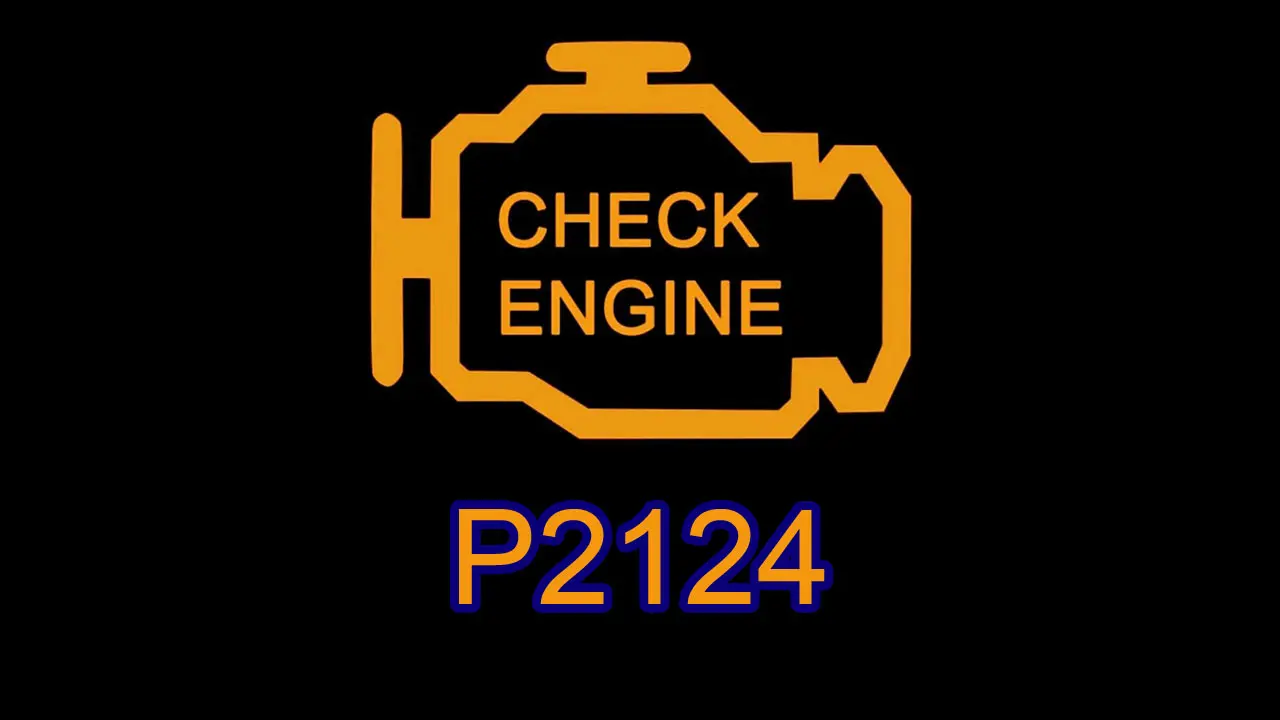
P2124 Throttle/Pedal Position Sensor/Switch "D" Circuit Intermittent
The P2124 Throttle/Pedal Position Sensor/Switch "D" Circuit Intermittent diagnostic trouble code indicates that the Engine Control Module (ECM/PCM) has detected an intermittent or unstable electrical signal from the throttle or accelerator pedal position D circuit.
In simple terms, the vehicle's computer is receiving a signal from the D throttle/pedal position circuit that occasionally becomes abnormal, disappears, jumps unexpectedly, or does not behave consistently.
Modern vehicles commonly use electronic throttle control (ETC) systems with multiple position sensors and redundant signal circuits. These signals allow the ECM to determine how far the accelerator pedal is being pressed and how far the electronic throttle is actually opening.
Because throttle control is safety-critical, the ECM continuously monitors these signals. If the D circuit becomes intermittent, the ECM may store P2124, illuminate the Check Engine Light, and in some vehicles activate reduced-power or fail-safe mode.
Common symptoms include:
-
Check Engine Light
-
Intermittent throttle response
-
Engine hesitation
-
Reduced engine power
-
Sudden loss of acceleration
-
Limp mode
-
Engine surging
-
Rough idle
-
Engine stalling
-
Cruise-control deactivation
-
Electronic throttle warning messages
The exact component associated with the D circuit depends on the vehicle manufacturer. It may be part of the accelerator pedal position sensor system, electronic throttle body, or another throttle/pedal position circuit.
What Does P2124 Mean?
P2124 means that the ECM/PCM has detected an intermittent malfunction in the throttle/pedal position sensor or switch D circuit.
The key word is "intermittent."
The circuit may work normally most of the time but occasionally produce an abnormal signal.
For example, the signal may:
-
Drop out momentarily
-
Jump to an unexpected value
-
Become noisy
-
Disconnect when the harness moves
-
Change when the accelerator pedal moves through a particular position
-
Temporarily lose its reference voltage
-
Temporarily lose its ground
-
Become disconnected because of a loose terminal
This makes P2124 different from:
-
P2121 — D circuit range/performance
-
P2122 — D circuit low input
-
P2123 — D circuit high input
-
P2124 — D circuit intermittent
An intermittent fault can be particularly difficult to diagnose because the vehicle may operate normally when inspected.
What Is the Throttle/Pedal Position Sensor?
Most modern vehicles use an electronic throttle control system.
The accelerator pedal generally does not directly control the throttle plate through a mechanical cable. Instead, the pedal contains position sensors that convert pedal movement into electrical signals.
A typical electronic throttle system works like this:
-
The driver presses the accelerator pedal.
-
Accelerator pedal position sensors detect pedal movement.
-
The sensors generate electrical signals.
-
The ECM/PCM receives the signals.
-
The ECM calculates the driver's requested torque.
-
The ECM commands the electronic throttle actuator.
-
The throttle plate moves.
-
Throttle position sensors report the actual throttle position.
-
The ECM compares the signals to verify correct operation.
Multiple position circuits provide redundancy and allow the ECM to detect an incorrect signal.
What Does "D Circuit" Mean?
The D circuit refers to a specific throttle or pedal position signal identified by the manufacturer.
It does not necessarily mean there is a separate physical sensor called "Sensor D."
Depending on the vehicle, the D circuit may be associated with:
-
Accelerator pedal position sensor
-
Throttle position sensor
-
Electronic throttle body
-
One of several redundant sensor signals
-
Accelerator pedal assembly
The exact location and function of the D circuit are manufacturer-specific.
For accurate diagnosis, the technician should use the vehicle's:
-
Wiring diagram
-
Connector pinout
-
Sensor specifications
-
Technical service information
-
Manufacturer diagnostic procedure
The D circuit on one vehicle may not use the same connector pin or physical component as the D circuit on another vehicle.
What Does "Intermittent" Mean?
An intermittent circuit fault means the electrical problem is not continuously present.
The circuit can operate normally and then temporarily fail.
For example:
Normal operation
The accelerator pedal is pressed and the sensor signal changes smoothly.
Intermittent fault
The driver moves the pedal through a certain position and the signal suddenly drops, jumps, or disappears.
The signal may return to normal immediately afterward.
Possible reasons include:
-
Loose connector terminal
-
Broken wire inside insulation
-
Harness movement
-
Corrosion
-
Water intrusion
-
Vibration
-
Heat-related wiring damage
-
Poor terminal tension
-
Internal sensor wear
-
Sensor dead spot
-
Poor ground
-
Intermittent reference-voltage loss
This is why simply measuring the circuit while the vehicle is stationary may not reveal the problem.
Symptoms of P2124
The symptoms can vary considerably depending on the vehicle and how frequently the D circuit fails.
Check Engine Light
The Check Engine Light may illuminate after the ECM detects the intermittent condition.
Intermittent Throttle Response
The accelerator may respond normally at one moment and become slow or unresponsive at another.
Hesitation
The engine may hesitate when accelerating.
Reduced Engine Power
The ECM may reduce engine output to protect against an unreliable throttle signal.
Sudden Loss of Acceleration
In some cases, the vehicle may temporarily lose normal acceleration.
Limp Mode
The ECM may enter a fail-safe strategy.
Engine Surging
An unstable position signal can cause abnormal engine response.
Rough Idle
Throttle-control problems can affect idle stability.
Engine Stalling
A severe or repeated signal interruption may contribute to stalling.
Cruise Control Disabled
The cruise-control system may be disabled because reliable throttle information is required.
Warning Messages
Depending on the vehicle, the driver may see messages such as:
-
Reduced Engine Power
-
Service Throttle System
-
Electronic Throttle Control Fault
-
Engine Fault
-
Drive System Fault
Common Causes of P2124
Loose Electrical Connector
A loose connector is one of the first things that should be inspected.
A connector may appear connected but still have poor terminal contact.
Possible problems include:
-
Loose terminals
-
Poor terminal tension
-
Backed-out pins
-
Damaged connector locks
-
Broken connector housing
Damaged Wiring
A wire can be damaged internally even when the insulation looks normal.
Possible problems include:
-
Broken conductor strands
-
Chafing
-
Vibration damage
-
Heat damage
-
Pinched wiring
-
Stretching
-
Previous repair damage
A partially broken conductor may connect normally until the harness moves.
Corroded Terminals
Corrosion can increase electrical resistance and cause an intermittent signal.
Look for:
-
Green corrosion
-
Oxidation
-
White deposits
-
Moisture
-
Contaminated terminals
Water Intrusion
Water entering the connector can temporarily interfere with the signal.
Possible sources include:
-
Damaged connector seals
-
Engine-bay water
-
Pressure washing
-
Leaking components
-
Condensation
Faulty Accelerator Pedal Position Sensor
If the D circuit belongs to the accelerator pedal assembly, the internal position sensor may be failing.
Possible problems include:
-
Internal wear
-
Dead spots
-
Signal dropout
-
Internal electrical failure
-
Inconsistent output
Faulty Throttle Position Sensor
If the D circuit is part of the electronic throttle body, an internal throttle-position sensor can cause P2124.
Faulty Electronic Throttle Body
An electronic throttle body may develop problems involving:
-
Position sensors
-
Actuator motor
-
Internal wiring
-
Circuit board
-
Position feedback
Poor Sensor Ground
An intermittent ground connection can cause the sensor signal to disappear or become unstable.
Possible causes include:
-
Loose ground
-
Corroded ground point
-
Damaged ground wire
-
High resistance
-
Poor connector contact
Intermittent Reference-Voltage Problem
Throttle and pedal sensors commonly receive a regulated reference voltage.
If this voltage temporarily disappears or changes, the sensor output can become abnormal.
Possible causes include:
-
Damaged reference wire
-
Loose connector
-
Short circuit
-
Another sensor affecting a shared reference circuit
-
ECM reference-voltage problem
High Resistance in the Circuit
A corroded terminal or damaged wire can introduce resistance into the circuit.
The problem may only appear under:
-
Vibration
-
Heat
-
Harness movement
-
High electrical load
Mechanical Binding
A sticking accelerator pedal or throttle plate can create abnormal position changes.
Possible causes include:
-
Carbon deposits
-
Damaged throttle shaft
-
Foreign material
-
Mechanical wear
-
Pedal obstruction
Throttle Plate Contamination
Carbon buildup can restrict throttle movement and cause the actual throttle position to behave unexpectedly.
However, a dirty throttle body should not automatically be assumed to be the cause of an intermittent electrical circuit code.
Low Battery or Charging Voltage
Unstable system voltage can affect electronic throttle operation.
Possible causes include:
-
Weak battery
-
Loose battery terminal
-
Alternator problems
-
Poor engine ground
-
Poor chassis ground
Throttle or Pedal Calibration Problem
Some vehicles require a relearn procedure after:
-
Battery disconnection
-
Accelerator pedal replacement
-
Throttle-body replacement
-
ECM replacement
-
Software updates
-
Major engine repairs
An incorrect calibration may cause related throttle-control faults.
Aftermarket Modifications
Potential causes include:
-
Throttle-response controllers
-
Accelerator-pedal devices
-
Modified wiring
-
ECU tuning
-
Engine swaps
-
Aftermarket throttle components
Faulty ECM/PCM
An ECM/PCM problem is possible but generally less common than:
-
Wiring problems
-
Connector problems
-
Sensor faults
-
Reference-voltage problems
-
Ground problems
-
Throttle-body faults
The ECM should generally be considered only after the external circuit has been thoroughly tested.
Vehicles Commonly Affected by P2124
P2124 can occur on many OBD-II vehicles equipped with electronic throttle-control systems.
Examples may include:
-
Ford F-150
-
Ford Explorer
-
Ford Mustang
-
Ford Focus
-
Ford Ranger
-
Chevrolet Silverado
-
Chevrolet Tahoe
-
Chevrolet Malibu
-
Chevrolet Camaro
-
GMC Sierra
-
GMC Yukon
-
Cadillac Escalade
-
Dodge Charger
-
Dodge Challenger
-
Ram 1500
-
Jeep Grand Cherokee
-
Jeep Wrangler
-
Chrysler Pacifica
-
Toyota Camry
-
Toyota Tundra
-
Toyota Tacoma
-
Honda Accord
-
Honda Civic
-
Honda CR-V
-
Nissan Altima
-
Nissan Pathfinder
-
Nissan Titan
-
BMW 3 Series
-
BMW 5 Series
-
Mercedes-Benz C-Class
-
Mercedes-Benz E-Class
-
Volkswagen Golf
-
Volkswagen Passat
-
Audi A4
-
Audi A6
This list is not exhaustive.
P2124 can occur on any compatible vehicle when the ECM detects an intermittent problem in the relevant throttle/pedal position D circuit.
Important: The exact component, connector, circuit location, and diagnostic procedure vary by manufacturer.
How Is P2124 Diagnosed?
P2124 can be more difficult to diagnose than a continuously present circuit fault because the signal may return to normal before testing begins.
A proper diagnosis should use the vehicle manufacturer's wiring diagrams, specifications, scan-tool data, and diagnostic procedures.
The objective is to determine whether the intermittent problem originates from the:
-
Position sensor
-
Accelerator pedal assembly
-
Electronic throttle body
-
Wiring
-
Connector
-
Reference-voltage circuit
-
Ground circuit
-
Mechanical mechanism
-
Calibration
-
ECM/PCM
Check for Additional Trouble Codes
Perform a complete scan of the vehicle.
Look for:
-
P2124
-
P2121
-
P2122
-
P2123
-
P2125
-
P2126
-
P2127
-
P2128
-
P2129
-
P2130–P2140
-
Throttle actuator codes
-
Accelerator pedal position codes
-
5-volt reference codes
-
Sensor circuit codes
-
Battery-voltage codes
-
Communication codes
Related codes can reveal whether the intermittent fault is isolated to the D circuit or part of a larger electrical problem.
Check Freeze-Frame Data
Review freeze-frame information stored when P2124 was detected.
Useful parameters may include:
-
Engine RPM
-
Vehicle speed
-
Engine load
-
Battery voltage
-
Accelerator pedal position
-
Throttle position
-
Coolant temperature
This can help determine whether the fault occurred during:
-
Acceleration
-
Deceleration
-
Cruising
-
Idle
-
Engine startup
-
A particular temperature condition
Identify the D Circuit
Use the vehicle-specific wiring diagram to identify:
-
D signal wire
-
Reference-voltage circuit
-
Sensor ground
-
ECM/PCM terminal
-
Related redundant sensor
-
Connector pin numbers
-
Expected signal characteristics
Do not assume that the D circuit has the same configuration across different vehicles.
Monitor Live Data
Use a capable scan tool to monitor:
-
D circuit position
-
Accelerator pedal position
-
Throttle position
-
Other redundant position signals
-
Commanded throttle position
-
Actual throttle position
Slowly operate the accelerator pedal through its full range.
Look for:
-
Sudden signal jumps
-
Signal dropouts
-
Unstable readings
-
Flat spots
-
Unexpected changes
-
Temporary loss of communication
-
Mismatch with redundant signals
Because P2124 is intermittent, recording live data can be particularly useful.
Perform a Wiggle Test
While monitoring the relevant live-data signals, carefully move the wiring harness and connectors according to the manufacturer's procedure.
If the signal suddenly changes when the harness is moved, inspect:
-
Wiring
-
Connector terminals
-
Connector locks
-
Harness routing
A wiggle test can help locate a loose connection or partially broken wire.
Inspect Electrical Connectors
Check the relevant connectors for:
-
Loose terminals
-
Corrosion
-
Bent pins
-
Backed-out terminals
-
Water intrusion
-
Damaged seals
-
Damaged connector locks
-
Heat damage
Pay particular attention to connectors located near the engine, throttle body, or accelerator pedal.
Check Sensor Reference Voltage
Many systems use approximately 5 volts as the sensor reference, but the correct specification must be confirmed for the specific vehicle.
Monitor the reference voltage while moving the harness if an intermittent fault is suspected.
If the reference voltage drops unexpectedly, investigate the reference circuit.
Check Sensor Ground
Verify that the sensor ground remains within specification.
Check for:
-
Voltage drop
-
Excessive resistance
-
Loose ground
-
Corrosion
-
Damaged wiring
Test Circuit Continuity
Check the D circuit for:
-
Open circuits
-
High resistance
-
Short to ground
-
Short to power
-
Short between related sensor circuits
An intermittent wire may pass a basic continuity test when stationary, so additional testing may be necessary.
Perform Voltage-Drop Testing
Voltage-drop testing can identify excessive resistance in:
-
Ground circuits
-
Connector terminals
-
Wiring
-
Splices
-
Power circuits
This can be particularly useful when the fault occurs only under vibration or load.
Inspect the Accelerator Pedal
If the D circuit belongs to the accelerator pedal assembly, inspect:
-
Pedal movement
-
Position sensor
-
Wiring
-
Connector
-
Terminals
-
Physical damage
Make sure the pedal moves smoothly without binding.
Inspect the Electronic Throttle Body
If the D circuit belongs to the throttle body, inspect:
-
Throttle plate
-
Position sensors
-
Actuator
-
Wiring
-
Connector
-
Internal electronics
Compare Redundant Sensor Signals
Electronic throttle systems commonly use multiple position signals.
Compare the D circuit with the other relevant signals.
If one signal suddenly changes while the others remain stable, investigate the corresponding sensor circuit.
Check Commanded vs. Actual Throttle Position
Compare the commanded throttle position with actual throttle position.
An unexpected difference may indicate:
-
Position-sensor problems
-
Throttle actuator problems
-
Mechanical binding
-
Wiring problems
-
Electronic throttle-body faults
Use an Oscilloscope When Necessary
An oscilloscope can be especially helpful with intermittent faults.
It can reveal:
-
Momentary signal dropouts
-
Voltage spikes
-
Electrical noise
-
Signal glitches
-
Dead spots
-
Irregular signal patterns
A multimeter may not capture a very short interruption that an oscilloscope can display.
Check Battery and Charging Voltage
Verify:
-
Battery condition
-
Battery terminals
-
Alternator output
-
Charging voltage
-
Engine grounds
-
Chassis grounds
Unstable system voltage can produce multiple intermittent electronic faults.
Check ECM/PCM Power and Grounds
Verify:
-
Battery power
-
Ignition power
-
ECM/PCM grounds
-
Sensor reference circuits
Check for Aftermarket Modifications
Inspect for:
-
Pedal controllers
-
Throttle-response devices
-
ECU tuning
-
Modified wiring
-
Engine swaps
-
Non-standard throttle components
Check for Technical Service Bulletins
Some manufacturers release technical service bulletins for known:
-
Wiring problems
-
Connector problems
-
Accelerator-pedal faults
-
Throttle-body faults
-
Software issues
Checking manufacturer-specific service information can prevent unnecessary component replacement.
How to Fix P2124
The correct repair depends on the cause confirmed during diagnosis.
Repair Loose Connections
If a connector terminal is loose, restore the correct terminal tension or replace the damaged terminal.
Repair Damaged Wiring
Repair or replace wiring affected by:
-
Chafing
-
Heat
-
Vibration
-
Broken conductors
-
Previous repairs
Repair Corroded Connectors
Clean or replace corroded terminals and repair any water intrusion.
Replace the Accelerator Pedal Assembly
If the D circuit is integrated into the accelerator pedal and the internal sensor has been confirmed faulty, replace the pedal assembly when required.
Replace a Faulty Position Sensor
If the applicable throttle or pedal position sensor can be replaced separately and testing confirms failure, replace it according to manufacturer procedures.
Replace the Electronic Throttle Body
If an internal throttle-position sensor, actuator, or electronic circuit is defective, replace the throttle body or applicable assembly.
Repair Sensor Ground Problems
Repair loose, damaged, or corroded sensor-ground connections.
Repair Reference-Voltage Problems
Repair the reference circuit if testing shows an intermittent or incorrect reference voltage.
Repair Shorted Circuits
Repair any signal circuit shorted to:
-
Ground
-
Battery voltage
-
Another sensor circuit
Repair Mechanical Binding
Repair the accelerator pedal or throttle mechanism if physical binding is confirmed.
Clean the Throttle Body
If carbon deposits are confirmed to be restricting throttle movement, clean the throttle body according to the manufacturer's procedure.
Repair Water-Intrusion Problems
Replace damaged connector seals and correct the source of moisture.
Perform Required Relearn Procedures
Some vehicles may require:
-
Throttle body relearn
-
Accelerator pedal calibration
-
Idle relearn
-
Electronic throttle adaptation
Always use the manufacturer's specified procedure.
Correct Aftermarket Modifications
Remove or correct aftermarket throttle-control modifications if they are responsible for the intermittent signal.
Update ECM/PCM Software
If manufacturer service information identifies a software issue, perform the appropriate ECM/PCM update.
Replace the ECM/PCM
The ECM/PCM should only be replaced after the external circuit and all related components have been properly tested.
What Happens If P2124 Is Ignored?
P2124 should not be ignored because an intermittent accelerator or throttle-position signal can become more frequent or develop into a permanent fault.
Possible consequences include:
-
Reduced engine power
-
Poor acceleration
-
Sudden hesitation
-
Limp mode
-
Engine stalling
-
Unpredictable throttle response
-
Cruise-control deactivation
-
Poor fuel economy
-
Additional throttle-control codes
-
Increased emissions
Because electronic throttle control is safety-critical, an intermittent fault deserves attention even if the vehicle currently appears to operate normally.
Can You Drive With P2124?
Driving with P2124 should be approached cautiously.
If the fault is genuinely intermittent, the vehicle may appear normal for long periods and then suddenly experience a throttle-control problem.
A short trip may be possible if:
-
Accelerator response is completely predictable.
-
The engine is running normally.
-
There is no significant power loss.
-
The vehicle is not stalling.
-
No serious warning messages are displayed.
Avoid continued driving if you experience:
-
Sudden loss of acceleration
-
Unpredictable throttle response
-
Severe hesitation
-
Repeated stalling
-
Reduced-power mode
-
Multiple electronic throttle warnings
-
Difficulty maintaining normal speed
If throttle response becomes unpredictable, have the vehicle inspected before continuing to drive.
Is P2124 a Serious Code?
P2124 is generally considered a moderate to potentially high-severity diagnostic trouble code.
The intermittent nature of the fault makes it particularly important to investigate because the vehicle may temporarily lose reliable accelerator or throttle-position information.
Depending on the vehicle, the ECM may:
-
Enter fail-safe mode
-
Limit engine power
-
Disable cruise control
-
Restrict throttle operation
-
Trigger a reduced-power warning
If the vehicle has sudden power loss, stalling, or unpredictable accelerator response, the problem should be treated as high priority.
How to Prevent P2124
Recommended practices include:
-
Inspect throttle and accelerator-pedal wiring during routine maintenance.
-
Keep electrical connectors clean and dry.
-
Prevent harnesses from rubbing against metal.
-
Protect wiring from excessive engine heat.
-
Check connector seals for water intrusion.
-
Maintain battery terminals.
-
Maintain engine and chassis grounds.
-
Repair damaged wiring promptly.
-
Secure wiring away from moving engine components.
-
Avoid poorly installed throttle-control modifications.
-
Use correct replacement components.
-
Perform required throttle or pedal relearn procedures.
-
Check for manufacturer technical service bulletins when appropriate.
-
Address intermittent Check Engine Light warnings promptly.
P2124 vs. Related Codes
| Code | General Description |
|---|---|
| P2124 | Throttle/Pedal Position Sensor/Switch "D" Circuit Intermittent |
| P2121 | Throttle/Pedal Position Sensor/Switch "D" Circuit Range/Performance |
| P2122 | Throttle/Pedal Position Sensor/Switch "D" Circuit Low Input |
| P2123 | Throttle/Pedal Position Sensor/Switch "D" Circuit High Input |
| P2125 | Throttle/Pedal Position Sensor/Switch "E" Circuit Malfunction |
| P2126 | Throttle/Pedal Position Sensor/Switch "E" Circuit Range/Performance |
| P2127 | Throttle/Pedal Position Sensor/Switch "E" Circuit Low Input |
| P2128 | Throttle/Pedal Position Sensor/Switch "E" Circuit High Input |
| P2129 | Throttle/Pedal Position Sensor/Switch "E" Circuit Intermittent |
| P2130 | Throttle/Pedal Position Sensor/Switch "F" Circuit Malfunction |
| P2131 | Throttle/Pedal Position Sensor/Switch "F" Circuit Range/Performance |
| P2132 | Throttle/Pedal Position Sensor/Switch "F" Circuit Low Input |
| P2133 | Throttle/Pedal Position Sensor/Switch "F" Circuit High Input |
| P2134 | Throttle/Pedal Position Sensor/Switch "F" Circuit Intermittent |
| P2135 | Throttle Position Sensor A/B Voltage Correlation |
| P2136 | Throttle/Pedal Position Sensor/Switch A/C Voltage Correlation |
| P2137 | Throttle/Pedal Position Sensor/Switch B/C Voltage Correlation |
| P2138 | Throttle/Pedal Position Sensor/Switch D/E Voltage Correlation |
| P2139 | Throttle/Pedal Position Sensor/Switch D/F Voltage Correlation |
| P2140 | Throttle/Pedal Position Sensor/Switch E/F Voltage Correlation |
The D-circuit codes can be summarized as:
-
P2121 = D circuit range/performance
-
P2122 = D circuit low input
-
P2123 = D circuit high input
-
P2124 = D circuit intermittent
The P2125–P2129 codes relate to the corresponding E circuit, while P2130–P2134 relate to the F circuit.
Final Thoughts
The P2124 Throttle/Pedal Position Sensor/Switch "D" Circuit Intermittent diagnostic trouble code indicates that the ECM/PCM has detected an unstable or intermittent signal in the D throttle or accelerator pedal position circuit.
Common causes include:
-
Loose electrical connectors
-
Damaged wiring
-
Broken conductors
-
Corroded terminals
-
Water intrusion
-
Faulty accelerator pedal position sensor
-
Faulty throttle position sensor
-
Electronic throttle-body problems
-
Poor sensor ground
-
Intermittent reference-voltage problems
-
High resistance in the circuit
-
Mechanical binding
-
Low or unstable system voltage
-
Calibration problems
-
Aftermarket modifications
-
ECM/PCM faults
The most important point is that P2124 does not automatically mean that the accelerator pedal or throttle body needs to be replaced.
Because the fault is intermittent, diagnosis should focus heavily on live-data monitoring, freeze-frame information, connector inspection, wiring movement, wiggle testing, reference-voltage and ground testing, voltage-drop testing, and comparison of redundant position signals.
If the signal interruption is very brief, an oscilloscope may be necessary to capture the fault.
If the vehicle develops unpredictable accelerator response, sudden power loss, repeated stalling, or reduced-power mode, the vehicle should be inspected promptly.
Correctly identifying the source of the intermittent D-circuit fault can prevent unnecessary parts replacement and help restore reliable electronic throttle operation.