TR
TR EN
EN

What Is a Power Window Regulator? Power Window Regulator and Window Motor Failure
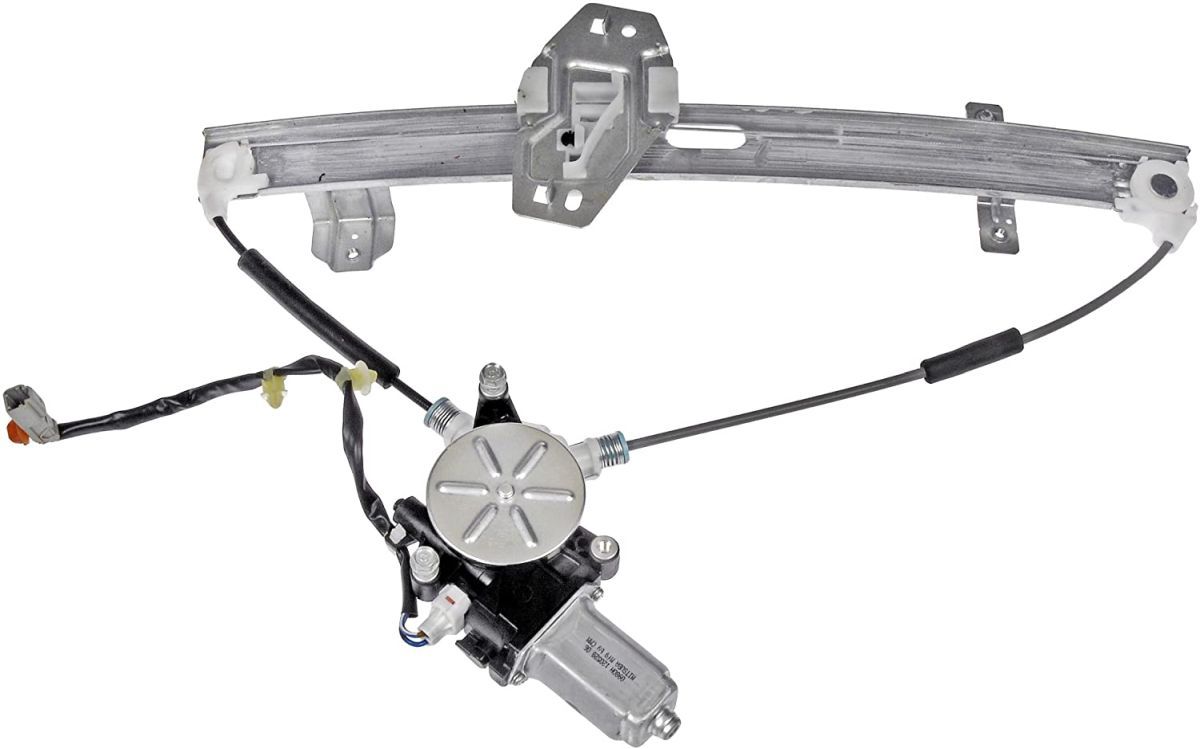
A power window regulator is the mechanical mechanism that moves a vehicle's side window up and down. It works together with the power window motor, which provides the electrical power required to move the glass.
Although the window regulator and window motor work as a single system, they are different components. The motor produces rotational force, while the regulator converts that movement into the controlled vertical or angled movement required to raise and lower the window.
A problem with either component can cause the window to move slowly, become noisy, stop halfway, get stuck, or stop working completely.
What Is a Power Window Regulator?
The power window regulator is the mechanism mounted inside the vehicle door.
Its primary purpose is to hold the window glass securely and guide it through its intended movement.
Depending on the vehicle, the regulator may use:
-
Cables
-
Pulleys
-
Gears
-
Scissor-type arms
-
Sliding tracks
-
Plastic guides
-
Mounting brackets
-
Glass clamps
Different vehicle manufacturers use different regulator designs.
The regulator must move the glass smoothly while keeping it properly aligned inside the door.
What Is a Power Window Motor?
The power window motor is a small electric motor that drives the window regulator.
When the driver presses the window switch, electrical power is supplied to the motor in the appropriate direction.
Reversing the polarity or electronic control signal allows the motor to rotate in the opposite direction, depending on the system design.
The motor then drives the regulator, which moves the window glass.
In many vehicles, the motor and regulator can be purchased separately. In others, they are supplied as a complete assembly.
How Does a Power Window System Work?
A typical power window system follows a relatively simple sequence.
When the window switch is pressed:
-
The switch sends a command to the window circuit or control module.
-
Power is supplied to the window motor.
-
The motor rotates.
-

The regulator converts motor rotation into window movement.
-
The regulator moves the glass along its guide channels.
-
The window stops when the switch is released or when the control system determines that the desired position has been reached.
Modern vehicles may use a dedicated door control module instead of sending motor power directly through a simple switch.
Some systems also include anti-pinch protection and automatic window positioning.
What Are the Symptoms of a Faulty Window Regulator?
A damaged window regulator can produce several recognizable symptoms.
Common signs include:
-
Window moves slowly
-
Window stops halfway
-
Window becomes stuck
-
Glass tilts inside the door
-
Window moves unevenly
-
Grinding or clicking noises
-
Window drops into the door
-
Motor runs but glass does not move
-
Window moves in one direction but not the other
-
Glass moves intermittently
-
Window becomes difficult to close
-
Regulator cable makes unusual noises
The exact symptom depends on the type of regulator failure.
What Are the Symptoms of a Faulty Window Motor?
A failing window motor can produce symptoms that are similar to a regulator problem.
Typical symptoms include:
-
Window does not move
-
Motor operates intermittently
-
Motor sounds weak
-
Window moves very slowly
-
Motor stops when the window reaches a particular position
-
Motor works in one direction but not the other
-
Clicking comes from the motor area
-
Motor becomes unusually hot
-
Window works again after the motor cools
-
No sound from the door when the switch is pressed
A silent window does not automatically mean that the motor has failed.
The switch, fuse, wiring, connector, control module, or power supply can produce the same symptom.
What Does It Mean If the Window Motor Runs but the Glass Does Not Move?
This is an important diagnostic clue.
If you can clearly hear the motor operating but the glass does not move, the regulator is often more suspicious than the motor itself.
Possible causes include:
-
Broken regulator cable
-
Damaged gear
-
Broken regulator arm
-
Disconnected glass mounting point
-
Broken plastic guide
-
Damaged regulator track
-
Regulator mechanism becoming detached
In some designs, the motor gear itself can also fail.
Therefore, the motor should not automatically be replaced just because the window does not move.
Why Does the Window Move Slowly?
A slow power window can have several causes.
Possible causes include:
-
Aging window motor
-
Excessive friction in the regulator
-
Dry or damaged window guides
-
Misaligned glass
-
Worn regulator components
-
Weak electrical supply
-
Corroded connectors
-
Damaged wiring
-
Excessive resistance inside the motor
-
Cold temperatures
-
Ice around the glass
A slow window is particularly important if it has gradually become slower over time.
This can indicate increasing mechanical resistance or a motor that is approaching the end of its service life.
Can a Dirty or Damaged Window Guide Cause Problems?
Yes.
The window glass moves through rubber channels and guide mechanisms inside the door.
If these channels become contaminated, damaged, distorted, or excessively dry, the resistance against the glass can increase.
This places additional load on the motor and regulator.
Possible symptoms include:
-
Slow operation
-
Squeaking
-
Increased motor noise
-
Window stopping under load
-
Automatic window reversing
-
Premature motor wear
The glass guides should therefore be inspected before replacing an expensive motor.
Why Does the Window Make a Grinding Noise?
Grinding or clicking noises can indicate a mechanical problem.
Possible causes include:
-
Damaged regulator gears
-
Broken cable strands
-
Worn pulleys
-
Damaged plastic guides
-
Regulator arm problems
-
Foreign objects inside the door
-
Motor gear damage
-
Misaligned glass
If the noise changes as the window moves, the regulator should be inspected.
Continuing to operate a severely damaged regulator can cause the glass to become detached or fall inside the door.
Why Does the Window Tilt or Move Crookedly?
A window that tilts or moves at an angle is often associated with a mechanical problem.
Possible causes include:
-
Regulator cable failure
-
Broken regulator guide
-
Loose glass mounting
-
Bent regulator arm
-
Damaged window channel
-
Glass becoming detached from the regulator
-
Incorrect installation
The motor may still operate normally even though the glass cannot move correctly.
This is an important distinction because replacing the motor alone would not correct a mechanically misaligned window.
Why Does the Window Fall Inside the Door?
If the window suddenly drops into the door, the regulator or glass mounting mechanism may have failed.
A broken cable, failed regulator arm, damaged guide, or detached glass mounting point can allow the glass to fall.
The motor may still be heard operating when the switch is pressed.
This does not mean that the motor is necessarily defective.
The door trim should normally be removed and the regulator inspected before further operation.
Why Does the Window Work Intermittently?
Intermittent operation can be more difficult to diagnose than a completely dead window.
Possible causes include:
-
Worn motor brushes
-
Internal motor wear
-
Damaged wiring
-
Loose connector
-
Corrosion
-
Faulty window switch
-
Door control module problems
-
Regulator binding
-
Low system voltage
-
Thermal protection inside the motor
A motor with worn internal brushes may work in one position and fail in another.
Temperature can also provide an important clue.
If the window works when cold but stops after repeated operation, motor overheating or excessive mechanical resistance may be involved.
Can a Faulty Window Switch Cause the Same Problem?
Yes.
The window switch is part of the control circuit and can fail independently of the motor and regulator.
Possible switch problems include:
-
Worn internal contacts
-
Liquid contamination
-
Corrosion
-
Broken wiring
-
Mechanical damage
If a window does not respond at all, the switch should be tested before the motor is condemned.
A useful diagnostic clue is whether the same window can be controlled from another switch, such as the driver's master window control.
What Causes Power Window Regulator Failure?
Window regulators are exposed to repeated mechanical loads every time the window is operated.
Common causes of failure include:
Cable breakage
Cable-type regulators can develop frayed or broken cables.
Plastic guide failure
Plastic components can crack or wear with age.
Gear wear
The regulator or motor gears can become worn or damaged.
Corrosion
Moisture entering the door can corrode mechanical and electrical components.
Glass misalignment
A misaligned window increases mechanical resistance.
Excessive friction
Damaged or contaminated window channels can overload the regulator.
Impact damage
A side impact can bend the regulator or door structure.
Repeated operation under heavy load
Operating the window against ice or an obstruction can place excessive stress on the system.
What Causes Window Motor Failure?
The electric motor can also wear out over time.
Possible causes include:
-
Worn brushes
-
Commutator wear
-
Overheating
-
Excessive electrical current
-
Mechanical overload
-
Water intrusion
-
Corrosion
-
Bearing or bushing wear
-
Low-quality replacement parts
-
Excessive regulator resistance
A motor can fail electrically because of internal wear, but it can also be damaged indirectly by a regulator that has become difficult to move.
Can a Bad Regulator Damage the Window Motor?
Yes.
If the regulator becomes stiff or partially seized, the motor has to work harder to move the glass.
This increases electrical current and heat.
Over time, excessive load can shorten motor life.
For this reason, replacing only a failed motor without checking the regulator may result in another failure.
The complete mechanism should be checked for excessive resistance.
Can a Bad Window Motor Damage the Regulator?
It is less common for a motor itself to mechanically damage a healthy regulator, but abnormal motor operation can place additional stress on the mechanism.
A motor with a damaged gear or abnormal operation may produce irregular movement.
Likewise, a regulator that binds can overload the motor and the regulator components at the same time.
The two components should therefore be diagnosed together.
What If the Window Works From One Switch but Not Another?
This is a useful diagnostic clue.
For example, if the passenger window works from the passenger switch but not from the driver's master switch, the passenger motor and regulator may be functioning normally.
Possible causes could include:
-
Driver-side switch failure
-
Wiring problem
-
Door module issue
-
Communication problem
-
Lockout function
-
Connector problem
The exact electrical architecture varies between vehicles.
What If None of the Windows Work?
If several power windows stop working simultaneously, it is less likely that all the motors and regulators failed at the same time.
Possible causes include:
-
Blown fuse
-
Main power supply problem
-
Door control module fault
-
Body control module issue
-
Low battery voltage
-
Wiring problem
-
Window lockout function
-
Communication fault
A common power supply or control problem should be investigated before replacing individual motors.
Can a Blown Fuse Cause a Power Window Failure?
Yes.
Power windows are protected by fuses or electronic circuit protection.
A blown fuse can disable one or several windows depending on the vehicle's electrical design.
However, replacing the fuse without investigating why it failed may not solve the problem.
A short circuit, damaged wiring, seized motor, or excessive current draw can cause the replacement fuse to blow again.
Never install a higher-rated fuse to prevent repeated failure.
Can Low Battery Voltage Affect Power Windows?
Yes.
Power window motors require sufficient electrical power to operate properly.
Low battery voltage can cause:
-
Slow window movement
-
Weak motor operation
-
Intermittent operation
-
Multiple electrical warnings
-
Window initialization problems
However, a slow window does not automatically mean that the battery is weak.
Mechanical resistance and motor wear are also common causes.
What Is One-Touch Window Operation?
Many modern vehicles have one-touch window control.
Instead of holding the switch continuously, the driver briefly presses the switch and the window automatically opens or closes.
This system requires the vehicle to know the window's position.
Depending on the design, position information may come from motor feedback, Hall sensors, current monitoring, or other control strategies.
If the battery is disconnected or the window mechanism is repaired, the window may lose its learned position.
A window initialization or relearning procedure may then be required.
What Is Anti-Pinch Protection?
Modern power windows may include an anti-pinch system designed to reduce the risk of injury if an object becomes trapped while the window is closing.
The system monitors factors such as motor position, movement, speed, or electrical load.
If the control unit detects an unexpected increase in resistance, it may stop the window and reverse it.
However, an anti-pinch reversal does not automatically mean that the anti-pinch sensor is defective.
A mechanically stiff regulator, dirty window channel, incorrect initialization, low voltage, or misalignment can also create excessive resistance.
Why Does the Window Go Up and Then Come Back Down?
This is a common symptom on vehicles with automatic windows and anti-pinch protection.
The system may interpret increased resistance as an obstruction.
Possible causes include:
-
Dirty window channel
-
Excessive friction
-
Misaligned glass
-
Damaged regulator
-
Incorrect window initialization
-
Low voltage
-
Faulty motor feedback
-
Genuine obstruction
The anti-pinch system should not simply be disabled to hide the problem.
The cause of the increased resistance should be identified.
How Is a Power Window Motor Tested?
A proper diagnosis starts with the electrical circuit.
A technician may check:
-
Fuse
-
Battery voltage
-
Power supply
-
Ground
-
Window switch
-
Wiring
-
Connectors
-
Control module
-
Motor voltage
-
Motor current draw
The motor may be tested under controlled conditions according to the vehicle manufacturer's wiring diagram.
Directly applying battery voltage to a motor can be useful on some conventional systems, but it is not appropriate for every modern vehicle because some motors incorporate electronics or position-sensing circuitry.
Therefore, electrical testing should follow the specific vehicle's system design.
How Is a Window Regulator Tested?
The regulator should be inspected for:
-
Cable damage
-
Broken guides
-
Bent arms
-
Gear damage
-
Loose mounting points
-
Excessive friction
-
Glass alignment
-
Damaged tracks
-
Abnormal movement
The glass should move smoothly without excessive resistance.
If the regulator binds, replacing the motor alone may not solve the problem.
Should the Window Motor and Regulator Be Replaced Together?
Not always.
If the regulator has failed but the motor operates correctly and is in good condition, some vehicles allow the regulator to be replaced separately.
If the motor has failed while the regulator moves freely, only the motor may need replacement.
However, replacing the complete assembly can make sense when:
-
The regulator is worn
-
The motor has high mileage
-
Both components show signs of wear
-
The motor has been overloaded
-
The manufacturer supplies them as an assembly
-
Labor costs make separate replacement impractical
The correct repair depends on the vehicle and the actual condition of the components.
Can a Window Regulator Be Repaired?
Sometimes.
Cable regulators may theoretically be repaired by replacing individual components, but this is not always practical or safe.
A broken cable, pulley, guide, or plastic component may be available separately for some vehicles.
For others, replacing the complete regulator assembly is the recommended repair.
Because the regulator supports the glass, an improperly repaired mechanism can allow the window to become loose or fall.
Should the Window Regulator Be Lubricated?
Some parts of the window mechanism may require lubrication, but the correct lubricant and location depend on the design.
Window channels and rubber seals should not automatically be coated with any grease or oil.
An inappropriate lubricant can damage rubber components, attract dirt, or increase resistance.
Always use a lubricant compatible with the specific component and manufacturer's service recommendations.
Can a Power Window Problem Be Detected With an OBD Scanner?
Sometimes, but not always.
Older power window systems may have little or no diagnostic capability.
Modern vehicles may use door modules that can store fault codes related to:
-
Motor position
-
Switch inputs
-
Communication
-
Anti-pinch protection
-
Door module operation
-
Power supply
-
Window initialization
An OBD scan can therefore be useful on modern vehicles.
However, a scanner cannot physically determine that a regulator cable is broken or that a mechanical guide is damaged.
Physical inspection remains necessary.
Is It Safe to Drive With a Broken Window Regulator?
The vehicle can often still be driven if the window is stuck closed, but the problem should be repaired as soon as practical.
If the glass is loose, partially open, or unsupported, driving can be unsafe.
A loose window may:
-
Fall into the door
-
Move unexpectedly
-
Allow water into the vehicle
-
Increase wind noise
-
Create security problems
-
Become damaged by vibration
A temporarily secured window should be handled carefully until the regulator is properly repaired.
Final Thoughts
The power window regulator and window motor are two different but closely connected components.
The motor supplies rotational force, while the regulator transfers that force to the window glass and controls its movement.
Symptoms such as slow operation, grinding noises, crooked movement, intermittent operation, a window that falls into the door, or a completely inoperative window can result from either component.
However, these symptoms do not automatically identify the failed part.
A faulty switch, fuse, wiring, connector, door control module, low battery voltage, damaged window channel, or mechanical obstruction can produce similar symptoms.
The most reliable approach is therefore to diagnose the complete power window system, checking electrical supply and control signals as well as the motor, regulator, glass alignment, and window guides before replacing parts.