TR
TR EN
EN

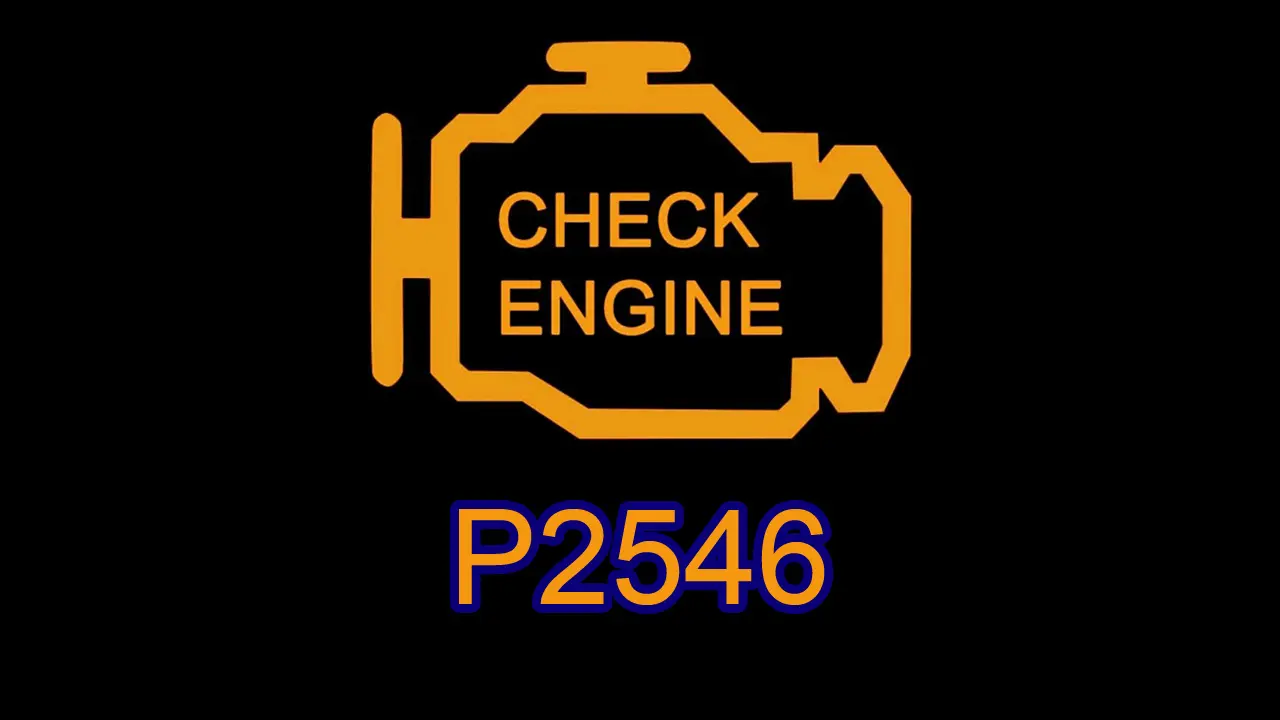
P2546 Torque Management Request Input Signal "A" Low
P2546 is a generic OBD-II diagnostic trouble code that indicates the Engine Control Module (ECM) or Powertrain Control Module (PCM) has detected that the Torque Management Request Input Signal "A" Circuit is producing a voltage signal lower than the expected manufacturer-specified range.
In simple terms, the ECM is receiving a torque management request signal that is too low or missing. This signal is used by other vehicle systems to request changes in engine torque, such as reducing or adjusting engine power during specific driving conditions.
The torque management system helps coordinate engine power with other vehicle systems, including:
-
Automatic transmission operation
-
Traction control
-
Electronic stability control
-
Cruise control
-
Turbocharger protection
-
Engine protection strategies
When the ECM detects a low signal condition in the Torque Management Request Input Signal "A" circuit, it stores diagnostic trouble code P2546 and may illuminate the Check Engine Light.
What Does P2546 Mean?
Modern vehicles use multiple electronic control modules that communicate with each other to manage engine torque.
Torque management requests can come from systems such as:
-
Transmission Control Module (TCM)
-
Anti-lock Brake System (ABS) module
-
Electronic Stability Control (ESC) module
-
Body Control Module (BCM)
-
Other powertrain-related modules
These modules send requests to the ECM when engine torque needs to be controlled.
Examples:
Transmission shifting
During gear changes, the transmission module may request temporary torque reduction to protect transmission components and improve shift smoothness.
Traction control operation
When wheel slip is detected, the ABS or stability control module may request reduced engine torque.
Engine protection
The ECM may limit torque when it detects conditions such as overheating, excessive boost pressure, or abnormal operating conditions.
The torque management request signal must remain within a specific voltage or communication range.
If the ECM detects a signal that is:
-
Too low
-
Missing
-
Shorted to ground
-
Below the expected threshold
it sets code P2546.
Common Symptoms of P2546
Symptoms may vary depending on the vehicle design and the module sending the torque request.
Common symptoms include:
-
Check Engine Light illuminated
-
Reduced engine power
-
Limp mode activation
-
Poor acceleration
-
Delayed throttle response
-
Transmission shifting problems
-
Harsh gear changes
-
Traction control warning light
-
Stability control warning light
-
Cruise control may not operate
-
Engine torque reduction during driving
-
Additional communication fault codes
Some vehicles may continue driving normally while storing the code, especially if the fault occurs intermittently.
Common Causes of P2546
Several electrical and communication problems can cause a low torque management request signal.
Short to ground in the torque request circuit
The signal wire may contact ground, causing the ECM to detect very low voltage.
Open circuit in the signal wiring
A broken wire can prevent the torque request signal from reaching the ECM.
Damaged wiring harness
The wiring may suffer from:
-
Broken conductors
-
Chafed insulation
-
Corrosion
-
Heat damage
-
Vibration damage
Faulty electrical connectors
Loose or corroded connectors may reduce signal voltage.
Possible problem areas include:
-
ECM connectors
-
TCM connectors
-
ABS module connectors
-
CAN communication connectors
Faulty Transmission Control Module (TCM)
A malfunctioning TCM may send an incorrect torque management request.
Faulty ABS or stability control module
Since traction systems request torque reduction, module problems can trigger this code.
CAN communication problems
Many modern vehicles transmit torque requests through the CAN network.
Possible causes include:
-
Damaged CAN wiring
-
Network communication interruptions
-
Module communication errors
Low battery voltage
Weak electrical supply can cause modules to communicate incorrectly.
Charging system problems
Alternator or voltage regulator faults may affect electronic control signals.
Aftermarket modifications
Incorrectly installed tuning devices or electronic accessories may interfere with torque management systems.
ECM malfunction
A rare possibility is an internal ECM failure affecting signal processing.
Vehicles Commonly Affected by P2546
P2546 may occur on many vehicles equipped with electronic throttle control, automatic transmissions, and advanced vehicle communication systems.
Commonly affected vehicles include:
-
Ford F-150
-
Ford Explorer
-
Ford Mustang
-
Chevrolet Silverado
-
Chevrolet Tahoe
-
GMC Sierra
-
Dodge Ram
-
Jeep Grand Cherokee
-
Chrysler 300
-
Toyota Tacoma
-
Toyota Tundra
-
Honda Accord
-
Honda Pilot
-
Nissan Pathfinder
-
Nissan Frontier
-
BMW 3 Series
-
Mercedes-Benz C-Class
-
Audi A4
-
Volkswagen Passat
-
Hyundai Santa Fe
-
Kia Sorento
Vehicles with electronically controlled transmissions and traction control systems are more likely to monitor torque request signals.
How Is P2546 Diagnosed?
Proper diagnosis requires checking the torque request circuit, communication network, and related control modules.
Check for additional diagnostic trouble codes
Technicians should scan for:
-
Transmission codes
-
ABS codes
-
Stability control codes
-
CAN communication codes
-
Battery voltage codes
Related codes often identify the source of the fault.
Inspect wiring and connectors
The torque management request circuit should be inspected for:
-
Broken wires
-
Short circuits
-
Loose terminals
-
Corrosion
-
Water intrusion
-
Poor previous repairs
Check the circuit voltage
A digital multimeter is used to verify:
-
Signal voltage
-
Ground condition
-
Circuit continuity
Check CAN communication
Technicians test:
-
Module communication
-
CAN network operation
-
Communication interruptions
Review live scan data
A professional scan tool can monitor:
-
Torque request status
-
Requested torque reduction
-
Transmission commands
-
Stability control requests
-
Module communication
Test related modules
The ECM, TCM, ABS module, and other control units may require individual testing.
How to Fix P2546
The correct repair depends on the actual cause of the low signal condition.
Common repairs include:
-
Repairing damaged torque management wiring
-
Repairing shorted circuits
-
Replacing damaged wiring harness sections
-
Cleaning corroded connectors
-
Repairing loose electrical terminals
-
Updating ECM, TCM, or ABS software
-
Replacing a faulty TCM
-
Replacing a faulty ABS or stability control module
-
Repairing battery or charging system problems
-
Removing incompatible aftermarket tuning devices
-
Replacing the ECM if internal failure is confirmed
After repairs, the diagnostic code should be cleared and the vehicle should be tested during different driving conditions.
Can You Drive With P2546?
Driving with P2546 may be possible, but it should not be ignored.
The vehicle may continue operating, but torque management functions may not work correctly.
Possible risks include:
-
Reduced engine performance
-
Unexpected power reduction
-
Transmission shift problems
-
Loss of traction control assistance
-
Poor acceleration response
If the vehicle enters limp mode or shows multiple warning lights, it should be inspected promptly.
Is P2546 a Serious Code?
P2546 is generally considered a moderate severity diagnostic trouble code.
The code does not usually indicate immediate engine damage, but it affects systems responsible for controlling engine power and vehicle stability.
Ignoring the issue may result in:
-
Poor drivability
-
Transmission performance problems
-
Reduced safety system operation
-
Additional electronic faults
Early diagnosis helps prevent more complicated control system failures.
How to Prevent P2546
Regular electrical system maintenance can reduce the chance of torque management signal problems.
Recommended preventive maintenance includes:
-
Maintain battery and charging system condition.
-
Keep connectors clean and protected.
-
Inspect wiring harnesses regularly.
-
Repair damaged wiring immediately.
-
Avoid incorrect aftermarket electronic modifications.
-
Perform recommended software updates.
-
Address warning lights promptly.
A reliable electrical network ensures proper communication between the ECM, transmission, ABS, and other vehicle systems.
Final Thoughts
P2546 Torque Management Request Input Signal "A" Low indicates that the ECM has detected a torque management request signal that is below the expected voltage range. The most common causes include shorted wiring, open circuits, connector problems, CAN communication faults, low battery voltage, faulty control modules, or aftermarket electronic modifications.
Because torque management plays an important role in engine power control, transmission operation, and traction systems, this code should be properly diagnosed. Correct repairs restore communication between vehicle modules and help maintain smooth, reliable, and safe vehicle operation.