TR
TR EN
EN

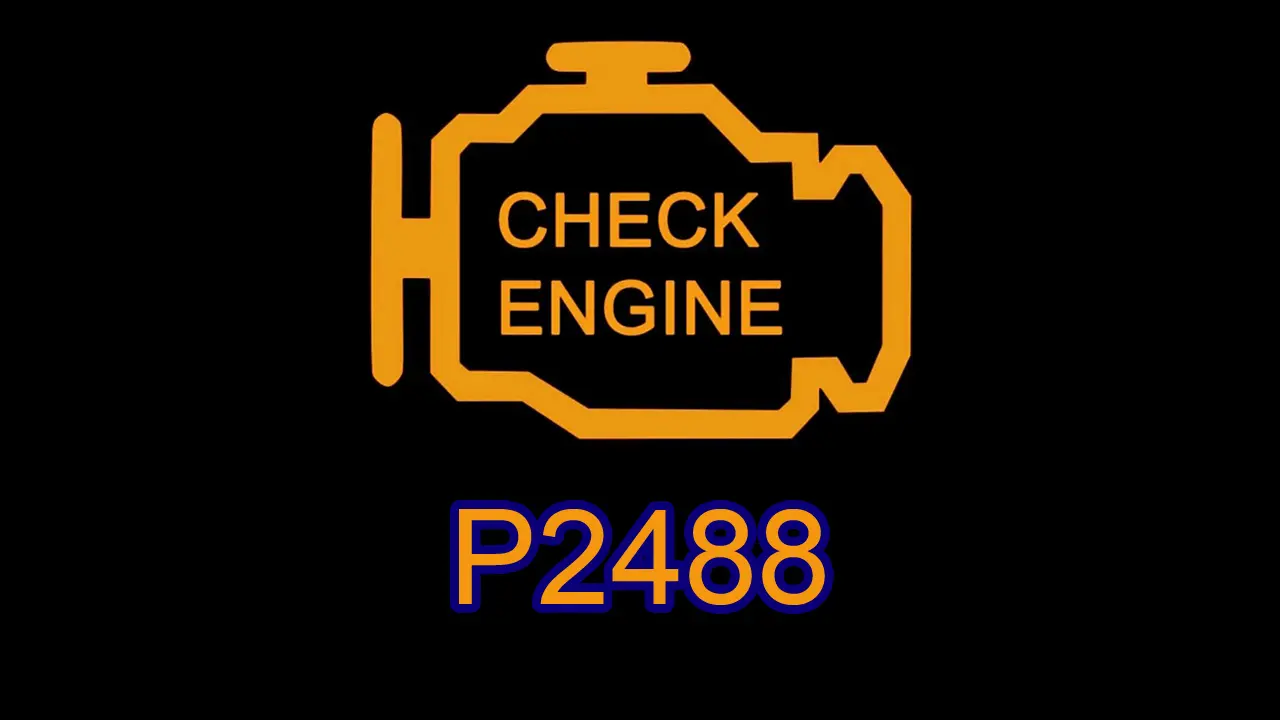
P2488 Exhaust Gas Temperature Sensor Circuit Range/Performance Bank 2 Sensor 5
P2488 is a generic OBD-II diagnostic trouble code that indicates the Engine Control Module (ECM) has detected that the Exhaust Gas Temperature (EGT) Sensor for Bank 2 Sensor 5 is operating outside its expected performance range. Unlike circuit open, low, or high voltage codes, P2488 means the sensor is still communicating with the ECM, but the signal does not behave as expected when compared with engine operating conditions or readings from other exhaust temperature sensors.
The ECM continuously compares exhaust temperature data from multiple sensors throughout the exhaust system. If the temperature reported by Bank 2 Sensor 5 changes too slowly, too quickly, or remains inconsistent with other sensor readings, the ECM stores code P2488 and illuminates the Check Engine Light.
This fault is common on diesel vehicles equipped with advanced exhaust aftertreatment systems but can also appear on some turbocharged gasoline engines.
What Does P2488 Mean?
Modern engines rely on several Exhaust Gas Temperature sensors to monitor temperatures throughout the exhaust system and protect sensitive emission control components.
These sensors help regulate temperatures in components such as:
-
Turbocharger
-
Diesel Oxidation Catalyst (DOC)
-
Diesel Particulate Filter (DPF)
-
Selective Catalytic Reduction (SCR) catalyst
-
Catalytic converter
Bank 2 refers to the side of a V-type engine opposite Cylinder 1.
Sensor 5 is generally positioned in the downstream section of the exhaust system, often after the SCR catalyst or near the final stages of the emission control system. The exact location varies by vehicle manufacturer.
When the ECM determines that the sensor's response does not match expected operating conditions, it records diagnostic code P2488.
Common Symptoms of P2488
The severity of symptoms depends on how inaccurate the sensor readings become.
Common symptoms include:
-
Check Engine Light illuminated
-
Malfunction Indicator Lamp (MIL) on
-
Reduced engine performance
-
Limp mode activation
-
DPF regeneration interruptions
-
Increased exhaust emissions
-
Reduced fuel economy
-
Emission system warning messages
-
Failed emissions inspection
-
Additional exhaust system diagnostic codes
Some drivers may notice no obvious drivability problems other than the warning light.
Common Causes of P2488
Several electrical, mechanical, and exhaust system problems may cause this code.
Aging or inaccurate exhaust gas temperature sensor
Over time, the sensor may become slow to respond or provide inaccurate temperature readings.
Contaminated sensor tip
Soot, ash, oil residue, or carbon deposits may reduce the sensor's ability to accurately measure exhaust temperatures.
Damaged wiring
The wiring harness may be affected by:
-
Heat damage
-
Melted insulation
-
Chafing
-
Broken conductors
-
Vibration damage
Loose or corroded connectors
Poor electrical connections may create unstable sensor signals.
Exhaust leaks
Leaks near the sensor can alter local exhaust temperatures and affect sensor performance.
Excessive soot accumulation
A partially restricted Diesel Particulate Filter may change exhaust temperatures and confuse sensor diagnostics.
Emission system problems
Faults affecting the DPF, SCR system, DEF injection, or catalytic converter may produce temperature readings outside the expected range.
Engine operating problems
Conditions such as:
-
Fuel injector faults
-
Incorrect air/fuel mixture
-
Turbocharger problems
-
Engine misfires
can alter exhaust temperatures and trigger the code.
ECM software issues
Some manufacturers have released software updates to improve EGT sensor monitoring strategies.
Vehicles Commonly Affected by P2488
P2488 most frequently appears on diesel vehicles with complex emission control systems.
Commonly affected vehicles include:
-
Ford F-Series Power Stroke
-
Ford Transit Diesel
-
Chevrolet Silverado Duramax
-
GMC Sierra Duramax
-
Ram 2500 Cummins
-
Ram 3500 Cummins
-
Mercedes-Benz Sprinter
-
Mercedes-Benz GLE Diesel
-
BMW X5 Diesel
-
BMW X3 Diesel
-
Audi Q7 TDI
-
Volkswagen Touareg TDI
-
Volkswagen Amarok
-
Land Rover Discovery
-
Range Rover Sport Diesel
-
Jeep Grand Cherokee EcoDiesel
-
Nissan Navara
-
Toyota Land Cruiser Diesel
-
Isuzu D-Max
-
Mitsubishi L200
Some turbocharged gasoline engines equipped with multiple exhaust temperature sensors may also experience this fault.
How Is P2488 Diagnosed?
Accurate diagnosis focuses on determining whether the sensor is responding correctly under changing engine conditions.
Check for additional trouble codes
Related codes involving:
-
Other EGT sensors
-
DPF
-
SCR system
-
NOx sensors
-
Oxygen sensors
may provide important diagnostic clues.
Inspect the sensor and wiring
Technicians examine the sensor and harness for:
-
Heat damage
-
Burned wiring
-
Loose connectors
-
Corrosion
-
Broken insulation
Inspect the exhaust system
The exhaust should be checked for:
-
Leaks
-
Cracks
-
Loose clamps
-
Damage near the sensor location
Review live scan data
A professional scan tool allows comparison of temperature readings from every EGT sensor.
A faulty Sensor 5 may display:
-
Delayed temperature response
-
Unrealistic temperature changes
-
Readings inconsistent with nearby sensors
-
Temperature values that remain fixed despite changing engine load
Measure sensor resistance
Resistance testing can determine whether the sensor remains within manufacturer specifications.
Perform circuit testing
Voltage and continuity tests verify that the wiring between the sensor and ECM is functioning correctly.
How to Fix P2488
The repair depends on the underlying cause identified during diagnosis.
Common repairs include:
-
Replacing the faulty exhaust gas temperature sensor
-
Cleaning a contaminated sensor when permitted by the manufacturer
-
Repairing damaged wiring
-
Replacing damaged wiring harnesses
-
Cleaning corroded electrical connectors
-
Repairing exhaust leaks
-
Repairing DPF or SCR system faults
-
Correcting fuel system or turbocharger problems
-
Updating ECM software if a manufacturer update is available
-
Replacing the ECM in rare cases of internal failure
After repairs are completed, the diagnostic code should be cleared and the vehicle should be road-tested to confirm that the sensor operates normally.
Can You Drive With P2488?
The vehicle may remain drivable, but it is not advisable to ignore the problem.
An improperly functioning exhaust gas temperature sensor may prevent the ECM from accurately controlling the emission system.
Possible consequences include:
-
Disabled DPF regeneration
-
Excessive soot accumulation
-
Increased emissions
-
Reduced engine efficiency
-
Limp mode activation
-
Additional emission-related fault codes
If the vehicle enters limp mode or displays multiple emission warnings, repairs should be carried out as soon as possible.
Is P2488 a Serious Code?
Yes. P2488 is considered a moderately serious diagnostic trouble code.
Although it usually does not cause immediate engine damage, inaccurate exhaust temperature monitoring can eventually contribute to:
-
Diesel Particulate Filter blockage
-
SCR system inefficiency
-
Catalytic converter stress
-
Increased emissions
-
Reduced engine performance
-
Expensive exhaust aftertreatment repairs
Early diagnosis significantly reduces the risk of secondary component failures.
How to Prevent P2488
Routine maintenance helps keep the exhaust temperature monitoring system operating correctly.
Recommended preventive measures include:
-
Inspect exhaust wiring during scheduled maintenance.
-
Repair damaged heat shields promptly.
-
Replace damaged wiring insulation immediately.
-
Secure wiring away from hot exhaust components.
-
Repair exhaust leaks without delay.
-
Maintain the DPF and SCR systems according to manufacturer recommendations.
-
Investigate Check Engine Lights as soon as they appear.
-
Keep the engine properly tuned to prevent abnormal exhaust temperatures.
Regular inspection of the exhaust system and emission components helps ensure accurate temperature monitoring and reliable operation.
Final Thoughts
P2488 Exhaust Gas Temperature Sensor Circuit Range/Performance Bank 2 Sensor 5 indicates that the ECM has detected an exhaust gas temperature sensor whose performance no longer matches expected operating conditions. Unlike open, low, or high circuit faults, this code typically points to inaccurate or inconsistent sensor behavior rather than a complete electrical failure. Common causes include a deteriorating sensor, contaminated sensor tip, damaged wiring, exhaust leaks, DPF or SCR system issues, or engine operating problems that affect exhaust temperature.
Prompt diagnosis and repair restore accurate exhaust temperature monitoring, ensure proper operation of emission control systems, improve engine efficiency, and help prevent long-term damage to components such as the DPF, catalytic converter, SCR catalyst, and turbocharger.