TR
TR EN
EN

Ways to Save Money on Car Repair Costs
One of the most frustrating parts of owning a car is dealing with unexpected repair bills. As a vehicle gets older, the battery, alternator, water pump, fuel pump, braking system, sensors, electronic modules, exhaust system, and many other components can eventually wear out or fail.
Regular maintenance is one of the best ways to control these costs, but it is not the only way. Understanding your warranty coverage, choosing the right repair shop, handling some simple maintenance jobs yourself when appropriate, and knowing when it may be more economical to replace an aging vehicle can make a significant difference to your overall car ownership costs.
1- If Your Car Is Still Under Warranty, Use the Authorized Service
One of the first things you should know after buying a new car is exactly what is covered by its warranty.
Warranty periods and mileage limits vary depending on the manufacturer, model, and market. Some vehicles have relatively short warranty periods, while some manufacturers offer longer warranties or additional coverage for certain components.
If a problem occurs while your vehicle is still covered by the manufacturer's warranty, the first step should generally be to contact an authorized service center.
For example, if an electronic module, sensor, or mechanical component fails because of a manufacturing defect and the problem is covered by the warranty, the manufacturer may cover the required parts and labor.
However, not every maintenance operation is covered by warranty.
Engine oil, filters, brake pads, tires, and other normal wear items are generally considered maintenance items rather than warranty repairs. The exact terms depend on the manufacturer and warranty agreement.
If your vehicle develops a problem while it is still under warranty, avoid having major repairs performed elsewhere before checking with the authorized service. Depending on the circumstances and local warranty terms, outside repairs or unsuitable parts could create complications with warranty coverage.
2- Take an Out-of-Warranty Vehicle to a Good Independent Repair Shop
Once the manufacturer's warranty has expired, you do not necessarily have to use an authorized dealer for every repair.
Authorized dealerships have important advantages. They may have access to manufacturer-specific diagnostic equipment, technical information, software updates, service procedures, and factory support.
However, their labor rates and original parts prices can sometimes make repairs considerably more expensive, particularly on older vehicles.
A reputable independent repair shop can often perform the same type of repair for less money.
The key word here is reputable.
Do not choose a repair shop simply because it offers the lowest price. A good independent workshop should have:
-
Experienced technicians
-
Appropriate diagnostic equipment
-
Up-to-date software and tools
-
Knowledge of your vehicle's make and model
-
Electrical and electronic diagnostic capabilities
-
Proper repair procedures
-
Clear parts and labor pricing
-
A reasonable warranty on its work
Modern cars are much more dependent on electronics than older vehicles. Reading an OBD fault code with a basic scanner is not always enough to identify the actual cause of a problem.
Live data, electrical measurements, actuator tests, wiring checks, and manufacturer-specific diagnostic equipment may sometimes be necessary.
You May Be Able to Supply the Parts Yourself
In some cases, you can save money by purchasing the replacement part yourself and paying the repair shop only for the labor.
For example, if you can find a genuine, OEM, or high-quality aftermarket component at a significantly better price than the workshop's parts price, it may be worth comparing the two options.
However, discuss this with the repair shop before buying anything.
Some workshops do not install customer-supplied parts, while others may install them but provide no warranty for the part itself.
You must also make sure that the part is actually compatible with your exact vehicle.
Buying a cheaper component for the wrong engine, transmission, model year, or equipment level is not a saving. It simply creates another expense.
Ask About the Replaced Parts
When an expensive component is replaced, you can ask the repair shop to show you the old part and, where possible, return it to you.
This can be particularly useful when dealing with expensive mechanical or electronic components.
You should make your request before the repair begins. In some cases, however, the old component may need to be retained for warranty inspection, manufacturer analysis, or another legitimate reason.
A Failed Part Does Not Always Need to Be Replaced
Another important way to reduce repair costs is to determine whether a component actually needs to be replaced.
Some parts must be replaced when they fail, while others may be repairable, cleanable, or affected by another problem.
Electrical connectors, wiring, certain mechanical components, and some smaller parts can sometimes be repaired instead of completely replaced.
However, safety and reliability should always come first.
Brake systems, steering components, airbag systems, fuel systems, and critical engine components are not areas where a cheap temporary repair should be chosen simply to save money.
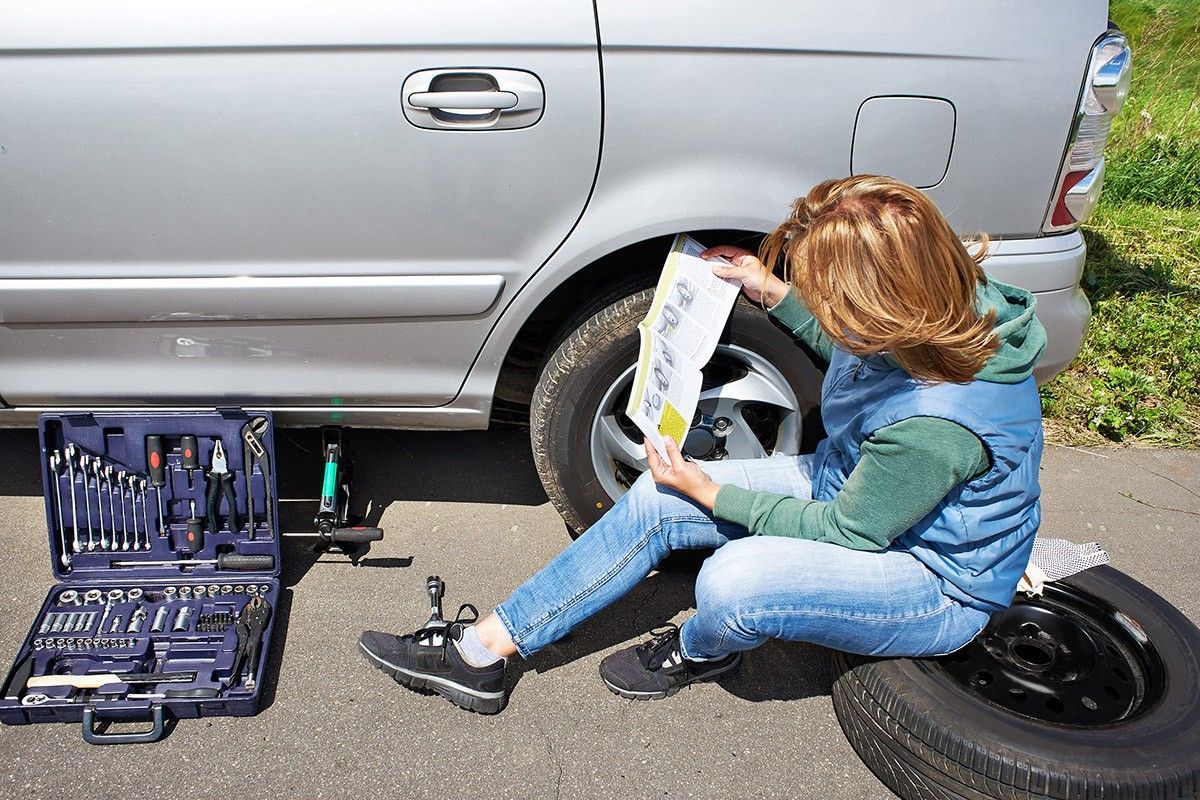
3- If You Have the Knowledge, Do Some Repairs Yourself
Some basic maintenance operations can be performed by vehicle owners who have the necessary knowledge, tools, and experience.
Depending on the vehicle, jobs such as replacing:
-
Air filters
-
Cabin filters
-
Wiper blades
-
Certain bulbs
-
Spark plugs
-
Battery
-
Some sensors
-
Certain hoses
-
Some belts
may be relatively straightforward.
However, there is an important difference between being able to replace a part and knowing that the part is actually faulty.
For example, seeing an engine fault code related to a sensor does not automatically mean that the sensor itself has failed.
The actual problem could be:
-
Wiring
-
A connector
-
Power supply
-
Ground connection
-
Reference voltage
-
Another sensor
-
A mechanical problem
-
An ECU or communication issue
Replacing parts randomly can quickly become more expensive than taking the vehicle to a professional in the first place.
Don't Attempt Repairs Beyond Your Ability
Working underneath a vehicle, servicing brakes, removing suspension components, working on airbags, or handling fuel systems can be dangerous without the correct knowledge and equipment.
The same applies to timing belt replacement and major engine or transmission repairs.
There is nothing wrong with doing simple jobs yourself when you know what you are doing.
But if you are unsure about a repair, trying to fix it yourself can turn a relatively inexpensive problem into a much larger repair bill.
Saving money is only useful if the repair is done correctly.
4- Consider Getting Rid of an Aging Vehicle After Saving Enough Money
This may be the most important point.
No matter how well a vehicle is maintained, components eventually reach the end of their service life.
As a car gets older and accumulates more mileage, several components may begin requiring replacement around the same period.
An older vehicle may eventually need repairs involving:
-
Battery
-
Alternator
-
Starter motor
-
Water pump
-
Fuel pump
-
Brake calipers
-
Brake discs and rotors
-
Suspension components
-
Sensors
-
Electronic control modules
-
Air-conditioning components
-
Catalytic converter
-
Exhaust pipes
-
Muffler
-
Turbocharger
-
Clutch
-
Transmission components
Some of these repairs may not be particularly expensive individually.
The problem begins when several components fail within a relatively short period.
You might replace the alternator today, the fuel pump a few months later, then discover that the catalytic converter, suspension, air-conditioning system, or electronic modules also require expensive repairs.
At that point, the total annual repair cost can become difficult to justify.
Think Carefully Before Paying for an Engine or Transmission Rebuild
One of the biggest financial decisions with an older vehicle is whether to repair or replace a major component.
An engine rebuild can be expensive. The same is true for an automatic transmission rebuild, particularly on modern and technically complex transmissions.
Before approving a major repair, consider:
How much is the vehicle currently worth?
How much will the repair cost?
How long do you intend to keep the vehicle?
Are other expensive repairs likely to be needed soon?
Will the repair significantly improve the vehicle's reliability?
A major repair does not automatically mean that the vehicle should be sold. If the car is otherwise in excellent condition and the repair will give it many more years of reliable service, repairing it may make financial sense.
But if the vehicle already has multiple expensive problems, putting a large amount of money into it may not be the best decision.
Mileage Is Not the Only Thing That Matters
High mileage does not automatically mean that a vehicle is no longer worth keeping.
A well-maintained car that has mostly been driven on highways may be in better mechanical condition than a lower-mileage vehicle that has spent its entire life in heavy stop-and-go traffic.
However, as mileage increases, more components naturally approach the end of their service life.
Driving conditions also matter.
A vehicle used primarily in city traffic may experience greater wear on components such as:
-
Brakes
-
Clutch
-
Automatic transmission
-
Engine cooling system
-
Suspension
-
Steering components
For this reason, the vehicle's maintenance history and usage conditions are just as important as the number on the odometer.
When Should You Consider Selling an Older Car?
There is no universal mileage or age at which every vehicle should be sold.
For example, a vehicle that has spent most of its life in heavy city traffic may become expensive to maintain around 150,000 km, while a well-maintained vehicle used mostly for long-distance driving may remain reliable beyond 200,000 km.
These figures should not be treated as strict rules.
The condition of the vehicle matters more than a specific number.
Age also matters. Once a vehicle reaches around eight years old or more, age-related failures can become increasingly common. Rubber components, seals, hoses, electrical components, cooling-system parts, suspension components, and electronic systems can all deteriorate over time.
That does not mean an eight-year-old car must be sold. It means that its future maintenance costs should be considered carefully.
Don't Wait Until the Car Becomes a Financial Burden
An older vehicle may be running perfectly today.
But when deciding whether to keep it, you should also consider what is likely to happen over the next one or two years.
If major maintenance items such as the timing belt, clutch, turbocharger, transmission, catalytic converter, suspension, or electronic modules are approaching the end of their expected service life, their potential costs should be included in your calculation.
A car can still work perfectly while becoming increasingly expensive to own.
This is why sometimes the most economical time to sell a vehicle is before several major repairs arrive at the same time, rather than after the repair bills have already accumulated.
Regular Maintenance Still Saves Money
Deciding to eventually sell an aging vehicle does not mean that you should stop maintaining it.
Regular engine oil and filter changes, correct coolant, proper transmission maintenance, brake servicing, and other scheduled maintenance can extend the life of major components.
Good maintenance can delay expensive failures, improve reliability, and preserve the vehicle's resale value.
However, maintenance cannot make mechanical components last forever.
Eventually, batteries, water pumps, alternators, brake components, sensors, electronic modules, exhaust components, suspension parts, and other systems will need repair or replacement.
The goal is not to avoid spending money on the car completely.
The goal is to keep the total cost of ownership under control.
The Best Way to Save Money on Car Repairs
There is no single trick that will eliminate car repair costs.
The best approach is to use the right strategy at the right stage of the vehicle's life.
If the vehicle is under warranty, make use of the warranty coverage. Once the warranty expires, find a trustworthy independent repair shop. Compare parts and labor prices, but do not sacrifice quality simply to get the lowest quote.
If you have the knowledge and equipment, perform simple maintenance jobs yourself. However, do not replace parts randomly without first identifying the actual cause of the problem.
Most importantly, keep an eye on the vehicle's long-term repair costs.
There comes a point when continuously repairing an aging vehicle may no longer make financial sense. If major engine or transmission work is approaching and several other expensive components are also showing signs of wear, putting that money toward a newer and more reliable vehicle may be the better financial decision.
Sometimes the cheapest repair is not repairing the car at all—it is knowing when it is time to move on.