TR
TR EN
EN

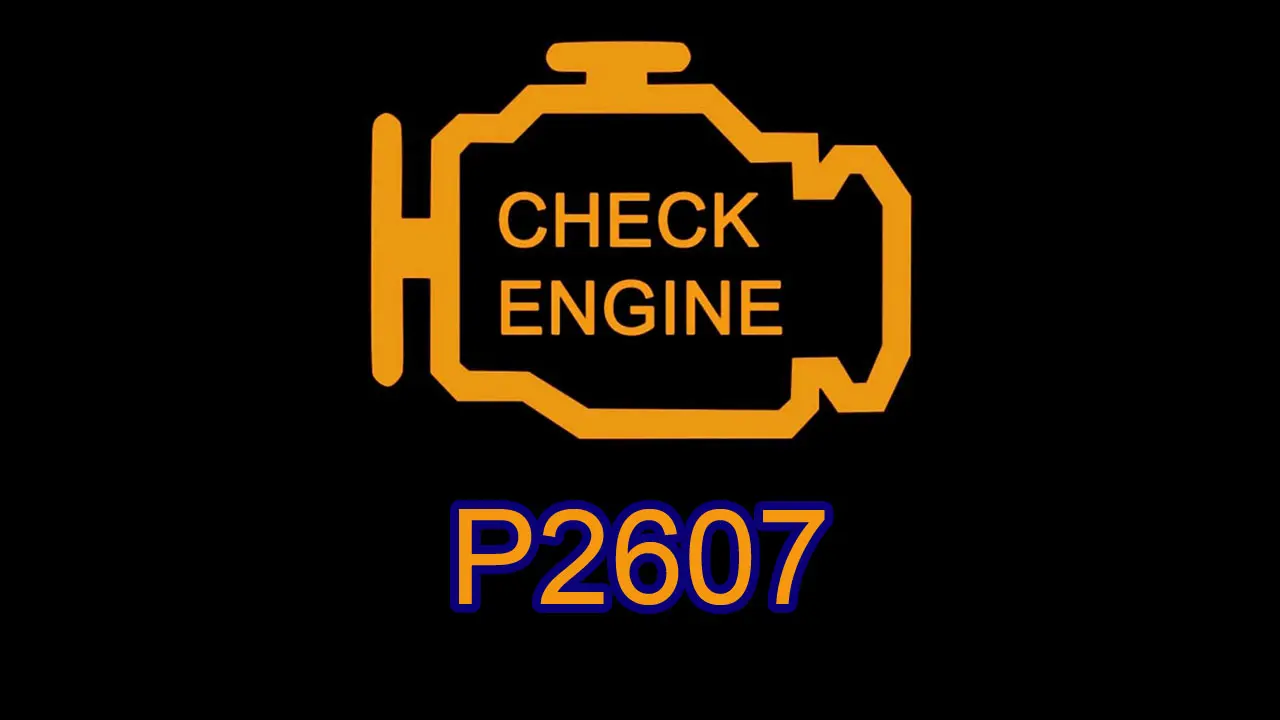
P2607 Intake Air Heater "B" Circuit Low
P2607 is a diagnostic trouble code that indicates the engine control module (ECM/PCM) has detected a low electrical condition in the Intake Air Heater "B" circuit.
The intake air heater is primarily used on diesel engines and certain applications where additional intake-air heating is required during cold starting. By heating the incoming air, the system helps improve combustion conditions when the engine and intake air are cold.
When P2607 is stored, the problem is not automatically the heater element itself. The low circuit condition can be caused by the heater, relay, fuse, wiring, connector, ground connection, or the control circuit.
The important diagnostic point is that the control module is seeing an electrical value in the "B" circuit that is lower than the expected operating level.
What Is Intake Air Heater "B"?
Some engines use more than one intake air heating element or more than one control circuit. The manufacturer identifies these circuits using designations such as "A" and "B."
The exact meaning of "B" depends on the vehicle's electrical architecture. It may refer to a second heater element, a separate heating circuit, or a specific control and monitoring path.
For this reason, the exact location and wiring of Intake Air Heater "B" should be identified using the vehicle-specific wiring diagram and service information rather than assuming that every vehicle uses the same configuration.
What Causes P2607?
Several electrical and component-related problems can cause P2607.
Faulty intake air heater
The heater element may have an internal electrical fault, abnormal resistance, or damage that prevents it from operating correctly.
Faulty heater relay
The intake air heater can draw significant current, so many systems use a dedicated relay or high-current switching circuit. Burned, damaged, or high-resistance relay contacts can reduce the voltage available to the heater circuit.
Wiring problems
Damaged wiring, a short to ground, excessive resistance, a partially broken conductor, or poor routing can cause the monitored circuit voltage to fall below the expected level.
Damaged or corroded connectors
Loose terminals, corrosion, moisture, bent pins, or heat-damaged connectors can create resistance in the circuit and cause a low electrical reading.
Blown fuse or power supply problem
A blown fuse or an interruption in the main power supply can prevent the heater circuit from receiving the required electrical power.
Poor ground connection
A damaged or corroded ground connection can interfere with proper current flow and cause abnormal voltage readings when the heater is commanded on.
Control module problem
In less common cases, the ECM/PCM or its heater control driver may be defective. However, the power supply, ground, relay, wiring, connectors, and heater should be tested before condemning the control module.
Symptoms of P2607
The symptoms can vary depending on the engine design and how heavily the vehicle relies on the intake air heater.
Possible symptoms include:
-
Check Engine Light
-
Longer cranking time during cold starts
-
Difficult cold starting
-
Rough idle when the engine is cold
-
Engine stalling shortly after a cold start
-
Increased exhaust smoke during cold operation
-
Intake air heater not operating
-
Reduced cold-start performance
-
Poorer engine operation in very cold weather
In warmer conditions, the vehicle may start and drive normally because the intake air heater is less important once the engine and surrounding air are warm.
Can P2607 Cause a Hard Start?
Yes, particularly in cold weather.
The intake air heater helps raise the temperature of the air entering the engine during conditions where additional heat is required for combustion.
If the "B" heater circuit is not operating correctly, the engine may require more cranking time before starting. Depending on the engine design and outside temperature, the driver may also notice rough running or increased smoke immediately after startup.
The effect can be relatively minor in moderate temperatures but much more noticeable during very cold starts.
How Is P2607 Diagnosed?
A proper diagnosis should begin with a complete scan of the vehicle.
The technician should record P2607 and check for any other stored or pending fault codes. Freeze-frame data should also be reviewed when available.
Important information can include:
-
Engine coolant temperature
-
Intake air temperature
-
Ambient temperature
-
System voltage
-
Engine operating conditions when the code was stored
The next step is to identify exactly which component and electrical path the manufacturer defines as Intake Air Heater "B."
Check the Fuse and Relay
The heater's fuse and relay should be inspected before replacing the heater element.
The fuse should not simply be judged by visual inspection. The circuit should be tested to determine whether the correct power supply is available.
The relay should also be checked on both its control side and its high-current side.
A relay can appear to operate normally while its contacts have excessive resistance. Under load, this resistance can cause a significant voltage drop and prevent the heater from receiving sufficient voltage.
If a fuse repeatedly blows, replacing it without finding the cause is not a proper repair. The circuit should be checked for a short circuit or excessive current draw.
Testing the Intake Air Heater
The heater element should be tested according to the manufacturer's specifications.
Resistance can be measured with a multimeter, but resistance alone does not always provide a complete diagnosis.
A heater can show a seemingly acceptable static resistance value while still failing to operate correctly under load.
Depending on the vehicle, diagnosis may include checking:
-
Heater resistance
-
Supply voltage
-
Ground quality
-
Voltage drop under load
-
Current draw
-
Control signal
-
Heater operation during an active test
Voltage and resistance specifications vary between manufacturers and engine applications, so vehicle-specific service data should always be used.
Check the Wiring and Connectors
Wiring and connector problems are important possibilities with P2607.
The intake air heater circuit is located in an area exposed to engine heat, vibration, moisture, and contamination. Over time, these conditions can damage wiring and electrical connections.
Inspect for:
-
Broken wires
-
Damaged insulation
-
Short circuits to ground
-
Loose terminals
-
Corroded pins
-
Burned connectors
-
Moisture contamination
-
Wiring rubbed against engine components
-
High-resistance connections
A continuity test can help identify an open circuit, but continuity alone does not prove that the circuit can carry the required current.
A wire may show continuity with a multimeter and still produce excessive voltage drop when the heater is operating under load.
For this reason, voltage-drop testing is particularly valuable when diagnosing P2607.
Check the Control Signal
The diagnosis should not stop at the heater element.
The ECM/PCM should be checked to determine whether it is commanding the "B" circuit correctly and whether the monitored feedback is consistent with the expected operating condition.
If the scan tool supports active tests, the intake air heater system may be commanded on manually.
This can help determine whether:
-
The control module is sending the required command
-
The relay responds correctly
-
The heater receives power
-
The heater draws the expected current
-
The feedback signal changes as expected
The exact test procedure depends on the vehicle.
Can P2607 Be Intermittent?
Yes.
Electrical problems do not always occur continuously.
P2607 may appear intermittently because of:
-
Engine vibration
-
Temperature changes
-
Moisture
-
Corrosion
-
Loose terminals
-
Damaged wiring
-
Relay contact problems
-
Movement of the wiring harness
For an intermittent fault, freeze-frame information and live data can be particularly useful.
A connector that works correctly when stationary may lose contact when the engine moves or when the surrounding temperature changes.
Does P2607 Mean the Heater Must Be Replaced?
Not necessarily.
P2607 identifies a low electrical condition in the Intake Air Heater "B" circuit. It does not automatically prove that the heater element has failed.
The actual cause may be:
-
Intake air heater
-
Relay
-
Fuse
-
Power supply
-
Ground connection
-
Wiring
-
Connector
-
Control circuit
-
ECM/PCM driver
Replacing the heater without testing the rest of the circuit can result in an unnecessary repair while the original electrical problem remains.
The correct approach is to test the circuit systematically and replace only the component that has been confirmed to be faulty.
Can You Drive With P2607?
The effect of P2607 depends on the vehicle and the operating conditions.
If the engine starts and runs normally, the code may primarily affect cold-start performance. However, the problem can become more noticeable in low temperatures.
Possible problems include:
-
Extended cranking
-
Difficult cold starting
-
Rough operation immediately after startup
-
Increased smoke
-
Cold-start stalling
If the engine is difficult to start, repeatedly stalls, or other serious warning symptoms are present, the vehicle should be diagnosed rather than continuing to operate it normally.
How Is P2607 Repaired?
The repair depends entirely on the cause identified during testing.
Possible repairs include:
-
Replacing the intake air heater
-
Replacing the heater relay
-
Repairing the power supply
-
Replacing a blown fuse after correcting the underlying fault
-
Repairing damaged wiring
-
Repairing or replacing damaged connectors
-
Cleaning or repairing ground connections
-
Correcting a short to ground
-
Repairing the control circuit
-
Testing or repairing the ECM/PCM when all external components and wiring are confirmed to be correct
After the repair, the fault code should be cleared and the vehicle should be tested under the conditions in which the heater is expected to operate.
The Key Point in P2607 Diagnosis
P2607 indicates that the control module has detected a low electrical condition in the Intake Air Heater "B" circuit.
The heater itself is only one part of the system. The complete circuit—including the fuse, relay, power supply, ground, wiring, connectors, heater element, control signal, and feedback circuit—may need to be evaluated.
Because intake air heaters can draw substantial current, voltage-drop and loaded circuit testing can provide much more useful information than a simple continuity check.
The goal of diagnosing P2607 is not simply to clear the code. The important step is finding why the "B" circuit is producing a low electrical condition and correcting the actual cause.