TR
TR EN
EN

What Is a Heater Blower Motor? Heater Blower Motor Failure Symptoms
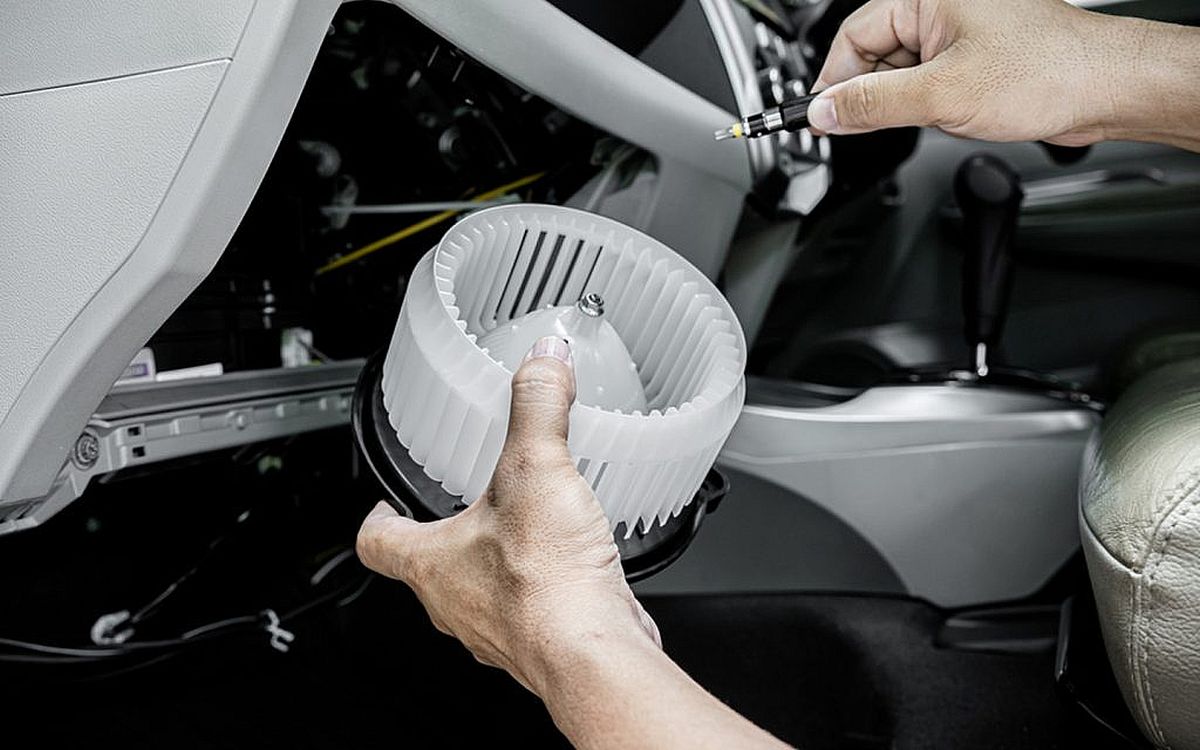
The heater blower motor is the electric motor responsible for moving air through the vehicle’s heating, ventilation, and air conditioning system. It is commonly called a blower motor or heater blower motor.
When the blower motor operates, it spins a fan wheel that pushes air through the HVAC housing and into the cabin through the ventilation ducts. The blower motor itself does not heat or cool the air. Instead, it creates the airflow needed to move air across the heater core or evaporator and into the passenger compartment.
Therefore, when the blower motor fails, the most obvious problem is usually a lack of airflow from the vents, even if the engine reaches normal operating temperature and the air conditioning system itself is functioning correctly.
What Does the Heater Blower Motor Do?
The blower motor creates airflow inside the vehicle's HVAC system.
Depending on the vehicle, it can provide airflow for:
-
Heating
-
Air conditioning
-
Ventilation
-
Windshield defrosting
-
Footwell heating
-
Dashboard vents
-
Rear passenger ventilation
For example, if the engine is warm but almost no air comes from the vents when the heater is turned on, the problem may not be the heater core. The blower motor, its control circuit, or the airflow system may be responsible.
How Does a Heater Blower Motor Work?
The blower motor converts electrical energy into mechanical rotation.
The motor spins a blower wheel, which moves air through the HVAC housing.
A basic system can be represented as:
Battery → Fuse → Blower control → Blower motor → Blower wheel → HVAC ducts
Modern vehicles can use a more sophisticated control system.
Blower speed may be controlled by:
-
Blower motor resistor
-
Blower resistor pack
-
Electronic blower control module
-
Transistor-based speed controller
-
HVAC control unit
-
BCM or another body-control module
Because of this, a blower motor that does not operate is not necessarily defective itself.
What Are the Symptoms of a Faulty Heater Blower Motor?
A failing blower motor can produce several different symptoms.
Common signs include:
-
Blower does not operate at all
-
Blower works only at certain speeds
-
Blower operates intermittently
-
Blower runs slowly
-
Blower stops at higher speeds
-
Humming or whining noise
-
Rattling or scraping noise
-
Blower speed changes unexpectedly
-
Weak airflow
-
Excessive vibration
-
Blower starts and stops randomly
-
Blower takes time to start
-
Burning electrical smell
The exact symptoms can help determine whether the problem is with the motor, speed-control system, wiring, or another HVAC component.
The Blower Motor Does Not Work at Any Speed
If the blower does not work on any setting, several possibilities should be considered.
Potential causes include:
-
Failed blower motor
-
Blown fuse
-
Faulty relay
-
Loose blower motor connector
-
Broken wire
-
Poor ground connection
-
Faulty blower control module
-
HVAC control panel failure
-
Seized blower motor
-
Electrical supply problem
If the blower previously became slower or noisier and then stopped completely, internal wear of the blower motor becomes more likely.
The Blower Motor Works Only at Certain Speeds
A blower that works on some speeds but not others can indicate a problem with the blower motor resistor or blower speed-control circuit.
In conventional manual HVAC systems, lower blower speeds may be controlled through resistors. If one or more resistor circuits fail, some speeds may stop working while another speed continues to operate.
For example:
-
Low speed does not work
-
Medium speed does not work
-
Higher speed does not work
-
Maximum speed still works
This pattern is commonly associated with a failed blower resistor.
However, not every vehicle uses a traditional resistor. Vehicles with automatic climate control may use an electronic blower control module instead.
The Blower Works Only on Maximum Speed
This is one of the classic symptoms of a failed blower resistor.
The blower motor itself may still be perfectly capable of operating, but the lower-speed circuits are no longer functioning correctly.
However, there is an important point to consider.
If the blower motor has worn bearings or internal mechanical resistance and is drawing excessive current, it can cause the resistor or control module to fail repeatedly.
Therefore, replacing only the resistor may not provide a permanent solution.
The blower motor's current consumption should also be checked.
Humming Noise From the Blower Motor
A humming or whining sound that increases with blower speed can indicate mechanical wear inside the blower motor.
Possible causes include:
-
Worn bearings
-
Worn motor bushings
-
Shaft play
-
Damaged blower wheel
-
Motor imbalance
-
Debris inside the blower housing
If the noise becomes louder as the blower speed increases, the blower motor and wheel should be inspected.
Rattling or Scraping Noise From the Blower
A scraping or rattling sound does not necessarily mean the motor itself is damaged.
Objects can enter the blower housing through the vehicle's air intake system.
Possible debris includes:
-
Leaves
-
Dust
-
Small pieces of plastic
-
Foreign objects
-
Broken filter material
These objects can hit the blower wheel and produce a clicking, rattling, or scraping sound.
If the noise began after servicing the cabin air filter or HVAC system, incorrect installation or debris should also be considered.
The Blower Motor Vibrates
Excessive vibration from the blower can indicate an imbalance in the blower wheel.
Possible causes include:
-
Dirt stuck to the blower wheel
-
Broken fan blade
-
Bent motor shaft
-
Worn motor bearing
-
Incorrectly installed blower wheel
-
Foreign object
-
Loose motor mounting
A badly unbalanced blower can place additional stress on the motor and its mounting points.
The Blower Motor Runs Slowly
A blower motor that gradually becomes weaker or slower should not be ignored.
Possible causes include:
-
Worn blower motor
-
Dry or damaged bearings
-
Motor shaft resistance
-
Dirty blower wheel
-
Low battery voltage
-
Voltage drop in the electrical circuit
-
Poor ground connection
-
Blower control module problem
-
Severely restricted cabin air filter
If the motor is mechanically worn and begins drawing excessive current, it may eventually stop working altogether.
Can a Clogged Cabin Air Filter Damage the Blower Motor?
A severely clogged cabin air filter can significantly restrict airflow.
The blower motor may still be operating normally, but very little air will come out of the vents.
A restricted filter and an electrically failed blower motor are two different problems.
Therefore, if airflow is weak, checking the cabin air filter should be one of the first diagnostic steps.
The evaporator and HVAC air passages should also be considered if the filter is clean but airflow remains poor.
The Blower Motor Works but Almost No Air Comes Out
If you can clearly hear the blower motor running but very little air reaches the vents, the motor itself may not be the problem.
Possible causes include:
-
Clogged cabin air filter
-
Blocked air passage
-
Damaged blower wheel
-
Air distribution door problem
-
Frozen evaporator
-
HVAC housing problem
-
Air duct restriction
Some vehicles use electrically operated air distribution doors. If one of these doors becomes stuck, airflow may be directed incorrectly even though the blower motor is operating normally.
Why Does the Blower Motor Fuse Keep Blowing?
If the blower fuse repeatedly blows, simply replacing the fuse is not a proper repair.
Possible causes include:
-
Blower motor short circuit
-
Excessive motor current
-
Seized blower motor
-
Shorted wiring
-
Damaged connector
-
Faulty blower control module
-
Water or moisture entering the electrical system
Never install a higher-rated fuse to prevent it from blowing.
The fuse is designed to protect the wiring and electrical components. Installing a larger fuse can allow excessive current to flow through the circuit, creating overheating and potentially a fire hazard.
What Happens If the Blower Motor Gets Wet?
The blower motor is often located near the cabin air intake or cabin filter area.
If the HVAC drain system becomes blocked or water enters the air intake area, moisture can reach the blower motor.
This can lead to:
-
Bearing corrosion
-
Electrical connector corrosion
-
Motor seizure
-
Intermittent operation
-
Fuse failure
-
Electrical short circuits
If the blower problem begins after heavy rain or washing the vehicle, possible water intrusion should be investigated.
How Is a Heater Blower Motor Tested?
A proper diagnosis starts by determining exactly when the blower stops working.
The electrical circuit can then be tested systematically.
Check the fuse
The blower fuse should be inspected. If it is blown, the cause of the excessive current should be identified.
Check the power supply
The technician should verify whether the correct voltage reaches the blower motor.
Check the ground
A poor ground can cause slow operation, intermittent operation, or complete failure.
Test the blower motor
The motor can be tested according to the vehicle manufacturer's procedure. Direct battery testing should only be performed when the motor's voltage requirements and wiring configuration are known.
Measure current consumption
A blower motor drawing significantly more current than specified may have mechanical resistance or internal wear.
This test can help distinguish a weak electrical supply from a failing motor.
Can an OBD Scanner Detect a Blower Motor Problem?
Sometimes.
Modern vehicles with electronically controlled HVAC systems can store diagnostic trouble codes related to:
-
Blower motor control
-
Blower speed
-
HVAC control module
-
Blower control module
-
Communication faults
-
Electrical supply problems
Some diagnostic systems can also display the commanded blower speed and actual control information.
However, a conventional blower motor with worn bearings or mechanical damage may not generate an OBD fault code.
Therefore, the absence of an OBD fault code does not prove that the blower motor is healthy.
Is the Blower Motor the Same as the Blower Resistor?
No.
The blower motor is the electric motor that physically rotates the blower wheel.
The blower resistor controls the motor's speed in many conventional HVAC systems.
Modern vehicles may replace the traditional resistor with an electronic blower control module.
This distinction is important because if the blower operates only at certain speeds, replacing the motor may not solve the problem.
Manual and Automatic Climate Control Systems
There can be significant differences between manual and automatic HVAC systems.
In a manual climate control system, blower speed is often selected using a physical switch or rotary control.
In an automatic climate control system, the HVAC control unit may continuously adjust blower speed based on cabin temperature and other sensor inputs.
The system may include:
-
HVAC control module
-
Blower control module
-
Blower motor
-
Temperature sensors
-
Air distribution doors
-
Sunload sensor
-
Cabin temperature sensor
Therefore, a blower that changes speed by itself in an automatic climate system is not necessarily defective.
Should a Blower Motor Be Repaired or Replaced?
The answer depends on the type of failure.
If the problem is caused by leaves or other debris inside the blower housing, cleaning may restore normal operation.
However, replacement is generally more appropriate when the motor has:
-
Worn bearings
-
Excessive shaft play
-
Damaged windings
-
Worn brushes
-
Commutator problems
-
Severe mechanical resistance
-
Burned electrical components
The blower wheel should also be inspected when replacing the motor.
If the original motor failed because of excessive current draw, the electrical control system should be checked before installing the replacement.
What Should Be Checked When Replacing the Blower Motor?
The replacement blower motor must be compatible with the vehicle's:
-
Make
-
Model
-
Model year
-
HVAC system
-
Electrical configuration
The following should also be checked:
-
Blower wheel installation
-
Electrical connector
-
Wiring
-
Ground connection
-
Cabin air filter
-
HVAC housing
-
Water drains
-
Foreign objects
-
Blower vibration
After installation, the blower should be tested at every available speed.
Can You Drive With a Failed Blower Motor?
A vehicle with a failed blower motor may still be mechanically driveable, but the problem can become a significant safety issue.
The most important concern is windshield defrosting.
If the blower does not operate, it may become difficult or impossible to clear condensation, frost, or fog from the windshield.
Poor visibility can make driving dangerous, especially during:
-
Rain
-
Snow
-
Cold weather
-
High humidity
-
Rapid temperature changes
The air conditioning system may also be unable to cool the cabin effectively during hot weather.
Therefore, a failed blower motor should not be treated as merely a comfort problem.
Conclusion
The heater blower motor is a key component of the vehicle's heating, ventilation, and air conditioning system. Its job is to create the airflow that carries heated or cooled air into the passenger compartment.
The most common symptoms of blower motor failure include no airflow, operation at only certain speeds, slow operation, unusual noises, vibration, intermittent operation, and a blower that stops working completely.
However, the blower motor is not always the component at fault. The fuse, relay, blower resistor, electronic control module, wiring, connector, ground, cabin air filter, and HVAC control system should also be inspected.
If the blower operates only at maximum speed, the blower resistor or electronic speed-control module should be investigated. If the motor is noisy, slow, or drawing excessive current, the motor itself may be approaching the end of its service life.
A systematic electrical and mechanical diagnosis is therefore much better than replacing the blower motor immediately based only on the symptom.