TR
TR EN
EN

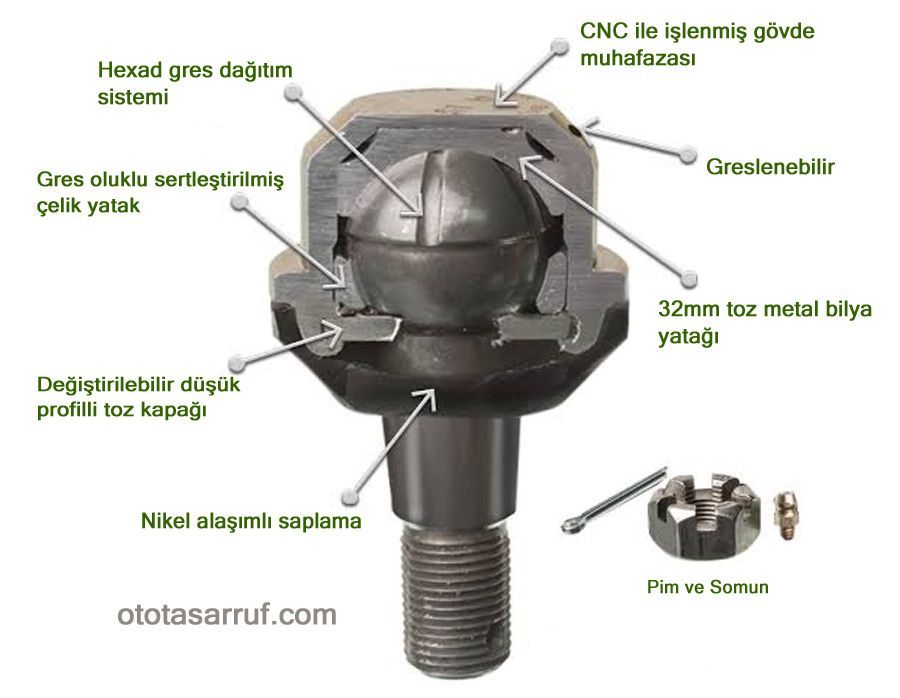
What Is a Ball Joint? What Are the Symptoms of Ball Joint Failure?
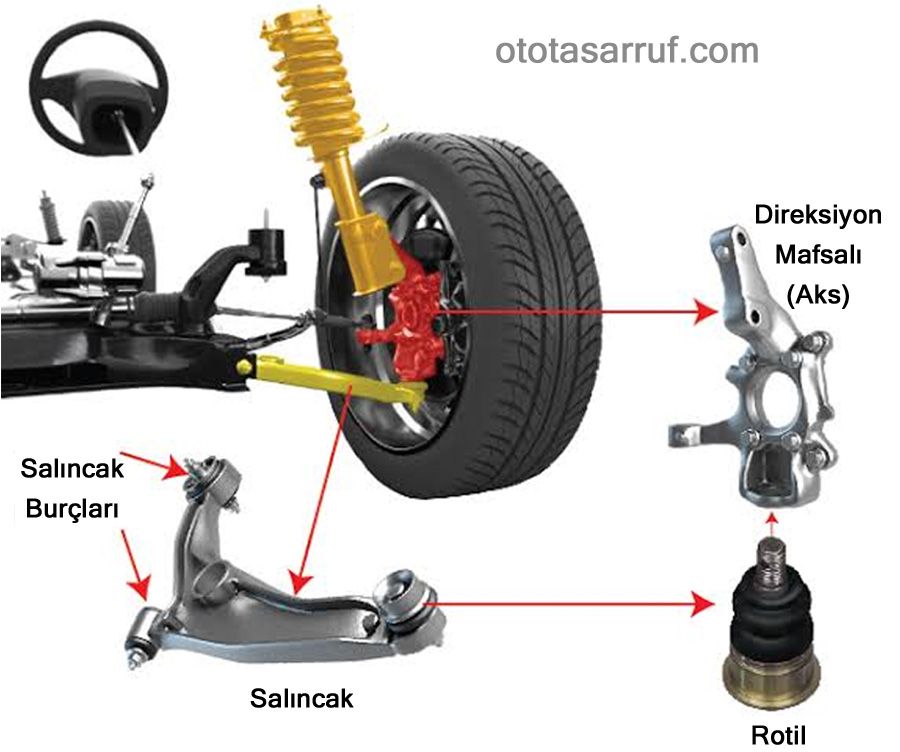
A ball joint is an important component of a vehicle's suspension and steering system. It connects the suspension control arm to the steering knuckle while allowing the wheel assembly to move in different directions.
The ball joint has a ball-and-socket design that allows the suspension to move vertically while the steering system turns the wheel from side to side.
Although relatively small, the ball joint plays a critical role in maintaining proper wheel movement and steering control. When it becomes worn or damaged, it can cause knocking noises, steering play, uneven tire wear, and unstable handling.
What Does a Ball Joint Do?
The main function of a ball joint is to provide a flexible mechanical connection between suspension and steering components.
It allows the steering knuckle to:
-
Move up and down with the suspension
-
Turn left and right with the steering system
-
Maintain a controlled connection with the suspension arm
-
Follow suspension movement without binding
Without this flexible joint, the suspension and steering systems could not move independently as required.
Where Is the Ball Joint Located?
The exact location depends on the vehicle's suspension design.
On many vehicles, the ball joint is located between the control arm and steering knuckle.
Some vehicles have a lower ball joint, while others may have both upper and lower ball joints.
In a MacPherson strut suspension, the lower ball joint commonly connects the lower control arm to the steering knuckle, while the upper portion of the knuckle is connected to the strut assembly.
The design varies considerably between vehicles, so the exact arrangement should be checked for the specific model.
How Does a Ball Joint Work?

A ball joint consists essentially of a spherical stud that moves inside a socket.
The spherical design allows movement in multiple directions while maintaining a secure mechanical connection.
As the vehicle travels over bumps, the suspension moves up and down. The ball joint allows this movement without preventing the steering knuckle from turning.
When the driver turns the steering wheel, the steering knuckle changes direction while the ball joint accommodates the required movement.
This combination of suspension and steering movement is what makes the ball joint so important.
What Are the Symptoms of Ball Joint Failure?
A worn ball joint can produce several noticeable symptoms.
Common signs include:
-
Knocking or clunking noises
-
Steering play
-
Loose steering
-
Vehicle wandering
-
Uneven tire wear
-
Steering vibration
-
Changes in wheel alignment
-
Creaking or squeaking
-
Poor handling over bumps
-
Instability during braking
-
Excessive wheel movement
The symptoms depend on how severely the joint is worn and whether the problem is in the upper or lower ball joint.
Knocking Noise From the Front Suspension
One of the most common symptoms of a worn ball joint is a knocking or clunking sound from the front suspension.
The noise may be noticeable when:
-
Driving over potholes
-
Passing over speed bumps
-
Driving on uneven roads
-
Turning the steering wheel
-
Accelerating or braking
-
Changing direction quickly
When the internal clearance of the ball joint becomes excessive, the suspension can move against the worn joint and create a noticeable knocking sound.
However, several other suspension components can produce similar noises, including control-arm bushings, stabilizer links, tie rods, and strut mounts.
Steering Feels Loose
A worn ball joint can affect the precision of the steering system.
The driver may feel that the vehicle does not respond as precisely to steering input as it normally should.
There may also be a feeling of looseness or instability, particularly when driving over uneven surfaces.
This does not necessarily mean that the steering rack or tie rods are defective. Suspension joints should also be checked.
Excessive Steering Play
Ball-joint wear can contribute to unwanted movement in the steering and wheel assembly.
If the ball joint develops excessive clearance, the steering knuckle may move more than intended.
This can result in:
-
Steering play
-
Delayed steering response
-
Poor directional stability
-
Uneven tire contact
-
Abnormal suspension movement
However, steering play should always be traced to its actual source because several steering and suspension components can produce similar symptoms.
Uneven Tire Wear
A severely worn ball joint can affect the position of the steering knuckle and therefore influence wheel alignment.
This can cause abnormal tire wear, particularly on the front tires.
Possible signs include:
-
Inner-edge wear
-
Outer-edge wear
-
Irregular tread wear
-
Uneven wear between the front tires
Incorrect wheel alignment, worn tie rods, damaged control arms, incorrect tire pressure, and worn suspension components can also cause these symptoms.
Steering Wheel Vibration
A damaged ball joint can sometimes contribute to steering vibration, particularly when combined with other suspension problems.
However, vibration should not automatically be attributed to the ball joint.
Other common causes include:
-
Wheel imbalance
-
Tire deformation
-
Bent wheel
-
Wheel bearing problems
-
Brake disc problems
-
Worn control-arm components
-
Worn steering joints
A complete front-end inspection is therefore necessary.
Creaking or Squeaking
Some ball joints may produce a creaking or squeaking noise when the suspension moves.
This can occur when:
-
The protective boot is damaged
-
Lubrication is lost
-
Dirt enters the joint
-
The internal surfaces become worn
-
The joint begins to bind
Not every noisy ball joint has the same cause, so the joint should be physically inspected.
Damaged Ball Joint Boot
The protective rubber boot is an important part of the ball joint assembly.
It keeps:
-
Dirt
-
Water
-
Dust
-
Road debris
away from the internal joint surfaces while helping retain lubrication.
If the boot tears, contaminants can enter the joint and grease can escape.
A damaged boot does not always mean the ball joint is already completely worn, but it can accelerate the wear process significantly.
Can a Ball Joint Cause the Car to Pull to One Side?
A worn ball joint can contribute to unstable steering and changes in wheel geometry, but pulling to one side is not a specific ball-joint symptom.
Other possible causes include:
-
Incorrect wheel alignment
-
Uneven tire pressure
-
Different tire conditions
-
Brake caliper problems
-
Worn suspension components
-
Steering-system problems
If pulling is accompanied by knocking or excessive wheel movement, the suspension should be inspected carefully.
Ball Joint and Wheel Alignment
The ball joint is part of the suspension geometry.
When it becomes severely worn, the steering knuckle can move differently from its intended position.
This can affect alignment angles and cause abnormal tire wear or handling changes.
After replacing a significantly worn suspension component, checking wheel alignment is often advisable, especially if the component affects steering geometry.
What Causes Ball Joint Failure?
Ball joints can wear for several reasons.
Common causes include:
-
High mileage
-
Rough roads
-
Frequent pothole impacts
-
Damaged protective boot
-
Loss of lubrication
-
Water and dirt contamination
-
Corrosion
-
Excessive suspension loads
-
Poor-quality replacement parts
-
Accident or impact damage
Road conditions have a major influence on ball-joint life.
Vehicles regularly driven on badly damaged roads may experience considerably faster suspension-joint wear.
Can a Ball Joint Fail Without Making Noise?
Yes.
A ball joint can develop measurable play without producing an obvious knocking sound.
Some drivers may notice only:
-
Loose steering
-
Poor handling
-
Uneven tire wear
-
Steering instability
For this reason, the absence of noise does not guarantee that the ball joint is healthy.
Regular suspension inspections are particularly important when the vehicle has high mileage or has been driven extensively on rough roads.
How Is a Ball Joint Diagnosed?
A technician can inspect the ball joint for excessive play and physical damage.
Depending on the suspension design, the vehicle may be lifted and the wheel and suspension components checked for unwanted movement.
The inspection can include:
-
Checking ball-joint play
-
Inspecting the rubber boot
-
Checking for grease leakage
-
Examining the ball-joint stud
-
Checking the control arm
-
Inspecting the steering knuckle
-
Checking related suspension joints
-
Checking wheel bearing play
The correct inspection method depends on the vehicle manufacturer's specifications.
Some suspension designs require the wheel to be loaded or unloaded in a particular way during the inspection.
Can You Check a Ball Joint Yourself?
A basic visual inspection is possible, but determining whether the joint has excessive play is best done using the correct procedure for the vehicle.
A damaged boot, missing grease, corrosion, or obvious physical damage can be identified visually.
However, determining whether the internal clearance is within specification may require professional equipment and knowledge of the suspension design.
Incorrectly lifting or supporting a vehicle can also be dangerous, so proper lifting equipment and safety procedures are essential.
Ball Joint vs. Tie-Rod End
Ball joints and tie-rod ends are often confused because both are spherical joints located near the wheel.
They have different functions.
The ball joint connects suspension components to the steering knuckle and allows suspension and steering movement.
The tie-rod end connects the steering linkage to the steering knuckle and transfers steering movement.
Both can cause:
-
Steering play
-
Knocking
-
Poor handling
-
Uneven tire wear
This is why a proper inspection is necessary before identifying the failed component.
Ball Joint vs. Control Arm Bushing
The ball joint and control-arm bushing are also different components.
The ball joint provides a pivoting connection between the control arm and steering knuckle.
The control-arm bushing attaches the control arm to the vehicle chassis or subframe while allowing controlled movement and reducing vibration.
A worn control-arm bushing can produce symptoms very similar to a worn ball joint.
Can a Bad Ball Joint Affect Braking?
Yes.
A severely worn ball joint can allow unwanted movement of the steering knuckle and suspension during braking.
The driver may notice:
-
Vehicle instability
-
Steering movement during braking
-
Pulling
-
Knocking
-
Changes in steering feel
However, brake-related pulling and vibration can have many other causes, so the complete braking and suspension systems should be checked.
Is It Safe to Drive With a Bad Ball Joint?
A severely worn ball joint can be a serious safety problem.
The ball joint is part of the mechanical connection between the wheel assembly and suspension.
If the joint develops excessive play or fails completely, the steering knuckle can move far beyond its intended range.
In an extreme failure, the wheel can move out of its normal position, potentially resulting in a loss of steering control.
For this reason, a ball joint with significant play or structural damage should not be ignored.
What Happens If a Ball Joint Breaks?
A complete ball-joint failure can cause major suspension movement.
Depending on the suspension design, the wheel assembly may move dramatically relative to the control arm.
Possible consequences include:
-
Loss of steering control
-
Wheel misalignment
-
Suspension collapse
-
Damage to the control arm
-
Damage to the axle or brake components
-
Tire damage
-
Vehicle immobilization
A completely failed ball joint can therefore be much more dangerous than a minor worn joint.
Can a Ball Joint Be Repaired?
In most cases, the ball joint itself is replaced rather than repaired.
Depending on the vehicle, the ball joint may be:
-
A separate replaceable component
-
Pressed into the control arm
-
Bolted to the control arm
-
Integrated into the control arm assembly
If the ball joint is integrated into the control arm, the entire control arm may need to be replaced.
The appropriate repair depends on the vehicle's design and the manufacturer's service procedure.
Should Ball Joints Be Replaced in Pairs?
Not every vehicle requires ball joints to be replaced as a pair.
However, if one side has significant wear, the other side should also be inspected carefully.
Both sides have usually experienced similar mileage and road conditions.
If both joints show comparable wear, replacing them together can prevent having to perform another suspension repair shortly afterward.
How Long Does a Ball Joint Last?
There is no universal replacement interval for ball joints.
Their service life depends on:
-
Vehicle weight
-
Suspension design
-
Mileage
-
Road conditions
-
Driving style
-
Protective boot condition
-
Lubrication
-
Replacement-part quality
Some ball joints can last well over 100,000 kilometers, while others may require replacement considerably earlier under severe driving conditions.
Regular inspection is more useful than relying on a fixed mileage interval.
How Can Ball Joint Problems Be Prevented?
Ball-joint wear cannot be completely prevented because it is a moving mechanical component, but its service life can often be extended.
Useful practices include:
-
Inspect suspension components regularly.
-
Replace damaged ball-joint boots promptly when applicable.
-
Avoid severe pothole impacts whenever possible.
-
Maintain correct tire pressure.
-
Repair other suspension problems before they place additional loads on the joint.
-
Use quality replacement parts.
-
Check wheel alignment when necessary.
-
Do not ignore suspension noises.
-
Have excessive steering play investigated.
Final Thoughts
The ball joint is a critical suspension and steering component that allows the steering knuckle to move while maintaining a secure connection with the suspension.
Knocking noises, steering play, loose handling, uneven tire wear, vibration, creaking, and abnormal wheel movement can all be signs of ball-joint wear.
However, these symptoms can also be caused by tie-rod ends, control-arm bushings, wheel bearings, stabilizer links, steering components, and other suspension parts.
The most important warning sign is excessive play in the ball joint. Severe wear can eventually compromise the mechanical connection between the suspension and wheel assembly and, in extreme cases, lead to a serious loss of vehicle control.
For this reason, a suspected ball-joint problem should be diagnosed promptly. Replacing a worn ball joint before it reaches the point of structural failure is far safer and generally less expensive than dealing with the consequences of a complete suspension failure.