TR
TR EN
EN

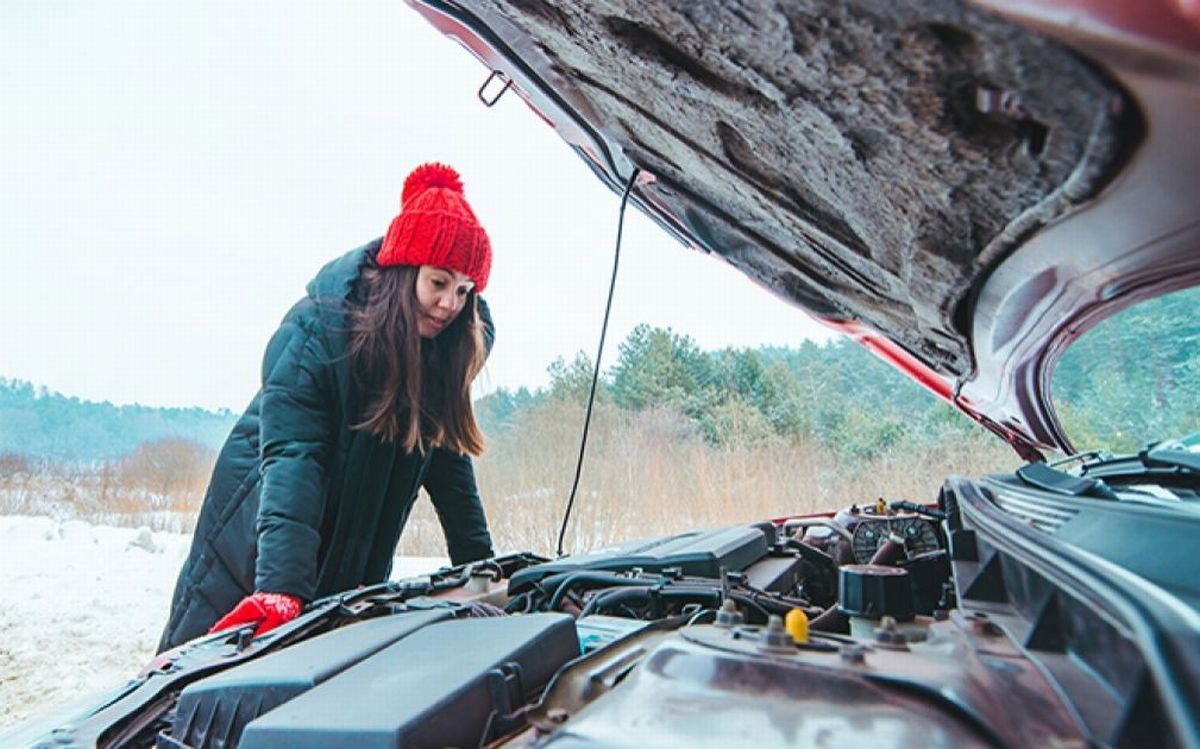
Why Won’t a Car Start in Cold Weather?
Cold weather can make starting a car significantly more difficult. The problem may be caused by the battery, engine oil, fuel system, ignition system, sensors, or even moisture and ice affecting electrical connections.
A car that starts normally in warm weather but struggles or fails to start when temperatures drop should not automatically be blamed on the cold itself. Low temperatures often expose a component that was already weak.
The most common causes are a weak battery, increased engine-oil resistance, fuel-delivery problems, glow-plug issues on diesel engines, ignition problems on gasoline engines, and incorrect sensor readings.
Weak or Discharged Battery
The battery is one of the most common reasons a car will not start in cold weather.
Low temperatures reduce a battery's ability to deliver current. At the same time, a cold engine requires more effort from the starter because the engine oil becomes more viscous.
This creates a double problem:
-
The battery produces less available starting power.
-
The starter requires more electrical power.
A battery that works adequately at 15–20°C may therefore fail to start the engine at temperatures below freezing.
Typical symptoms include:
-
Starter motor turns slowly
-
Clicking sound when trying to start
-
Dashboard lights become noticeably dim
-
Electronics reset during starting
-
Engine almost starts but cannot crank fast enough
-
No response from the starter
Battery age is also important. A battery that is already several years old may have significantly reduced cold-cranking performance.
Low Battery Voltage
Sometimes the battery is not completely dead but its voltage drops too far during cranking.
Modern vehicles are particularly sensitive to low voltage because many control modules need stable electrical power during startup.
Low voltage can cause:
-
Warning lights
-
Multiple fault codes
-
Immobilizer-related problems
-
Electronic throttle problems
-
ECU communication errors
-
Starter problems
If a car behaves strangely only during cold starts, checking battery voltage before and during cranking can provide valuable information.
Engine Oil Becomes Thicker
Engine oil becomes more viscous as temperature decreases.
When the engine is cold, the starter must overcome greater resistance from the oil and internal engine components.
If the wrong oil viscosity is being used, this effect can become more pronounced.
For example, an engine designed for a low-temperature oil specification may crank noticeably slower if an excessively thick oil is installed.
Using the correct oil viscosity and manufacturer specification is therefore particularly important in regions with cold winters.
Starter Motor Problems
A weak starter motor can become much more obvious in cold weather.
The starter has to turn the engine fast enough for the engine-management system to establish the correct conditions for combustion.
A worn starter may:
-
Turn slowly
-
Make clicking or grinding noises
-
Work intermittently
-
Draw excessive current
-
Fail completely when temperatures are low
If the battery tests healthy but the engine still cranks slowly, the starter and its electrical connections should be checked.
Corroded Battery Terminals and Ground Connections
Cold weather can expose poor electrical connections.
Corrosion or looseness at the:
-
Battery terminals
-
Engine ground strap
-
Chassis ground
-
Starter cable
-
Positive battery cable
can create significant voltage loss during cranking.
The battery may appear healthy when tested separately, yet insufficient voltage may reach the starter.
Fuel Problems in Gasoline Engines
Gasoline engines can experience starting problems when the fuel system is not operating correctly.
Possible causes include:
-
Weak fuel pump
-
Low fuel pressure
-
Clogged fuel filter
-
Faulty fuel-pressure regulator
-
Leaking injector
-
Incorrect fuel mixture
-
Water contamination in the fuel system
Cold starting requires the engine-management system to provide the appropriate fuel mixture.
If fuel pressure is already marginal, the problem may become much more noticeable in cold weather.
Diesel Cars and Glow Plug Problems
Diesel engines are particularly sensitive to low temperatures.
Unlike gasoline engines, diesel engines rely heavily on compression-generated heat for ignition. Glow plugs help raise the temperature inside the combustion chamber during cold starting.
Faulty glow plugs can cause:
-
Difficult cold starting
-
Long cranking
-
Rough running immediately after startup
-
White or gray smoke
-
Engine shaking
-
Glow-plug warning light
A diesel engine that starts normally when warm but struggles badly when cold should have its glow plugs and glow-plug control system checked.
Glow Plug Control Module Failure
Replacing the glow plugs is not always enough.
The glow-plug control module, wiring, fuses, and electrical supply also need to be checked.
If several glow plugs fail simultaneously, an electrical or control problem may sometimes be more likely than multiple plugs failing at exactly the same time.
Ignition Problems in Gasoline Engines
Gasoline engines require a strong spark to ignite the air-fuel mixture.
Cold starting can reveal weaknesses in the ignition system.
Potential causes include:
-
Worn spark plugs
-
Faulty ignition coils
-
Damaged ignition wiring
-
Poor electrical connections
-
Incorrect spark-plug gap
A weak ignition system may cause misfires or prolonged cranking when the engine is cold.
Faulty Coolant Temperature Sensor
The engine-control unit needs to know the engine's temperature to determine how much fuel and ignition advance to use during startup.
The coolant temperature sensor provides this information.
If the sensor incorrectly reports that a cold engine is already warm, the ECU may not provide the appropriate cold-start fueling.
Possible symptoms include:
-
Difficult cold starting
-
Long cranking
-
Rough idle
-
Poor fuel economy
-
Check Engine Light
-
Normal starting once the engine is warm
A temperature reading that does not match the actual ambient and engine temperature is an important diagnostic clue.
Crankshaft Position Sensor Problems
The crankshaft position sensor tells the ECU the crankshaft's position and rotational speed.
If the ECU cannot obtain a reliable crankshaft signal, it may not properly control fuel injection and ignition.
A failing sensor can sometimes behave differently at different temperatures.
Possible symptoms include:
-
Long cranking
-
Intermittent no-start
-
Sudden engine shutdown
-
Difficult starting when cold
-
Difficult starting when hot
-
RPM signal problems
Temperature-dependent sensor failures can be difficult to diagnose without live data.
Camshaft Position Sensor Problems
The camshaft position sensor also plays an important role in engine synchronization.
A weak or failing sensor can cause:
-
Long cranking
-
Hard starting
-
Rough running
-
Misfires
-
Reduced engine performance
-
Check Engine Light
In some vehicles, the engine may still start with a faulty camshaft sensor but take considerably longer to do so.
Moisture and Frozen Components
Cold weather often comes with high humidity, snow, rain, or condensation.
Moisture can affect:
-
Ignition coils
-
Spark-plug wells
-
Electrical connectors
-
Wiring
-
Fuse boxes
-
Sensors
If moisture freezes inside or around a connector, an intermittent electrical problem may become much more noticeable.
Frozen Fuel or Water Contamination
Water contamination in the fuel system can cause problems in very cold conditions.
Water can freeze and restrict fuel flow or interfere with fuel-system components.
This is particularly relevant for diesel vehicles because diesel fuel itself can also experience low-temperature flow problems.
Diesel Fuel Can Gel in Very Cold Weather
Diesel fuel contains paraffin compounds that can crystallize at sufficiently low temperatures.
This can restrict fuel filters and fuel lines.
As a result, a diesel vehicle may:
-
Crank normally but not start
-
Start and then stall
-
Lose power
-
Have restricted fuel flow
-
Develop fuel-filter blockage
Modern diesel fuels are formulated with seasonal requirements in mind, but extremely low temperatures can still create problems, especially when the wrong fuel specification is used.
Clogged Fuel Filter
A partially blocked fuel filter may not cause obvious problems in normal weather.
However, cold fuel can flow less easily, making an existing restriction more problematic.
A clogged filter can therefore cause difficult starting, hesitation, or loss of power in cold conditions.
Frozen or Restricted Air Intake
Snow, ice, or severe frost can sometimes restrict the air intake.
A completely blocked intake is uncommon, but vehicles exposed to heavy snow or ice should be checked for:
-
Frozen intake ducts
-
Snow around the airbox
-
Blocked filters
-
Ice around the intake opening
Throttle Body Problems
A dirty or malfunctioning electronic throttle body can cause starting and idle problems.
In cold weather, deposits or mechanical resistance may become more noticeable.
Possible symptoms include:
-
Difficult starting
-
Rough idle
-
Stalling immediately after starting
-
Poor throttle response
-
Check Engine Light
However, a no-start condition should not automatically be blamed on the throttle body. Battery voltage, fuel pressure, ignition, crankshaft signal, and engine synchronization should be checked first.
Frozen Exhaust System
In certain circumstances, condensation can accumulate in the exhaust system and freeze.
A severely restricted exhaust can make starting difficult or impossible.
This is uncommon, but it can occur in vehicles that are frequently used for very short journeys.
Engine Compression Problems
Cold weather can make an existing mechanical problem more apparent.
Low compression can make cold starting particularly difficult because the engine needs sufficient compression heat for combustion.
Possible causes include:
-
Worn piston rings
-
Valve leakage
-
Valve-seat problems
-
Head-gasket problems
-
Excessive engine wear
-
Incorrect valve timing
A vehicle that starts easily when warm but requires very long cranking when cold may warrant a compression or cylinder-leakage test.
Timing Problems
Incorrect camshaft timing can also cause difficult starting.
Potential causes include:
-
Stretched timing chain
-
Timing-belt installation error
-
Weak chain tensioner
-
Variable valve timing problems
-
Camshaft actuator problems
If difficult starting is accompanied by timing-chain rattling or synchronization fault codes, the timing system should be investigated.
Immobilizer and Key Problems
Sometimes the engine is mechanically capable of starting but the immobilizer prevents it from running.
Cold weather can occasionally expose weaknesses in:
-
Key battery
-
Keyless-entry system
-
Immobilizer antenna
-
Vehicle battery
-
Electronic control modules
If the starter operates normally but the engine does not start and an immobilizer warning appears, the security system should be checked.
Why Does the Car Crank but Not Start?
This distinction is extremely important.
If the starter does not turn the engine, focus first on:
-
Battery
-
Battery connections
-
Starter motor
-
Starter relay
-
Fuses
-
Ground connections
-
Starting-system electronics
If the starter turns the engine normally but the engine does not start, investigate:
-
Fuel pressure
-
Fuel injection
-
Spark
-
Glow plugs on diesel engines
-
Crankshaft sensor
-
Camshaft sensor
-
Engine synchronization
-
Immobilizer
-
Compression
This simple distinction can prevent unnecessary parts replacement.
Why Does the Car Start With a Jump Start?
If the vehicle starts immediately with a jump start, the battery and starting circuit become strong suspects.
Possible causes include:
-
Weak battery
-
Low battery charge
-
Excessive parasitic drain
-
Charging-system problem
-
Poor battery connections
-
Starter drawing excessive current
If the same problem happens again the following morning, the battery should not simply be jump-started repeatedly. The battery, alternator, and electrical system should be tested.
Why Does the Car Start After Several Attempts?
Repeated attempts can sometimes eventually produce enough fuel pressure or allow a marginal electrical or sensor condition to work temporarily.
This may point toward:
-
Weak fuel pump
-
Fuel-pressure loss
-
Injector leakage
-
Sensor problems
-
Weak battery
-
Ignition problems
-
Glow-plug problems
The fact that the engine eventually starts does not mean the underlying problem has disappeared.
How to Prevent Cold-Weather Starting Problems
Several basic maintenance practices can significantly reduce cold-start problems.
Check the battery before winter.
A battery-load test can reveal problems that a simple voltage measurement may miss.
Use the correct engine oil.
Follow the manufacturer's recommended viscosity and specification for the climate and engine.
Keep the fuel system maintained.
Replace fuel filters at the appropriate interval and use fuel from reliable sources.
Check glow plugs on diesel engines.
If a diesel vehicle has increasingly difficult cold starts, do not wait for the glow-plug warning light before having the system inspected.
Maintain the ignition system.
Gasoline engines should have properly specified spark plugs and healthy ignition coils.
Check the cooling-temperature sensor.
The sensor should report a temperature that makes sense relative to the actual engine temperature.
Keep battery terminals and grounds clean.
A good battery cannot compensate for a poor electrical connection.
What Temperature Is Too Cold for a Car?
There is no single temperature at which every car will stop starting.
A well-maintained modern vehicle can generally start in very cold conditions, while an older vehicle with a weak battery or mechanical problem may struggle at relatively modest temperatures.
The actual starting capability depends on:
-
Battery condition
-
Oil viscosity
-
Engine design
-
Fuel type
-
Glow-plug condition
-
Ignition system
-
Engine compression
-
Fuel quality
-
Ambient temperature
-
Vehicle maintenance
Therefore, if a car suddenly refuses to start after a cold night, the temperature itself may only be the trigger that exposed an existing weakness.
Final Thoughts
Cold weather does not normally make a healthy car impossible to start. Instead, low temperatures place greater demands on almost every part of the starting and combustion process.
The battery and starter system are the first areas to consider when the engine cranks slowly. If the engine cranks at normal speed but refuses to start, attention should shift toward fuel, spark, glow plugs, sensors, engine synchronization, and compression.
For diesel vehicles, glow plugs, fuel quality, fuel-filter condition, and low-temperature diesel performance deserve particular attention. For gasoline engines, the battery, ignition system, fuel pressure, spark plugs, and temperature sensors are common areas to inspect.
The most important point is to avoid replacing parts based solely on the fact that the weather is cold. Proper diagnosis of battery voltage, cranking speed, fuel pressure, ignition, sensor signals, and fault codes can usually identify why the vehicle refuses to start.