TR
TR EN
EN

What Is an AdBlue Injector? Symptoms, Causes, Diagnosis and Solutions
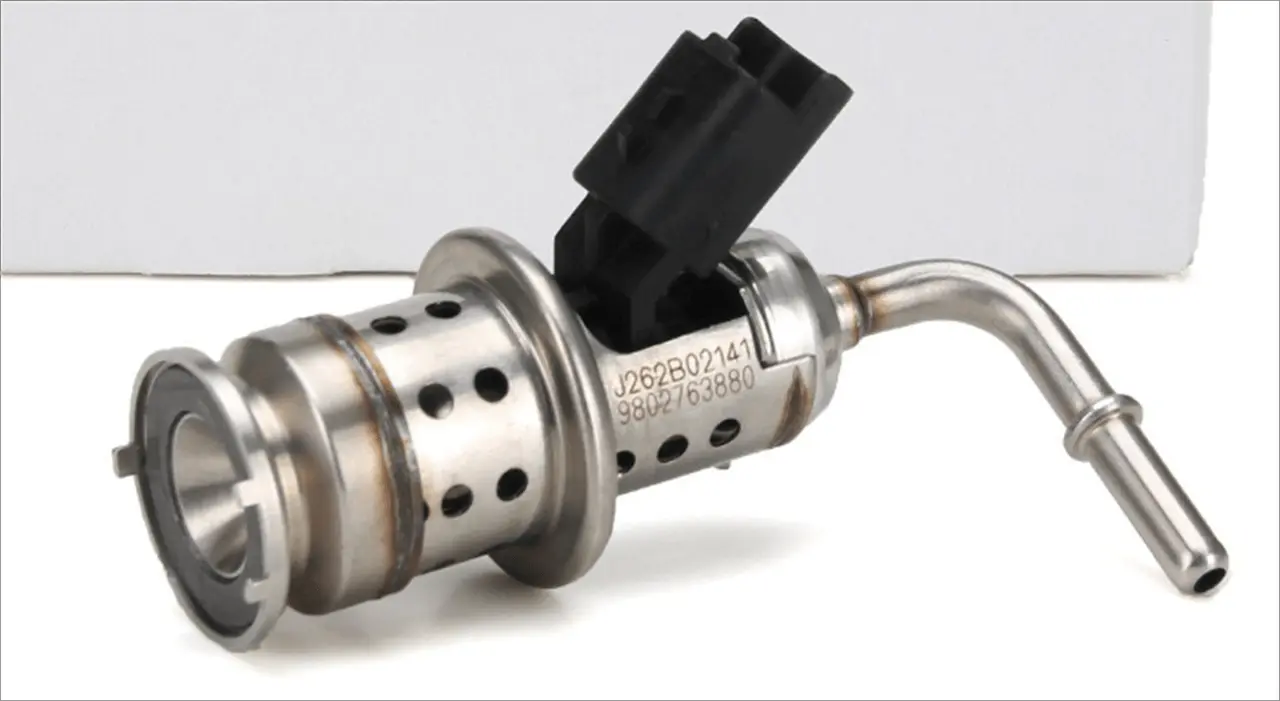
The AdBlue injector, also known as the DEF injector, SCR injector or reductant injector, is an important component of modern diesel emission control systems.
Its main function is to inject a precisely controlled amount of AdBlue into the exhaust system. The AdBlue fluid then helps the vehicle's Selective Catalytic Reduction (SCR) system reduce harmful nitrogen oxide emissions, commonly known as NOx.
A faulty AdBlue injector can cause increased emissions, warning messages, reduced engine power and, in some cases, an engine restart restriction.
Because AdBlue systems are closely monitored by the vehicle's engine and emission control modules, even a relatively small injector problem can trigger diagnostic trouble codes and cause the Check Engine Light or AdBlue warning to appear.
What Is an AdBlue Injector?
The AdBlue injector is a valve or nozzle located in the exhaust aftertreatment system.
It sprays AdBlue into the exhaust gases upstream of the SCR catalyst.
AdBlue is a fluid consisting of high-purity urea and demineralized water. It is not diesel fuel and is stored in a separate AdBlue or DEF tank.
The injector delivers the correct amount of fluid according to the vehicle's operating conditions.
Depending on the vehicle and engine design, the AdBlue injector may be controlled by an SCR control module, engine control module or integrated emission control system.
What Does an AdBlue Injector Do?
The main function of the injector is to deliver a precisely metered amount of AdBlue into the exhaust system.
When AdBlue is exposed to the high temperature of the exhaust system, it undergoes a chemical process that ultimately produces ammonia.
The ammonia then reacts with nitrogen oxides inside the SCR catalyst.
This process converts NOx into less harmful substances, mainly nitrogen and water.
In simplified form:
AdBlue is injected into the exhaust → Heat converts the fluid into ammonia-containing compounds → The SCR catalyst uses ammonia to reduce NOx emissions
The correct amount of AdBlue is critical.
Too little AdBlue may result in insufficient NOx reduction.
Too much AdBlue can cause deposits, crystallization and other SCR system problems.
Where Is the AdBlue Injector Located?
The AdBlue injector is located in the exhaust system.
It is normally positioned:
-
Upstream of the SCR catalyst
-
After the diesel particulate filter on many vehicles
-
Before or within the SCR exhaust treatment assembly
-
In the exhaust pipe where the exhaust gases and AdBlue can mix correctly
The exact location depends on the vehicle and exhaust system design.
The injector is usually connected to an AdBlue supply line from the tank or dosing module.
Because the injector operates in a high-temperature environment, access and replacement procedures vary considerably between vehicle models.
How Does an AdBlue Injector Work?
The vehicle's control system continuously monitors engine operating conditions and exhaust emissions.
Important information may include:
-
Engine speed
-
Engine load
-
Exhaust temperature
-
Exhaust mass flow
-
NOx sensor readings
-
SCR catalyst temperature
-
AdBlue temperature
-
AdBlue system pressure
-
AdBlue level
Using this information, the control system calculates how much AdBlue is required.
The dosing system then sends AdBlue from the tank toward the injector.
The injector opens when commanded and sprays the required quantity into the exhaust stream.
The system does not normally inject AdBlue continuously.
Instead, the injection quantity and timing are carefully controlled according to operating conditions.
What Happens If the AdBlue Injector Fails?
If the injector cannot deliver the correct amount of AdBlue, the SCR system may no longer be able to reduce NOx emissions correctly.
The vehicle's control module may detect:
-
Insufficient reductant flow
-
Excessive reductant flow
-
Incorrect dosing
-
Injector circuit problems
-
Injector blockage
-
AdBlue pressure problems
-
NOx conversion efficiency problems
Depending on the vehicle, the result may include:
-
Check Engine Light
-
AdBlue warning
-
SCR system warning
-
Reduced engine power
-
Reduced performance
-
Emissions fault messages
-
Countdown warnings
-
Engine restart prevention after a certain distance or after the engine is switched off
The exact warning strategy varies by manufacturer and vehicle model.
Common Symptoms of a Faulty AdBlue Injector
A defective AdBlue injector can produce several warning signs.
Common symptoms include:
-
Check Engine Light
-
AdBlue or DEF warning message
-
SCR system warning
-
Emissions system warning
-
Reduced engine power
-
Reduced performance
-
Limp mode
-
Increased NOx emissions
-
AdBlue consumption abnormalities
-
Engine restart restriction warnings
-
Crystallized deposits around the injector
-
Diagnostic trouble codes
-
Failed emissions testing
The vehicle may continue to run normally during the early stages of an injector problem.
This is because an AdBlue injector failure usually affects the emission control system rather than directly interrupting fuel injection into the engine.
AdBlue Warning Light or SCR System Warning
One of the most common signs of an AdBlue injector or dosing-system problem is an emissions warning.
Depending on the manufacturer, the dashboard may display messages such as:
-
AdBlue system fault
-
SCR system fault
-
Emissions system malfunction
-
Check emissions system
-
Urea system fault
-
DEF system fault
-
No engine restart in a certain distance
-
Engine start impossible in a certain distance
These warnings do not automatically prove that the injector itself has failed.
The fault may also involve the AdBlue tank, pump, heater, pressure sensor, NOx sensor, SCR catalyst, supply line or electrical system.
Reduced Engine Power
Some vehicles may enter a reduced-power mode when the emission control system detects a serious SCR or AdBlue fault.
The purpose is to prevent continued operation outside the vehicle's emission-control requirements.
The driver may notice:
-
Reduced acceleration
-
Lower engine power
-
Poor response under load
-
Restricted engine performance
However, not every AdBlue injector fault will immediately cause limp mode.
The vehicle's response depends on the type of fault and manufacturer-specific control strategy.
Engine Restart Restriction
A serious or persistent SCR system fault may eventually trigger a restart restriction.
This is one of the most concerning symptoms for drivers.
The vehicle may display a warning indicating that the engine will not restart after a specified distance or number of engine starts.
Once the condition reaches the final restriction stage, the engine may start normally while running but may not be allowed to start again after it is switched off until the SCR fault is correctly repaired.
This strategy is not necessarily caused by the injector alone.
It can be triggered by various problems within the AdBlue and SCR system.
AdBlue Injector Crystallization
One of the most common physical problems associated with AdBlue injectors is crystallization.
When AdBlue is exposed to certain conditions, the water in the solution can evaporate, leaving behind urea crystals.
These white crystalline deposits can form around:
-
The injector nozzle
-
The injector tip
-
The exhaust pipe
-
The mixing area
-
AdBlue supply connections
Crystallization can interfere with the injector spray pattern or eventually block the nozzle.
A partially blocked injector may still operate but may not deliver or atomize the fluid correctly.
Symptoms of a Blocked AdBlue Injector
A blocked or partially restricted injector can cause:
-
Low reductant flow
-
SCR efficiency faults
-
NOx-related fault codes
-
Check Engine Light
-
AdBlue system warning
-
White crystallized deposits
-
Incorrect AdBlue dosing
-
Emissions problems
The actual fault may develop gradually.
For this reason, a vehicle can sometimes continue operating normally before a warning light eventually appears.
Can a Faulty AdBlue Injector Leak?
Yes.
A damaged injector or connection can potentially leak AdBlue.
Leaks may produce visible white crystallized deposits as the water content evaporates.
Possible causes include:
-
Damaged injector body
-
Damaged seals
-
Loose connection
-
Cracked AdBlue line
-
Incorrectly installed injector
-
Internal injector failure
Any visible crystallization should be investigated because it can indicate a leak or incorrect dosing problem.
Common Causes of AdBlue Injector Failure
Several problems can cause the injector to malfunction.
Crystallization
Urea deposits can restrict or block the injector nozzle.
Contaminated AdBlue
Contaminated or incorrect fluid can damage the dosing system or block components.
Electrical failure
The injector's internal electrical components may fail.
Damaged wiring
Heat, vibration or physical damage can affect the electrical circuit.
Connector corrosion
Moisture and corrosion can cause poor electrical contact.
AdBlue pressure problems
A faulty pump or dosing module may prevent sufficient fluid from reaching the injector.
Frozen or damaged AdBlue
AdBlue can freeze at low temperatures. Although many vehicles have heated systems, heater failures can cause problems.
Mechanical damage
Road debris, heat or improper servicing can damage the injector or its connections.
Can Poor-Quality AdBlue Damage the Injector?
Yes.
The AdBlue system is designed to use fluid that meets the correct specification.
Contaminated or incorrect fluid can cause:
-
Crystallization
-
Blockages
-
Corrosion
-
Sensor problems
-
Pump damage
-
Injector damage
Diesel fuel, water, coolant or other substances should never be added to the AdBlue tank.
Even a small amount of contamination can affect the entire SCR system.
AdBlue Injector Electrical Problems
An AdBlue injector can develop electrical faults.
Depending on the injector design, possible problems include:
-
Open circuit
-
Short circuit
-
High circuit resistance
-
Low circuit resistance
-
Damaged wiring
-
Loose connector
-
Corrosion
-
Internal solenoid failure
If the diagnostic trouble code specifically indicates an injector circuit fault, the wiring and electrical supply should be tested before replacing the injector.
A good injector cannot operate correctly if it does not receive the required electrical command.
AdBlue Injector vs AdBlue Pump
The AdBlue injector and pump have different functions.
The AdBlue pump moves or pressurizes AdBlue from the tank through the supply system.
The AdBlue injector meters and sprays the fluid into the exhaust system.
A problem with the pump can prevent the injector from receiving sufficient fluid.
As a result, a low-dosing fault does not automatically mean that the injector is blocked or defective.
AdBlue Injector vs NOx Sensor
The AdBlue injector and NOx sensor also perform different functions.
The AdBlue injector adds reductant to the exhaust system.
The NOx sensor measures nitrogen oxide levels in the exhaust.
A faulty NOx sensor can incorrectly report an SCR efficiency problem and may lead to diagnostic trouble codes that appear to be related to AdBlue dosing.
For this reason, the complete SCR system should be diagnosed before replacing the injector.
AdBlue Injector vs SCR Catalyst
The SCR catalyst is responsible for the chemical conversion of NOx.
The injector supplies the AdBlue required for this process.
A damaged or ineffective SCR catalyst can produce low NOx conversion even when the injector is working correctly.
Likewise, a blocked injector can prevent the catalyst from receiving sufficient ammonia.
These components must therefore be diagnosed as part of the same system.
How Is an AdBlue Injector Diagnosed?
A proper diagnosis should begin with a full diagnostic scan.
The technician may check:
-
Stored diagnostic trouble codes
-
Freeze-frame data
-
AdBlue pressure
-
AdBlue tank level
-
Injector activation
-
Injector electrical circuit
-
NOx sensor readings
-
Exhaust temperatures
-
SCR catalyst performance
-
Dosing quantity
-
System pressure
-
Pump operation
The injector and surrounding exhaust system should also be inspected for visible crystallization.
Visual Inspection
Visual inspection can reveal important clues.
The technician may check for:
-
White urea crystals
-
Injector leaks
-
Damaged supply lines
-
Loose electrical connectors
-
Heat damage
-
Corrosion
-
Physical damage to the injector
A visible white deposit around the injector does not automatically mean that the injector itself has failed.
The deposit may also originate from a damaged line, connection or incorrect sealing.
Injector Activation Test
Some diagnostic tools can perform an actuator test.
The control module commands the AdBlue injector to operate while the technician monitors the system's response.
This can help confirm:
-
Whether the injector receives an electrical command
-
Whether the injector activates
-
Whether the dosing system responds
-
Whether the injector circuit is functioning
The test must be performed according to the vehicle manufacturer's diagnostic procedure.
AdBlue should not be manually sprayed into the exhaust system.
AdBlue System Pressure Testing
If the injector does not receive enough AdBlue, the problem may be elsewhere in the system.
Possible causes include:
-
Faulty AdBlue pump
-
Pressure loss
-
Blocked supply line
-
Frozen AdBlue
-
Dosing module fault
-
Faulty pressure sensor
-
Tank heater failure
Therefore, the supply pressure should be checked where appropriate.
Replacing the injector without confirming that AdBlue is actually reaching it can lead to unnecessary repairs.
Can an AdBlue Injector Be Cleaned?
Whether an AdBlue injector can be cleaned depends on the specific vehicle and injector design.
External crystallized deposits may sometimes be removed using manufacturer-approved cleaning procedures.
However, an injector with internal mechanical or electrical damage may require replacement.
The use of unapproved chemicals or aggressive cleaning methods can damage the injector, seals or exhaust aftertreatment system.
For this reason, the correct manufacturer-approved procedure should be followed.
Should the AdBlue Injector Be Replaced Immediately?
No.
An AdBlue or SCR fault code does not automatically prove that the injector has failed.
Before replacing the injector, technicians should check:
-
AdBlue quality
-
AdBlue tank level
-
Pump operation
-
System pressure
-
Supply lines
-
Electrical wiring
-
Injector connector
-
Injector command
-
NOx sensors
-
SCR catalyst efficiency
-
Exhaust temperature sensors
-
Visible crystallization
Only after these checks should the injector be identified as the actual cause of the fault.
Can You Drive With a Faulty AdBlue Injector?
In many cases, the vehicle can initially continue to operate.
However, the fault should not be ignored.
The problem may result in:
-
Persistent warning lights
-
Reduced engine power
-
Increased emissions
-
Failed emissions inspection
-
A restart countdown
-
Complete restart prevention
The vehicle may eventually become impossible to restart after being switched off if the system enters a final emissions-related start restriction.
Can a Faulty AdBlue Injector Cause a No-Start Condition?
The injector usually does not directly prevent the engine from starting immediately.
However, if the vehicle's SCR system detects a serious fault and reaches its final restart restriction stage, the engine may be prevented from starting after it has been switched off.
This is an important distinction.
The injector does not normally control the diesel fuel required for combustion.
Instead, a persistent emission-control fault can cause the vehicle's control system to impose a restart restriction.
How to Prevent AdBlue Injector Problems
Several practices can help reduce the risk of injector and SCR system problems.
-
Use only the correct specification of AdBlue.
-
Do not add diesel, water or other fluids to the AdBlue tank.
-
Keep the AdBlue filler area clean.
-
Do not ignore AdBlue or SCR warning messages.
-
Repair leaks promptly.
-
Address visible crystallization.
-
Use correct service procedures.
-
Avoid damaging electrical connectors and supply lines.
-
Use manufacturer-approved replacement components and fluids.
Proper maintenance of the entire AdBlue system is important because the injector depends on the pump, tank, lines, sensors and electronic control system.
Frequently Asked Questions
Does the AdBlue injector inject fuel into the engine?
No. The AdBlue injector sprays AdBlue into the exhaust system, not diesel fuel into the engine.
Can a bad AdBlue injector cause reduced engine power?
Yes. Depending on the vehicle, a serious SCR system fault can trigger a reduced-power mode.
Can crystallization block the AdBlue injector?
Yes. Urea crystals can form around or inside the injector and interfere with dosing.
Does every AdBlue warning mean the injector is bad?
No. The fault may involve the tank, pump, pressure sensor, heater, NOx sensor, SCR catalyst, wiring or another component.
Can you clean a blocked AdBlue injector?
In some cases, approved cleaning procedures may address external crystallization. However, an internally damaged or electrically defective injector may require replacement.
Can a bad AdBlue injector cause a no-start condition?
It can indirectly lead to a restart restriction if the SCR fault remains unresolved and the vehicle reaches the final stage of its emissions-related no-restart strategy.
Final Thoughts
The AdBlue injector is an essential component of the diesel SCR emission control system. Its job is to deliver the correct amount of AdBlue into the exhaust so that the SCR catalyst can reduce harmful NOx emissions.
A faulty injector can cause AdBlue warnings, Check Engine Light illumination, SCR system faults, reduced engine power, crystallization, emissions problems and restart restriction messages.
However, an AdBlue injector should not be replaced based solely on a warning light or diagnostic trouble code.
The AdBlue pump, supply lines, pressure system, NOx sensors, SCR catalyst, electrical circuit and exhaust temperature sensors can all produce similar symptoms.
The most reliable diagnosis involves checking the entire SCR system, confirming correct AdBlue pressure and supply, testing the injector circuit, inspecting for crystallization and comparing relevant live data.
Correct diagnosis is especially important because replacing the injector without identifying the actual cause can leave the original SCR or AdBlue system fault unresolved.