TR
TR EN
EN

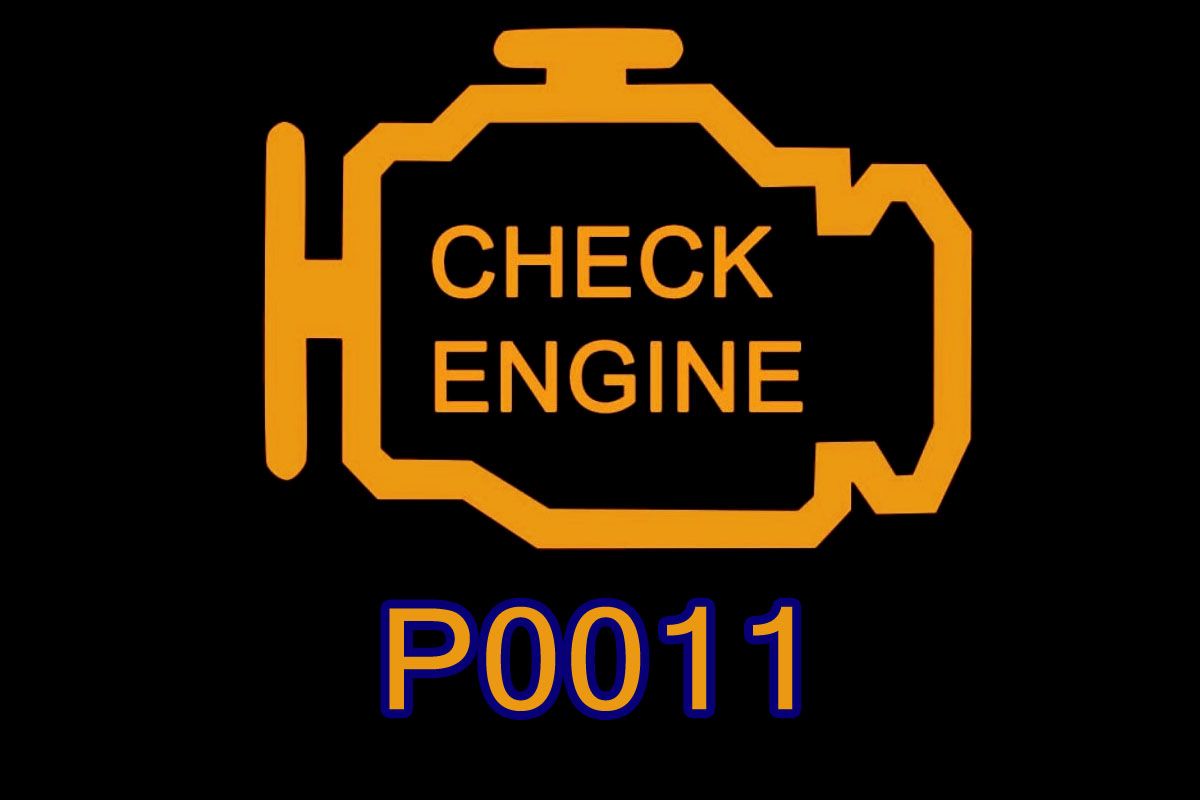
P0011 "A" Camshaft Position - Timing Over-Advanced (Bank 1)
P0011 indicates that the engine control module (ECM) has detected that the “A” camshaft on Bank 1 is positioned more advanced than the system expects.
The important word in this code is “over-advanced.” The ECM is not simply saying that it cannot see the camshaft. It is detecting a camshaft position that is further advanced than the commanded or expected position.
This usually brings the variable valve timing (VVT) system into focus.
The camshaft can be deliberately moved while the engine is running to optimize valve timing for different engine speeds and loads. If the camshaft moves too far toward the advanced position, remains there when it should return, or the ECM sees an unexpectedly advanced position, P0011 can be stored.
Why the Camshaft Is Allowed to Move
Modern engines often use variable valve timing to change when the intake or exhaust valves open and close.
The ECM controls an oil control valve or VVT solenoid. Depending on the engine design, this directs pressurized engine oil into a camshaft phaser. The phaser then changes the camshaft's angular position relative to the crankshaft.
At one operating condition, advancing the camshaft may improve torque or efficiency. At another, the ECM may command it back toward its base position.
P0011 occurs when the actual camshaft position does not agree with what the ECM expects, specifically with the camshaft being too far advanced.
The “A” Camshaft and Bank 1
Bank 1 is the cylinder bank containing cylinder number 1 on an engine with more than one cylinder bank.
The “A” camshaft is a manufacturer-defined designation. On many engines it refers to the intake camshaft, but this should not be assumed for every engine. The manufacturer's service information should be used to identify exactly which camshaft and VVT actuator are involved.
This matters during diagnosis because testing the wrong VVT solenoid or camshaft sensor can send the diagnosis in the wrong direction.
What Can Make a Camshaft Become Over-Advanced?
The camshaft does not normally move into an advanced position by itself. Something in the VVT system or mechanical timing system is allowing or causing that position.
One common possibility is a VVT solenoid that is stuck or not controlling oil flow correctly.
If the solenoid remains open when it should close, or becomes contaminated with sludge, oil may continue reaching the camshaft phaser. The phaser can then remain advanced instead of returning to the commanded position.
Engine oil condition is equally important.
The VVT system depends heavily on correct oil pressure and clean oil passages. Incorrect oil viscosity, degraded oil, sludge, a restricted oil passage, or an unsuitable oil filter can affect how quickly and accurately the phaser responds.
Other possible causes include:
-
Sticking or contaminated VVT solenoid
-
Faulty camshaft phaser
-
Incorrect engine oil
-
Low or unstable oil pressure
-
Restricted VVT oil passages
-
Timing-chain wear
-
Timing-chain tensioner problems
-
Incorrect mechanical timing
-
Camshaft position sensor problems
-
Crankshaft position sensor problems
-
Wiring or connector faults
-
Internal engine problems
-
ECM control problems
P0011 Does Not Automatically Mean the Camshaft Sensor Is Bad
This distinction is important.
The camshaft position sensor may be doing exactly what it is supposed to do: reporting that the camshaft is actually too far advanced.
For example, imagine that the ECM commands the camshaft to return to its normal position. A properly functioning sensor reports the camshaft position, but the phaser remains advanced because the VVT mechanism is stuck.
The ECM compares the expected position with the reported position and detects the difference.
In this situation, replacing the sensor would not solve the underlying problem.
Start With the Engine Oil
Because VVT operation is often oil-controlled, checking the oil is one of the simplest and most valuable first steps.
Check:
-
Engine oil level
-
Correct oil specification
-
Correct viscosity
-
Oil condition
-
Oil contamination
-
Oil filter condition
-
Signs of sludge
-
Engine oil pressure when necessary
If the oil is excessively dirty or the wrong specification has been used, VVT operation can become slow, unstable, or incorrect.
A low oil level can also prevent the VVT system from operating properly.
However, simply changing the oil should not be considered a complete diagnosis. If P0011 returns after the oil is corrected, the VVT system itself needs to be investigated.
The VVT Solenoid Is a Major Suspect
The oil control valve, commonly called the VVT solenoid, controls oil flow to the camshaft phaser.
A solenoid can cause P0011 if:
-
It is mechanically stuck
-
Its internal screen is restricted
-
It is contaminated with sludge
-
Its electrical coil is faulty
-
Its control circuit has a wiring problem
-
It cannot regulate oil flow correctly
An important diagnostic step is to determine whether the solenoid responds correctly when commanded.
Depending on the vehicle, a scan tool may be able to perform an actuator test. The technician can also monitor the camshaft position while commanding the VVT system.
A solenoid should not automatically be replaced simply because P0011 is present.
Commanded Camshaft Position vs. Actual Position
One of the most useful diagnostic approaches is to compare commanded camshaft angle with actual camshaft angle.
If the ECM commands the camshaft to move back toward its base position but the actual position remains advanced, there is a strong reason to investigate:
-
VVT solenoid operation
-
Oil pressure and oil flow
-
Camshaft phaser movement
-
Mechanical timing
If the actual position changes unpredictably, electrical or mechanical problems may be involved.
The exact camshaft-angle limits vary between engines, so there is no universal “acceptable” number that applies to every vehicle.
A Stuck Camshaft Phaser Can Produce P0011
The camshaft phaser is the mechanical component that changes the camshaft's position relative to the crankshaft.
A phaser can become stuck because of:
-
Internal wear
-
Contaminated oil
-
Mechanical damage
-
Oil-pressure problems
-
Internal locking mechanism failure
In this situation, the VVT solenoid may be receiving the correct electrical command, yet the camshaft still remains too advanced.
This is why testing only the electrical side of the VVT solenoid is not always enough.
The entire system has to be considered:
ECM command → VVT solenoid → oil flow → camshaft phaser → actual camshaft position
A failure anywhere along that chain can result in incorrect camshaft timing.
Timing Chain Problems Should Not Be Ignored
Although P0011 is commonly associated with VVT, mechanical timing can also be responsible.
A worn or stretched timing chain can alter the relationship between the crankshaft and camshaft. A damaged tensioner or guide can make the situation worse.
If the timing chain has jumped, or the engine was recently assembled with incorrect timing, the camshaft may remain outside the expected position even though the VVT components are functioning.
Look especially closely at mechanical timing when P0011 is accompanied by:
-
Timing-chain rattling
-
Difficult starting
-
Long cranking
-
Rough running
-
Misfires
-
Reduced power
-
Additional cam/crank correlation codes
If the engine has recently had timing-chain, cylinder-head, or other major engine work, incorrect timing installation should be considered early in the diagnosis.
Electrical Checks Are Still Necessary
The VVT solenoid and camshaft sensor both depend on electrical circuits.
Inspect the relevant connectors and wiring for:
-
Broken wires
-
Damaged insulation
-
Loose terminals
-
Corrosion
-
Oil contamination
-
Poor terminal tension
-
Short circuits
-
Open circuits
-
Harness damage near hot engine components
A wiring problem can prevent the ECM from controlling the VVT solenoid correctly or can distort the camshaft position signal.
Voltage-drop testing and circuit testing under load are generally more useful than relying only on a basic continuity check.
Always use the vehicle-specific wiring diagram and specifications for voltage, resistance, and control strategy.
Symptoms Associated With P0011
The effect of an over-advanced camshaft depends on how severe the problem is and how the particular engine reacts to incorrect valve timing.
Possible symptoms include:
-
Check Engine Light
-
Rough idle
-
Poor acceleration
-
Reduced engine power
-
Increased fuel consumption
-
Difficult starting
-
Extended cranking
-
Engine hesitation
-
Misfires
-
Stalling
-
Poor throttle response
-
Abnormal engine noise
Some vehicles may continue to drive relatively normally when the deviation is small, while others may experience significant drivability problems.
Is P0011 Serious?
P0011 should not be treated as a code that can simply be cleared and forgotten.
A minor VVT control problem may allow the vehicle to continue operating for some time, but an underlying mechanical timing problem can become much more serious.
If the vehicle has severe loss of power, repeated stalling, significant misfires, difficult starting, or abnormal timing-chain noise, it is better to stop driving and investigate the problem promptly.
This is particularly important on interference engines, where a serious timing failure can result in internal engine damage.
A Better Way to Diagnose P0011
Rather than immediately replacing the camshaft sensor or VVT solenoid, diagnosis should establish why the camshaft is staying too far advanced.
A practical sequence is:
-
Confirm P0011 and examine freeze-frame information.
-
Check for additional camshaft, crankshaft, VVT, or oil-pressure codes.
-
Verify engine oil level, specification, viscosity, and condition.
-
Inspect the VVT solenoid and its connector.
-
Test the solenoid's electrical circuit according to manufacturer specifications.
-
Perform an actuator test if supported.
-
Monitor commanded and actual camshaft position.
-
Check whether the camshaft returns correctly when VVT is commanded back.
-
Check oil pressure and VVT oil passages if necessary.
-
Inspect the camshaft phaser if it does not respond correctly.
-
Verify mechanical timing if the camshaft remains advanced.
-
Compare camshaft and crankshaft signals when electronic or mechanical correlation remains uncertain.
This approach prevents the common situation where several expensive components are replaced without actually finding the cause.
Common Mistakes When Diagnosing P0011
Replacing the camshaft sensor first
P0011 does not prove that the sensor has failed. The sensor may be accurately reporting an actual over-advanced camshaft.
Replacing the VVT solenoid without checking the oil
A contaminated or incorrect oil supply can cause VVT problems even when the solenoid itself is functional.
Assuming every P0011 is an electrical fault
P0011 can be caused by hydraulic and mechanical problems, not just wiring or electronics.
Ignoring mechanical timing
If the timing chain, tensioner, or other timing components are worn or incorrectly installed, replacing the VVT solenoid will not correct the underlying problem.
Replacing the ECM too early
The ECM is generally one of the last components that should be blamed. The control signal, wiring, VVT mechanism, sensor feedback, oil system, and mechanical timing should be proven first.
What Repairs Can Correct P0011?
The correct repair depends entirely on the diagnostic findings.
Possible repairs include:
-
Correcting engine oil level
-
Replacing incorrect or degraded engine oil
-
Replacing the oil filter
-
Cleaning restricted VVT passages
-
Replacing a faulty VVT solenoid
-
Repairing VVT wiring or connectors
-
Replacing a damaged camshaft position sensor
-
Replacing a defective camshaft phaser
-
Repairing timing-chain components
-
Replacing a worn tensioner or guide
-
Correcting incorrectly installed mechanical timing
-
Repairing an oil-pressure problem
The goal is not simply to make the code disappear. The camshaft must actually return to the position commanded by the ECM and maintain the correct relationship with the rest of the engine.
Final Thoughts
P0011 indicates that the Bank 1 “A” camshaft is more advanced than the ECM expects. In many engines, the VVT system is the first area to investigate, particularly the oil supply, VVT solenoid, and camshaft phaser.
However, the code can also be caused by mechanical timing problems, sensor feedback issues, wiring faults, or inadequate oil pressure.
The most reliable diagnosis is therefore based on commanded versus actual camshaft position, supported by oil-system checks, VVT testing, electrical testing, and mechanical timing verification. A P0011 code identifies an abnormal camshaft timing condition; it does not, by itself, identify which component has failed.