TR
TR EN
EN

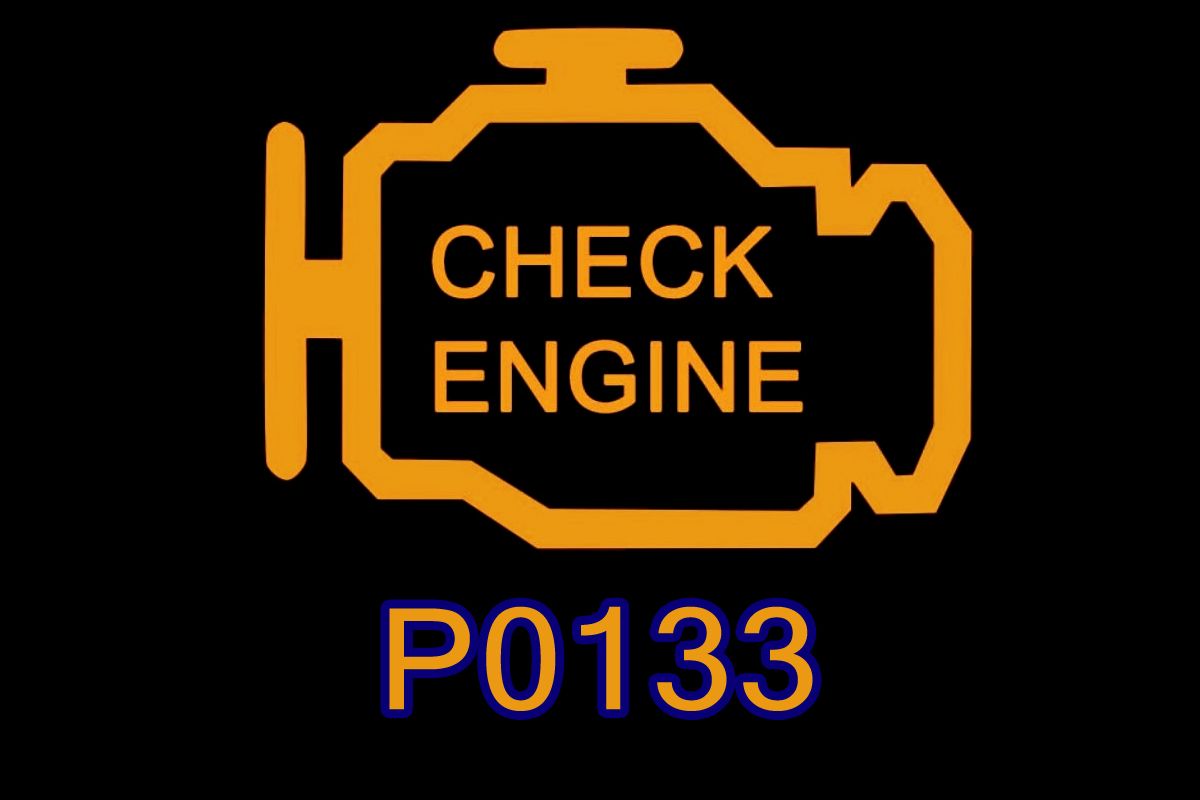
P0133 O2 Sensor Circuit Slow Response (Bank 1, Sensor 1)
P0133 means the engine control module (ECM/PCM) has detected that the Bank 1, Sensor 1 oxygen sensor is responding more slowly than expected to changes in the exhaust mixture.
The key word in this code is “slow.”
The ECM is not necessarily saying that the sensor has completely stopped working. Instead, the sensor is producing a response, but the response is taking too long compared with the time expected by the engine management system.
Because Bank 1 Sensor 1 is normally the upstream oxygen sensor, P0133 deserves attention because this sensor is commonly involved in fuel-mixture control.
What the ECM Is Actually Detecting
An oxygen sensor constantly provides information about the oxygen content of the exhaust.
The ECM changes fuel delivery, the combustion mixture changes, and the oxygen sensor should respond accordingly.
A simplified process looks like this:
Engine mixture changes → exhaust oxygen changes → Bank 1 Sensor 1 reacts → ECM sees the change → fuel control is adjusted
With P0133, the ECM believes the sensor's response is too slow.
That does not necessarily mean the sensor is completely dead.
A sensor can still produce plausible readings at times while becoming too sluggish to follow rapid changes accurately.
What Are Bank 1 and Sensor 1?
Bank 1 refers to the cylinder bank containing cylinder number 1.
On an inline engine, there is normally only one cylinder bank, so the upstream sensor is typically Bank 1 Sensor 1.
Sensor 1 normally means the sensor located before the catalytic converter.
This is different from the downstream sensor, which is generally called Sensor 2.
The exact sensor technology varies. Some vehicles use conventional narrowband oxygen sensors, while others use wideband air-fuel ratio sensors.
That distinction matters when interpreting live data.
Why Does a Slow Oxygen Sensor Matter?
The upstream oxygen sensor is part of the feedback system used to control the air-fuel mixture.
When the engine changes operating conditions, the sensor needs to react quickly enough for the ECM to make appropriate corrections.
If the sensor becomes sluggish, the ECM may receive delayed information.
This can contribute to:
-
Less precise fuel control
-
Increased emissions
-
Poor fuel economy
-
Hesitation
-
Rough running
-
Reduced drivability
-
Difficulty maintaining the desired mixture
The actual effect depends on the vehicle and how its fuel-control system is designed.
What Causes P0133?
Aging is one of the most common possibilities, but it is far from the only one.
Aging or contaminated oxygen sensor
Oxygen sensors operate in an extremely hot and chemically aggressive environment.
Over time, the sensing element can become contaminated or lose its ability to react quickly.
Possible contaminants include:
-
Oil
-
Coolant
-
Fuel additives
-
Silicone compounds
-
Excessive carbon
-
Other combustion by-products
A sensor may continue working but become noticeably slower.
Weak sensor heater
The oxygen sensor's heater helps it reach and maintain its operating temperature.
If the heater is weak, the sensor may take too long to become fully responsive, particularly during cold operation.
The heater itself may have a separate electrical fault, or it may be deteriorating without immediately setting a dedicated heater code.
Exhaust leak
An exhaust leak near the upstream oxygen sensor can allow outside air to enter the exhaust stream.
That introduces additional oxygen into the exhaust and can interfere with the sensor's interpretation.
A leak can therefore create oxygen-sensor behavior that appears abnormal even though the sensor itself is functioning.
Actual air-fuel mixture problems
P0133 can sometimes be the result of an engine operating condition that makes the sensor appear slow.
Possible causes include:
-
Vacuum leaks
-
Intake leaks
-
Fuel-pressure problems
-
Injector problems
-
MAF sensor errors
-
MAP sensor problems
-
EVAP purge problems
-
Incorrect fuel delivery
-
Misfires
The sensor should not automatically be blamed when the engine itself is producing abnormal exhaust conditions.
Wiring or connector problems
A poor electrical connection can affect the sensor signal.
Possible problems include:
-
Corroded terminals
-
Loose terminals
-
Damaged wiring
-
Heat-damaged insulation
-
Chafing
-
Poor previous repairs
-
Water contamination
-
Intermittent connections
Because the upstream sensor is usually located close to the exhaust manifold or turbocharger, heat damage deserves particular attention.
Symptoms of P0133
Some vehicles store P0133 with very few noticeable symptoms.
Possible symptoms include:
-
Check Engine Light
-
Reduced fuel economy
-
Slight hesitation
-
Poor throttle response
-
Rough or unstable idle
-
Reduced acceleration
-
Increased emissions
-
Difficult starting in some circumstances
-
Occasional stalling
-
Engine running differently during warm-up
A vehicle may still drive almost normally because the sensor is not necessarily completely inoperative.
A Slow Sensor Is Not the Same as a Dead Sensor
This distinction is important.
A failed sensor may produce:
-
No meaningful signal
-
A fixed signal
-
An electrical fault
-
An open circuit
-
A short circuit
A sensor associated with P0133 may still produce a changing signal.
The problem is that the signal does not change quickly enough when the exhaust mixture changes.
That means simply checking whether the sensor produces some voltage is not enough to diagnose P0133.
The response behavior matters.
How to Diagnose P0133
The diagnosis should begin with the entire vehicle scan rather than immediately replacing the oxygen sensor.
Check for all stored and pending DTCs.
Pay attention to codes involving:
-
Fuel mixture
-
Misfires
-
MAF
-
MAP
-
Fuel pressure
-
Oxygen-sensor heaters
-
Intake leaks
-
EVAP
-
Exhaust leaks
The freeze-frame data can also reveal the conditions under which the ECM detected the slow response.
Look at the Live Oxygen-Sensor Data
Live data is particularly important for P0133.
On a conventional narrowband oxygen sensor, the technician can observe how the upstream sensor responds as the air-fuel mixture changes.
The important question is not simply:
“Does the sensor move?”
The better question is:
“How quickly does it respond when the mixture changes?”
A sluggish sensor may show delayed movement compared with what the ECM expects.
The exact expected response depends on the vehicle, sensor type and manufacturer's diagnostic procedure.
Be Careful With Universal Voltage Rules
A common diagnostic mistake is to assume every oxygen sensor should behave like a traditional 0–1 volt narrowband sensor.
That is not correct for every modern vehicle.
Some engines use wideband or air-fuel-ratio sensors whose signals are interpreted differently.
Therefore, voltage and response behavior should always be evaluated according to the sensor type and manufacturer's specifications.
A generic voltage rule can lead to an incorrect diagnosis.
Check Fuel Trims
Fuel trims can provide valuable supporting evidence.
Monitor:
-
Short-term fuel trim
-
Long-term fuel trim
-
Engine RPM
-
Engine load
-
MAF
-
MAP
-
Throttle position
-
Coolant temperature
-
Oxygen-sensor data
If fuel trims are significantly abnormal, investigate why before concluding that the oxygen sensor is defective.
For example, an intake leak can cause the engine to operate lean and force the ECM to make substantial fuel corrections.
There is no universal fuel-trim value that proves a particular component is defective, so the readings need to be interpreted in context.
Check for Vacuum and Intake Leaks
An intake leak can introduce air that the ECM did not properly account for.
Possible leak points include:
-
Vacuum hoses
-
PCV hoses
-
Intake manifold gasket
-
Throttle-body gasket
-
Brake-booster hose
-
Intake ducting
-
Turbocharger plumbing
-
Crankcase ventilation components
A smoke test can be useful when a leak is suspected but cannot be found visually.
If correcting an intake leak makes the oxygen-sensor behavior return to normal, replacing the sensor would have been unnecessary.
Inspect the Exhaust Before Replacing the Sensor
Exhaust leaks deserve special attention with oxygen-sensor problems.
An upstream exhaust leak can allow atmospheric oxygen into the exhaust stream.
The sensor then sees an exhaust mixture that does not accurately represent the engine's combustion.
Inspect the exhaust manifold, manifold gasket, oxygen-sensor mounting area and nearby exhaust connections.
Look for:
-
Soot marks
-
Cracks
-
Damaged gaskets
-
Loose connections
-
Exhaust noise
-
Evidence of previous repairs
Even a relatively small leak in the right location can influence oxygen-sensor readings.
Check the Sensor Heater
The heater should be tested when appropriate.
A functioning heater allows the sensor to reach its operating temperature quickly.
A weak heater may cause delayed sensor operation, especially after a cold start.
Check:
-
Heater power
-
Heater control
-
Wiring
-
Connector
-
Fuse where applicable
-
Heater resistance according to manufacturer specifications
There is no universal resistance value for every oxygen sensor.
Inspect the Sensor Wiring
The Bank 1 Sensor 1 harness operates in a demanding environment.
Inspect it for:
-
Melted insulation
-
Burn marks
-
Broken wires
-
Chafing
-
Connector corrosion
-
Loose terminals
-
Water intrusion
-
Incorrect previous wiring repairs
A wiring problem may not be permanent. An intermittent connection can cause the sensor to behave normally at one moment and incorrectly at another.
Could the MAF Sensor Cause P0133?
Potentially, yes.
The MAF sensor tells the ECM how much air is entering the engine.
If its measurement is incorrect, the ECM can calculate an incorrect fuel quantity.
That can create abnormal combustion and exhaust conditions, which can affect oxygen-sensor behavior.
However, P0133 does not automatically mean the MAF sensor is faulty.
MAF data should be evaluated together with engine load, fuel trims, throttle position, MAP, IAT and oxygen-sensor behavior.
Could Fuel Pressure Cause P0133?
Yes, an abnormal fuel supply can influence oxygen-sensor behavior.
Possible problems include:
-
Low fuel pressure
-
Weak fuel pump
-
Restricted fuel filter
-
Fuel-pressure regulator problem
-
Injector restriction
-
Injector flow imbalance
If fuel delivery is unstable, the mixture may not respond as expected to ECM commands.
Fuel pressure should therefore be checked when the available evidence points toward a fuel-system problem.
Could a Misfire Cause P0133?
A misfire can significantly alter the oxygen content of the exhaust.
Unburned oxygen can reach the exhaust system and influence oxygen-sensor readings.
If misfire codes are present alongside P0133, the misfire should be investigated rather than simply replacing the oxygen sensor.
A severe misfire can also damage the catalytic converter.
Can Contamination Make an O2 Sensor Slow?
Yes.
An oxygen sensor can become contaminated over its service life.
For example, oil consumption or coolant entering the combustion chamber can expose the sensor to substances that interfere with its sensing element.
In such a case, replacing the sensor without correcting the source of contamination may result in another failure later.
The cause of contamination should therefore be investigated if sensor replacement is necessary.
Does P0133 Mean the O2 Sensor Must Be Replaced?
Not necessarily.
The sensor is certainly a possible cause, particularly on a high-mileage vehicle with an aging sensor, but P0133 should not be treated as a guaranteed sensor-replacement code.
Before replacing it, verify:
-
Sensor response
-
Heater operation
-
Wiring
-
Connector condition
-
Exhaust integrity
-
Fuel trims
-
Intake system
-
Fuel delivery
-
Misfire activity
If the sensor is demonstrably slow and the surrounding systems are operating correctly, replacement becomes much more justified.
What Happens If P0133 Is Ignored?
A vehicle may continue operating for quite some time with P0133.
However, leaving an unresolved oxygen-sensor response problem can lead to:
-
Increased fuel consumption
-
Increased emissions
-
Poorer fuel control
-
Reduced drivability
-
Possible catalytic-converter stress if fueling becomes significantly incorrect
The seriousness depends on the actual cause.
A slow sensor by itself is usually less immediately dangerous than a severe underlying fuel or ignition problem.
Can You Drive With P0133?
If the Check Engine Light is steady and the vehicle drives normally, short-term driving is often possible.
However, the fault should be diagnosed rather than ignored indefinitely.
Driving should be limited or avoided if P0133 is accompanied by:
-
Flashing Check Engine Light
-
Severe misfire
-
Major power loss
-
Stalling
-
Strong fuel smell
-
Heavy smoke
-
Serious hesitation
Those symptoms may indicate a separate underlying problem capable of damaging the engine or catalytic converter.
A Practical Diagnostic Sequence
A sensible approach is to work from the simplest explanations toward component replacement.
Start by scanning all modules and reviewing freeze-frame information.
Then examine the Bank 1 Sensor 1 live data and determine whether its response is genuinely slow.
After that, inspect the sensor wiring and connector.
Check the heater circuit if applicable.
Inspect the intake and exhaust systems for leaks.
Review fuel trims and MAF/MAP data.
If the evidence points toward an actual mixture problem, investigate fuel delivery, injectors and other engine-management inputs.
Only after those checks should the oxygen sensor itself be condemned.
Final Takeaway
P0133 means the ECM has detected a slow response from the Bank 1 Sensor 1 oxygen-sensor circuit.
The sensor may be aging or contaminated, but other problems can create the same code. Exhaust leaks, intake leaks, fuel-delivery problems, misfires, heater faults, wiring problems and incorrect airflow measurements can all influence oxygen-sensor response.
The most useful way to approach P0133 is to focus on response speed rather than simply whether the sensor produces a signal.
If the sensor is slow while the engine, exhaust, wiring and heater are operating correctly, sensor replacement may be the appropriate repair. If the sensor is responding correctly but the engine is creating abnormal exhaust conditions, the real repair lies elsewhere.