TR
TR EN
EN

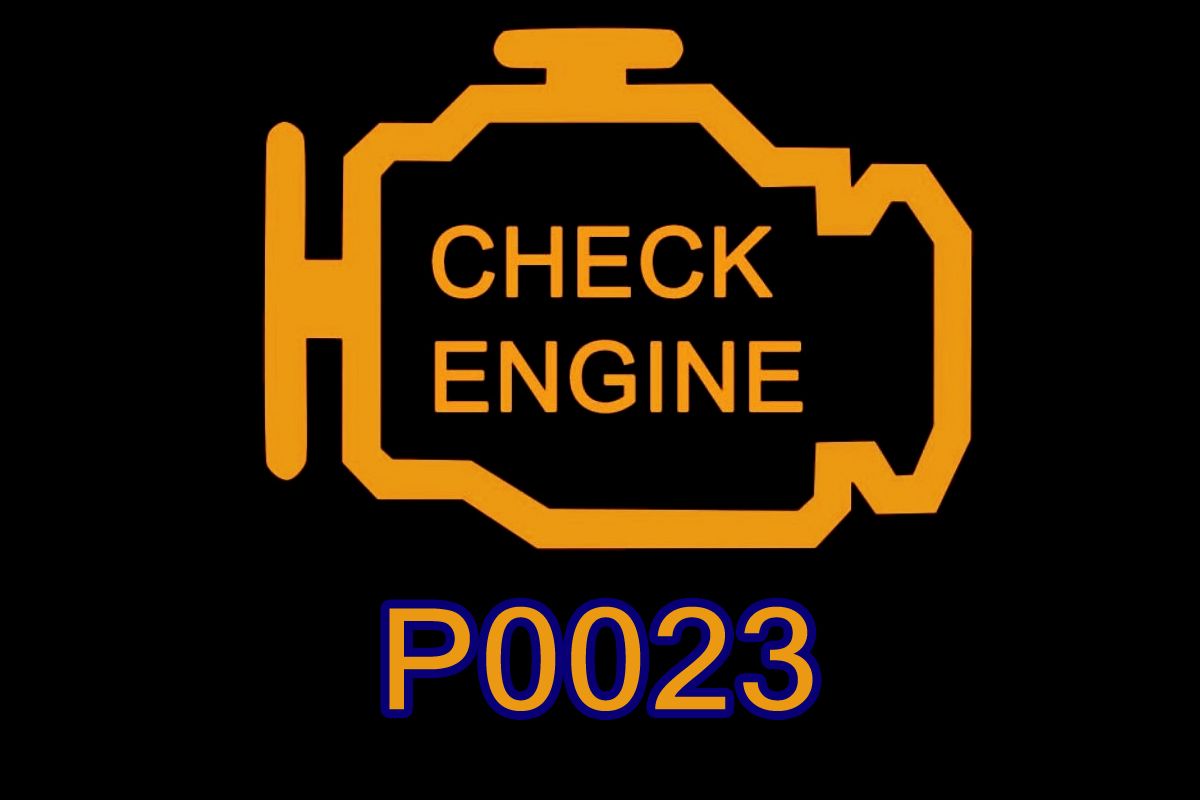
P0023 "B" Camshaft Position Actuator Circuit (Bank 2)
P0023 is an OBD-II diagnostic trouble code that indicates a problem with the “B” camshaft position actuator circuit on Bank 2.
In practical terms, the engine control module (ECM/PCM) has detected an electrical problem in the circuit used to control the actuator responsible for changing the position of a camshaft on the second cylinder bank.
The important word here is “circuit.” P0023 does not necessarily mean that the camshaft itself has a mechanical problem. The fault can be caused by the actuator/solenoid, wiring, connector, power supply, control circuit, or the engine control module.
Understanding “B” Camshaft and Bank 2
Two terms in this code can cause confusion: “B” and “Bank 2.”
Bank 2 refers to the cylinder bank that does not contain cylinder number 1. This designation only applies to engines with more than one cylinder bank, such as V6 and V8 engines.
“B” camshaft is manufacturer-dependent. On many engines, “B” refers to the exhaust camshaft, but this is not universal. The exact camshaft identified as “B” should therefore be confirmed using the vehicle's service information.
The actuator is generally part of the variable valve timing (VVT) system. Depending on the engine design, it may be called a camshaft actuator solenoid, VVT solenoid, oil control valve, or camshaft timing control valve.
What Is the Camshaft Position Actuator?
Modern engines often use variable valve timing to alter when the intake and exhaust valves open and close.
The ECM can command a camshaft to move to a different position depending on engine speed, load, throttle position, temperature, and other operating conditions.
A typical VVT system uses:
-
An electrically controlled actuator or solenoid
-
Engine oil as the hydraulic medium
-
A camshaft phaser
-
Camshaft and crankshaft position sensors
-
Oil passages
-
Wiring and electrical connectors
-
ECM control circuitry
When the ECM wants to change camshaft timing, it controls the actuator. The actuator then regulates oil flow to the camshaft phaser.
P0023 means the ECM has detected an abnormality in the electrical control circuit associated with that actuator.
Common Causes of P0023
Several different problems can trigger this code.
Faulty camshaft actuator or VVT solenoid
The actuator itself may have an internal electrical fault, such as an open winding, short circuit, or abnormal resistance.
Damaged wiring
The wiring near the engine is exposed to heat, vibration, oil, and movement. A damaged wire can create an open circuit or an unwanted short.
Corroded or loose connector
Oil contamination, moisture, corrosion, damaged terminals, or poor connector tension can interrupt the actuator circuit.
Short to ground or voltage
A damaged harness can cause the actuator control wire to contact ground or another voltage source.
Power supply problem
Some VVT systems share power with other engine components. A fuse, power feed, relay, or common wiring problem can therefore affect actuator operation.
Oil contamination or incorrect oil
Although P0023 is primarily a circuit code, the actuator is part of an oil-controlled VVT system. Dirty oil or restricted passages can cause related VVT problems and may appear alongside electrical faults.
Incorrect replacement component
An incorrect VVT solenoid or actuator can have different electrical characteristics or connector/pin configuration and may cause a circuit fault.
ECM problem
The ECM controls the actuator through an output circuit. An internal driver fault is possible, although it should normally be considered after the wiring, connector, power supply, and actuator have been tested.
Symptoms You May Notice
The symptoms depend on how the engine's VVT system is designed and how the fault affects camshaft control.
Possible symptoms include:
-
Check Engine Light
-
Rough or unstable idle
-
Hesitation during acceleration
-
Reduced engine performance
-
Poor throttle response
-
Increased fuel consumption
-
Difficult starting
-
Engine stalling
-
Reduced low- or high-RPM torque
-
Limp mode on some vehicles
In some cases, the vehicle may appear to drive normally even though P0023 is stored.
P0023 Does Not Automatically Mean the VVT Solenoid Is Bad
This is one of the most important points when diagnosing this code.
A scan tool may report P0023, but that does not prove that the actuator or VVT solenoid has failed.
For example, imagine that the actuator is perfectly functional but one of its control wires has broken near the connector. The ECM can still detect an abnormal actuator circuit and store P0023.
The same code can potentially be caused by:
Actuator → connector → wiring → power supply → control circuit → ECM
Therefore, replacing the actuator immediately is not always the correct repair.
How P0023 Should Be Diagnosed
A good diagnosis begins with the complete vehicle scan rather than immediately removing the VVT actuator.
1. Scan all stored codes
Read all current, pending, and manufacturer-specific codes.
Other camshaft, crankshaft, VVT, oil-pressure, or electrical codes can provide important clues.
2. Check the freeze-frame data
Look at the engine speed, coolant temperature, load, throttle position, and other available information from the moment the fault was detected.
This can help determine whether the problem occurs during cold starts, high RPM, acceleration, or another specific operating condition.
3. Confirm the exact Bank 2 “B” actuator
Do not assume that “B” always means the exhaust camshaft.
Use the manufacturer's repair information to identify the correct actuator and its connector.
4. Inspect the connector carefully
Look for:
-
Bent terminals
-
Loose terminals
-
Corrosion
-
Oil contamination
-
Water intrusion
-
Broken locking tabs
-
Terminals pushed backward inside the connector
A connector can look fine externally while having poor terminal contact internally.
5. Inspect the wiring
Follow the harness from the actuator toward the main engine harness.
Pay particular attention to areas close to:
-
Exhaust components
-
Cylinder heads
-
Timing components
-
Brackets
-
Sharp edges
-
Moving engine components
Heat-damaged insulation and wires broken internally from repeated flexing are common types of problems worth checking.
6. Test the actuator circuit
The exact test depends on the manufacturer's wiring diagram.
Depending on the system, the technician may check:
-
Power supply
-
Ground
-
Control voltage
-
Continuity
-
Shorts to ground
-
Shorts to voltage
-
Voltage drop
-
Actuator resistance
-
Actuator current draw
The correct resistance specification must come from the vehicle manufacturer. There is no universal resistance value that applies to every VVT actuator.
7. Test actuator operation
If supported by the diagnostic equipment, the actuator can sometimes be commanded through an active test.
The technician can then observe whether the actuator responds as expected and whether camshaft position changes accordingly.
8. Check the oil and VVT mechanism
If the electrical circuit tests correctly, investigate the hydraulic and mechanical side of the VVT system.
Check:
-
Engine oil level
-
Oil condition
-
Correct oil specification
-
Oil passages
-
VVT filter screens where equipped
-
Oil pressure where necessary
-
Camshaft phaser operation
9. Consider the ECM only after the circuit is proven good
An ECM driver failure is possible, but replacing the ECM should generally be one of the later steps rather than the first.
Can Low Engine Oil Cause P0023?
Low or degraded engine oil can certainly cause VVT problems, but it should not automatically be considered the explanation for a circuit-specific P0023.
If the actuator circuit itself has an open wire or short circuit, changing the oil will not repair that electrical fault.
However, if P0023 appears together with camshaft timing performance codes, rough operation, or other VVT-related faults, oil condition and oil pressure become particularly important.
Can a Bad Camshaft Sensor Cause P0023?
A camshaft position sensor and a camshaft actuator are different components.
The sensor tells the ECM where the camshaft actually is. The actuator changes the camshaft's position.
A faulty sensor can create other camshaft position or timing-related codes, but P0023 specifically points toward the actuator circuit.
Therefore, replacing a camshaft sensor simply because P0023 is present is not a logical first repair.
What Happens If You Ignore P0023?
The consequences depend on the vehicle and the actual cause.
If the problem is only an electrical fault and the camshaft remains in a relatively usable position, the vehicle may continue to run reasonably well.
However, the engine may no longer be able to control valve timing correctly under all conditions. This can lead to poor performance, increased fuel consumption, starting problems, or additional engine-management faults.
If the underlying problem involves mechanical timing, oil pressure, or a camshaft phaser that is stuck, continued operation can potentially result in more serious engine problems.
Is P0023 a Serious Code?
P0023 should not be ignored, but its seriousness depends on the symptoms and the underlying failure.
A vehicle with a steady Check Engine Light and normal operation may be able to reach a repair facility without difficulty.
Driving should be minimized and the vehicle inspected promptly if there is:
-
Severe engine shaking
-
Stalling
-
Major loss of power
-
Abnormal timing-chain noise
-
Difficult starting
-
Multiple engine timing codes
-
A flashing Check Engine Light
The Correct Way to Approach P0023
P0023 is best understood as a camshaft actuator electrical-circuit fault, not as a command to replace a particular component.
The most efficient diagnostic sequence is generally:
Identify the exact Bank 2 “B” actuator → inspect the connector and wiring → verify power and control circuits → test the actuator → check VVT oil/hydraulic operation → investigate mechanical timing → consider ECM control only after the circuit has been proven good.
That approach prevents unnecessary replacement of expensive components and helps distinguish a simple wiring problem from an actuator, VVT mechanism, or engine-control issue.