TR
TR EN
EN

What Is My Car Leaking? What Does Each Fluid Color Mean?
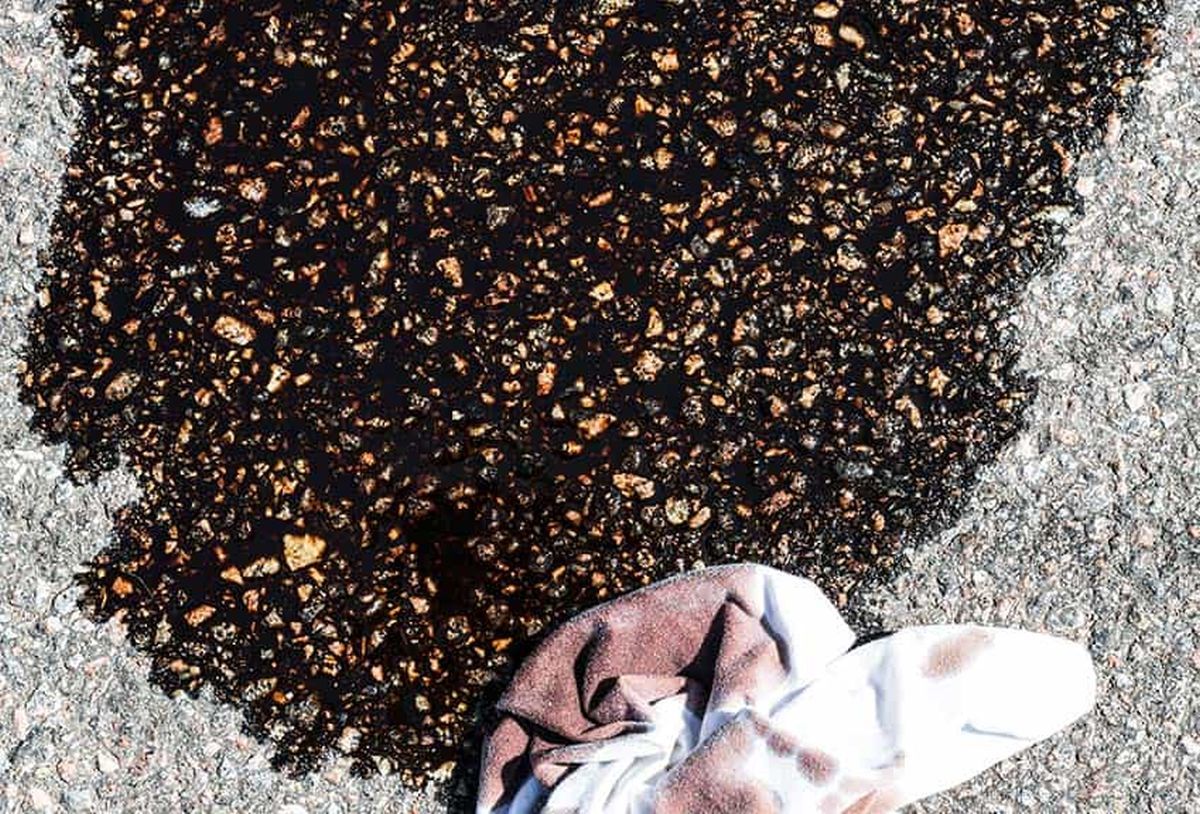
Finding a puddle underneath your car can be worrying, especially when you do not know whether it is water, engine oil, coolant, transmission fluid, or brake fluid.
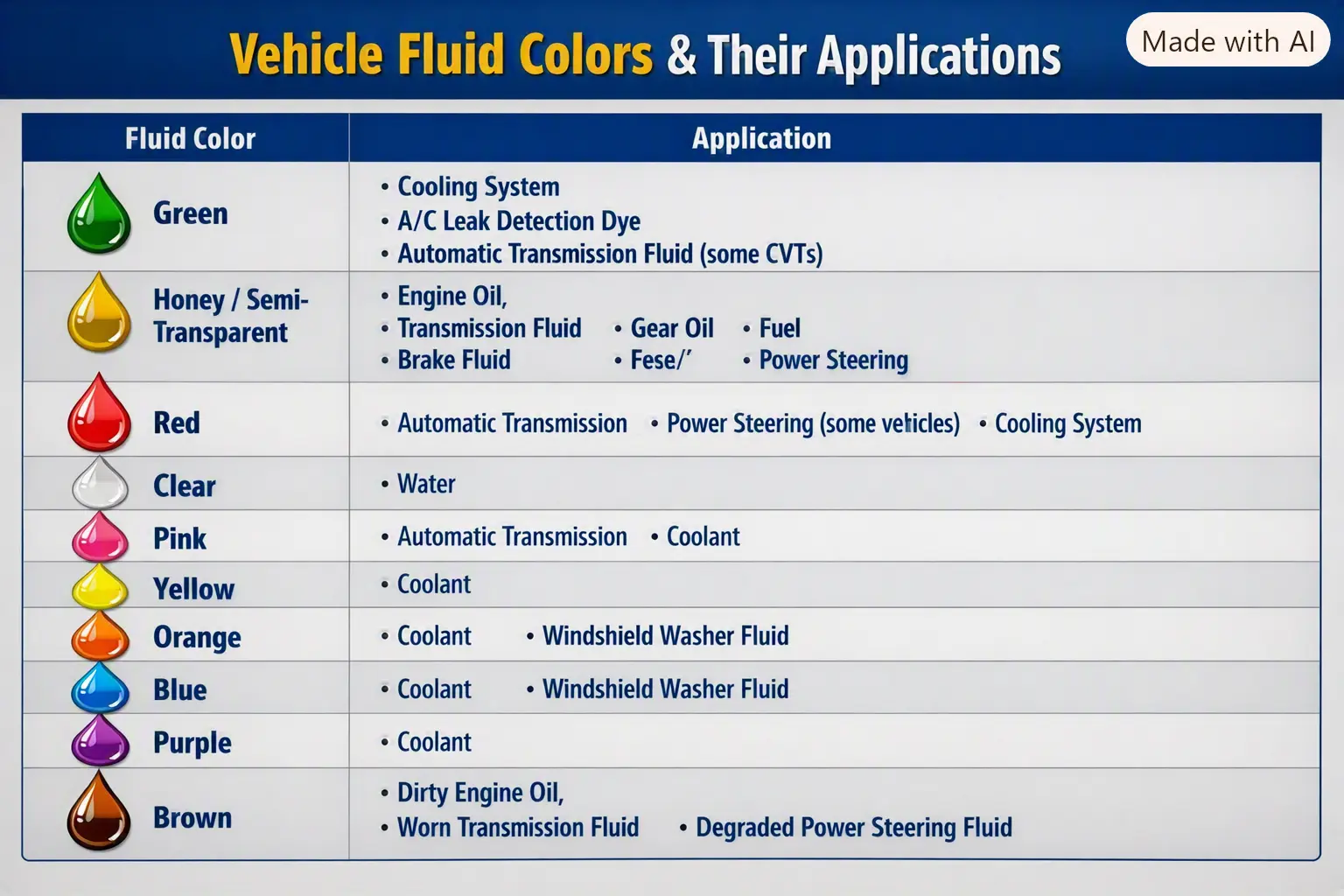
The color, smell, location, consistency, and behavior of the fluid can provide useful clues. However, fluid color alone is not enough to identify a leak with certainty. Many automotive fluids change color with age, contamination, heat, and use.
A good diagnosis considers the complete picture rather than relying on color alone.
Clear Water: Is It Always a Leak?
Not every puddle underneath a car is a mechanical-fluid leak.
Clear, odorless water is often simply condensation from the air-conditioning system.
When the A/C operates, moisture from the air condenses on the evaporator. This water is normally drained underneath the vehicle.
A puddle of clear water appearing around the passenger-side or center area of the vehicle after using the A/C is usually normal.
Water can also come from:
-
Rain
-
Car washing
-
Snow or ice melting
-
Condensation from the exhaust system
However, water dripping continuously when the A/C has not been operating should be investigated if the source is unclear.
Brown or Black Fluid: Engine Oil
Engine oil is one of the most common fluids found underneath a vehicle.
Fresh engine oil is generally amber, brown, or golden depending on its formulation and age. As the oil accumulates mileage, it normally becomes darker and can eventually appear almost black.
An engine-oil leak may originate from many locations, including:
-
Oil pan
-
Oil drain plug
-
Drain-plug sealing washer
-
Valve cover gasket
-
Timing cover
-
Front crankshaft seal
-
Rear main seal
-
Camshaft seals
-
Oil filter
-
Oil filter housing
-
Oil cooler
-
Turbocharger oil lines
-
Various engine seals and gaskets
A dark fluid underneath the engine does not automatically mean the oil pan is leaking.
Oil can travel across the engine or subframe before dripping onto the ground, making the visible puddle location different from the actual leak source.
How Can You Recognize Engine Oil?
Engine oil is generally:
-
Oily and slippery
-
Thicker than water
-
Brown to black depending on age
-
Difficult to remove from the skin
-
Usually associated with an oily smell
A simple visual inspection can help, but the safest approach is to trace the leak from the highest fresh-wet point downward.
Green, Pink, Orange, Yellow or Blue: Coolant
Engine coolant can have several different colors.
Depending on the coolant formulation and manufacturer, it may be:
-
Green
-
Blue
-
Pink
-
Red
-
Orange
-
Yellow
-
Purple
This is why coolant color should never be used as the only identification method.
Modern coolants use different additive technologies, and manufacturers do not all use the same color conventions.
A coolant leak may occur at:
-
Radiator
-
Radiator hose
-
Expansion tank
-
Expansion-tank cap
-
Thermostat housing
-
Water pump
-
Heater hoses
-
Heater core
-
Engine coolant passages
-
Radiator fittings
-
Plastic coolant connectors
What Does Coolant Usually Feel and Smell Like?
Coolant is generally thinner than engine oil and may have a distinctive sweet smell.
However, you should not deliberately smell or taste automotive fluids.
Some coolant contains toxic substances such as ethylene glycol, so it should be treated as hazardous.
A coolant leak can become serious because insufficient coolant can eventually cause engine overheating.
Why Is Coolant Color Not Reliable?
A common mistake is assuming:
Green = coolant
Red = transmission fluid
Brown = engine oil
Real-world vehicles are not always that simple.
Coolant color varies significantly between manufacturers and coolant formulations. Some fluids may also change appearance as they age or become contaminated.
The correct way to identify coolant is to consider its location, consistency, smell, reservoir level, and vehicle-specific fluid specification.
Red or Pink Fluid: Transmission Fluid or Power Steering Fluid?
Red or pink fluid is commonly associated with automatic transmission fluid (ATF), but it can also be associated with some power-steering fluids.
Fresh ATF may appear red, pink, or reddish-brown.
Possible transmission leak locations include:
-
Transmission pan
-
Drain plug
-
Fill plug
-
Axle seals
-
Driveshaft seals
-
Input shaft seal
-
Output shaft seal
-
Transmission cooler lines
-
Cooler fittings
-
Valve-body or mechatronic seals
-
Transmission case seams
-
Torque-converter/front-pump area
As transmission fluid ages, it can become darker.
Therefore, an old transmission-fluid leak may no longer look bright red.
What If the Transmission Fluid Is Brown or Black?
Dark transmission fluid does not necessarily mean there is an external leak problem, but it can indicate that the fluid is aged, overheated, or contaminated.
If a transmission is losing fluid and the fluid has become unusually dark or smells burnt, the transmission should be inspected.
Low transmission-fluid level can cause:
-
Delayed engagement
-
Harsh shifting
-
Slipping
-
Gear-selection problems
-
Transmission overheating
-
Abnormal noises
-
Internal damage
Adding fluid without repairing a significant leak is not a proper solution.
Yellowish or Clear Fluid: Brake Fluid
Brake fluid can be clear to yellowish when relatively fresh.
Depending on its age and condition, it can become darker.
A brake-fluid leak may occur around:
-
Brake calipers
-
Flexible brake hoses
-
Rigid brake lines
-
Master cylinder
-
ABS hydraulic unit
-
Brake connections
-
Clutch hydraulic components on vehicles sharing the same reservoir
Brake fluid is generally thinner than engine oil.
A brake-fluid leak should be treated as a serious safety problem.
If the brake pedal suddenly becomes soft, sinks toward the floor, or the brake-fluid level is falling, the vehicle should not simply be driven to see whether the problem gets worse.
What Does Brake Fluid Feel Like?
Brake fluid is generally:
-
Thin
-
Slippery
-
Clear to yellowish when fresh
-
Potentially darker when old
It can also damage certain painted surfaces.
Do not intentionally handle unidentified automotive fluids with bare hands.
Brown or Dark Fluid Near a Wheel
If a fluid is appearing close to a wheel, several possibilities should be considered.
It could be:
-
Brake fluid
-
Grease from a CV joint
-
Shock absorber fluid
-
Engine oil carried by airflow
-
Transmission fluid
-
Wheel-bearing grease
-
Road contamination mixed with another fluid
The location alone does not identify the fluid.
For example, grease thrown onto the inside of a wheel can strongly indicate a damaged CV-joint boot.
Thick Black Grease: CV Joint or Wheel Bearing?
A thick, sticky substance around the inside of a wheel is often grease rather than conventional liquid fluid.
A torn CV-joint boot can allow grease to escape and be sprayed around the suspension and wheel as the axle rotates.
Possible signs include:
-
Grease around the inside of the wheel
-
Grease on suspension components
-
Clicking during tight turns
-
Cracked or split CV boot
Wheel-bearing grease can also escape in some bearing designs, although the exact symptoms depend on the bearing type.
Clear or Light Brown Fluid Near the Shock Absorber
A shock absorber or strut that is visibly wet with oily fluid may have a seal problem.
A small amount of surface moisture is not necessarily proof of a failed shock absorber, but significant oil leakage combined with poor damping can indicate a problem.
Possible symptoms include:
-
Excessive bouncing
-
Poor body control
-
Increased stopping distance in some conditions
-
Uneven tire wear
-
Vehicle instability
-
Knocking or abnormal suspension behavior
A shock absorber leak should be assessed together with its damping performance and overall suspension condition.
Green, Yellow or Brown Fluid Under the Car: Location Matters
The same color can represent different fluids.
For example, a yellowish fluid could potentially be:
-
Coolant
-
Brake fluid
-
Aged hydraulic fluid
-
Another vehicle-specific fluid
This is why the location of the puddle is extremely useful.
Fluid underneath the radiator area suggests a different group of possibilities from fluid underneath the transmission or near a rear differential.
Fluid Under the Front of the Car
A leak near the front of the vehicle may originate from:
-
Engine oil
-
Coolant
-
A/C condensation
-
Power steering fluid
-
Transmission fluid
-
Washer fluid
-
Brake fluid
-
Engine-mounted components
The front of the vehicle contains many fluid systems, so location alone is still insufficient.
Fluid Under the Center of the Car
A puddle around the center of the vehicle can potentially come from:
-
Transmission
-
Fuel system
-
Exhaust condensation
-
Coolant hoses
-
Brake lines
-
A/C condensation
-
Fluid that has traveled from another location
The underbody can also allow fluid to move along shields, crossmembers, and other components before it finally reaches the ground.
Fluid Under the Rear of the Car
At the rear, possible sources include:
-
Differential oil
-
Rear axle seals
-
Brake fluid
-
Shock absorbers
-
Fuel
-
Washer-fluid lines on certain vehicles
-
Exhaust condensation
On rear-wheel-drive and all-wheel-drive vehicles, differential oil is an important possibility.
What Color Is Differential Oil?
Differential oil is commonly amber, brown, or dark brown.
It may also have a particularly strong sulfur-like or gear-oil smell because many gear oils contain extreme-pressure additives.
Possible leak locations include:
-
Differential cover
-
Drain plug
-
Fill plug
-
Axle seals
-
Pinion seal
-
Housing seams
Low differential-fluid level can cause serious gear and bearing damage.
Blue Fluid: Washer Fluid
Blue fluid underneath the vehicle may be windshield washer fluid, depending on the product used.
Washer fluid can also be:
-
Clear
-
Green
-
Pink
-
Orange
-
Purple
So once again, color is not definitive.
Washer fluid is usually much thinner than engine oil and often has a noticeable alcohol or detergent-like smell.
A leak may occur at:
-
Washer reservoir
-
Pump
-
Hose
-
Hose connector
-
Windshield washer nozzle system
-
Rear washer line
A washer-fluid leak is usually less mechanically serious than an oil, coolant, or brake-fluid leak, but it should still be repaired if the reservoir repeatedly becomes empty.
Brownish or Reddish Fluid: Power Steering
Vehicles with hydraulic power steering may leak power-steering fluid.
The exact fluid used varies by vehicle.
Depending on the system, it may appear:
-
Clear
-
Amber
-
Yellow
-
Green
-
Red
-
Brown
Possible leak points include:
-
Power-steering pump
-
High-pressure hose
-
Return hose
-
Steering rack
-
Reservoir
-
Hose connections
-
Steering-rack seals
A power-steering leak can be accompanied by:
-
Heavy steering
-
Whining from the pump
-
Fluid level dropping
-
Fluid sprayed around the belt area
Many modern vehicles use electric power steering, however, so they do not have conventional hydraulic power-steering fluid.
Fuel: Clear, Pale Yellow or Different Colors
Fuel leaks require immediate attention.
Gasoline is generally clear to pale yellow, although its appearance can vary depending on the fuel and additives.
Diesel fuel may also appear relatively clear, yellowish, or darker depending on age and contamination.
Fuel is much thinner than engine oil and has a distinctive strong odor.
A suspected fuel leak should never be treated as a minor puddle.
Potential sources include:
-
Fuel tank
-
Fuel lines
-
Fuel filter
-
Fuel pump
-
Fuel injectors
-
Fuel rail
-
Tank connections
-
Fuel filler system
If you suspect a fuel leak, avoid smoking, flames, sparks, and unnecessary driving.
A Wet Spot Does Not Always Mean a Fluid Leak
A vehicle can appear wet underneath without having a mechanical-fluid leak.
Other possibilities include:
-
A/C condensation
-
Rainwater
-
Car-wash water
-
Exhaust condensation
-
Water draining from body cavities
-
Windshield-washer fluid
This is why identifying the fluid before assuming that a mechanical component has failed is important.
How Can You Identify an Unknown Fluid?
If you discover a puddle, start with a visual inspection.
Look at:
Color
Is it clear, amber, brown, black, red, pink, green, blue, or another color?
Consistency
Is it watery, oily, sticky, thick, or greasy?
Location
Where is it dripping from?
Amount
Is there one small drop or a rapidly growing puddle?
Smell
Does it have a recognizable fuel, gear-oil, coolant, or detergent-like odor?
Do not taste an unidentified automotive fluid, and avoid direct skin contact.
A piece of clean cardboard placed under the vehicle can also help determine where fresh fluid is landing, although it should never be used as a substitute for a proper inspection.
Why the Puddle Location Can Be Misleading
One of the most important points in leak diagnosis is that the place where the fluid reaches the ground may not be where the leak starts.
Fluid can travel along:
-
Engine blocks
-
Transmission housings
-
Subframes
-
Splash shields
-
Underbody panels
-
Hoses
-
Wiring trays
-
Suspension components
For this reason, simply looking underneath the car and replacing the component directly above the puddle can result in an incorrect repair.
How Is a Fluid Leak Properly Diagnosed?
A professional leak diagnosis generally starts by identifying the fluid and cleaning the affected area.
The technician may then:
-
Check the relevant fluid levels.
-
Clean accumulated oil or fluid.
-
Inspect the suspected area.
-
Run the engine or operate the vehicle as appropriate.
-
Look for fresh fluid.
-
Follow the fluid upward to its highest wet point.
-
Inspect seals, gaskets, hoses, fittings, and housings.
-
Use UV dye when appropriate and compatible with the fluid.
-
Perform a pressure test where applicable.
-
Confirm the leak source before replacing parts.
The exact method depends on the vehicle and fluid system.
Can OBD-II Detect a Fluid Leak?
Usually, OBD-II cannot directly detect an external fluid leak.
The vehicle may detect consequences of low fluid or related system problems.
For example:
-
Low coolant may eventually cause temperature-related faults.
-
Low transmission fluid may contribute to transmission performance problems.
-
Low oil pressure may trigger an oil-pressure warning or diagnostic code.
-
Low brake fluid may trigger a warning through the brake-fluid level sensor.
But the ECU generally cannot simply tell you:
“The oil pan is leaking.”
Mechanical inspection is normally required to locate an external leak.
Is a Small Leak Safe to Ignore?
Not necessarily.
A small leak can become a major leak.
A minor seepage may remain relatively stable for some time, while a damaged seal or hose can suddenly fail and release a large amount of fluid.
The consequences depend on the fluid.
A small coolant leak can eventually lead to overheating.
A small engine-oil leak can eventually cause low oil level.
A small transmission leak can eventually cause shifting problems or internal damage.
A small brake-fluid leak can compromise braking performance.
A fuel leak introduces a fire hazard.
Therefore, the seriousness of a leak should be determined by the fluid and its source, not simply by the size of the puddle.
Do Not Judge a Fluid Only by Its Color
Fluid color is useful as an initial clue, but it should never be treated as a definitive identification method.
For example:
-
Red does not always mean transmission fluid.
-
Green does not identify every coolant.
-
Brown does not automatically mean engine oil.
-
Clear liquid does not automatically mean water.
-
Blue does not necessarily mean washer fluid.
Age, contamination, manufacturer-specific formulations, and lighting can all change the appearance of a fluid.
When Should You Stop Driving?
Some leaks require immediate attention.
Avoid driving the vehicle and arrange professional assistance if you notice:
-
Fuel leaking
-
Brake-fluid loss
-
Rapid coolant loss
-
Engine-oil pressure warning
-
Transmission fluid leaking heavily
-
A rapidly growing puddle
-
Smoke or steam
-
Burning smell
-
Severe overheating
-
Sudden loss of braking performance
-
Sudden loss of steering assistance
-
Loud mechanical noises
A vehicle should not be driven simply because it still starts and moves.
Final Thoughts
A puddle underneath your car is a diagnostic clue, not a diagnosis.
Clear water is often A/C condensation, while brown or black fluid may be engine oil. Red or pink fluid can be transmission or hydraulic fluid, and green, blue, orange, pink, or yellow fluids may be coolant or washer fluid depending on the vehicle and product.
The safest approach is to consider color, consistency, smell, location, fluid levels, and vehicle symptoms together.
Most importantly, find the actual source rather than assuming that the component directly above the puddle is leaking. A fluid can travel a considerable distance before reaching the ground.
If the leak involves brake fluid, fuel, coolant, engine oil, transmission fluid, or differential oil, it should be taken seriously because continuing to drive with insufficient fluid can turn a relatively simple leak into a major mechanical or safety problem.