TR
TR EN
EN

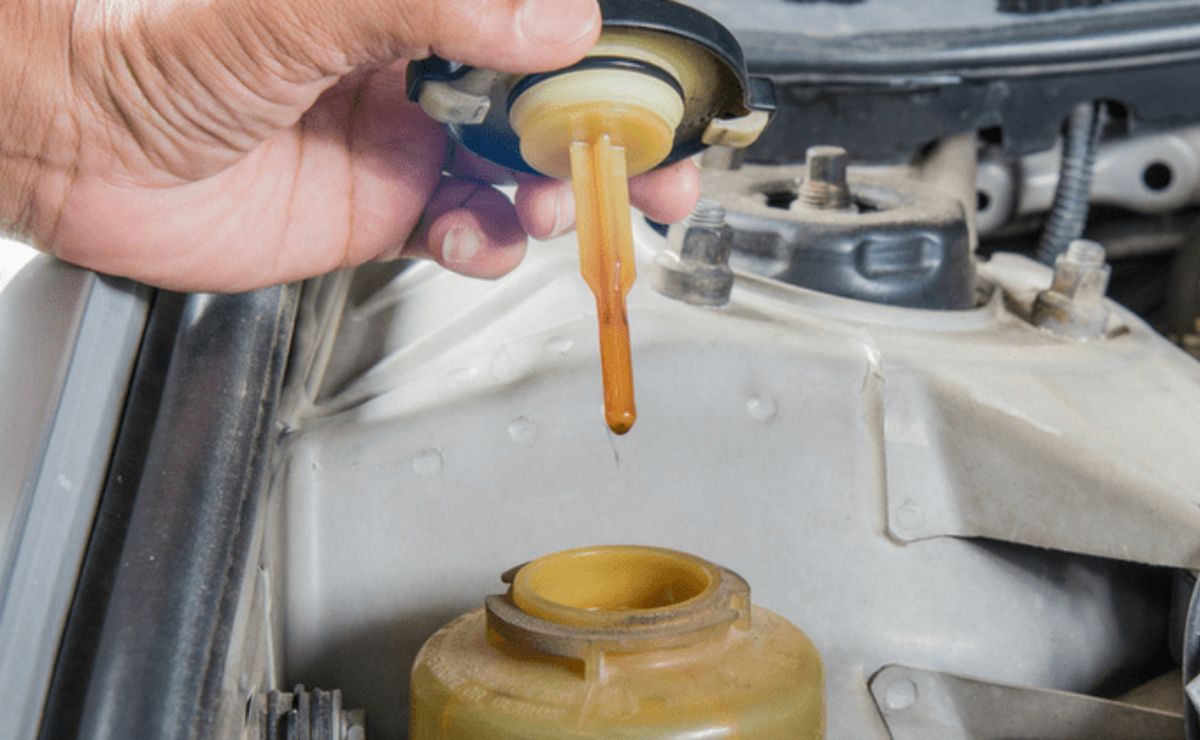
When Should Power Steering Fluid Be Changed? What Happens If It Gets Low?
Power steering fluid is an important part of a conventional hydraulic power steering system. It transfers hydraulic pressure from the power steering pump to the steering mechanism, reducing the effort required to turn the steering wheel.
Although many manufacturers do not specify a fixed replacement interval for power steering fluid, the fluid can deteriorate over time because of heat, oxidation, contamination and component wear.
A low fluid level is more serious than simply having old fluid. If the level falls because of a leak, continuing to drive can damage the power steering pump and eventually cause loss of power assistance.
What Is Power Steering Fluid?
Power steering fluid is a hydraulic fluid designed to operate the power steering system.
In a conventional hydraulic system, the power steering pump generates hydraulic pressure. The fluid then travels through hoses and valves to the steering rack or steering gearbox.
When the driver turns the steering wheel, the system directs hydraulic pressure to assist the steering movement.
The fluid therefore performs several functions:
-
Transfers hydraulic pressure
-
Lubricates the power steering pump
-
Lubricates internal steering components
-
Helps dissipate heat
-
Protects internal components against wear and corrosion
-
Provides stable hydraulic operation
The correct fluid type is important because power steering systems are designed around specific fluid characteristics.
Does Every Car Use Power Steering Fluid?
No.
This distinction is particularly important in modern vehicles.
There are three common steering-assistance designs:
Hydraulic Power Steering
Uses an engine-driven hydraulic pump and power steering fluid.
Electro-Hydraulic Power Steering
Uses hydraulic fluid, but the pump is driven electrically rather than directly by the engine.
Electric Power Steering
Uses an electric motor and generally does not require hydraulic power steering fluid.
Therefore, a vehicle should not be assumed to require power steering fluid simply because it has power-assisted steering.
When Should Power Steering Fluid Be Changed?
There is no universal replacement interval that applies to every vehicle.
The manufacturer's maintenance schedule should be the first reference.
Some manufacturers specify a replacement interval, while others may describe the fluid as requiring inspection rather than routine replacement.
As a general maintenance principle, power steering fluid may deserve attention when:
-
The manufacturer specifies replacement
-
The fluid has become very dark
-
The fluid smells burnt
-
The fluid contains visible contamination
-
The system has been repaired
-
A power steering component has been replaced
-
The system has been contaminated with the wrong fluid
-
The vehicle has experienced a major steering-fluid leak
The exact service interval depends on the vehicle, steering system and fluid specification.
Does Power Steering Fluid Really Wear Out?
Yes.
Power steering fluid is subjected to repeated heat cycles, pressure and mechanical stress.
Over time, it can become:
-
Darker
-
Oxidized
-
Contaminated
-
Less effective at protecting components
Small particles from pump and steering-component wear can also accumulate in the fluid.
This does not necessarily mean that every dark-colored fluid must immediately be replaced. Fluid color varies between products, and some fluids naturally become darker with age.
Condition, smell, contamination and manufacturer specifications should be considered together.
What Happens If Power Steering Fluid Gets Low?
A low fluid level can cause several problems.
The most common symptoms include:
-
Heavy steering
-
Whining or groaning from the power steering pump
-
Steering assistance that comes and goes
-
Increased steering effort
-
Noise when turning
-
Fluid visible around the pump or steering rack
-
Foaming or bubbles in the reservoir
-
Steering becoming particularly heavy at low speed
If the fluid level becomes extremely low, the pump may draw air instead of fluid.
This can cause cavitation, increased noise and rapid pump wear.
Why Does Power Steering Fluid Get Low?
Power steering fluid normally should not be consumed like engine fuel.
If the level is repeatedly decreasing, there is usually a reason.
The most common cause is a fluid leak.
Possible leak points include:
-
Power steering pump seals
-
High-pressure hose
-
Low-pressure return hose
-
Hose connections
-
Reservoir
-
Steering rack seals
-
Steering gearbox seals
-
Reservoir cap area
-
O-rings
-
Hydraulic pump housing
A small leak may initially be difficult to see.
Can Power Steering Fluid Evaporate?
Under normal conditions, power steering fluid should not disappear simply because of evaporation.
If the reservoir level keeps dropping, a leak or another system problem should be suspected.
A very small leak can leave only a damp or oily area rather than a visible puddle.
Fluid can also accumulate on components underneath the vehicle, making the actual leak source difficult to identify.
What Does a Power Steering Fluid Leak Look Like?
Power steering fluid can appear oily or wet around the affected component.
Depending on the fluid type, its color may vary.
A leak may be found around:
-
Steering rack boots
-
Hydraulic hoses
-
Pump shaft area
-
Reservoir
-
Hose fittings
-
Steering gearbox
The color of the fluid alone should not be used to identify the source because engine oil, transmission fluid and other fluids can also contaminate the same area.
What Happens If You Keep Driving With Low Power Steering Fluid?
Continuing to drive with insufficient fluid can damage the power steering system.
The pump relies on the fluid for both hydraulic operation and lubrication.
When the fluid level becomes too low, the pump can begin drawing air.
This can lead to:
-
Whining
-
Cavitation
-
Excessive heat
-
Internal wear
-
Pump failure
-
Loss of steering assistance
A vehicle with no hydraulic assistance can still often be physically steered, but steering effort can become substantially higher, particularly at low speeds.
Can Low Power Steering Fluid Make the Steering Wheel Hard to Turn?
Yes.
This is one of the most recognizable symptoms.
The steering may become particularly heavy:
-
During parking
-
At very low speeds
-
When turning into a tight corner
-
When maneuvering the vehicle
-
When the engine is idling
The reason is that hydraulic assistance is most noticeable when the steering system is under high load.
However, heavy steering does not automatically mean low fluid.
Other possible causes include:
-
Failing power steering pump
-
Blocked hydraulic hose
-
Steering rack problem
-
Incorrect belt tension
-
Broken or slipping drive belt
-
Low electrical voltage in electro-hydraulic systems
-
Mechanical steering problems
-
Tire pressure problems
-
Suspension or steering-component faults
Why Does the Power Steering Pump Whine?
A whining or groaning sound is a common symptom when air enters the hydraulic system or the pump is operating with insufficient fluid.
The noise may become louder when the steering wheel is turned.
Possible causes include:
-
Low fluid level
-
Air in the system
-
Fluid contamination
-
Worn pump
-
Restricted fluid flow
-
Damaged hose
-
Incorrect fluid
-
Excessive pump load
A noisy pump should not automatically be replaced before checking the fluid level and system condition.
Is It Normal for the Power Steering Fluid to Foam?
Foaming or bubbles in the reservoir are generally not desirable.
They can indicate that air is entering the hydraulic system.
Possible causes include:
-
Low fluid level
-
Loose return hose connection
-
Damaged hose
-
Air entering through a seal
-
Incorrect bleeding procedure
-
Pump cavitation
If the reservoir contains a large amount of foam, the cause should be investigated rather than simply adding more fluid.
Can Power Steering Fluid Become Black?
Power steering fluid can become darker with age and contamination.
However, "black" fluid can be a sign that the fluid has been heavily degraded or contaminated.
Possible reasons include:
-
Long service life
-
Excessive heat
-
Oxidation
-
Pump wear
-
Internal component wear
-
Contamination with another fluid
-
Incorrect fluid
The fluid should not be judged solely by color. Manufacturer recommendations and overall condition are more important.
What Does Burnt Power Steering Fluid Mean?
A strong burnt smell can indicate that the fluid has been exposed to excessive heat.
Possible causes include:
-
Overloaded power steering system
-
Repeated steering at full lock
-
Pump problems
-
Restricted fluid flow
-
Internal component problems
-
Fluid deterioration
Repeatedly holding the steering wheel against full lock can place a high load on the hydraulic system.
It is generally better to avoid holding the steering at full lock for extended periods.
What Happens If the Wrong Power Steering Fluid Is Used?
Using the wrong fluid can cause serious problems.
Power steering systems may be designed for different hydraulic fluids, including manufacturer-specific fluids and fluids based on different chemical formulations.
The wrong fluid can potentially cause:
-
Seal swelling
-
Seal deterioration
-
Leakage
-
Pump noise
-
Incorrect hydraulic behavior
-
Component damage
Therefore, "power steering fluid" is not a universal specification.
The exact fluid required by the vehicle should be confirmed before topping up or replacing the fluid.
Can Automatic Transmission Fluid Be Used in Power Steering?
Sometimes, but not universally.
Some vehicles are specifically designed to use a particular type of automatic transmission fluid in their hydraulic steering systems.
Other vehicles require a dedicated power steering fluid or manufacturer-specific hydraulic fluid.
Therefore, automatic transmission fluid should never be added simply because it is available.
The vehicle manufacturer's specification must determine what fluid is appropriate.
How Do You Check the Power Steering Fluid Level?
If the vehicle has a hydraulic power steering system and a fluid reservoir, the level can usually be checked visually.
The reservoir may have:
-
MIN and MAX markings
-
HOT and COLD markings
-
A dipstick integrated into the cap
The correct checking procedure varies by vehicle.
Some systems require the fluid to be checked at a particular temperature, while others specify checking it with the engine off.
The vehicle's service instructions should be followed.
Should Power Steering Fluid Be Checked With the Engine Running?
It depends on the vehicle.
Some manufacturers specify checking the level with the engine off, while others provide a procedure involving a warmed system.
Because reservoir markings and procedures vary, there is no universal rule.
Using the wrong procedure can result in an incorrect fluid-level assessment.
Can You Just Add Power Steering Fluid?
If the level is slightly low, adding the correct specified fluid may restore the level temporarily.
But repeatedly adding fluid is not a proper repair.
If the fluid level falls again, the system should be inspected for a leak.
A hydraulic steering system should not normally require frequent topping up.
How Often Should You Check Power Steering Fluid?
For vehicles equipped with hydraulic power steering, checking the fluid during routine maintenance is sensible.
It is especially worthwhile when:
-
The steering becomes noisy
-
Steering effort changes
-
A fluid smell is noticed
-
There are wet areas underneath the vehicle
-
The pump becomes louder
-
The reservoir level appears low
Checking the level periodically can help identify a leak before it causes major damage.
Can a Power Steering Leak Damage the Alternator?
Yes, depending on the vehicle and component locations.
If leaking power steering fluid reaches the alternator, electrical components can potentially be contaminated.
Fluid can also reach:
-
Drive belts
-
Belt tensioners
-
Engine mounts
-
Wiring
-
Connectors
-
Other engine-bay components
This is another reason why a hydraulic leak should be repaired rather than repeatedly topped up.
Can Power Steering Fluid Damage the Drive Belt?
A leaking hydraulic fluid can contaminate a serpentine or accessory belt.
Fluid contamination can cause the belt to:
-
Slip
-
Become noisy
-
Deteriorate
-
Lose proper grip
If the belt also drives the alternator, water pump or other critical components, secondary problems can develop.
The source of the leak should therefore be repaired and contaminated components evaluated.
What Happens If the Power Steering Pump Runs Dry?
Operating a hydraulic power steering pump without sufficient fluid can cause severe wear.
The fluid provides hydraulic medium and lubrication.
Without adequate fluid, the pump may experience:
-
Cavitation
-
Excessive friction
-
Heat buildup
-
Bearing wear
-
Internal vane or rotor damage
-
Premature failure
A pump that has been operated for a significant period without fluid may already be damaged even if fluid is later added.
Can Low Power Steering Fluid Cause a Warning Light?
Some vehicles have a dedicated power steering warning light, but the exact warning strategy varies.
Traditional hydraulic systems may have no dedicated fluid-level sensor at all.
Modern vehicles may monitor:
-
Steering assistance
-
Hydraulic pressure
-
Fluid level
-
Pump operation
-
Steering angle
-
Electrical current
An electric or electro-hydraulic steering system may therefore display a steering warning even though the problem is not simply low fluid.
Can OBD Detect Low Power Steering Fluid?
Usually, not directly in a conventional hydraulic system.
A basic hydraulic power steering system may not have a fluid-level sensor or electronic control module.
However, modern electric and electro-hydraulic systems can store diagnostic trouble codes related to:
-
Steering assistance
-
Pump operation
-
Steering angle
-
Motor current
-
Communication
-
Voltage
Therefore, OBD can be useful on modern vehicles, but it does not replace a physical inspection of the hydraulic system.
How Is a Power Steering Fluid Leak Diagnosed?
A proper inspection should begin by cleaning the contaminated area if necessary and then identifying where fresh fluid appears.
The technician may inspect:
-
Reservoir
-
Pump
-
High-pressure hose
-
Return hose
-
Hose fittings
-
Steering rack
-
Steering gearbox
-
Rack boots
-
Pump shaft seal
Some leaks are easier to locate with the engine running and the steering system operating.
Special leak-detection methods may also be used when the source is difficult to identify.
What Is a Power Steering Fluid Flush?
A power steering flush removes old fluid from the hydraulic circuit and replaces it with fresh fluid.
Depending on the vehicle, the procedure may involve:
-
Removing old fluid from the reservoir
-
Disconnecting an appropriate return line
-
Circulating fresh fluid through the system
-
Turning the steering according to the manufacturer's procedure
-
Refilling the reservoir
-
Bleeding air from the system
The exact procedure varies significantly between vehicles.
Improper flushing can introduce air into the system or cause fluid contamination.
Is Power Steering Fluid Replacement the Same as a Flush?
Not necessarily.
A simple fluid replacement may remove fluid from the reservoir and refill it.
A flush aims to replace a much larger proportion of the fluid contained throughout the hydraulic circuit.
A partial fluid change may be appropriate for some vehicles, while others may require a specific service procedure.
Does New Power Steering Fluid Fix a Noisy Pump?
It depends on the cause.
If the noise is caused by:
-
Low fluid
-
Air in the system
-
Old or contaminated fluid
correcting the fluid condition may reduce the noise.
If the pump has already suffered internal damage, replacing the fluid will not repair the mechanical damage.
Likewise, if the system has a leak, fresh fluid may only provide temporary improvement.
Can Power Steering Fluid Affect Steering Feel?
Yes.
Incorrect fluid, aeration, contamination or hydraulic pressure problems can change steering behavior.
The driver may notice:
-
Heavy steering
-
Uneven assistance
-
Notchy steering
-
Assistance that changes with RPM
-
Steering that becomes heavy during parking
However, steering feel can also be affected by tires, suspension, steering geometry and mechanical steering components.
Why Does Steering Become Heavy at Idle?
A hydraulic power steering pump is typically driven by the engine.
At low engine speed, pump output may be lower.
If the pump is worn or the system has insufficient fluid, the hydraulic assistance may become noticeably weaker at idle.
Possible causes include:
-
Low fluid
-
Air in the system
-
Worn pump
-
Slipping drive belt
-
Restricted hose
-
Steering rack problem
If steering becomes significantly heavier at idle but improves as RPM increases, the hydraulic system deserves particular attention.
Can Low Power Steering Fluid Cause Steering Wheel Vibration?
Not usually as a direct symptom.
Low fluid more commonly causes heavy steering and pump noise.
Steering-wheel vibration is more commonly associated with issues such as:
-
Wheel imbalance
-
Tire problems
-
Brake disc runout
-
Wheel bearing wear
-
Suspension components
-
Steering linkage
-
Alignment
A hydraulic problem can sometimes create unusual steering behavior, but vibration should not automatically be blamed on power steering fluid.
Can Power Steering Fluid Cause a Steering Wheel to Pull?
Low or contaminated fluid is not usually the first suspect when a vehicle pulls to one side.
Possible causes include:
-
Tire pressure differences
-
Tire construction or wear
-
Wheel alignment
-
Brake caliper drag
-
Suspension damage
-
Steering-component problems
A steering-assistance fault can affect steering behavior, but the entire steering and suspension system should be checked.
What Happens If Power Steering Fluid Is Overfilled?
Overfilling is also undesirable.
As the fluid heats up, it expands.
An overfilled reservoir can cause:
-
Fluid leakage
-
Foaming
-
Fluid pushed out of the reservoir
-
Engine-bay contamination
The fluid should be maintained between the manufacturer's specified MIN and MAX levels.
Can Power Steering Fluid Leak From the Rack?
Yes.
Steering rack seals can deteriorate over time.
A rack leak may appear around the ends of the rack or inside the steering-rack boots.
If hydraulic fluid accumulates inside a rack boot, this can be a strong indication of an internal rack seal problem.
A leaking steering rack may require seal repair or rack replacement depending on its design and condition.
Can a Power Steering Hose Leak?
Yes.
Power steering hoses are exposed to:
-
Hydraulic pressure
-
Heat
-
Vibration
-
Oil and fluid contamination
-
Aging
Over time, hoses can crack, swell or develop leaks.
High-pressure hoses are particularly important because they operate under substantial hydraulic pressure.
Can You Drive With a Power Steering Fluid Leak?
A very small leak may initially allow the vehicle to remain drivable, but continuing to drive while the fluid level is falling is not recommended.
If the leak becomes severe, steering assistance can suddenly disappear.
The pump may also be damaged by running without sufficient fluid.
If the steering suddenly becomes extremely heavy, the vehicle should be brought to a safe location and the cause investigated.
Power Steering Fluid Maintenance Tips
A few simple practices can help extend the life of the system:
-
Use only the specified fluid
-
Check the fluid level periodically
-
Investigate repeated fluid loss
-
Do not ignore pump whining
-
Avoid holding the steering against full lock for extended periods
-
Inspect hoses and connections for leaks
-
Keep the reservoir and cap area clean
-
Follow the manufacturer's service recommendations
-
Bleed the system correctly after repairs
-
Inspect contaminated belts and nearby components after a leak
Final Consideration
Power steering fluid does not have one universal replacement interval. The manufacturer's maintenance schedule and fluid specification should always come first.
However, old, contaminated or overheated fluid can affect hydraulic-system performance, while a low fluid level usually indicates a leak or another problem that should be investigated.
The most important symptoms to take seriously are:
-
Heavy steering
-
Pump whining or groaning
-
Intermittent loss of steering assistance
-
Low reservoir level
-
Repeated fluid loss
-
Foaming in the reservoir
-
Visible hydraulic-fluid leakage
-
Sudden loss of power assistance
Adding fluid can restore the correct level temporarily, but it does not repair the reason why the fluid disappeared. If the level continues to fall, the leak should be located and repaired before the power steering pump or other steering components are damaged.
Also remember that many modern vehicles use electric power steering and do not have hydraulic power steering fluid at all. Before purchasing or replacing any fluid, the vehicle's steering-system design and the manufacturer's specified fluid should be confirmed.