TR
TR EN
EN

What Is Ignition Timing? How Is Ignition Timing Adjusted?
Ignition timing, commonly called spark timing, refers to the moment when the spark plug fires the air-fuel mixture in relation to the position of the piston and crankshaft.
The spark does not normally occur exactly when the piston reaches top dead center (TDC). In many gasoline engines, the spark occurs before the piston reaches TDC so that combustion pressure can develop at the appropriate point during the power stroke.
Correct ignition timing is essential for engine performance, fuel economy, smooth operation, emissions, and preventing abnormal combustion.
Modern engines generally control ignition timing electronically through the ECU, while older engines may use a distributor and mechanical or vacuum advance mechanisms.
What Does Ignition Timing Actually Mean?
When the ignition system fires the spark plug before the piston reaches TDC, this is called ignition advance.
For example, if the spark occurs at 10 degrees before top dead center, the ignition timing may be described as 10° BTDC.
If the spark occurs later, closer to TDC, the timing is considered retarded.
Ignition timing therefore describes the relationship between:
-
Crankshaft position
-
Piston position
-
Spark plug firing
-
Engine speed
-
Engine load
The ideal timing is not necessarily the same under every operating condition.
Why Does the Spark Occur Before TDC?
Combustion is not instantaneous.
After the spark plug produces a spark, the flame front begins to propagate through the air-fuel mixture. The engine therefore needs to initiate combustion early enough for the cylinder pressure to reach its optimum point after TDC.
As engine speed increases, there is less time available for combustion to develop during each engine cycle. The ignition system can therefore increase advance under appropriate conditions.
However, more advance is not always better.
Excessive ignition advance can cause knock or detonation, excessive cylinder pressure, overheating, and potentially serious engine damage.
What Is Ignition Advance?
Ignition advance means firing the spark plug earlier in the engine cycle.
The amount of advance can change depending on operating conditions.
For example, the ECU may alter ignition timing according to:
-
Engine RPM
-
Engine load
-
Throttle position
-
Intake air temperature
-
Engine coolant temperature
-
Intake manifold pressure
-
Air-fuel ratio
-
Knock sensor feedback
-
Crankshaft position
-
Camshaft position
-
Fuel quality
The ECU continuously calculates the appropriate ignition timing rather than using one fixed value.
What Is Retarded Ignition Timing?
Retarded ignition timing means the spark occurs later than it otherwise would.
Retarding the ignition timing can sometimes be used intentionally to control combustion, reduce knock, manage exhaust temperature, or meet emissions requirements.
If timing becomes excessively retarded because of a fault, however, the engine may experience:
-
Poor acceleration
-
Reduced power
-
Increased fuel consumption
-
Rough running
-
Poor throttle response
-
Higher exhaust temperatures
-
Difficult starting in some situations
How Was Ignition Timing Adjusted on Older Engines?
Older gasoline engines often used a distributor-based ignition system.
The distributor controlled the relationship between crankshaft position and the spark supplied to each cylinder.
Ignition timing could sometimes be adjusted by rotating the distributor housing.
The distributor system could also include:
Mechanical advance
Weights and springs inside the distributor changed ignition timing according to engine speed.
Vacuum advance
A vacuum-operated mechanism could advance the ignition timing according to engine load.
These systems allowed the engine to use different ignition timing values at idle, part throttle, and higher engine speeds.
How Is Ignition Timing Controlled in Modern Engines?
Modern engines generally do not require manual ignition timing adjustment.
Instead, the ECU receives information from several sensors and determines when each ignition coil should fire.
Important inputs include the crankshaft position sensor and camshaft position sensor.
The crankshaft position sensor tells the ECU where the crankshaft is in its rotation. The camshaft position sensor helps the ECU determine the position of the camshaft and identify the engine cycle.
Using these signals, the ECU can calculate the appropriate ignition timing for each cylinder.
How Is Ignition Timing Adjusted on a Modern Engine?
On a modern electronically controlled engine, ignition timing is generally adjusted through ECU calibration and control, not by physically rotating a distributor.
The ECU uses programmed ignition maps and real-time sensor feedback.
The basic process can be described as follows:
The ECU determines engine position
The crankshaft and camshaft sensors provide position information.
The ECU determines engine operating conditions
RPM, engine load, temperature, throttle position, intake pressure, and other parameters are evaluated.
The ECU calculates the required timing
The ECU references its ignition strategy and determines when the spark should occur.
The ECU controls the ignition coil
The ignition coil is energized and discharged at the calculated moment.
The spark plug fires
The resulting spark initiates combustion inside the cylinder.
The ECU can then modify timing continuously as operating conditions change.
Can Ignition Timing Be Manually Adjusted on a Modern Car?
Usually, no.
If a modern engine uses coil-on-plug ignition and electronic engine management, there is normally no distributor that can simply be rotated to change the base ignition timing.
A scan tool may display actual ignition advance, but this does not necessarily mean the technician can manually set that value.
If the timing is incorrect because of a sensor, wiring, mechanical timing, ECU, or calibration problem, the underlying cause must be identified.
Ignition Timing and Engine Timing Are Not the Same Thing
These two terms are often confused.
Ignition timing refers to when the spark plug fires.
Engine timing, often called valve timing, refers to the relationship between the crankshaft and camshaft and therefore when the intake and exhaust valves open and close.
For example, a timing belt or timing chain that has jumped one or more teeth can cause incorrect valve timing.
This does not mean that the spark timing itself has simply been manually adjusted incorrectly.
A mechanical timing problem can, however, cause the crankshaft and camshaft signals to become inconsistent and may affect ignition control.
What Happens If Ignition Timing Is Too Advanced?
Excessive advance can cause the combustion pressure to rise too early.
Possible symptoms include:
-
Engine knock
-
Detonation
-
Metallic pinging under load
-
Reduced performance
-
Engine overheating
-
Difficult starting
-
Increased cylinder pressure
-
Potential piston damage
Modern engines use knock sensors and ECU control to reduce the risk of damaging combustion.
If the ECU detects knock, it can retard ignition timing.
What Happens If Ignition Timing Is Too Retarded?
Excessively retarded timing can delay combustion.
Possible symptoms include:
-
Weak acceleration
-
Reduced engine power
-
Poor throttle response
-
Increased fuel consumption
-
Rough engine operation
-
Increased exhaust temperature
-
Poor starting
-
Excessive heat in the exhaust system
A severely retarded engine may also produce abnormal exhaust temperatures because combustion can continue later into the exhaust cycle.
What Are the Symptoms of Incorrect Ignition Timing?
The symptoms depend on the type of ignition system and the cause of the problem.
Common signs include:
-
Poor acceleration
-
Loss of engine power
-
Rough idle
-
Engine misfires
-
Increased fuel consumption
-
Engine knocking
-
Pinging under acceleration
-
Difficult starting
-
Check Engine Light
-
High exhaust temperatures
-
Unstable engine operation
However, these symptoms do not automatically prove that the ignition timing itself is incorrect.
A bad spark plug, ignition coil, injector, vacuum leak, sensor, fuel pressure problem, or mechanical engine fault can produce very similar symptoms.
How Is Ignition Timing Checked?
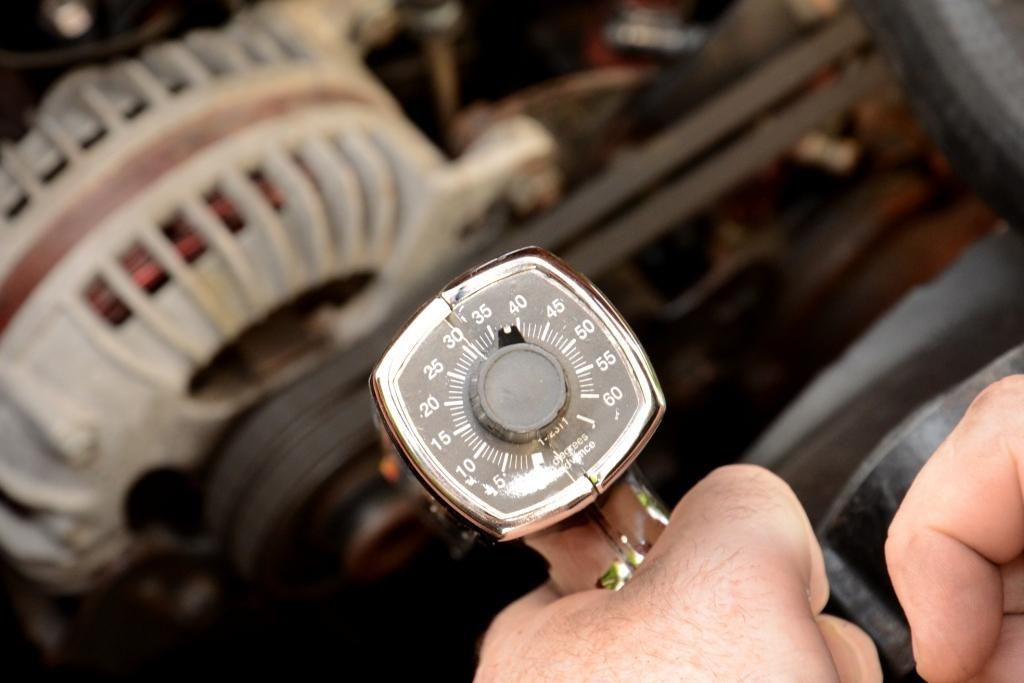
On an older distributor-equipped engine, ignition timing can often be checked using a timing light.
The timing light flashes when a particular cylinder fires. The technician can then compare the crankshaft timing marks with the specified ignition timing.
The engine may need to be operated at a specified RPM or under specified conditions during the test.
On modern engines, a scan tool is generally more useful.
The technician may check:
-
Ignition advance
-
Engine RPM
-
Crankshaft position
-
Camshaft position
-
Knock sensor activity
-
Misfire counters
-
Engine load
-
Throttle position
-
Intake manifold pressure
-
Engine coolant temperature
The actual ignition timing can then be compared with the expected behavior.
Can a Timing Light Be Used on a Modern Engine?
Sometimes, but its usefulness depends on the ignition system and whether suitable timing references are available.
Many modern engines do not have the same type of adjustable distributor-based ignition system found on older engines.
For these engines, a scan tool and appropriate diagnostic equipment are generally more useful for evaluating ignition timing.
If a mechanical timing problem is suspected, crankshaft and camshaft synchronization should also be checked.
What Is Dynamic Ignition Timing?
Dynamic ignition timing refers to ignition timing while the engine is running.
This is important because the required timing changes according to engine speed and load.
An engine may have one timing value at idle and a significantly different value at higher RPM and different load conditions.
Therefore, checking only one timing value may not reveal an intermittent or load-dependent problem.
What Is Static Ignition Timing?
Static timing refers to determining the ignition position when the engine is not running or is positioned at a specified reference point.
This was particularly relevant to older ignition systems.
Some older engines could be positioned at a specified crankshaft angle and the distributor adjusted so that the ignition system was correctly synchronized.
This method is generally not applicable to modern distributorless ignition systems.
Can Incorrect Mechanical Timing Affect Ignition Timing?
Yes.
If the timing belt or timing chain is installed incorrectly or jumps teeth, the relationship between the crankshaft and camshaft changes.
The ECU may detect this through the crankshaft and camshaft position sensors.
Depending on the vehicle, diagnostic trouble codes such as P0016, P0017, P0018, or P0019 may be stored.
Possible symptoms include:
-
Poor engine performance
-
Rough idle
-
Misfires
-
Difficult starting
-
Reduced power
-
Increased fuel consumption
-
Check Engine Light
In severe cases, an incorrectly timed engine can cause valve-to-piston contact in an interference engine.
Can Fuel Quality Affect Ignition Timing?
Yes.
Fuel with insufficient octane for the engine's operating conditions can increase the likelihood of knock.
Modern engines can respond by retarding ignition timing when knock is detected.
This can protect the engine, but performance may decrease.
Using the fuel grade recommended by the vehicle manufacturer is therefore important.
Does Engine Temperature Affect Ignition Timing?
Yes.
The ECU can modify ignition timing according to engine temperature.
Cold-start conditions require a different combustion strategy from a fully warmed engine.
If an engine coolant temperature sensor provides incorrect information, the ECU may calculate inappropriate ignition timing along with other fuel and idle-control parameters.
Does LPG Affect Ignition Timing?
LPG-powered engines can require different ignition strategies because LPG has different combustion characteristics from gasoline.
Depending on the system, the LPG ECU may communicate with or influence the gasoline ECU's ignition strategy, or the engine may operate using a calibration specifically designed for LPG operation.
Incorrect LPG calibration can contribute to:
-
Misfires
-
Poor acceleration
-
Excessive combustion temperatures
-
Poor fuel economy
-
Engine hesitation
Ignition timing should therefore be evaluated together with fuel mixture and LPG calibration when diagnosing an LPG-equipped engine.
How Is Ignition Timing Corrected?
The correction method depends entirely on the engine.
On an older distributor-equipped engine, the distributor may be adjusted according to the manufacturer's specifications.
On a modern engine, the solution is usually to repair the underlying problem rather than manually changing the timing.
Possible repairs include:
-
Replacing a faulty crankshaft position sensor
-
Replacing a faulty camshaft position sensor
-
Repairing damaged wiring
-
Repairing ignition coil problems
-
Correcting mechanical timing
-
Replacing a timing belt or chain
-
Repairing VVT components
-
Correcting ECU calibration problems
-
Repairing fuel-system problems
-
Correcting LPG calibration
ECU tuning can also change ignition timing, but this should only be performed using a properly developed calibration appropriate for the specific engine and fuel.
Is More Ignition Advance Better?
No.
This is one of the most common misconceptions about ignition timing.
Increasing ignition advance can sometimes improve torque under certain operating conditions, but excessive advance can cause knock and damaging cylinder pressures.
The ideal ignition timing is the timing that produces the required combustion pressure at the correct point in the engine cycle while maintaining safe combustion.
The optimum value changes with RPM, load, temperature, fuel, compression ratio, combustion chamber design, and many other factors.
Can Incorrect Ignition Timing Damage the Engine?
Yes.
Severely incorrect ignition timing can cause significant engine problems.
Excessive advance can increase the risk of knock and abnormal combustion, potentially damaging:
-
Pistons
-
Piston rings
-
Connecting rods
-
Bearings
-
Cylinder head components
Excessively retarded timing can increase exhaust temperatures and place additional thermal stress on the exhaust valves, catalytic converter, and other components.
This is why ignition timing should not be changed arbitrarily.
Final Thoughts
Ignition timing determines when the spark plug initiates combustion relative to piston and crankshaft position.
Older engines may allow ignition timing to be adjusted mechanically through a distributor, while modern engines generally calculate and control ignition timing electronically through the ECU.
When ignition timing appears incorrect, the correct approach is not simply to advance or retard it. The engine should first be diagnosed to determine whether the problem comes from the ignition system, crankshaft or camshaft sensors, mechanical timing, fuel system, knock control, wiring, ECU calibration, or another component.
Correct ignition timing is ultimately about starting combustion at the right moment for the engine's specific operating conditions, not simply firing the spark as early as possible.