TR
TR EN
EN

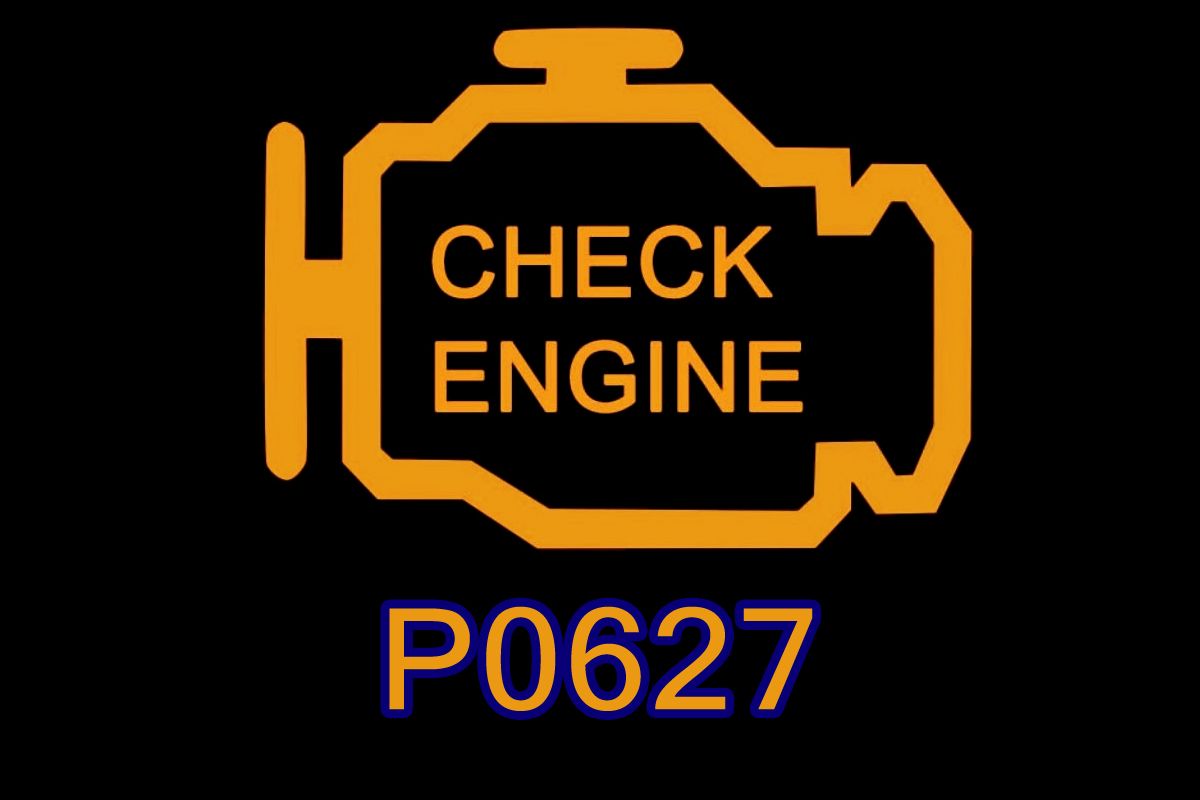
P0627 Fuel Pump "A" Control Circuit/Open
The P0627 – Fuel Pump "A" Control Circuit/Open diagnostic trouble code (DTC) indicates that the ECM/PCM has detected an open or interrupted electrical circuit in the control system for Fuel Pump "A".
In simple terms:
The engine computer is trying to control the fuel pump, but it detects that the control circuit is electrically open or that the expected control signal is missing.
P0627 is primarily an electrical circuit fault. It does not automatically mean that the fuel pump itself has failed.
The problem may be located in:
-
Fuel pump
-
Fuel pump relay
-
Fuel Pump Control Module (FPCM)
-
Fuse
-
Wiring
-
Electrical connector
-
Ground circuit
-
ECM/PCM
-
CAN communication system, depending on vehicle design
What Does P0627 Mean?
The fuel pump needs an electrical circuit through which it receives power or a control command.
A simplified system can look like this:
ECM/PCM → Fuel Pump Control Circuit → Relay/FPCM → Fuel Pump → Ground
If the ECM/PCM detects that this circuit is open, interrupted or missing the expected electrical response, it can store P0627.
The word "Open" is important.
An open circuit means electrical current cannot flow through the intended path.
For example:
Broken wire → Circuit interrupted → Fuel pump cannot receive command/power → P0627
What Is Fuel Pump "A"?
"Fuel Pump A" is a generic designation used by the OBD-II system.
It does not necessarily mean that the vehicle has multiple fuel pumps.
Depending on the vehicle, Fuel Pump "A" may refer to:
-
The primary fuel pump
-
A specific fuel pump circuit
-
A particular pump control output
-
One channel of a fuel pump control module
The exact meaning should be confirmed using the vehicle's wiring diagram.
What Causes P0627?
Possible causes include:
-
Broken fuel pump control wire
-
Open circuit
-
Disconnected fuel pump connector
-
Corroded connector
-
Failed fuel pump relay
-
Blown fuse
-
Failed fuel pump
-
Failed Fuel Pump Control Module
-
Poor fuel pump ground
-
Damaged wiring near the fuel tank
-
ECM/PCM control circuit failure
-
CAN communication problem
-
Low system voltage
-
Previous incorrect wiring repair
Can a Bad Fuel Pump Cause P0627?
Yes, but it is not the only possibility.
A completely failed fuel pump can result in an open electrical condition.
For example, if the pump motor winding has failed internally:
Fuel pump motor open → No current flow → ECM detects abnormal circuit → P0627
However, the same code can occur because the wiring or relay between the ECM and fuel pump is open.
Therefore, replacing the fuel pump immediately is not always the correct repair.
Can a Blown Fuel Pump Fuse Cause P0627?
Yes, depending on the vehicle's circuit design.
A blown fuse can interrupt the electrical supply to the fuel pump or its control circuit.
The technician should determine why the fuse failed.
If a replacement fuse immediately blows again, there may be:
-
Short circuit
-
Internally shorted fuel pump
-
Damaged wiring
-
Faulty control module
Installing a larger fuse is never an appropriate repair.
Can a Fuel Pump Relay Cause P0627?
Yes.
If the vehicle uses a conventional fuel-pump relay, a failed relay can interrupt the pump circuit.
Possible relay problems include:
-
Burned contacts
-
Failed coil
-
Corrosion
-
Loose relay socket
-
Internal mechanical failure
The relay should be tested rather than replaced automatically.
Can a Fuel Pump Control Module Cause P0627?
Yes.
Many newer vehicles use an FPCM (Fuel Pump Control Module) rather than simply switching the pump on and off through a conventional relay.
A simplified system may be:
ECM/PCM → FPCM → Fuel Pump
If the FPCM loses power, ground or communication, or its output circuit fails, P0627 may occur.
Can a Bad Ground Cause P0627?
Yes, potentially.
The fuel pump needs a complete electrical circuit.
A poor or disconnected ground can interrupt current flow and create symptoms similar to an open circuit.
Check:
-
Fuel pump ground
-
FPCM ground
-
ECM/PCM ground
-
Chassis ground connections
A voltage-drop test under load is particularly useful.
Can a Bad Connector Cause P0627?
Yes.
A disconnected, loose or corroded connector can create an open circuit.
Inspect the connector at the:
-
Fuel pump
-
Fuel tank
-
FPCM
-
Relay
-
Fuse box
Look for:
-
Corrosion
-
Bent terminals
-
Loose pins
-
Burned terminals
-
Water intrusion
-
Broken wires immediately behind the connector
Can Damaged Wiring Cause P0627?
Yes, and this is one of the most important causes to investigate.
Fuel pump wiring can be damaged by:
-
Vibration
-
Heat
-
Moisture
-
Corrosion
-
Previous repairs
-
Road debris
-
Fuel-tank removal
-
Bodywork
Pay particular attention to the wiring around the fuel tank because it can be difficult to see without inspection.
Can CAN Communication Cause P0627?
Potentially.
In vehicles equipped with an FPCM, the ECM may communicate with the fuel pump control module through the vehicle's network.
A communication problem can prevent the pump from receiving the correct command.
If P0627 appears together with U-codes, investigate:
-
CAN-H
-
CAN-L
-
FPCM power
-
FPCM ground
-
Network communication
before replacing the fuel pump.
Can Low Battery Voltage Cause P0627?
Potentially.
Low system voltage can interfere with fuel pump operation and module communication.
Check:
-
Battery voltage
-
Battery terminals
-
Charging voltage
-
Engine and chassis grounds
If several low-voltage codes are stored at the same time, investigate the vehicle's electrical system first.
Can a Bad Alternator Cause P0627?
Indirectly, potentially.
An alternator that is not charging correctly can cause low system voltage.
This can affect the fuel pump and its control modules.
If P0627 appeared together with multiple electrical faults, test the charging system.
Symptoms of P0627
Possible symptoms include:
-
Check Engine Light
-
Engine cranks but does not start
-
Hard starting
-
Extended cranking
-
Engine stalling
-
Intermittent starting
-
Loss of power
-
Poor acceleration
-
Fuel pressure problems
-
Fuel pump not running
-
No audible fuel-pump priming
The severity depends on whether the open circuit is permanent or intermittent.
Can P0627 Cause a No-Start Condition?
Yes.
This is one of the most important consequences of P0627.
If the fuel pump cannot receive the necessary electrical command or power, it may not generate fuel pressure.
The result can be:
Fuel pump circuit open → Fuel pump does not operate → Fuel pressure does not build → Engine cranks but does not start
Can P0627 Cause Engine Stalling?
Yes.
If the fuel pump circuit intermittently opens while the engine is running, fuel pressure can suddenly drop.
This can cause:
-
Hesitation
-
Loss of power
-
Engine misfire
-
Engine stalling
An intermittent connector or broken wire can be particularly difficult to diagnose because the vehicle may restart after the connection is restored.
Can P0627 Cause Low Fuel Pressure?
Yes, indirectly.
P0627 is an electrical circuit code, not a direct fuel-pressure code.
However, if the open circuit prevents the pump from operating, fuel pressure can become zero or significantly lower than specification.
Therefore, both:
Electrical fuel-pump circuit
and, when appropriate:
Actual fuel pressure
should be tested.
Can P0627 Cause Poor Acceleration?
Yes, potentially.
If the fuel pump is operating intermittently or not receiving the correct control signal, fuel delivery can become insufficient.
Possible symptoms include:
-
Hesitation
-
Poor acceleration
-
Loss of power
-
Engine stumbling
-
Stalling
Is P0627 a Serious Code?
Yes.
A fuel pump control circuit failure can leave the vehicle unable to start or cause the engine to stall unexpectedly.
If the vehicle is already experiencing:
-
Stalling
-
No-start
-
Severe power loss
-
Intermittent fuel delivery
the fault should be diagnosed promptly.
Can You Drive With P0627?
If the vehicle is operating normally, it may be possible to drive it a short distance for diagnosis.
However, this is not a code that should be ignored.
An intermittent open circuit can suddenly become permanent.
If the engine is already stalling or losing power, continued driving is not recommended.
How Is P0627 Diagnosed?
A systematic electrical diagnosis is the best approach.
1. Scan all control modules
Record all stored and pending DTCs.
Pay particular attention to:
-
Fuel pump codes
-
FPCM codes
-
Voltage codes
-
Communication U-codes
2. Check the battery
Verify that battery voltage is adequate.
3. Check fuel pump fuses
Verify both fuse condition and power supply.
4. Test the fuel pump relay
If the vehicle uses a relay, check its operation and terminals.
5. Check the fuel pump connector
Inspect for corrosion, loose pins and damaged wiring.
6. Check fuel pump power
Command the pump on and measure voltage at the pump.
7. Check fuel pump ground
Verify the ground circuit under load.
8. Check continuity of the control circuit
An open wire between modules or components can be identified with appropriate circuit testing.
9. Check the FPCM
If equipped, verify:
-
Power
-
Ground
-
Communication
-
Input command
-
Output to fuel pump
10. Measure fuel pressure
If the pump is not operating correctly, confirm whether fuel pressure is actually below specification.
11. Check ECM/PCM control
If all external components and wiring are correct, investigate the ECM/PCM control circuit.
Why Is Continuity Testing Alone Not Enough?
A wire can show continuity with a multimeter and still fail when the fuel pump is operating under load.
For this reason, technicians should also consider:
-
Voltage-drop testing
-
Load testing
-
Current measurement
-
Commanded-state testing
For example:
Continuity test: PASS
but:
Pump operating → Voltage drops significantly → Excessive resistance
This can produce fuel-pump problems even though the wire appears electrically continuous.
How Do You Test the Fuel Pump Circuit?
The exact procedure depends on the vehicle.
Generally, determine:
-
Is the pump being commanded ON?
-
Is voltage reaching the pump?
-
Is the ground good?
-
Is the control module operating?
-
Is the pump drawing current?
-
Is fuel pressure within specification?
These measurements help determine whether the problem is:
Control → Wiring → Power → Ground → Pump
rather than simply assuming the pump has failed.
How Do You Test the Fuel Pump?
If the fuel pump is receiving correct voltage and ground but does not operate, the pump itself becomes a stronger suspect.
Current draw can also provide useful information.
For example:
No current → Open pump circuit or failed pump
Excessive current → Possible internally failing or mechanically restricted pump
Normal current but inadequate pressure → Possible pump mechanical problem or fuel-delivery restriction
Always compare measurements with the manufacturer's specifications.
What If P0627 Appears With P0628?
These codes are closely related.
P0627 – Fuel Pump "A" Control Circuit/Open
indicates an open or interrupted control circuit.
P0628 – Fuel Pump "A" Control Circuit Low
indicates that the control circuit voltage/signal is lower than expected.
If both codes appear, investigate the circuit carefully for:
-
Intermittent wiring
-
Short to ground
-
Connector problems
-
FPCM faults
-
Relay problems
What If P0627 Appears With P0629?
P0629 – Fuel Pump "A" Control Circuit High
indicates a high condition in the same general control system.
If P0627 and P0629 appear intermittently, unstable wiring, connector problems or control-module operation should be investigated.
What If P0627 Appears With P069E?
P069E – Fuel Pump Control Module Requested MIL Illumination
can appear when the FPCM detects a problem and requests MIL illumination.
If P0627 and P069E appear together, pay particular attention to:
-
FPCM
-
FPCM power supply
-
FPCM ground
-
Fuel pump output
-
CAN communication
What If P0627 Appears With U-Codes?
Multiple U-codes can indicate that the problem is broader than the fuel pump itself.
Check:
Battery → Power → Ground → CAN wiring → FPCM → ECM/PCM
before replacing the pump.
Can the ECM/PCM Cause P0627?
Yes, potentially.
The ECM/PCM may directly control a fuel-pump relay or communicate with an FPCM.
If the ECM's internal driver circuit fails, the expected control signal may not be produced.
However, the ECM should be considered only after the external circuit has been tested.
Can P0627 Be Fixed Without Replacing the Fuel Pump?
Absolutely.
Possible repairs include:
-
Repairing a broken wire
-
Repairing a connector
-
Replacing a faulty relay
-
Replacing a blown fuse after correcting its underlying cause
-
Repairing a ground
-
Repairing or replacing the FPCM
-
Repairing CAN communication
-
Repairing the ECM control circuit
The fuel pump should only be replaced when testing confirms that it is faulty.
Can P0627 Be Cleared With an OBD Scanner?
The code can usually be cleared after diagnosis.
However, clearing P0627 does not repair an open circuit.
If the circuit remains open, the code will return.
The correct procedure is:
Diagnose → Repair → Clear → Test → Rescan
Does P0627 Mean the Fuel Pump Is Bad?
No.
This is one of the most important points.
P0627 specifically indicates an open condition in the Fuel Pump "A" control circuit.
The actual problem could be:
Fuel pump → Relay → Fuse → FPCM → Wiring → Connector → Ground → ECM/PCM
Therefore, replacing the pump without testing the circuit can result in an unnecessary repair.
Common Diagnostic Mistakes
Replacing the fuel pump immediately
The actual problem may be a broken wire or failed relay.
Checking only fuel pressure
Fuel pressure does not tell you whether the electrical control circuit is open.
Checking only continuity
The circuit may pass a static continuity test but fail under load.
Ignoring the fuel pump ground
A poor ground can interrupt pump operation.
Ignoring the FPCM
Modern vehicles may use a dedicated fuel pump control module.
Ignoring communication codes
CAN problems can prevent the fuel pump module from receiving commands.
Replacing a fuse without finding the cause
If the fuse continues to fail, an underlying electrical problem remains.
How Is P0627 Repaired?
The correct repair depends on the confirmed cause.
Possible repairs include:
-
Repairing broken fuel-pump wiring
-
Repairing an open control circuit
-
Replacing damaged connectors
-
Repairing corroded terminals
-
Replacing a faulty fuel pump relay
-
Replacing a blown fuse after correcting the cause
-
Repairing the fuel pump ground
-
Replacing a defective FPCM
-
Repairing CAN communication
-
Replacing a failed fuel pump
-
Repairing the ECM/PCM control circuit
How Do You Clear P0627?
After completing the repair:
Scan all modules → Check battery voltage → Check fuses → Test relay/FPCM → Check fuel pump power → Check ground → Test control wiring → Test pump → Verify fuel pressure → Repair fault → Clear DTC → Start engine → Road test → Rescan
If P0627 does not return and the fuel system operates normally, the repair has likely been successful.
Final Thoughts on P0627
P0627 – Fuel Pump "A" Control Circuit/Open indicates that the vehicle has detected an open or interrupted electrical condition in the Fuel Pump "A" control circuit.
The most important areas to investigate are:
Fuse → Relay → FPCM → Wiring → Connectors → Ground → Fuel pump → ECM/PCM → CAN communication
The most important point is that P0627 does not automatically mean the fuel pump needs to be replaced.
A proper diagnosis should determine whether the circuit is actually open and identify exactly where the interruption occurs.
If the vehicle is experiencing hard starting, no-start, engine stalling or sudden loss of power, the fault should be addressed promptly because a fuel-pump circuit failure can completely interrupt fuel delivery.