TR
TR EN
EN

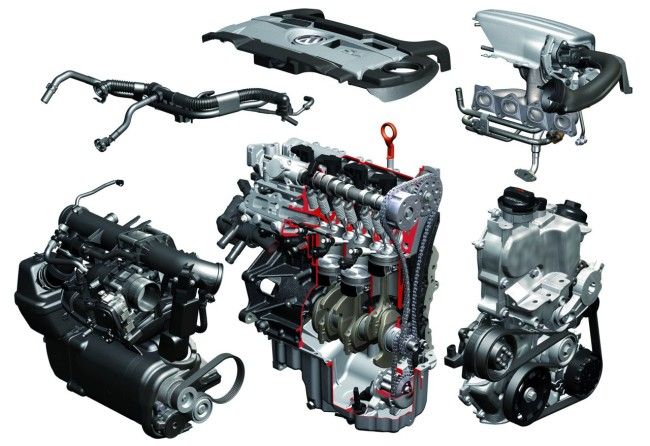
What Is the Volkswagen TSI System?
Volkswagen TSI is a gasoline engine technology that combines turbocharging with direct fuel injection. The TSI name is commonly associated with Turbocharged Stratified Injection.
TSI technology was developed by the Volkswagen Group and has been used not only in Volkswagen vehicles but also across brands such as Audi, SEAT, and Škoda, with different engine generations and configurations.
The main idea behind TSI is to produce strong power and torque from a relatively small engine while maintaining reasonable fuel consumption and emissions.
How Does a TSI Engine Work?
A TSI engine can be understood through three main systems: the turbocharger, direct injection, and electronic engine management.
Turbocharger
The turbocharger uses exhaust gas energy to force more air into the engine. With more air available for combustion, the engine control unit can inject an appropriate amount of additional fuel and produce more power.
This allows relatively small engines, such as 1.0-liter or 1.5-liter units, to produce considerably more torque than a naturally aspirated engine of similar size.
Direct Fuel Injection
Instead of injecting fuel into the intake manifold, TSI engines inject fuel directly into the combustion chamber.
The injectors spray fuel at precisely controlled times, while the ECU continuously adjusts injection quantity and timing according to engine speed, load, temperature, air pressure, and other operating conditions.
Electronic Engine Management
The engine control unit manages many parameters simultaneously, including:
-
Turbocharger boost
-
Fuel pressure
-
Injection timing
-
Injection quantity
-
Ignition timing
-
Throttle position
-
Airflow
-
Exhaust emissions
-
Valve timing
For this reason, TSI does not simply mean “a turbocharged engine.” Turbocharging, direct injection, and sophisticated engine management work together as a complete system.
Why Does Volkswagen Use Turbocharging in TSI Engines?
The main advantage of turbocharging is that it allows a smaller engine to produce the torque and power of a larger naturally aspirated engine under many operating conditions.
A turbocharger increases the amount of air entering the combustion chamber. The engine can then burn an appropriate amount of fuel with that additional air and generate more torque.
This is particularly noticeable during acceleration and when climbing hills.
However, turbocharging also means that the engine depends on several additional components. Boost hoses, the intercooler, wastegate or electronic turbo actuator, boost-control system, pressure sensors, and related wiring can all affect turbocharger operation.
Therefore, a loss of power on a TSI engine does not automatically mean that the turbocharger itself has failed.
Direct Injection in TSI Engines
Direct injection is one of the most important characteristics of TSI technology.
Because fuel is injected directly into the combustion chamber, the ECU has very precise control over the amount and timing of fuel delivery.
This can help improve:
-
Fuel efficiency
-
Torque production
-
Emissions control
-
Cold-start performance
-
Combustion control
However, direct injection also creates some specific maintenance considerations.
One well-known issue on some direct-injection gasoline engines is carbon buildup on the intake valves.
In a traditional port-injected engine, fuel passes through the intake ports and can provide some cleaning effect. With direct injection, fuel is sprayed directly into the combustion chamber, so the back of the intake valves does not receive the same fuel contact.
As a result, deposits can develop depending on the engine design, PCV system, driving conditions, oil vapor levels, and other factors.
Not every TSI engine suffers from carbon buildup to the same degree. Engine generation and specific design are important.
Advantages of TSI Engines
TSI engines offer several important advantages.
Strong low- and mid-range torque
Turbocharging allows a relatively small engine to produce substantial torque at everyday engine speeds. This can make the vehicle feel responsive in city traffic and during overtaking.
Good power from a small displacement
A smaller turbocharged engine can deliver power levels that would traditionally require a larger naturally aspirated engine.
Potentially lower fuel consumption
When driven under suitable conditions, a smaller TSI engine can operate efficiently and consume less fuel than a larger engine producing similar performance.
Precise fuel control
Direct injection allows the ECU to control fuel delivery very accurately.
Modern emissions management
Modern TSI engines combine direct injection, turbocharging, variable valve timing, oxygen sensors, particulate filters on some applications, and other technologies to control emissions.
Common TSI Engine Problems
The Volkswagen Group has produced many different TSI engines over the years. Therefore, there is no single list of problems that applies equally to every TSI engine.
Depending on the engine generation, some common areas of concern can include:
Carbon deposits
Direct injection can contribute to intake-valve deposits under certain conditions.
Turbocharger and boost-control problems
Boost leaks, wastegate or actuator problems, intercooler leaks, damaged hoses, pressure sensors, and control-system faults can cause poor performance.
Fuel injector problems
A faulty direct-injection injector can cause rough running, misfires, difficult starting, increased fuel consumption, or poor acceleration.
High-pressure fuel system problems
Many TSI engines use both a low-pressure fuel system and a high-pressure fuel system. Problems with the high-pressure fuel pump, fuel-pressure regulation, or related components can become more noticeable under heavy engine load.
Ignition problems
Spark plugs and ignition coils are particularly important on turbocharged gasoline engines. A weak coil or worn spark plug can cause misfires, hesitation, vibration, and loss of power.
PCV system problems
The crankcase ventilation system can affect engine vacuum, air/fuel control, idle quality, and oil consumption when it develops a fault.
Cooling-system problems
Thermostats, water pumps, coolant leaks, temperature sensors, and other cooling components can affect engine temperature and overall operation.
TSI Engine Oil Consumption
Oil consumption is one of the subjects frequently discussed when TSI engines are mentioned.
However, it would be incorrect to say that all TSI engines consume excessive oil.
Some older TSI generations became known for higher-than-desired oil consumption, which could be related to piston-ring design, crankcase ventilation, turbocharger condition, or other engine-specific factors.
Later generations received various design changes, so their behavior can be different.
For this reason, a used TSI vehicle should not be judged simply because it has a TSI badge. The engine code, production year, engine generation, maintenance history, and actual oil consumption are much more useful when evaluating the vehicle.
TSI Timing Chain and Timing Belt Systems
Not every TSI engine uses the same timing system.
Depending on the engine generation, Volkswagen Group TSI engines can use either a timing chain or a timing belt. The design and recommended maintenance procedure also vary between engine families.
Therefore, it is not accurate to say that every TSI engine has a chain or that every TSI engine has a belt.
When buying a used TSI vehicle, the engine code should be identified and the manufacturer's maintenance requirements for that specific engine should be checked.
Why Are TSI Engines Powerful for Their Size?
The performance of a TSI engine does not come from the turbocharger alone.
Power and torque are produced through the combined operation of:
-
Turbocharging
-
Direct fuel injection
-
High-pressure fuel delivery
-
Precise ignition control
-
Variable valve timing
-
Electronic throttle control
-
Intercooling
-
Engine-management software
This combination allows a relatively small engine to produce substantial torque without requiring a very large displacement.
TSI Fuel Consumption
One of the major reasons for using TSI technology is the potential for good fuel economy.
However, real-world fuel consumption depends on much more than engine displacement.
Driving style
Frequent hard acceleration increases boost pressure and fuel consumption.
Urban driving
Short trips, traffic, frequent stops, and operating the engine before it reaches normal temperature can significantly increase consumption.
Turbocharger load
A turbocharged engine can be economical under light load, but when the engine is operating under high load and producing substantial boost, fuel consumption naturally increases.
Vehicle weight and transmission
The same TSI engine can have very different fuel consumption figures depending on the vehicle, transmission, gearing, and overall weight.
Maintenance condition
Spark plugs, air filters, injectors, sensors, tire pressure, engine oil, and other components can all influence efficiency.
What Fuel Should Be Used in a TSI Engine?
The safest approach is to follow the minimum octane rating and fuel specification specified by the vehicle manufacturer.
Using a higher-octane fuel does not automatically mean that every TSI engine will produce more power. Modern ECUs can adjust ignition timing based on knock detection and operating conditions, but the engine should still be operated with fuel that meets the manufacturer's requirements.
High-performance or high-compression TSI engines may be more sensitive to fuel quality, making the correct fuel specification particularly important.
TSI Engine Maintenance
Proper maintenance is important for the long-term reliability of a TSI engine.
Engine oil should meet the manufacturer's required specification rather than being selected solely by viscosity. Using an oil with the wrong approval or specification can be inappropriate even if the viscosity appears suitable.
Other important maintenance areas include:
Spark plugs and ignition coils
The condition of the ignition system should be monitored, particularly if the engine develops hesitation or misfires.
Turbocharger and boost system
Boost hoses, intercooler connections, actuators, and related components should be inspected if power delivery changes.
Cooling system
Coolant level, leaks, thermostat operation, water pump condition, and engine temperature should be monitored.
Fuel system
If starting, acceleration, or misfire problems develop, fuel pressure and injector operation should be tested rather than replacing components without diagnosis.
PCV system
Crankcase ventilation problems can affect both engine operation and oil consumption.
Timing system
The timing belt or chain should be serviced according to the requirements of the specific engine code.
OBD diagnostics
When the engine warning light comes on, diagnostic trouble codes and live data should be examined.
On a modern TSI engine, measurement and diagnosis are generally much better than replacing parts based only on symptoms.
Symptoms of a TSI Engine Problem
A TSI engine may require diagnosis if it develops symptoms such as:
-
Rough idle
-
Hesitation during acceleration
-
Sudden loss of power
-
Misfires
-
Increased fuel consumption
-
Difficult starting
-
Excessive oil consumption
-
Abnormal exhaust smoke
-
Unusual turbocharger noises
-
Check Engine light
-
Reduced boost pressure
-
Limp mode
-
Vibration under load
None of these symptoms automatically identifies one failed component.
For example, poor acceleration could be caused by a boost leak, fuel-pressure problem, ignition fault, injector issue, sensor problem, or an engine-management fault.
Buying a Used TSI Vehicle
When purchasing a used TSI vehicle, identifying the exact engine is more important than simply knowing that it is a TSI.
The engine code and engine generation should be established first.
Different TSI generations can have different piston designs, timing systems, turbochargers, fuel systems, cooling systems, and known weaknesses.
A proper inspection should include:
Cold start
Listen for abnormal noises and check for rough running, excessive vibration, or difficult starting.
Oil consumption
Ask about oil consumption and inspect the maintenance history.
Turbocharger operation
The engine should deliver power smoothly without unusual turbo noises, boost leaks, or unexplained power reduction.
OBD scan
Check active, stored, and pending fault codes rather than looking only for a warning light.
Maintenance records
Oil changes, spark plugs, timing-system service, cooling-system repairs, and engine-specific maintenance should be reviewed.
What Is the Difference Between TSI, TFSI, and FSI?
FSI generally refers to Volkswagen Group gasoline engines using direct fuel injection.
TSI is generally associated with turbocharged gasoline engines using direct injection.
TFSI is a name used primarily within Audi and Volkswagen Group applications for turbocharged direct-injection gasoline engines.
The terminology has evolved over the years, however, and the badge alone does not provide a complete description of the engine's hardware.
The engine code and model year are much more useful when determining the exact technology used.
TSI Engines and OBD Diagnostics
Modern TSI engines contain many electronically controlled systems, making OBD diagnostics particularly useful.
For example, if a misfire code is stored, the correct approach is not automatically to replace the injector. Ignition coils, spark plugs, fuel pressure, injector operation, compression, air/fuel data, and cylinder-specific information may all need to be evaluated.
Likewise, a turbocharger-related fault does not automatically mean the turbocharger needs replacement.
The technician may need to compare requested and actual boost pressure, inspect boost hoses and the intercooler, check the wastegate or actuator, evaluate pressure sensors, and inspect the relevant electrical circuits.
This approach can prevent unnecessary and expensive parts replacement.
Are TSI Engines Reliable?
There is no single answer for every TSI engine because the Volkswagen Group has produced many different TSI generations.
A particular TSI engine can have a very different reliability profile from another TSI engine carrying the same badge.
The most important factors include:
-
Exact engine code
-
Engine generation
-
Production year
-
Maintenance history
-
Oil specification and service intervals
-
Driving conditions
-
Fuel quality
-
Cooling-system condition
-
Turbocharger condition
-
Previous repairs
A well-maintained TSI engine can provide strong performance and good efficiency, but ignoring maintenance can make the turbocharger, direct-injection fuel system, cooling system, and other components expensive to repair.
The Important Point About TSI
TSI is best understood as a family of Volkswagen Group turbocharged gasoline engine technologies rather than one specific engine.
The combination of turbocharging and direct fuel injection allows Volkswagen Group vehicles to obtain strong torque and useful performance from relatively small engines.
At the same time, the technology requires proper maintenance and accurate diagnosis. Carbon deposits, fuel-system faults, ignition problems, boost leaks, PCV issues, cooling-system faults, and engine-specific timing-system problems can all produce similar symptoms.
For anyone buying, maintaining, or diagnosing a TSI-powered vehicle, the most useful information is not simply the word TSI on the engine cover. The engine code, model year, generation, service history, and actual diagnostic data provide a much clearer picture of the engine's condition and reliability.