TR
TR EN
EN

P0190 Fuel Rail Pressure Sensor "A" Circuit Malfunction
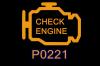
P0190 is an OBD-II diagnostic trouble code that indicates the engine control module (ECM) has detected a malfunction in the Fuel Rail Pressure Sensor “A” circuit.
The code is deliberately broad. It does not tell you that the fuel pressure is definitely too high or too low, nor does it automatically mean that the pressure sensor itself has failed.
Instead, P0190 tells you that the ECM has detected a problem with the electrical circuit responsible for monitoring fuel rail pressure.
That circuit can include the pressure sensor, its connector, wiring, reference voltage, sensor ground, signal circuit, and the ECM input.
What Is the Fuel Rail Pressure Sensor?
The Fuel Rail Pressure Sensor measures the pressure inside the fuel rail and sends this information to the ECM as an electrical signal.
The ECM uses this information to determine how the fuel system is operating and to adjust fuel delivery accordingly.
Depending on the engine, fuel rail pressure information can influence:
-
Fuel injection quantity
-
Fuel pressure regulation
-
Injection timing
-
Engine starting
-
Engine load calculations
-
Emissions control
-
Fuel-system protection
On many vehicles, the sensor has three basic circuits:
Reference voltage → Sensor → Signal → ECM
There is also a sensor ground circuit.
The exact design varies between manufacturers and fuel-system types.
What Does P0190 Actually Mean?
P0190 essentially means:
“The ECM has detected a problem with the Fuel Rail Pressure Sensor A circuit.”
It does not necessarily mean:
“Fuel pressure is wrong.”
And it does not necessarily mean:
“Replace the fuel rail pressure sensor.”
The fault could be electrical rather than mechanical.
For example, a broken signal wire can cause P0190 even when the fuel rail pressure sensor itself is perfectly healthy.
P0190 Is a General Circuit Code
The P0190 code sits at the beginning of a group of fuel rail pressure sensor-related codes.
Other codes in this family provide more specific information.
For example:
-
P0191 – Fuel Rail Pressure Sensor “A” Circuit Range/Performance
-
P0192 – Fuel Rail Pressure Sensor “A” Circuit Low Input
-
P0193 – Fuel Rail Pressure Sensor “A” Circuit High Input
-
P0194 – Fuel Rail Pressure Sensor “A” Circuit Intermittent/Erratic
P0190 is therefore the general circuit malfunction code.
When only P0190 is available, the technician needs to determine what kind of electrical failure has occurred.
Symptoms of P0190
The symptoms can vary considerably depending on the vehicle and the nature of the circuit failure.
Possible symptoms include:
-
Check Engine Light
-
Hard starting
-
Extended cranking
-
Engine hesitation
-
Rough idle
-
Poor acceleration
-
Loss of engine power
-
Engine stalling
-
Poor fuel economy
-
Reduced throttle response
-
Limp mode
-
Engine may fail to start
Some vehicles may continue running almost normally.
If the ECM can substitute a calculated fuel-pressure value, the driver may notice only the Check Engine Light.
Why Fuel Rail Pressure Matters
The engine needs the correct fuel pressure to deliver the appropriate amount of fuel.
If the ECM cannot trust the pressure sensor signal, it may have difficulty determining whether the fuel system is operating correctly.
This can be especially important on:
-
Gasoline direct-injection engines
-
Diesel common-rail engines
-
Other electronically controlled high-pressure fuel systems
The ECM may respond by changing fuel control or activating a protection strategy.
Common Causes of P0190
Faulty fuel rail pressure sensor
The sensor may have an internal electrical failure.
It can fail completely or produce an abnormal output.
Damaged wiring
The sensor harness may be:
-
Broken
-
Chafed
-
Melted
-
Crushed
-
Corroded
-
Contaminated
-
Damaged by vibration
Faulty connector
The connector can develop:
-
Corroded terminals
-
Loose terminals
-
Bent pins
-
Poor terminal tension
-
Broken locking mechanism
-
Water intrusion
-
Fuel or oil contamination
Open circuit
A break in the reference, signal, or ground circuit can prevent the ECM from receiving a valid sensor signal.
Short circuit
The signal circuit may be shorted to:
-
Ground
-
Voltage
-
Another electrical circuit
The result depends on the vehicle's specific wiring design.
Reference-voltage problem
A missing or incorrect reference voltage can prevent the sensor from operating correctly.
Sensor-ground problem
A poor sensor ground can cause an incorrect or unstable signal.
Actual fuel-pressure problem
A mechanical fuel-system fault may exist at the same time.
Possible causes include:
-
Fuel pump problem
-
Restricted fuel filter
-
Fuel pressure regulator problem
-
High-pressure pump problem
-
Fuel-pressure control problem
-
Fuel supply restriction
However, an actual pressure problem should not be assumed simply because P0190 is present.
ECM fault
An internal ECM input problem is possible, but this should generally be one of the last possibilities considered.
Start With a Full System Scan
Before replacing the sensor, perform a complete diagnostic scan.
Record:
-
Stored DTCs
-
Pending DTCs
-
Freeze-frame data
-
Fuel-pressure-related codes
-
Fuel-pump codes
-
Pressure-regulator codes
-
Engine synchronization codes
-
Low-voltage codes
-
Other sensor circuit codes
Additional codes can provide a major clue.
For example, if several sensors have circuit faults simultaneously, investigate the vehicle's reference-voltage and ground circuits before replacing individual sensors.
Check Freeze-Frame Data
Freeze-frame data can tell you when P0190 was triggered.
Look at:
-
Engine RPM
-
Engine load
-
Vehicle speed
-
Coolant temperature
-
Battery voltage
-
Commanded fuel pressure
-
Actual fuel pressure
-
Fuel rail pressure sensor voltage
This can help determine whether the fault occurs:
-
During starting
-
At idle
-
Under acceleration
-
At high engine speed
-
When the engine is hot
-
When the engine is cold
That information can significantly narrow the search.
Check the Live Fuel Rail Pressure Reading
Use a scan tool capable of displaying fuel-pressure data.
Observe the pressure while:
-
Turning the ignition on
-
Starting the engine
-
Idling
-
Increasing engine speed
-
Applying engine load
The exact expected pressure depends on the fuel system.
What matters is whether the reported pressure behaves logically and consistently.
Compare Commanded and Actual Pressure
On systems that provide both parameters, compare the requested pressure with the measured pressure.
If commanded and actual pressure follow each other normally, but the electrical sensor signal shows an obvious fault, investigate the sensor circuit.
If actual pressure cannot reach the requested value, investigate the fuel system itself.
This distinction prevents unnecessary replacement of expensive fuel-system components.
Inspect the Sensor Connector
The connector is one of the first physical components to inspect.
Check for:
-
Corrosion
-
Loose pins
-
Bent terminals
-
Damaged locking mechanism
-
Water
-
Fuel contamination
-
Oil contamination
-
Broken seals
Also inspect the harness immediately behind the connector.
A wire can break internally where it repeatedly bends.
Inspect the Wiring Harness
Follow the wiring as far as practical.
Look for contact with:
-
Exhaust components
-
Engine brackets
-
Moving parts
-
Sharp edges
-
High-temperature areas
Pay attention to previous repairs.
Poorly repaired wiring can create resistance, intermittent connections, or short circuits.
Check the Reference Voltage
If the sensor uses a regulated reference supply, verify it according to the manufacturer's specifications.
Do not assume a universal voltage value applies to every vehicle.
If the reference voltage is missing or abnormal, investigate the circuit before replacing the sensor.
If multiple sensors share the same reference supply, a single shorted component can sometimes affect several sensors.
Check the Sensor Ground
The ground circuit should be tested carefully.
A poor ground can cause the sensor's output to become incorrect even if the sensor itself is functioning properly.
Check for:
-
Excessive resistance
-
Voltage drop
-
Corrosion
-
Loose terminals
-
Damaged wiring
A voltage-drop test can be more useful than simply checking resistance with the circuit inactive.
Test the Signal Circuit
The signal wire between the sensor and ECM should be checked for:
-
Open circuit
-
Short to ground
-
Short to voltage
-
Excessive resistance
-
Intermittent connection
Use the manufacturer's wiring diagram to identify the correct terminals.
Never guess which wire is the signal circuit.
A Continuity Test Isn't Always Enough
An electrical wire can pass a basic continuity test and still be faulty.
For example, a conductor may have several broken strands.
At rest, the remaining strands provide continuity.
When the engine vibrates, the connection becomes unstable.
The ECM then sees an abnormal pressure signal and stores P0190.
This is why difficult circuit faults may require testing while the harness is moved or while the engine is operating.
Test the Fuel Rail Pressure Sensor
If the external wiring and circuits are correct, test the sensor.
Depending on the vehicle, this may involve:
-
Measuring signal voltage
-
Checking sensor output against actual pressure
-
Monitoring the sensor with a scan tool
-
Using an oscilloscope
-
Following a manufacturer-specific sensor test
The sensor should produce a signal that corresponds logically to fuel rail pressure.
Do Not Use Generic Pressure Values
Fuel pressure varies enormously between fuel systems.
A conventional gasoline injection system, gasoline direct-injection system, and diesel common-rail system do not operate at the same pressures.
Even two different engines using similar technology can have different specifications.
Always use the manufacturer's pressure specifications for the specific engine.
Safety on High-Pressure Fuel Systems
Extra care is required when diagnosing P0190 on direct-injection gasoline or diesel common-rail engines.
Fuel pressure can be extremely high.
Do not loosen high-pressure fuel lines to check whether pressure is present.
Do not touch or disconnect pressurized fuel-system components without following the manufacturer's pressure-release procedure.
Use appropriate diagnostic equipment and procedures.
Could the Fuel Pump Cause P0190?
It can contribute to fuel-pressure problems, but it is not the first thing to replace based solely on P0190.
First determine whether the problem is:
Electrical signal problem
or
Genuine fuel-pressure problem.
If the sensor reports low pressure and actual measured pressure is also low, investigate the fuel system.
If actual pressure is normal but the sensor signal is incorrect, concentrate on the sensor and its electrical circuit.
Could the Fuel Pressure Regulator Cause P0190?
A faulty pressure regulator can certainly cause incorrect rail pressure.
However, the diagnostic evidence should demonstrate that the physical pressure is incorrect.
If the actual fuel pressure is correct but the ECM receives an abnormal sensor signal, replacing the regulator will not fix the underlying problem.
P0190 vs. P0191
P0190 is a general Fuel Rail Pressure Sensor “A” circuit malfunction.
P0191 indicates that the sensor circuit is outside its expected range or performance.
P0191 therefore provides more information about the sensor's operating behavior.
P0190 vs. P0192
P0192 specifically means the sensor circuit has a low input.
With P0192, low signal voltage, a short to ground, or a sensor producing an abnormally low output becomes particularly important.
P0190 is less specific.
P0190 vs. P0193
P0193 indicates a high input from the Fuel Rail Pressure Sensor “A” circuit.
P0190 simply indicates that the circuit has malfunctioned without specifying whether the signal is high or low.
P0190 vs. P0194
P0194 indicates an intermittent or erratic sensor signal.
If the signal repeatedly disappears, jumps, or changes unexpectedly, P0194 becomes particularly relevant.
P0190 can still appear depending on the manufacturer's diagnostic strategy.
What If P0190 Appears With P0192 or P0193?
When multiple codes from the same sensor family appear, pay close attention to the sequence in which they were recorded.
For example, if P0190 and P0192 occur together, inspect the signal circuit for a low-voltage condition or short to ground.
If P0190 and P0193 occur, investigate an excessively high signal or short to voltage.
The freeze-frame data can help determine which condition occurred first.
Could Low Battery Voltage Cause P0190?
Unstable electrical power can affect electronic sensors and the ECM.
If P0190 appears alongside several unrelated electrical codes, check:
-
Battery voltage
-
Charging-system output
-
Battery terminals
-
Engine grounds
-
ECM power supply
If the vehicle's electrical system is stable and only the fuel-pressure sensor circuit is affected, focus on that circuit.
Could the ECM Be Faulty?
Yes, but an ECM fault should be considered only after the sensor and wiring have been tested.
Before condemning the ECM, verify:
-
Sensor operation
-
Reference voltage
-
Sensor ground
-
Signal circuit
-
Wiring continuity
-
Shorts
-
Connector condition
-
ECM power
-
ECM grounds
If all external circuits are correct and the ECM still fails to interpret the sensor signal correctly, an internal ECM fault becomes possible.
A Practical Diagnostic Example
Imagine a vehicle that arrives with P0190 and occasional stalling.
The technician checks the live fuel-pressure data.
The pressure reading occasionally disappears completely.
The actual fuel system appears to maintain pressure normally.
The sensor connector is inspected and looks acceptable.
A wiggle test is then performed while monitoring the sensor signal.
Moving the harness causes the pressure reading to disappear.
Further inspection reveals a partially broken signal wire near the connector.
The sensor is good.
The fuel pump is good.
The wiring is the actual cause of P0190.
Another Possible Scenario
A different vehicle has P0190 continuously.
The wiring and connector are in good condition.
The reference voltage and sensor ground are correct.
The actual fuel pressure is within specification.
However, the pressure sensor's output remains incorrect.
The sensor fails its manufacturer-specified test.
In this case, replacing the Fuel Rail Pressure Sensor is the appropriate repair.
How Should P0190 Be Repaired?
The correct repair depends on the actual cause.
Possible repairs include:
-
Replacing the Fuel Rail Pressure Sensor
-
Repairing damaged wiring
-
Replacing the sensor connector
-
Repairing loose or corroded terminals
-
Restoring the reference voltage
-
Repairing the sensor ground
-
Repairing a genuine fuel-pressure problem
-
Repairing the ECM connector
-
Repairing or replacing the ECM after an internal fault has been conclusively confirmed
After completing the repair, clear the DTC and perform a test drive.
Monitor fuel rail pressure and sensor data to ensure the fault does not return.
Final Diagnosis
P0190 – Fuel Rail Pressure Sensor “A” Circuit Malfunction is a general code indicating that the ECM has detected a problem with the electrical circuit used to monitor fuel rail pressure.
The main areas to investigate are:
-
Fuel rail pressure sensor
-
Sensor connector
-
Signal wiring
-
Reference-voltage circuit
-
Sensor ground
-
Actual fuel pressure
-
Fuel-pressure control system
-
ECM input circuit
A reliable diagnostic approach is:
Scan all codes → check freeze-frame data → monitor live fuel-pressure data → compare commanded and actual pressure → inspect the connector → inspect the wiring → verify reference voltage and ground → test the signal circuit → test the sensor → verify actual fuel pressure when necessary → evaluate the ECM last.
The most important point is that P0190 identifies a fuel rail pressure sensor circuit malfunction, not necessarily a failed sensor or low fuel pressure.
A loose terminal, damaged harness, short circuit, missing reference voltage, poor sensor ground, or genuine fuel-system problem can all lead to the same code. The electrical signal and the actual fuel pressure should therefore be separated during diagnosis before any expensive component is replaced.