TR
TR EN
EN

What Is an Airbag Brain? How Does It Work? Can It Be Repaired?
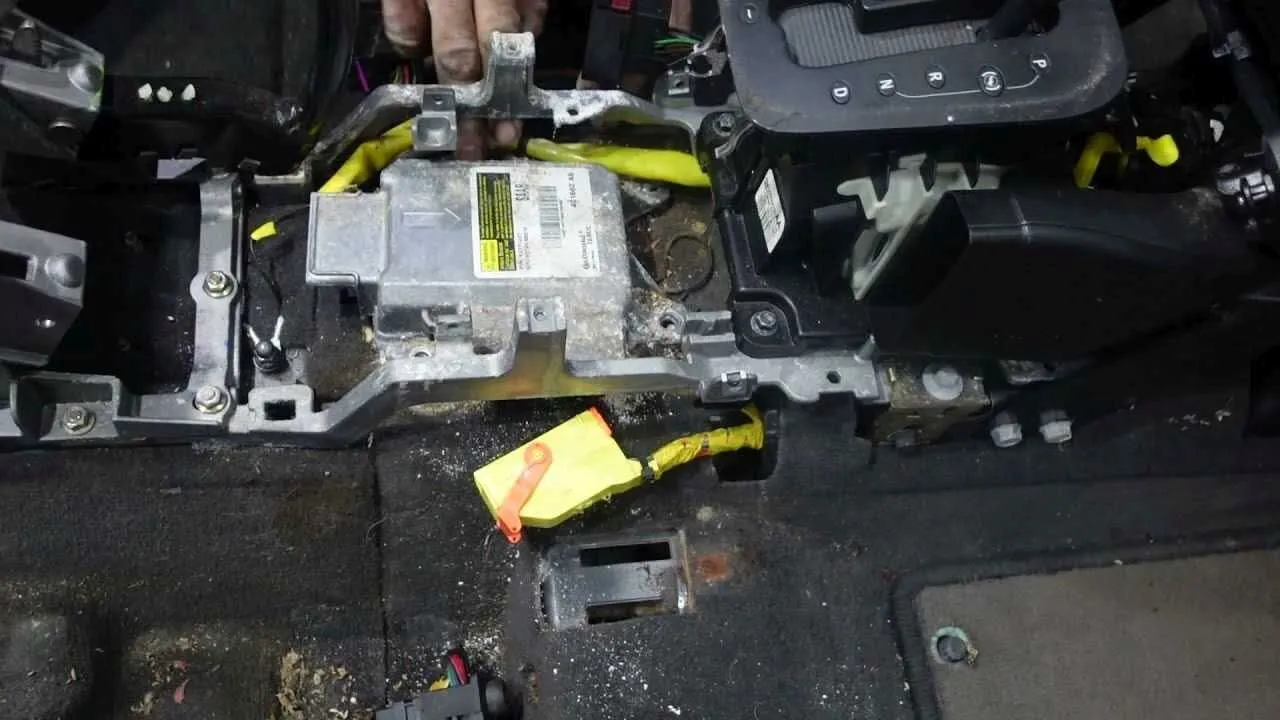
The airbag brain, commonly known in the automotive industry as the airbag control module, SRS control module, or airbag ECU, is the electronic control unit responsible for managing the vehicle's airbag and supplemental restraint system.
It is essentially the central computer of the airbag system.
The airbag brain constantly monitors information from crash sensors, seat belt sensors, occupant detection systems, and other safety-related components. When the vehicle is involved in a serious collision, it analyzes the information received from these sensors and determines whether one or more airbags or seat belt pretensioners need to be activated.
This decision must be made extremely quickly. In a serious crash, the airbag system may need to react within milliseconds.
Although the term "airbag brain" is commonly used by drivers and repair technicians, the technical name is usually Airbag Control Module or SRS Control Module.
What Is the Purpose of the Airbag Brain?
The main purpose of the airbag brain is to monitor and control the vehicle's Supplemental Restraint System (SRS).
It performs several different functions during normal driving and during a crash.
Depending on the vehicle, the airbag module may monitor or control:
-
Driver airbag
-
Front passenger airbag
-
Side airbags
-
Curtain airbags
-
Knee airbags
-
Seat belt pretensioners
-
Crash sensors
-
Seat occupancy sensors
-
Seat belt switches
-
Passenger classification systems
-
Seat position sensors
-
SRS warning light
-
Vehicle acceleration and deceleration information
The exact configuration differs between vehicle manufacturers and models.
Some vehicles have multiple separate crash sensors, while others incorporate some of the sensing functions into the airbag control module itself.
Where Is the Airbag Brain Located?
The location of the airbag brain varies depending on the vehicle.
It is commonly installed close to the center of the vehicle, for example:
-
Under the center console
-
Beneath the carpet
-
On the transmission tunnel
-
Under a front seat
-
Near the center of the passenger compartment
The central location is important because the module needs to accurately detect changes in vehicle acceleration and deceleration.
However, the exact location should always be determined using the manufacturer's service information.
How Does an Airbag Brain Work?
The airbag brain continuously monitors the SRS system while the vehicle is operating.
It receives information from various sensors and checks whether the electrical circuits and safety components are functioning correctly.
When a collision occurs, the sensors detect a sudden change in acceleration or pressure, depending on the type of sensor used.
The airbag module analyzes this information and determines whether the event meets the conditions required for airbag deployment.
If deployment is necessary, the module sends an electrical activation signal to the appropriate pyrotechnic devices.
The airbags can then deploy and the seat belt pretensioners can tighten the seat belts when required.
The entire process happens extremely quickly.
How Does the Airbag Brain Detect a Crash?
The airbag system does not rely on a single sensor in every vehicle.
Modern systems can use several types of sensors, including:
-
Front impact sensors
-
Side impact sensors
-
Acceleration sensors
-
Pressure sensors
-
Rollover sensors
-
Seat occupancy sensors
-
Seat belt sensors
The airbag brain processes the information received from these components.
It is designed to distinguish between normal driving events and a potentially dangerous collision.
For example, hard braking does not normally cause the airbags to deploy because the acceleration pattern is different from the characteristics of a serious crash.
Similarly, driving over a pothole or speed bump should not normally trigger airbag deployment.
Why Doesn't the Airbag Deploy in Every Accident?
Airbags are not designed to deploy in every collision.
Their deployment depends on factors such as:
-
Crash direction
-
Crash severity
-
Vehicle deceleration
-
Duration of the impact
-
Sensor information
-
Occupant position
-
Seat belt status
-
Vehicle design
-
Airbag system strategy
A vehicle can therefore suffer visible body damage without deploying every airbag.
The airbag brain determines which restraint devices are appropriate for the particular crash conditions.
What Happens to the Airbag Brain After a Crash?
One of the most important functions of some airbag modules is the recording of crash-related information.
After a significant collision, the module may store a crash event or deployment-related information in its memory.
Depending on the vehicle and module design, this information may remain stored even after the airbags have been replaced.
This is why replacing a deployed airbag does not necessarily solve an SRS warning light problem.
The airbag module itself may still contain crash-related data or permanent fault information.
What Is Crash Data in an Airbag Module?
Crash data is information stored by certain airbag control modules following a significant collision.
The exact information varies between manufacturers and module designs.
Depending on the system, the module may store information associated with:
-
Crash detection
-
Airbag deployment
-
Pretensioner activation
-
Sensor status
-
System faults
-
Vehicle acceleration
-
Restraint system conditions
Some modules can become locked or enter a crash-recorded state after deployment.
The repair procedure depends on the exact module and vehicle.
What Are the Symptoms of a Faulty Airbag Brain?
A faulty airbag brain can cause several warning signs.
The most common symptom is an illuminated airbag or SRS warning light.
Other possible symptoms include:
-
Airbag warning message
-
SRS fault codes
-
Communication errors
-
Seat belt pretensioner fault codes
-
Multiple airbag-related warnings
-
Intermittent SRS faults
-
Failure to communicate with the airbag module
-
Warning light remaining on after starting the vehicle
The presence of an airbag warning light should never be ignored.
An illuminated SRS warning light means that the restraint system has detected a fault, and one or more components may not operate as intended during a crash.
Why Does the Airbag Warning Light Stay On?
There are many possible reasons.
The airbag brain may detect a problem with:
-
Airbag wiring
-
Airbag connectors
-
Crash sensors
-
Seat occupancy sensors
-
Seat belt pretensioners
-
Seat belt switches
-
Low system voltage
-
Communication circuits
-
Internal module faults
-
Stored crash data
Therefore, an illuminated airbag light does not automatically mean that the airbag brain itself is defective.
The system should first be scanned using suitable SRS diagnostic equipment.
Can a Weak Battery Cause an Airbag Fault?
Yes, low battery voltage can sometimes cause SRS-related fault codes.
A weak battery, battery replacement, jump-starting, charging-system problems, or significant voltage fluctuations can cause certain electronic control modules to record temporary faults.
However, this does not mean that every airbag warning light is caused by the battery.
The correct approach is to read the stored diagnostic trouble codes and determine why the module detected the fault.
Does Disconnecting the Battery Reset the Airbag Brain?
Generally, no.
Disconnecting the battery removes electrical power from the vehicle, but it does not necessarily erase information stored in the airbag module's memory.
Many airbag modules use non-volatile memory for important information.
Therefore, disconnecting the battery should not be considered a method for removing crash data or repairing an SRS fault.
If a crash event has been stored, specialized procedures may be required depending on the vehicle.
Can an Airbag Brain Be Repaired?
In some cases, yes.
However, whether an airbag brain can be repaired depends on the specific module and the nature of the fault.
Possible repair situations include certain electronic faults, memory-related problems, communication issues, or modules that have stored crash information and are designed to be reset or reconditioned.
On the other hand, a module with severe physical damage, corrosion, water damage, or certain internal failures may require replacement.
The manufacturer's repair procedure should always be considered before deciding whether a module should be repaired or replaced.
What Does Airbag Module Reset Mean?
The term airbag module reset generally refers to restoring a module that has recorded a crash event to a serviceable condition when the module design and manufacturer's procedures allow it.
This is not necessarily the same thing as clearing diagnostic trouble codes.
A standard scan tool may be able to erase certain temporary faults, but crash-related information stored in non-volatile memory may require specialized equipment and procedures.
The exact process depends on the airbag module's hardware and software.
Is Airbag Module Repair the Same as Clearing Fault Codes?
No.
These are two different procedures.
Clearing fault codes means deleting diagnostic trouble codes that have been stored by the control module.
Airbag module repair or reset may involve restoring the module's internal memory or correcting an electronic problem.
If the original problem still exists, clearing the code will not solve it.
For example, if an airbag connector is damaged, the warning light may return immediately after the fault is cleared.
Can an OBD Scanner Reset the Airbag Brain?
It depends on the diagnostic tool.
A basic OBD-II scanner may only access emissions-related systems and may not communicate with the SRS module.
More advanced diagnostic equipment can access the airbag system and may allow a technician to:
-
Read SRS fault codes
-
Clear certain faults
-
View live data
-
Check sensor status
-
Perform system tests
-
Identify the module part number
-
Check communication faults
However, not every diagnostic device can reset crash data or program an airbag control module.
Specialized equipment may be required.
Why Does an Airbag Module Need Coding or Programming?
When an airbag brain is replaced, the replacement module may need to be configured for the vehicle.
Depending on the manufacturer, this may involve:
-
Coding
-
Programming
-
Variant configuration
-
Software initialization
-
Calibration
-
Vehicle configuration
-
Communication setup
A physically compatible module is not necessarily electronically ready to operate in another vehicle.
For this reason, replacing an airbag module is not always as simple as removing the old unit and installing another one.
What Causes an Airbag Brain to Fail?
Several different conditions can damage an airbag control module.
Crash damage
A serious accident can cause the module to record a crash event or, in some cases, sustain physical damage.
Water damage
Water entering the passenger compartment can damage electronic components and connectors.
This is particularly important when the module is located underneath the carpet or center console.
Electrical problems
Voltage spikes, incorrect jump-starting, wiring problems, or charging-system failures can affect sensitive electronic components.
Corrosion
Moisture can cause corrosion on circuit boards, connectors, terminals, and wiring.
Wiring problems
An open circuit, short circuit, poor ground, or damaged connector can prevent the airbag system from operating correctly.
Can Water Damage Cause an Airbag Module Failure?
Yes.
Water damage is a serious concern for an airbag module.
If a vehicle has been flooded or water has entered the interior, the SRS module should be inspected carefully.
Even when the vehicle appears to operate normally, moisture may remain inside electrical connectors.
Corrosion can then develop over time and create intermittent or permanent faults.
A water-damaged airbag module should not simply be cleaned and returned to service without proper inspection and testing.
Can a Wiring Problem Be Mistaken for a Bad Airbag Brain?
Absolutely.
This is one of the most important points when diagnosing an SRS fault.
An airbag-related diagnostic code does not automatically mean that the control module is defective.
The actual problem may be:
-
Damaged wiring
-
Loose connector
-
Corroded terminal
-
Broken ground connection
-
Damaged crash sensor
-
Faulty seat occupancy sensor
-
Defective seat belt pretensioner
-
Communication wiring problem
A technician should verify the relevant circuit before condemning the airbag module.
What Is an Airbag Squib?
An airbag inflator contains a pyrotechnic initiator commonly referred to as a squib.
When the airbag control module determines that deployment is necessary, it sends the appropriate electrical activation signal to the pyrotechnic circuit.
Because these components are designed to activate extremely quickly, SRS circuits must be handled using the manufacturer's approved procedures.
Airbag and pretensioner circuits should not be treated like ordinary electrical circuits.
Improper testing or handling can create a serious safety hazard.
Why Should Airbag Components Be Handled Carefully?
Airbags and seat belt pretensioners contain pyrotechnic components.
They are designed to activate rapidly and with considerable force.
For this reason, technicians should follow the vehicle manufacturer's safety procedures when diagnosing, removing, installing, or servicing SRS components.
Improper electrical testing, accidental activation, incorrect wiring, or unsuitable diagnostic procedures can be dangerous.
This is one area where professional equipment and manufacturer-specific procedures are particularly important.
Should a Used Airbag Brain Be Installed?
A used airbag module may appear to be an inexpensive alternative, but compatibility must be verified carefully.
Important considerations include:
-
Part number
-
Hardware version
-
Software version
-
Vehicle configuration
-
Crash history
-
Coding requirements
-
Module condition
-
Manufacturer-specific compatibility
A used module that has already recorded a crash event may not function correctly in another vehicle without the appropriate procedure.
Installing a module simply because the connector fits is not sufficient.
Should the Airbag Module Be Replaced After Every Accident?
Not necessarily.
The correct procedure depends on the vehicle manufacturer's specifications, the type of crash, whether the module recorded a deployment event, and the condition of the module.
Some systems allow certain modules to be reset or reconditioned.
Others require replacement after a deployment or specific crash event.
Therefore, there is no universal rule that every airbag module must be replaced after every accident.
How Is an Airbag Brain Diagnosed?
Diagnosis should begin with a proper scan of the SRS system.
A technician can first identify:
-
Stored fault codes
-
Active faults
-
Module communication status
-
Crash event information
-
Sensor-related problems
-
Pretensioner faults
-
Airbag circuit faults
The physical wiring and connectors should then be inspected as necessary.
If the module itself is suspected, its part number, communication status, power supply, ground connections, and internal condition should be evaluated.
The diagnostic process should always be based on the specific vehicle and module.
Is an Airbag Brain Failure Serious?
Yes.
The airbag control module is part of a critical occupant safety system.
A fault in this system can potentially prevent one or more airbags or seat belt pretensioners from operating correctly during a collision.
For this reason, an illuminated SRS warning light should not be treated as an ordinary dashboard warning.
The vehicle should be diagnosed and repaired as soon as reasonably possible.
Can You Drive With an Airbag Warning Light On?
The vehicle may continue to run normally with an SRS warning light illuminated, but that does not mean the safety system is functioning correctly.
An airbag warning light indicates that the vehicle has detected a problem in the restraint system.
Depending on the fault, one or more airbags, pretensioners, sensors, or other SRS functions may be unavailable.
Therefore, driving for an extended period without diagnosing the warning is not recommended.
Final Thoughts
The airbag brain is one of the most important electronic control units in a modern vehicle.
Technically known as the airbag control module or SRS control module, it monitors crash sensors and restraint-system components, evaluates crash conditions, and activates the appropriate airbags and seat belt pretensioners when necessary.
When a serious collision occurs, the module may store crash-related information in its memory. This can mean that replacing deployed airbags alone is not enough to restore the SRS system.
An airbag brain can sometimes be repaired or reset, but this depends entirely on the module, vehicle, type of fault, and manufacturer's repair procedures. In other cases, replacement is the correct solution.
It is also important to remember that an illuminated airbag warning light does not automatically mean the airbag brain is defective. Wiring problems, connectors, sensors, pretensioners, low voltage, communication faults, and other SRS components can create similar symptoms.
For this reason, the correct approach is to diagnose the entire SRS system before replacing the control module.
Because airbags and seat belt pretensioners contain pyrotechnic components, repairs should be performed using appropriate diagnostic equipment and the vehicle manufacturer's specified safety procedures.
A properly functioning airbag system can make a major difference in a serious collision, so SRS faults should never be ignored or treated as a simple dashboard-light problem.