TR
TR EN
EN

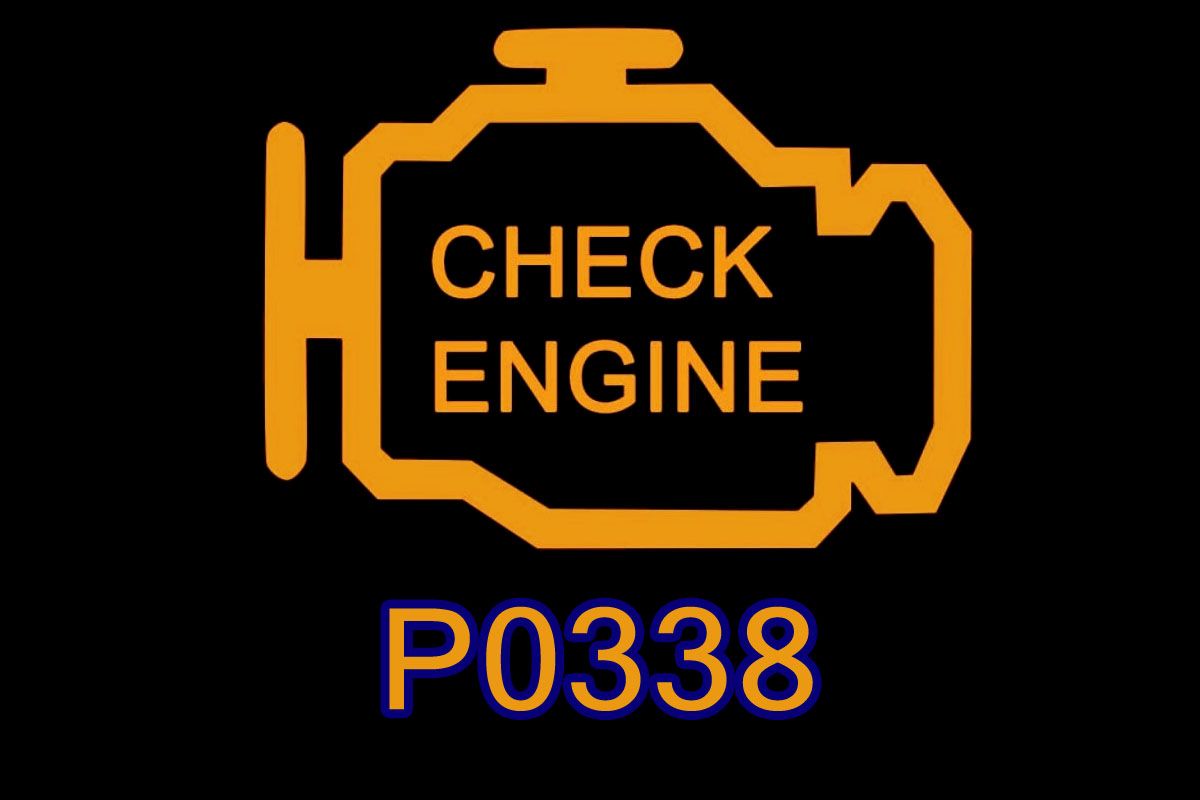
P0338 Crankshaft Position Sensor "A" Circuit High Input
The P0338 trouble code means the engine control module (ECM/PCM) has detected that the electrical signal from the Crankshaft Position Sensor “A” is higher than the expected range.
The crankshaft position sensor is one of the most important sensors in the engine management system. It tells the ECM where the crankshaft is positioned and how fast it is rotating. The computer uses this information to coordinate ignition, fuel injection, engine synchronization, misfire detection, and in many vehicles, variable valve timing.
P0338 does not automatically mean that the crankshaft position sensor is defective. A high input can be caused by the sensor, wiring, connector, signal circuit, trigger wheel, electrical interference, incorrect sensor installation, or—depending on the sensor design—other problems affecting the signal waveform.
What Does the Crankshaft Position Sensor Do?
The crankshaft converts the pistons' up-and-down movement into rotational movement.
The ECM needs to know the crankshaft's exact position and rotational speed to determine when combustion events should occur.
The crankshaft position sensor provides this information by monitoring a toothed wheel, reluctor, tone ring, or another type of trigger attached to or associated with the crankshaft.
The signal is used for:
-
Ignition timing
-
Fuel injection timing
-
Engine RPM calculation
-
Engine starting
-
Crankshaft position determination
-
Camshaft/crankshaft synchronization
-
Misfire detection
-
Variable valve timing strategies
-
Engine protection strategies
If the crankshaft signal becomes abnormal, the ECM can lose an accurate reference for engine operation.
What Does “Sensor A” Mean?
The designation “Sensor A” is manufacturer-specific.
On some vehicles there is only one crankshaft position sensor, while other applications may have more than one crankshaft-related position or speed sensing circuit.
Therefore, “A” should not automatically be interpreted as a specific physical location without checking the vehicle's service information.
What Does “High Input” Mean?
This is particularly important with P0338.
“High Input” refers to the electrical signal received by the ECM being higher than expected.
It does not necessarily mean:
-
The engine RPM is too high
-
The crankshaft is physically moving too far
-
The crankshaft is in a “high” position
-
Engine temperature is high
-
Oil pressure is high
-
The engine is overspeeding
The ECM is identifying an abnormal electrical input from the crankshaft position sensor circuit.
Depending on the sensor type, the ECM may see a signal voltage or waveform that exceeds the expected characteristics.
How Does a Crankshaft Position Sensor Produce a Signal?
Two common technologies are used for crankshaft position sensing.
Hall-effect sensors
These sensors generally receive a power supply and produce a digital switching signal as the trigger target passes the sensing element.
Variable reluctance (VR) sensors
These sensors generate an alternating electrical waveform as the crankshaft reluctor passes the sensor.
The ECM is calibrated for a particular signal pattern.
Consequently, a signal that is too high, incorrectly shaped, excessively noisy, or otherwise outside the expected characteristics can result in P0338.
The exact diagnostic procedure depends heavily on the sensor design.
Common Causes of P0338
Several different faults can produce a crankshaft position sensor high-input code.
Faulty crankshaft position sensor
The sensor may have an internal electrical failure and produce an abnormal output.
Heat, age, vibration, contamination, or internal electronic failure can alter the signal.
Signal wire shorted to power
A damaged signal wire touching a voltage source can raise the signal above the expected level.
This is particularly important with Hall-effect sensor circuits.
Damaged wiring
The harness can become:
-
Chafed
-
Melted
-
Pinched
-
Corroded
-
Internally broken
-
Damaged by vibration
Crankshaft sensor wiring is often routed near hot engine components, making harness inspection important.
Connector problems
A loose, corroded, contaminated, or damaged connector can alter the sensor signal.
Terminal tension is also important. A terminal that looks clean may still have poor electrical contact.
Incorrect sensor power supply
On sensors that use an external power supply, an abnormal supply voltage can affect the sensor's output.
The actual expected voltage must be determined from the manufacturer's wiring diagram.
Poor ground
A sensor with an unstable or poor ground may produce an abnormal output.
Ground problems can sometimes create confusing sensor codes because the sensor's reference point is no longer stable.
Electrical interference
The crankshaft position signal is critical and can be affected by electrical noise.
Poorly routed wiring, damaged shielding, aftermarket electrical equipment, ignition interference, or other electrical problems can sometimes distort the signal.
Incorrect sensor installation or air gap
On applications where sensor-to-trigger clearance is critical, an incorrect installation can affect the waveform.
The specified gap must be checked according to the vehicle manufacturer's procedure rather than using a generic measurement.
Damaged reluctor or trigger wheel
The sensor may be functioning correctly while the component it reads is damaged.
Possible problems include:
-
Damaged teeth
-
Missing or distorted teeth
-
Cracks
-
Incorrect trigger position
-
Loose reluctor
-
Contamination
-
Physical displacement
Mechanical timing problem
Although P0338 describes an electrical high-input condition, crankshaft-related faults can sometimes occur alongside mechanical timing problems.
If camshaft and crankshaft synchronization is incorrect, additional codes may appear.
Low-quality or incorrect replacement sensor
Not all replacement sensors produce identical electrical characteristics.
An incorrect or poor-quality sensor can create an abnormal waveform even if it physically fits the engine.
ECM/PCM fault
An internal ECM input circuit problem is possible but should generally be considered only after the sensor and its external circuit have been thoroughly tested.
Symptoms of P0338
P0338 can cause anything from a Check Engine Light with relatively normal operation to severe starting and running problems.
Possible symptoms include:
-
Check Engine Light
-
Hard starting
-
Extended cranking
-
Intermittent no-start
-
Engine stalling
-
Rough running
-
Hesitation
-
Poor acceleration
-
Reduced engine power
-
Misfire
-
Unstable RPM
-
Tachometer abnormalities
-
Increased fuel consumption
-
Limp-home operation
In some vehicles, the engine may stop running if the ECM loses a reliable crankshaft reference.
Why Is the Crankshaft Sensor So Important During Starting?
The ECM needs a reliable crankshaft reference before it can properly coordinate engine operation.
During cranking, the computer monitors the crankshaft signal to determine:
-
Whether the engine is rotating
-
Engine speed
-
Crankshaft position
-
Timing reference
-
Relationship with the camshaft signal
If the signal is missing or implausible, the ECM may be unable to establish proper synchronization.
This is why a crankshaft position sensor problem can cause a vehicle to crank normally but fail to start.
Can P0338 Cause a No-Start?
Yes.
Depending on the vehicle's engine management strategy, an abnormal crankshaft position signal can cause:
-
Extended cranking
-
Intermittent starting
-
Engine start and immediate stall
-
Complete no-start
The ECM may disable ignition or fuel injection if it cannot trust the crankshaft position information.
The exact behavior varies between manufacturers and engine management systems.
Can P0338 Cause a Misfire?
Yes.
The crankshaft signal is used as a fundamental timing reference.
If that signal becomes inaccurate, the ECM may have difficulty controlling ignition and injection at the correct moment.
This can result in:
-
Rough running
-
Hesitation
-
Misfire
-
Power loss
-
Stalling
However, a P0338 code accompanied by a misfire does not automatically mean the crankshaft sensor caused the misfire.
The complete signal and engine operation should be evaluated.
How to Diagnose P0338
A proper diagnosis should focus on the complete crankshaft position sensor circuit, not just the sensor.
1. Scan all stored and pending codes
Start by checking every code stored in the ECM.
Pay particular attention to codes involving:
-
Camshaft position sensors
-
Crankshaft position sensors
-
Engine synchronization
-
Misfire
-
VVT
-
System voltage
A camshaft/crankshaft correlation code alongside P0338 can provide an important clue.
2. Check freeze-frame data
Look at the engine conditions when P0338 was recorded.
Useful information includes:
-
Engine RPM
-
Engine temperature
-
System voltage
-
Engine load
-
Vehicle speed
-
Throttle position
If the fault occurs only during cranking, the diagnostic direction may be different from a fault that appears only at high RPM.
3. Identify the exact sensor and circuit
Use the manufacturer's wiring diagram to determine:
-
Sensor type
-
Power supply
-
Ground
-
Signal wire
-
ECM pin
-
Trigger arrangement
Do not assume every crankshaft sensor uses the same electrical design.
4. Inspect the sensor
Check for:
-
Physical damage
-
Oil contamination
-
Metal debris
-
Incorrect installation
-
Loose mounting
-
Damage around the sensing tip
Metal particles can be particularly relevant on magnetic-type sensors.
5. Inspect the connector
Check for:
-
Corrosion
-
Bent pins
-
Loose terminals
-
Oil contamination
-
Water intrusion
-
Broken connector locks
-
Poor terminal tension
A connector fault can create an abnormal signal without the sensor itself being defective.
6. Inspect the wiring
Trace the harness between the crankshaft sensor and ECM.
Look for:
-
Chafing
-
Melted insulation
-
Pinched wires
-
Broken conductors
-
Poor previous repairs
-
Contact with exhaust components
-
Contact with moving engine parts
An internally damaged wire may require more than a visual inspection to identify.
7. Verify power and ground
If the sensor uses an external power supply, verify that the supply is correct.
Check the ground under the appropriate test conditions.
Do not apply a universal voltage specification because crankshaft sensor circuits differ significantly between vehicles.
8. Check for a signal circuit short to power
Because P0338 specifically describes a high input, the signal circuit should be checked for an unwanted connection to a voltage source.
This is especially important when the signal voltage appears higher than the manufacturer's specification.
9. Examine the waveform
An oscilloscope can be extremely useful for diagnosing P0338.
It can show whether the signal is:
-
Too high
-
Distorted
-
Noisy
-
Intermittent
-
Incorrectly shaped
-
Missing specific pulses
-
Different from the manufacturer's expected waveform
This is often much more informative than simply measuring voltage with a multimeter.
10. Check the trigger wheel
If the electrical circuit appears correct, inspect the crankshaft reluctor or trigger.
A damaged trigger can cause an abnormal signal even when the sensor is functioning correctly.
11. Compare crankshaft and camshaft signals
If synchronization problems are suspected, examine both signals together.
This can help determine whether the problem is:
-
Electrical
-
Sensor-related
-
Trigger-related
-
VVT-related
-
Mechanical timing-related
A clean crankshaft waveform does not necessarily mean the engine's mechanical timing is correct.
12. Check mechanical timing if necessary
If the sensor and circuit test correctly but synchronization remains abnormal, inspect the timing system.
Possible causes include:
-
Stretched timing chain
-
Jumped timing chain
-
Incorrect timing belt installation
-
Damaged timing components
-
Camshaft timing problems
Can a Multimeter Diagnose P0338?
A multimeter can perform useful preliminary checks.
It can help identify:
-
Missing power
-
Poor ground
-
Short circuits
-
Open circuits
-
Abnormal static voltage
However, a crankshaft position sensor produces a dynamic signal while the engine is rotating.
A multimeter may therefore fail to show waveform distortion, noise, incorrect pulse width, missing teeth, or brief signal abnormalities.
For difficult P0338 cases, an oscilloscope is often a much better diagnostic tool.
Why Can P0338 Appear Only at Higher RPM?
A sensor or wiring fault may not become obvious at low engine speed.
As RPM increases:
-
Signal frequency increases
-
Electrical conditions change
-
Engine vibration increases
-
Wiring moves more
-
Sensor output characteristics change
-
Electrical interference can become more noticeable
A sensor can therefore appear to work correctly at idle or during slow cranking but produce an abnormal waveform at higher RPM.
This is one reason a road test or dynamic signal test can be important.
P0338 Does Not Automatically Mean a Bad Sensor
Replacing the crankshaft position sensor is sometimes the correct repair.
But it should not be the automatic response to P0338.
If the real problem is a signal wire shorted to power, a damaged connector, incorrect sensor supply, electrical interference, damaged reluctor, or another circuit fault, replacing the sensor will not solve the problem.
The same applies to mechanical timing problems.
The correct question is not simply:
“Is the crankshaft sensor bad?”
It is:
“Why is the ECM receiving a crankshaft position signal that is higher than expected?”
P0338 vs. Other Crankshaft Position Sensor Codes
The neighboring crankshaft position codes describe different signal conditions.
P0335 – Crankshaft Position Sensor “A” Circuit Malfunction
A general circuit malfunction.
P0336 – Crankshaft Position Sensor “A” Circuit Range/Performance
The signal is outside the expected range or its performance/relationship is implausible.
P0337 – Crankshaft Position Sensor “A” Circuit Low Input
The ECM detects a signal that is lower than expected.
P0338 – Crankshaft Position Sensor “A” Circuit High Input
The ECM detects an electrical input higher than expected.
P0339 – Crankshaft Position Sensor “A” Circuit Intermittent
The crankshaft signal becomes unstable or drops out intermittently.
This distinction is important because P0338 specifically points toward a high electrical input, whereas P0337 points toward a low input and P0339 toward an intermittent signal.
Is P0338 Serious?
It can be.
The crankshaft position signal is a fundamental engine timing reference.
If the fault is severe, the vehicle may:
-
Stall unexpectedly
-
Refuse to start
-
Lose power
-
Misfire
-
Enter a reduced-power strategy
An unexpected stall can be dangerous in traffic.
If the engine is running normally and the Check Engine Light is steady, the vehicle may remain temporarily driveable, but the fault should still be diagnosed promptly.
If the engine is stalling, difficult to start, or experiencing severe hesitation or power loss, continued driving is not recommended.
A Practical Diagnostic Sequence
A useful workshop approach is:
P0338 detected → scan all codes → check freeze-frame → identify Sensor A → inspect sensor → inspect connector → inspect wiring → verify power and ground → check signal circuit for short to power → test waveform → inspect trigger wheel → compare cam/crank synchronization → check VVT/mechanical timing if necessary → repair confirmed fault → clear codes → road test → rescan.
This prevents unnecessary sensor replacement and helps separate an electrical signal problem from a mechanical timing problem.
Conclusion
P0338 – Crankshaft Position Sensor “A” Circuit High Input means the ECM/PCM has detected an electrical signal from the crankshaft position sensor circuit that is higher than the expected level.
The sensor itself can certainly be the cause, but it is not the only possibility. A signal wire shorted to power, wiring damage, connector problems, incorrect sensor supply, poor grounding, electrical interference, incorrect installation, or a damaged crankshaft trigger can also produce the code.
Because the crankshaft position signal is fundamental to engine synchronization, P0338 should not be ignored—particularly when accompanied by hard starting, stalling, misfire, or significant loss of power.
The most reliable repair comes from testing the complete circuit and the actual waveform rather than replacing the sensor based on the code description alone.